Spooky Irish stories on Halloween - and the people who tell them
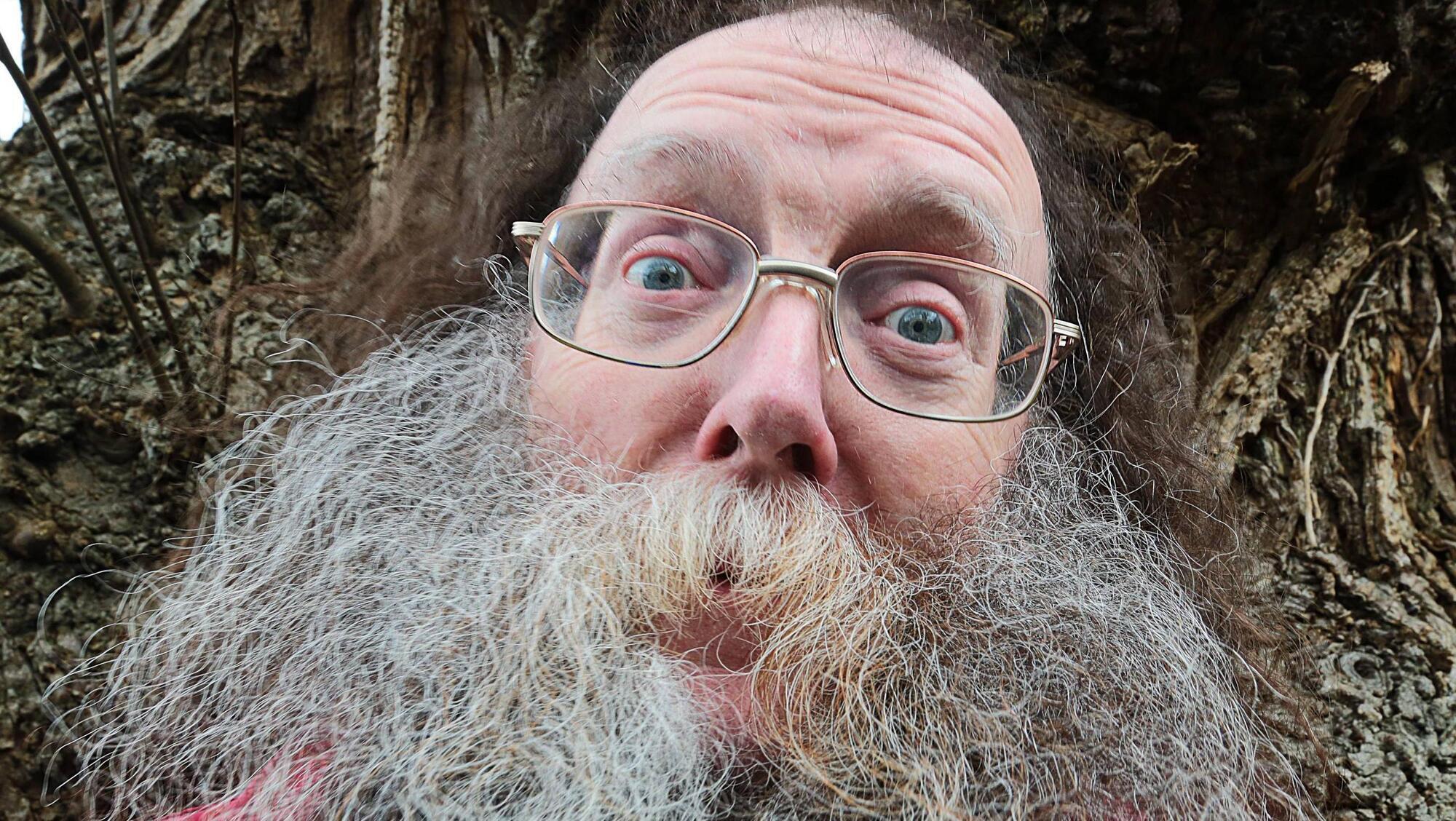
Seanchaí Eddie Lenihan:
“Halloween is the changeover time of the year, the time between autumn and winter, the Celtic end of the year. It’s neither this nor that, and anything might be expected to happen,” says seanchaí Eddie Lenihan.
Traditionally, it was a night to take a dare. “If you weren’t good at something, ‘twas the perfect night for going under the briars. Where I live in Crusheen, Co Clare, if someone has terrific luck at cards, they’ll say ‘Jaysus, were you under the briars last night?’” he says, before explaining what kind of briars you need.
“A briar in the shape of a tunnel, a briar that’d grow up and over and down, and root a second time. You’d crawl under it just on the stroke of midnight and you could get what you wished for.”
And one man did, he says, a man who wasn’t good at cards. “On the stroke of midnight he went under a two-rooted briar and he made a wish that he’d be good at cards. On the other side, there was a deck of cards.
“Soon after, he played with that deck and he won. The other players examined the deck and it seemed an ordinary deck. He played the night after, and the night after, and he won every time, and they barred him. He went to another place and won all round him.”
And then, says Eddie, he went to the town and it was the same story, and from there he went to Cork City – by now he’d learned poker – and played against wealthier partners, and they barred him.
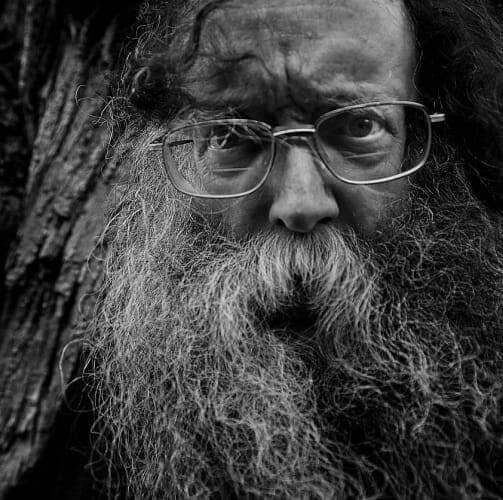
And then it was onto Dublin, and then London, where “he won all round him”. And then he went to France. “To the court of the king,” says Eddie, “where they made him a Comte of the court and he came to own land in France.
“And when he was an old man, his time to die came. He sent for the priest and the thing of the cards came up. And the Abbé said ‘show me the cards’ – he fingered through the deck and every single card was a smiling joker. And the priest said ‘I’m afraid, poor man, you’re after selling your soul to someone’.
“Did you ever hear,” Eddie asks me, “that a deck of cards is often called ‘the Devil’s prayer book’?”
Halloween, he says, is the night of the fairies, of the ghosts, of the dead. “These days – Halloween, All Saints Day on November 1 and All Souls Day on November 2 – are for the souls who want to go to Heaven.”
He sees echoes of the old beliefs in current-day celebrations. “Fireworks shooting up into the dark wintry sky in their own way are a reflection of the soul going to Heaven.”
Halloween is a gap, says Eddie, when even the dead can come back for a night.

Shane Lehane, lecturer in UCC’s Department of Folklore and Ethnology, runs the Cultural and Heritage Studies course at Cork College of FET (Tramore Road).
He points to a long-lived tradition in Ireland – prominent from the 1700s to the 1950s – which held that over three days from Halloween to All Souls Day, the Holy Souls could return to us.
“People lit a candle in the window for their dead loved ones – often in the room where they’d died – to guide them on their way. They set the table, put food out. They made sure the fire was lighting on Halloween night – they’d leave the door open, go to bed early.”
Halloween, he says, is the natural death of the year. “The trees become skeletal. There’s nothing growing in the fields – it’s all finished. And Halloween is associated with Martinmas on November 11 – the traditional day of slaughter, of animals you couldn’t keep alive because you’d have to feed them, the day you culled your stock, shed blood. And then had a feast at Christmas.
“So there’s this idea of transition between one year and another. And the endpoint is also the beginning.”
For Shane, we enter the dark side at Halloween. “All our fears, the Jungian shadow, the stuff nobody wants to think about, the mystery, otherworldliness, what happens when we die. I often think Samhain [Halloween] is the beginning of storytelling, the time of candle and fireplace – stories that are a measure of our fears.”
Storytelling as a way to contain our fears – put them “out there” – is important, and Shane says a number of negative figures are prominent in Irish Halloween tradition. One is the Púca, who appears at crossroads in the shape of an animal – a pig, sometimes headless, a ram with huge horns or a black horse. “And the Púca takes you out from underneath and brings you on his back and you’re ridden all night through briars and muck – and he brings you back to where you were and you’re absolutely wrecked. And people sometimes don’t recover and die from it.”

Hannah Mac Auliffe, PhD candidate in the school of History at Trinity College Dublin, believes the Irish are fascinated by spirits and púcas because throughout our history, we’ve told stories of ghosts and ghouls, spectres and spirits. “Our mythology is full of horror-movie worthy creatures that exist to torment heroes – like the werewolves of Cruachan who come up against legendary hero Cas Corach.
“We’ve several surviving ghost stories that date to at least the 10th century,” she says, citing The Adventures of Nera, which begins on Halloween night as Queen Maeve and King Ailill are having their Samhain feast at their fort at Rathcroghan.
“We’re very proud of our folklore and traditions, so it’s not surprising spooky stories of creatures like the Due Dearg, the Banshee and the Púca have evolved and survived [through] generations. They provide a fascinating link to those who’ve come before us.
“I [also] think it comes down to the Irish today – just like the Irish of the past – loving the intrigue and the adrenaline rush that comes with a good ghost story.”
- Eddie Lenihan will tell stories for Halloween on October 31 at Cahernane House Hotel, Killarney – https://www.cahernane.com/en/; phone 064 663 1895.
- Grape on flour: Place grape on top of pyramid of flour. Each player takes turn at slicing the flour away using a knife, trying not to let the grape fall. Whoever makes it fall must try to retrieve it using only their mouth – involves putting your face in the flour!
- Bobbing for apples: Fill basin with water. Float apples in basin. Players keep hands behind their back and try to catch an apple in their mouth without using their hands.
- Snap apple: Tie strings around apples and hang them from ceiling. Ensure apples are at mouth height or lower. Each player aims to eat the whole apple without touching it with their hands. Alternatively, the winner could be whoever gets the first bite out of their apple. For younger children, a tip is to switch apples for doughnuts. Hannah Mac Auliffe remembers a childhood variation: Wedge coins into flesh of apple. Try to grab a coin and pull it out of the apple, without using hands. “I felt I’d hit the jackpot when I walked away with my coin haul,” she recalls.
CONNECT WITH US TODAY



Be the first to know the latest news and updates