Secret GAA Coach: 'Club funds raised for juvenile teams used to pay VAT bill from club bar'
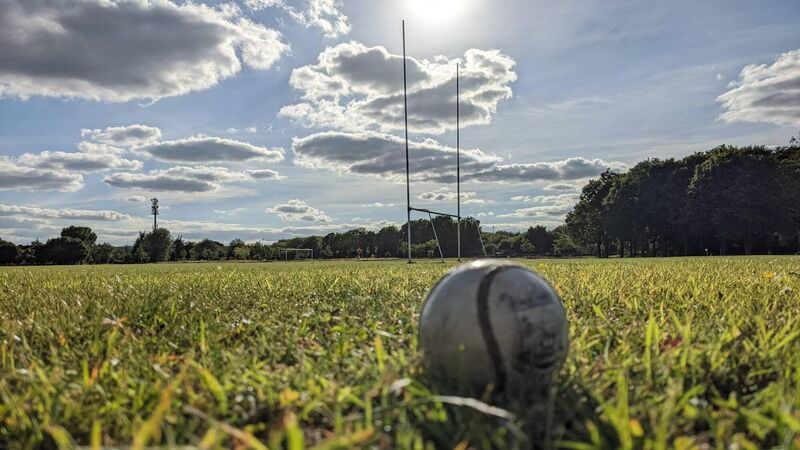
'Maintaining pitches alone is a massive financial undertaking. Paying for and maintaining floodlights isn’t cheap.' Picture: Stephen Shannon/iStock
Finance and fundraising are key to the very existence of the GAA club. Some clubs are well-run business operations. Others, less so.
My beloved club falls into the latter category. Regardless of the nation’s economic outlook, my one and only has teetered on the brink of extinction as a result of debt and insurmountable running costs on more than one occasion.
As a result, for many years the next month’s mortgage payment or the upcoming VAT bill was the limit beyond which any plans for the future dare not stray. Sadly, this mindset has remained even though the club’s financial burden has eased considerably in recent years.
Newcomers to the club are often taken aback by the approach to fundraising which seems to favour one of two approaches – that of a frantic gunman screaming at a shopkeeper to hand over the contents of the till or that of a Vegas croupier scooping away your finances before you realise what you have signed up to.
Membership fees, particularly for families, have been well above the national average for decades. A club Lotto was launched to widespread uproar some years back on an opt-in-only basis – the notion that members were, technically, being forced to gamble was a bridge too far for some stalwarts who left the club in protest.
On another occasion, funds raised privately by parents specifically for the benefit of juvenile teams were used, instead, to pay the VAT bill from the club bar.
I decided against using the club account for my team upon learning that some of the funds had been used to repair a window that had been broken by the son of a prominent member of the executive.
Of course, none of this is to underestimate the difficulties that come with running a GAA club. Maintaining pitches alone is a massive financial undertaking. Paying for and maintaining floodlights isn’t cheap.
Running the bar and paying the associated bills is a serious commitment in its own right. Then there is insurance to be paid. Many people have endured many sleepless nights trying to find a workable solution to all of this.
It is not uncommon for a parent to query the financial workings of the club with me. While we conduct our own team fundraising activities, all of which have been well supported by parents, the proceeds only cover some of our yearly outgoings.
Paying for referees, floodlights, equipment, pitches, jerseys etc is only partly covered by the funds raised. Club tracksuits and other gear need to be paid for by the individual or their parents. Of course, every child has to have a tracksuit.
All of these items have to be purchased through the club shop – a typical arrangement is for a club to be signed up with one of the main suppliers for which they receive a commission for the use of its logo and colours.
Very few of the main suppliers physically produce the gear in Ireland, they instead import it in from manufacturers – invariably in the Far East.
I am aware of a situation where a mentor managed to source the gear directly from a manufacturer in the Far East – the same manufacturer that supplies some of the big brand distributors in Ireland (the mentor’s economic patriotism was even called into question by one member of the club executive, probably based on some misguided romantic notion that GAA gear is handwoven by a Cathleen Ní Houlihan type character in her cottage in Killala).
An exact replica was procured and the cost of zip tops (including club sponsor) to parents was €10 (and €1 extra for players' initials) instead of €50 for the same item from the club supplier.
Ultimately, our main source of fundraising, ie, parents, lose out and pay five times more so as to facilitate arrangements clubs have with suppliers.
Money which could be much better spent in other areas of the club for the benefit of the young club players.
CONNECT WITH US TODAY



Be the first to know the latest news and updates