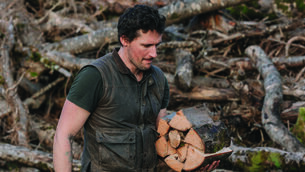
An Cailín Ciúin: 'We were about to become a part of something bigger than any one film - a new wave'
Colm Bairéad and Cleona Ní Chrualaoi, the husband and wife team behind An Cailín Ciúin, reflect on the impact of their quiet girl - and their joy at seeing audiences embrace the cúpla focail 
An Cailín Ciúin: 'We were about to become a part of something bigger than any one film - a new wave'

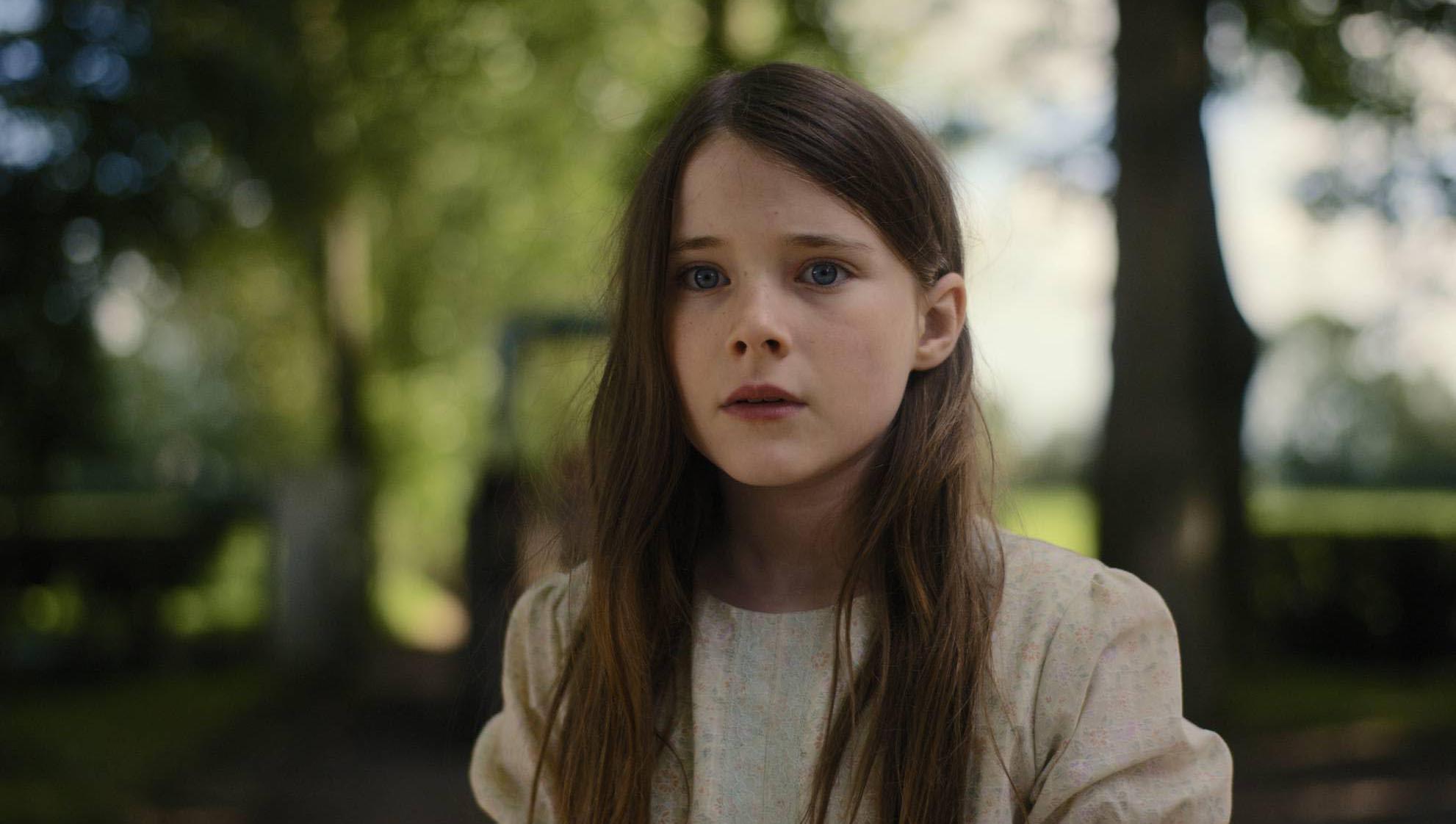
Catherine Clinch, the star of An Cailín Ciúin, a milestone event for the modern Irish language

Colm Bairéad: Writer/Director

When Irish people were asked in an RTÉ poll in 2015 to vote for their favourite Irish poem of the last 100 years, they chose Seamus Heaney’s When All the Others Were Away at Mass

The poem offers a vivid and moving evocation of a very specific memory from the poet’s youth, a weekly ritual between young Heaney and his mother, sitting alone, peeling potatoes. 

No words pass between them, the silence broken only by the potato peels falling into a bucket of clean water, “like solder, weeping off the soldering iron”. 

In the poem, Heaney is a grown man keeping vigil by his mother’s deathbed, and yet this childhood memory is what preoccupies him, this memory of a special kind of silence, shared. 

“I remembered her head bent toward my head, her breath in mine, our fluent dipping knives — never closer the whole rest of our lives”.
It doesn’t surprise me that it topped the poll. It touches something in us. 

We recognise implicitly that silence in which everything is said, the muted language of the heart. 

It’s a silence that we tried to reproduce in our film An Cailín Ciúin (adapted from Claire Keegan’s Foster), a film that is also, in a sense, concerned with childhood memory-making, as a young, neglected girl experiences a formative summer on a farm in County Waterford, the temporary ward of distant relatives. 

There’s another silence, however, that An Cailín Ciúin is addressing, obliquely, simply by existing. 

The film is not, of course, silent. The characters do speak. They just happen to be speaking a language that has been underrepresented in the darkened spaces of our cinemas. 

They happen to be speaking a language that itself has been silenced by history and is, by some overly-pessimistic projections of recent years, on its own deathbed. They happen to be speaking Irish.

I think going to the cinema to watch a film in Irish is still a novel, perhaps even mildly revolutionary, idea for Irish audiences. 

The language has rarely had the opportunity to grace the big screen, to weave its way into what has been, historically, one of our nation’s favourite past times. 

Those of a certain vintage will remember the old Gael Linn newsreels that preceded the main feature in the cinemas of the late 1950s and early 1960s. 

Or being brought on school trips to see George Morrison’s Mise Éire. Yet these were documentary subjects. 

Over the following decades, fiction filmmaking in Irish was a decidedly rare thing. 

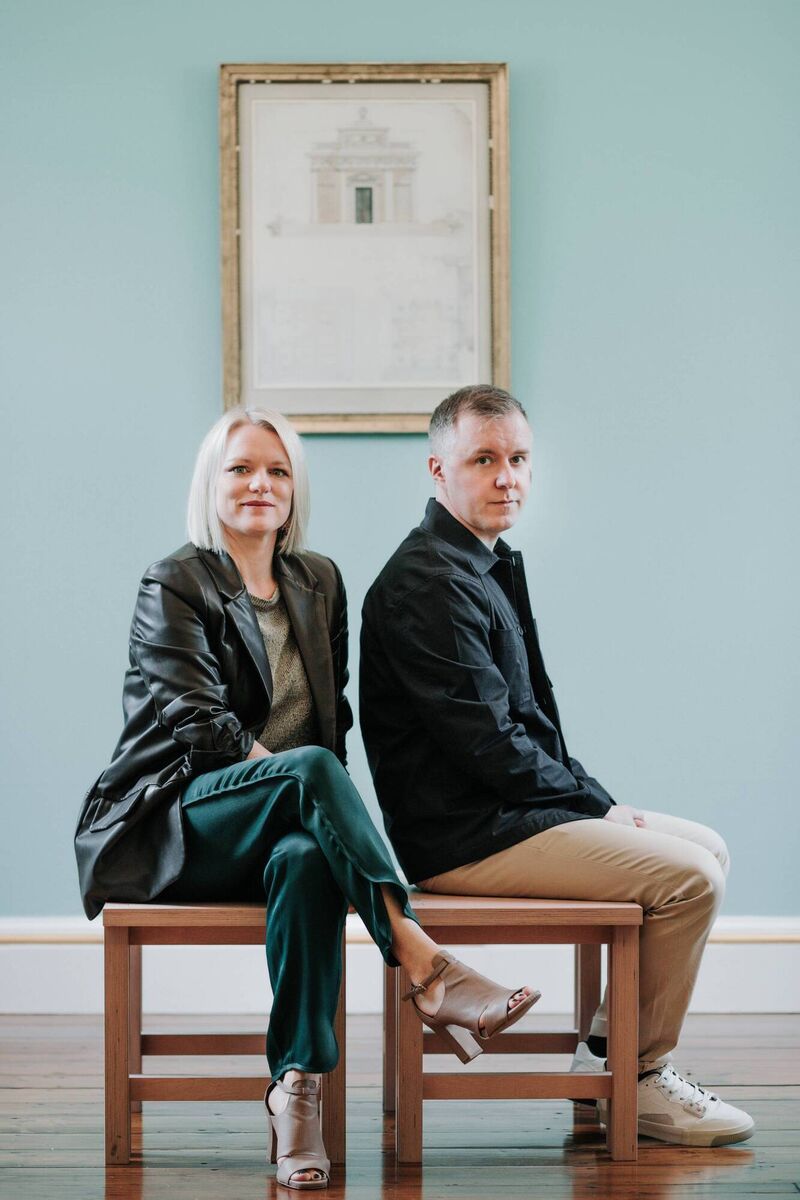
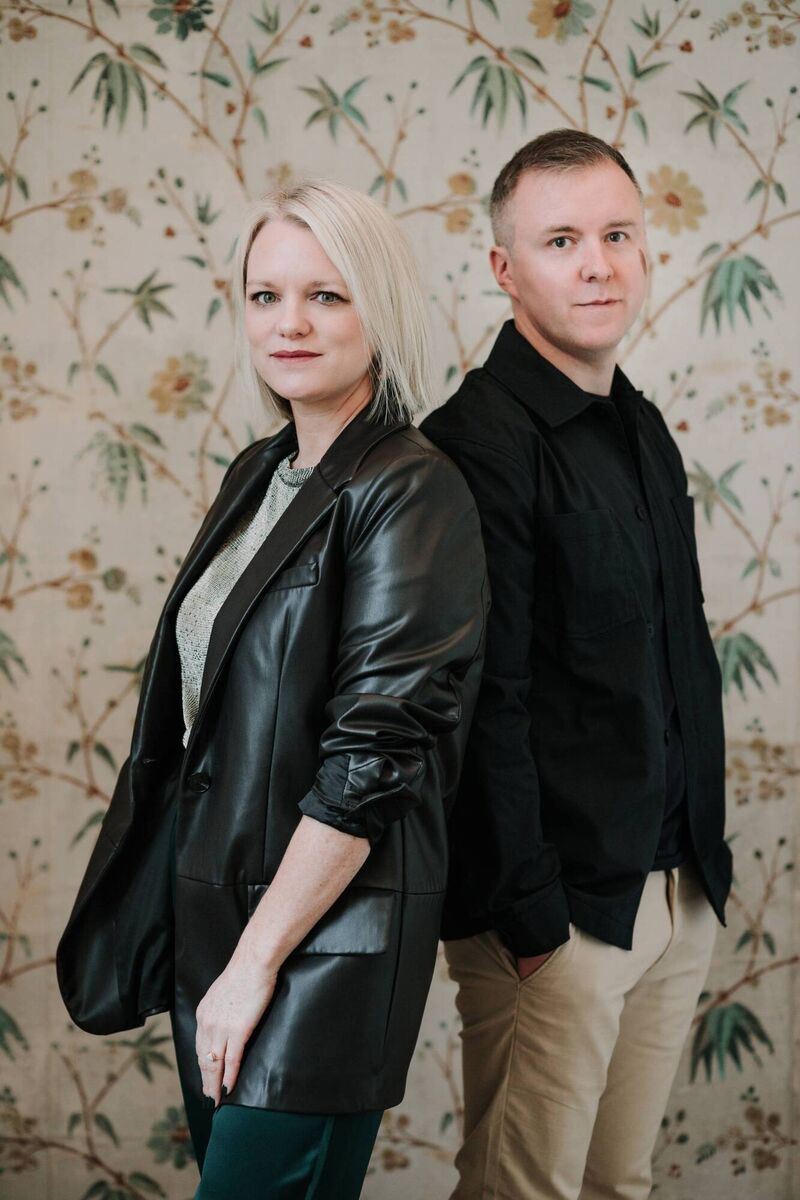
Colm Bairéad and Cleona Ní Chrualaoi, writer/director and producer of An Cailín Ciúin. Pic: Nina Val Photography

My wife and I (Cleona Ní Chrualaoi, who produced An Cailín Ciúin) have often commented on the fact that we had never seen an Irish-language dramatic feature together in a cinema before Tom Sullivan’s Arracht in 2020. It felt like a landmark moment.

This recent surge in Irish-language films, which began in earnest with Arracht is due almost entirely to increased investment, to a commitment to the idea of Irish-language cinema by a number of key stakeholders — TG4, Screen Ireland, and the Broadcasting Authority of Ireland. 

It has resulted in a continuity of films in Irish that the industry and Irish audiences have never known before. 

Most encouragingly, I think it has produced some of the more distinctive Irish films of recent times and has actually shifted the perception of what our national cinema can look like. 

It has felt in these past few years that a sense of real possibility has attached itself to Irish-language cinema, a sense of something new to be discovered in this expression of ourselves. 

Something that belongs unreservedly to us, that can complement and stand side-by-side with Irish films in English. 

That’s certainly how it felt sitting in the Dolby Theatre at this year’s Oscars, as An Cailín Ciúin represented Ireland in the International Feature Film category, while Martin McDonagh’s The Banshees of Inisherin haunted a host of other categories. 

Two different films, two different languages, but both an expression of us. That was exciting. That is exciting. It feels modern to me. Mature and open and nuanced.

And yet, despite our film’s extraordinary international journey, the thing that has been most affecting for us as filmmakers has been the impact and the response that the film has had here at home. 

The huge number of admissions in cinemas around the country, the outpouring of emotion on social media, the countless remarks on how the film has captured people’s memories of childhood and, most remarkably of all, the manner in which the film has seemingly brought people back to the language.

On that final point, I don’t want to overstate things. 

I can’t say with any certainty that the film sent people rushing in their droves to their nearest Irish evening class or Pop-Up Gaeltacht, but I do believe, that An Cailín Ciúin has played its part in a shifting of mindset. 

The number of Irish speakers may not have magically increased since the film’s release, but the respect for the language and for its capacity to represent us, even though we may not all speak it fluently, I believe, has. 

It has shown me that there is still a connection between Irish people and their indigenous language that hasn’t been entirely lost. Something unspoken, but keenly felt, a little like that silence between Heaney and his mother. That gives me hope. 

For Cleona and I, as we raise our two young boys through Irish here in Dublin City, that hope continues to be one of the greatest gifts this film has given us.

Colm Bairéad and Cleona Ní Chrualaoi, writer/director and producer of An Cailín Ciúin. Pic: Nina Val Photography

Cleona Ní Chrualaoi: Producer

“How are you feeling?” Michael Patric asked me as were being chauffered in our black SUV past the famous Siegessäule statue towards the Haus der Kulturen der Welt in Berlin for the world premiere of An Cailín Ciúin

Michael’s kind curiosity, a far cry from his onscreen character, Da’s tough persona. “Excited, a little nervous,” I said. 

It was February 11, 2022, and we were all masked up because of covid. We were about to walk the red carpet and launch our quiet film into the world. It was the first time an Irish-language feature film had been selected for the prestigious Berlin Film Festival.
I’ll never forget stepping onto the red carpet and our film team being introduced individually inside the auditorium. It was such a magical feeling. 

Afterwards, the film received rapturous applause. We took to the stage for our very first Q&A and one of the first questions I was asked was “Why did you choose to make the film in Irish?” It is a question that we’ve answered many times since.

Before we made An Cailín Ciúin, much of our work was in the Irish language. Colm made his first short film for TG4 in 2005 and one of my first jobs in television was working on a period docudrama for the station. 

It was also the language that brought Colm and I together when were both hired to work on the same TG4 docudrama series in 2009.

When I saw Tom Sullivan’s Arracht at the Dublin Film Festival in February 2020, it had a profound impact on me. 

It was the first time I had seen Irish on the big screen and it stirred something in me. 

Before that, I had only ever heard Irish on the TV or the radio. 

Here was an Irish-language film of great cinematic achievement that could hold its own against any film. 

Colm and I knew at that stage that our film-to-be, an adaptation of Claire Keegan’s Foster, had gotten the green light and that we would soon be embarking on an Irish-language feature of our own. 

We were about to become a part of something bigger than any one film. A new wave. One made possible by an initiative called Cine4 launched in 2017 by TG4, Screen Ireland, and the Broadcasting Authority of Ireland to fund feature films in the Irish language.

Back on stage in Berlin, we talked about Irish-language cinema like it had just been born and in some ways, it felt like it just had. 

Before Cine4, you could count on one hand the number of Irish-language feature films that had been theatrically released, none of which I had ever actually seen in a cinema. 

There was no question that the language was underrepresented on the big screen, but Cine4 was now breathing life into the idea of a new kind of cinema for Ireland, and the world.

During many Q&As since and throughout our Oscars campaign, Colm and I spoke about Irish and its current status in Ireland, how it’s only spoken daily by a small percentage of people, how, unfortunately, it’s declining in Gaeltacht areas, and how it’s listed as an endangered language by Unesco with a risk of disappearing in the next century. 

We also touched on the positive efforts to keep it alive by muintir na Gaeltachta themselves, the countrywide network of Gaelscoils (where we found our young star, Catherine Clinch), the work of TG4 and other Irish-language organisations and the phenomenon of the Pop-Up Gaeltacht.

Colm Bairéad and Cleona Ní Chrualaoi, writer/director and producer of An Cailín Ciúin. Pic: Nina Val Photography

As for our own connection to the language, that seed was sown years ago. Colm was raised bilingually in Dublin, where his Dad spoke Irish and his Mum spoke English. 

His Dad, Liam, was an activist for the Irish language and he set up a Gaelscoil in their local community where Colm and his siblings attended school. 

I grew up in Meath and became fluent during my teenage years, as a student in the Rathcairn Gaeltacht, where I lived during the week. 

My Mum is also a native speaker from Donegal. I wasn’t raised through Irish, but I would hear it spoken by her and my relatives when we’d be on holidays there. 

As a young child, I remember my Mum doing a thesis on the decline of the Irish language in her native Rosguill. The graphs and maps have stayed with me.

I saw how Irish had declined in her homeplace since she was a child and sadly, it barely exists as a first language in the area now. I didn’t fully understand how fragile the language actually was then, but I often wonder now how something so central to that community and our own identity could simply disappear.

Of course, the language wasn’t the main motivation for us to make An Cailín Ciúin, but it became a huge part of the film’s story.

I remember the joy back home when the film won the Grand Prix award at the Berlinale. 

A film in our native language being recognised by a major festival such as Berlin really meant something to people. 

Winning Best Film at the IFTAs 2022 was another watershed moment because it was the first time an Irish-language film had done so, but nothing could have prepared us for the outpouring of national pride and emotion that came when the film was nominated for an Oscar. 

Something historic had happened. Our small, indigenous language was finding her voice on the world stage. A language that had sometimes been viewed with shame and resentment, was suddenly something to celebrate. 

The word “bród” has been used a lot in the wake of the Oscars. It didn’t matter that we didn’t win an Oscar, people were genuinely moved that a film in Irish made it that far.

When An Cailín Ciúin eventually finishes its theatrical run all over the world, it will have been seen in over 60 countries, by audiences who have never heard our ancient language before. 

It hopefully means people will be open to seeing more films in Irish and will help to ensure a future for Irish-language storytelling on screen.

Perhaps what our film and other Cine4 films have done is that they have both normalised and elevated Irish in mainstream culture. 

Seeing Irish-language films being represented at glitzy awards ceremonies such as the BAFTAs and the Oscars and hearing Irish being spoken on the red carpet at these events by stars like Paul Mescal can only help to positively affect how the language is perceived and raise its status.

The success of these films shows that Irish has value as a way of expressing ourselves, but just like the young girl at the heart of our film, it needs to be nurtured, if it is to survive.

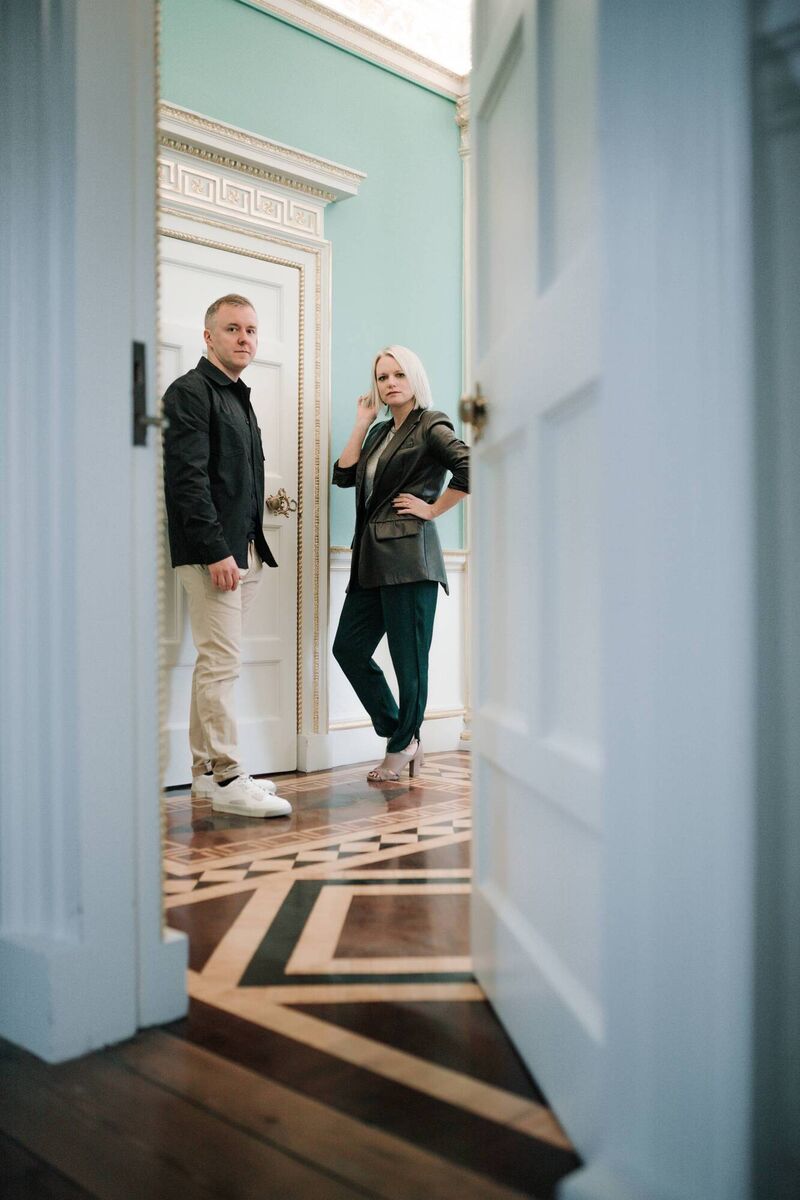
Photoshoot by Nina Val Photography, in Casino Marino, Dublin:

Casino Marino is a remarkable building, both in terms of structure and history. It is widely acknowledged as one of the most important examples of neoclassical architecture in Ireland. 

Casino Marino is operated by the OPW and is open daily for tours until 5th November this year. 

The underground tunnels, used by Michael Collins for shooting practice during the War of Independence, are also re-opening to the public. 

An bhfuil Gaeilge agat? Cliceáil ar an bpictiúr seo.

x

More in this section

Lifestyle

Newsletter

The best food, health, entertainment and lifestyle content from the Irish Examiner, direct to your inbox.

Cookie Policy Privacy Policy Brand Safety FAQ Help Contact Us Terms and Conditions

© Examiner Echo Group Limited