Modernisation moves in chess attract a whole new fanbase
Ahead of International Chess Day on July 20, Jonathan deBurca Butler finds out if we are pawns or kings of the classic board game
Modernisation moves in chess attract a whole new fanbase

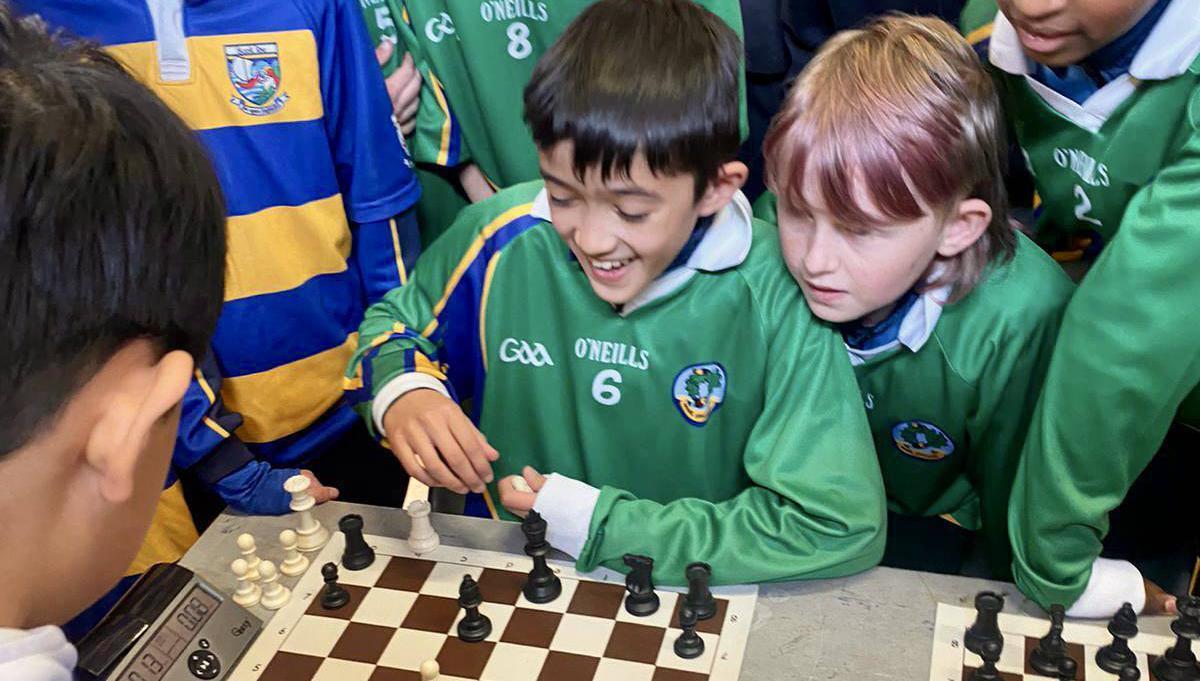
Kids enjoying a game of chess at the Ficheall chess féile

Alex Baburin was just seven years old when he picked up his first pawn and advanced it one square towards his opponent’s king and queen.

“I was an only child and both my parents worked, so they would leave me with female relatives and that wasn’t too much fun for a young boy,” says the Russian. “So for me, chess was something I could do at home on my own and it was exciting. I got a chess book or two so I could play through moves. I played in imaginary tournaments against myself pretending to be this or that grandmaster. I was quite competitive so later that attracted me to competitions too and it went from there.” When Alex moved to Ireland in 1993, he was already an experienced professional and an international master.

“I was one of the highest-rated international masters in the world at the time,” he recalls. “So I was ready to move up and I became a grandmaster in 1996 after completing the required steps. It’s not like doing exams, but it is similar. You play in tournaments, you get your results and you get your rating. It’s a bit like becoming an actuary in a way.”

Teachers learn chess skills at the Ficheall series of 10 beginner chess lessons

He remains Ireland’s only grandmaster and believes there are several simple reasons for that: “When I arrived in Ireland, the conditions weren't there. There weren't really enough people playing, there weren’t enough coaches. There was only one professional teacher in Ireland when I arrived. It is getting better but there is a bit to go yet. It’s a bit like a pyramid. If you have a broad base you can reach a high level but if you don’t, then people with talent who don’t get proper chess education, if you like, can often slip through the net.”

“Another consideration is that at some point good young chess players have to decide whether to focus on a career or become professional players. This is where most people just go to college and choose a career. It can be difficult to find time to commit to it. A part of the problem is that you can’t earn enough as an average grandmaster. You’d need to be in the top 50 in the world to be reasonably OK. I was in the top 70 at my best and it wasn't easy to make a living back then. It’s even harder now.”

Alex’s love of the game has seen him bring his skills and knowledge to thousands through his Chess School in Dublin. He is part of what appears to be a small revolution in the game in Ireland.

“Chess in this country is going very well,” says chairperson of the Irish Chess Union, Desmond Beatty.

“Before the pandemic, we had a membership of about 1,000. There was a drop-off during COVID of course but it seems that lots of people took it up and now we are up to somewhere in the order of 1,700. The Irish Junior Championships, for example, would typically have between 100 to 150 playing in them, this year we had 300. So there has been a massive return to over-the-board.”

Desmond believes the pandemic created the perfect circumstances for people to explore new things and pursue new hobbies and it seems that one cohort in particular was suddenly drawn to the charms of the sport.

“Gamers began to tap into it and became intrigued by it,” says Desmond.

“Gaming culture is all about live commentary. They brought that element to the game. So now you have an electronic board beside the games and people commenting on strategies and possible moves. That has brought excitement to the game. It has made it somewhat cool and that has triggered a transformation among younger people.”

Ireland's resident grandmaster Alexander Baburin from Russia making a move during the opening game of his four game chess challenge against Kevin O'Shea of Cork City Chess Club at the Bosun, Monkstown, Co. Cork. Pic: Denis Minihane

While gamers and grandmasters can certainly take some credit for the renewed interest in Ireland’s chess story, many others have played their part. Among them are five Cork-based primary school teachers and principals who started Ficheall Bunscoile Chorcaí in 2017. Having seen the impact chess-playing was having on students in their schools, the educators sought to provide an annual chess tournament as a focal point for chess during the school year.

“We had first-hand experience of teaching chess in classrooms and saw the powerful impact it was having on individual pupils' self-esteem,” says Liam Murray, secretary of Ficheall.ie

“We wanted to spread this positive idea so that more teachers, schools and ultimately pupils would benefit.”

Within a year, word had spread and schools around the country began to get involved. By 2022/2023, 336 schools registered with Ficheall for one-day Feile Fichille tournaments involving over 6,500 pupils.

Ficheall.ie aims to make chess the rainy-day activity of choice and to that end, it has developed a 20-hour Continuing Professional Development (CPD) course for teachers who are interested in using chess as part of the Social, Personal and Health Education (SPHE) curriculum.

“The teachers learn the game from zero to be able to teach it and lead it in the schools,” says Liam.

“Teachers see it as developing skills of patience, resilience and communication. In fact, the Ficheall series of ten beginner chess lessons link to the learning objectives of the primary SPHE curriculum for first to sixth class and this is where most teachers place the teaching of chess during the school day. The game is a platform for skillful teachers to develop real-life concepts, to build relationships with students and to explore emotions using a hands-on approach and not a worksheet.”

In July 2023, the course was completed by 350 teachers. More than 1,000 have completed the course since it first began. As well as building social skills and cognitive abilities, initiatives like Ficheall.ie will inevitably lead to the growth of interest in the game.

Desmond Beatty has big ambitions for chess in Ireland: “We would love to see this initiative across every school in the country."

“As well as that, we want to have five Grandmasters in Ireland. We have one in Alex Baburin, who has been a great servant of the game in Ireland, but we want to get our better players to be the best they can be. We want to get 50 arbiters, the referees who run the game and we are almost there with that. I’d like to see 500 trainers, 5,000 members in the ICU and I’d like to see at least 50,000 people playing the game in Ireland. I’d actually like 500,000 but we’ll start with 50 and where are we going to get that? Through the schools and colleges.”

The growth of chess in Ireland has not gone unnoticed on the international stage. This time last year, Ireland bid and won the right to host its first-ever World or European chess championship. The European School Chess Championship will be held at the University of Limerick in 2024.

“That’s a very exciting development,” says Desmond. “It will bring the best in talent from 56 federations across Europe but it presents a further opportunity for the development of the game in this country and over the next few months the Irish Chess Union will be launching drives to encourage players to get involved in those championships.” 

More in this section

Lifestyle

Newsletter

The best food, health, entertainment and lifestyle content from the Irish Examiner, direct to your inbox.

Cookie Policy Privacy Policy Brand Safety FAQ Help Contact Us Terms and Conditions

© Examiner Echo Group Limited