Pete the Vet: Dogs and the Irish State are undergoing the biggest review in a lifetime
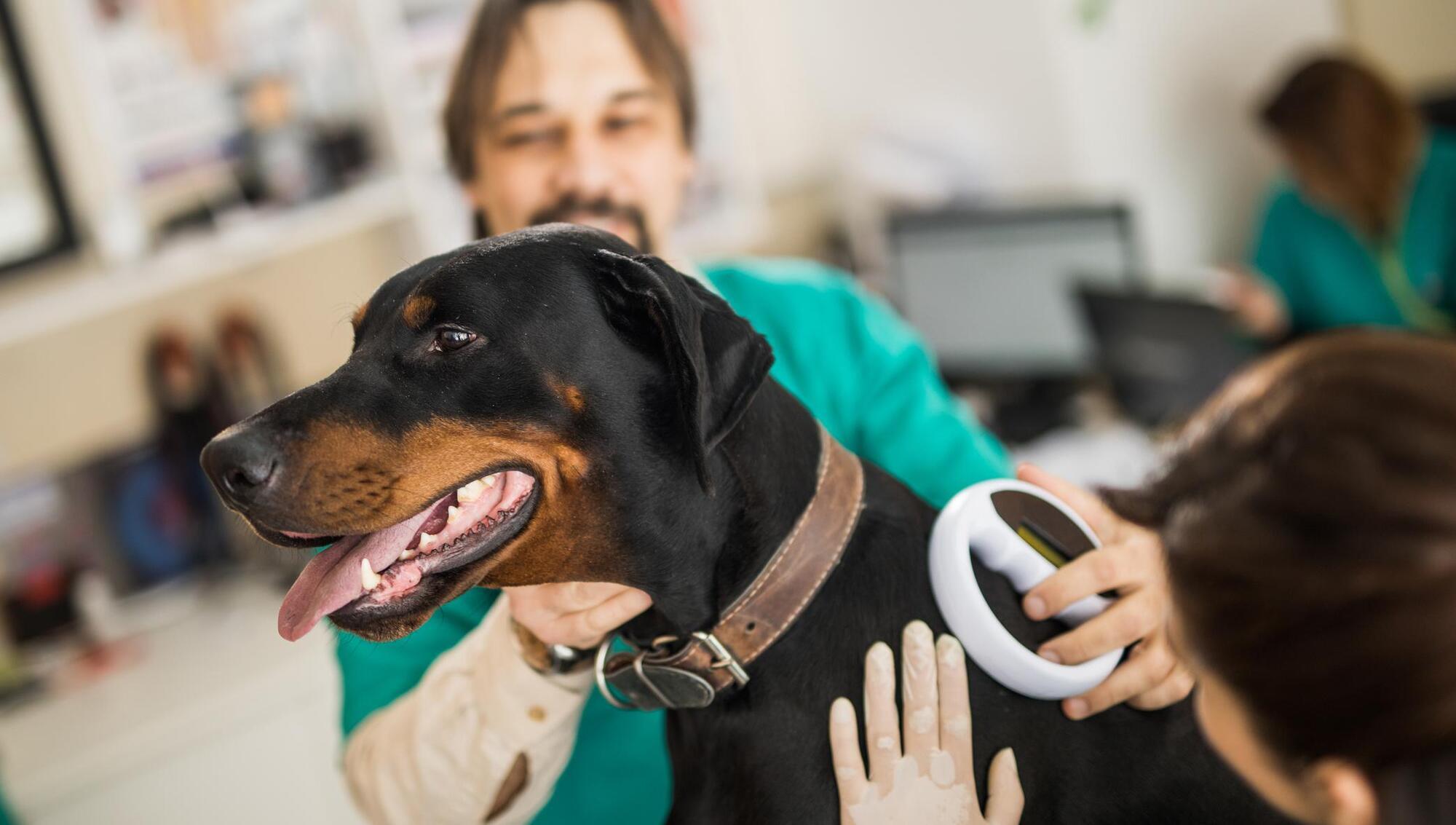
A dog being microchipped. Picture: iStock Veterinarians cooperating while scanning a dog's chip at vet's office. Focus is on dog.
The issue of the control of dogs in Ireland is in the news again. After many years of inaction by government, it seems that significant reform is imminent.
Last November, a nine-year-old boy suffered life-changing injuries when he was attacked by a pit bull terrier while out playing near his home in Enniscorthy. This traumatic incident highlighted the fact that the existing dog control legislation in Ireland was in serious need of review, with 1700 incidents of dog bites being recorded over five years between 2016 and 2021. Following a request from the then Taoiseach, Micheal Martin, the Minister for Agriculture Charlie McConalogue set about urgently progressing a detailed review of dog control legislation.
In fact, this review had already been underway. In 2021, a public consultation on the topic of dog control was held by the Department of Rural and Community Development, with feedback from a wide number of stakeholders: submissions to this consultation can be viewed onlinetarget="_blank" rel="noopener noreferrer">. This was followed up with Oireachtas committee hearings in 2022, which were summarised in a report titled “Issues impacting dog welfare in Ireland”, also available online.
The third part of the governmental review of this area was the focus of the request from the Taoiseach: an interdepartmental working group was established, titled The Working Group on Control of Dogs, including officials from the Department of Agriculture, Food and the Marine, the Department of Rural and Community Development, plus representatives from other departments and local authorities. This group has been meeting weekly since January 2023, aiming to progress into reality a distillation of changes suggested by the initiatives of 2021 and 2022.
The interim report from this group was submitted to Cabinet last week for initial approval, with a final report expected later in the year. Further feedback from stakeholders will then be sought. It’s expected that very significant changes will introduced with the aim of improving both dog welfare and dog control in this country.
Currently, the control of dogs is mostly under the umbrella of two different governmental departments:
- the Department of Agriculture, Food and the Marine
- the Department of Rural and Community Development
- The compulsory microchipping of dogs, partly because in rural Ireland, the prevention of livestock worrying by dogs is a very significant issue for farmers (hence the need for microchips to identify dogs that cause harm).
- Enforcement of the Animal Health and Welfare Act, the principal legislation that protects animal welfare in Ireland.
- The regulation of the sale of pets. Since, 1 February 2020, if you sell or supply five or more pets in a year you must register with the Department of Agriculture and keep records.
- The implementation of dog control legislation. This includes the day to day control of dogs, in both urban and rural areas, through the thirty one local authorities and their nationwide network of dog pounds, with teams of local authority dog wardens and veterinary officers.
- The Dog Breeding Establishment Act, which involves the inspection and licensing of anyone who keeps more than five entire female dogs for breeding: these range from smaller breeders with less than twenty breeding bitches to so-called “puppy farms” with over a hundred.
- The enforcement of current control of dogs legislation including dog warden arrangements.
- The control of dogs legislation, including fines, licensing and ‘restricted breeds’
- The dog identification regulations, including microchipping and dog licensing.
- Gaps in the existing legislation relating to dogs.
- The pet sellers regulations and the promotion of responsible dog ownership.
The interim report was not made public, but the minutes from the working group meetings are available online.
- Forty new dog wardens. There are currently around sixty local authority dog wardens. The plan is that forty new dog wardens will be employed, significantly improving the state’s ability to enforce dog control legislation.
- Increased levels of fines for dog owners found to be in breach of the Control of Dogs Act. The on the spot fine will be increased from €100 to €250, while the maximum fine (if a case goes to court) will be increased from €2,500 to €5,000.
- The creation of a single database for dog microchips. All dogs over the age of twelve weeks, and all puppies before they are sold, must be microchipped and registered on one of four approved microchip databases, but there is no central Irish database that includes details from all of these separate databases. The creation of a single database that includes details of all dogs in Ireland makes logical sense. This may also be able to cross-reference with the database of dog licences: all dogs in Ireland must have a dog licence, but to date, this database is entirely separate to the dog microchip database, which is highly inefficient.
- A review of the breeding, sale and supply of dogs (so called “puppy farm legislation”), with proposals including a centralised national database of dog breeding establishments.
- A review of the restricted breeds legislation. The current “dangerous dogs” laws in Ireland are based on so-called “breed specific” legislation that has been shown to be ineffective. Recommended modifications include banning the keeping of large muscular dogs by anyone with a criminal record, and compulsory third party insurance for all such dogs.
- A renewed focus on public education about responsible dog ownership, including a focus on neutering to reduce the numbers of unwanted puppies. This may be put in place via increased Department of Agriculture funding grants to animal rescue groups around the country. Research shows that the best way to prevent dog bites is to educate the public: human factors always play a significant role in dog bite incidents.
Animal welfare groups around Ireland, including the ISPCA, are watching closely: this may be the best opportunity in a generation to positively influence the lives of our canine friends.
CONNECT WITH US TODAY



Be the first to know the latest news and updates