'Like Sir Henry's but chasing natural highs': Brian O'Connell on how running changed his life
Running has transformed Brian O’Connell’s life. Now, as he embarks on his latest marathon, the broadcaster has launched a podcast to show people the power of the sprint
'Like Sir Henry's but chasing natural highs': Brian O'Connell on how running changed his life

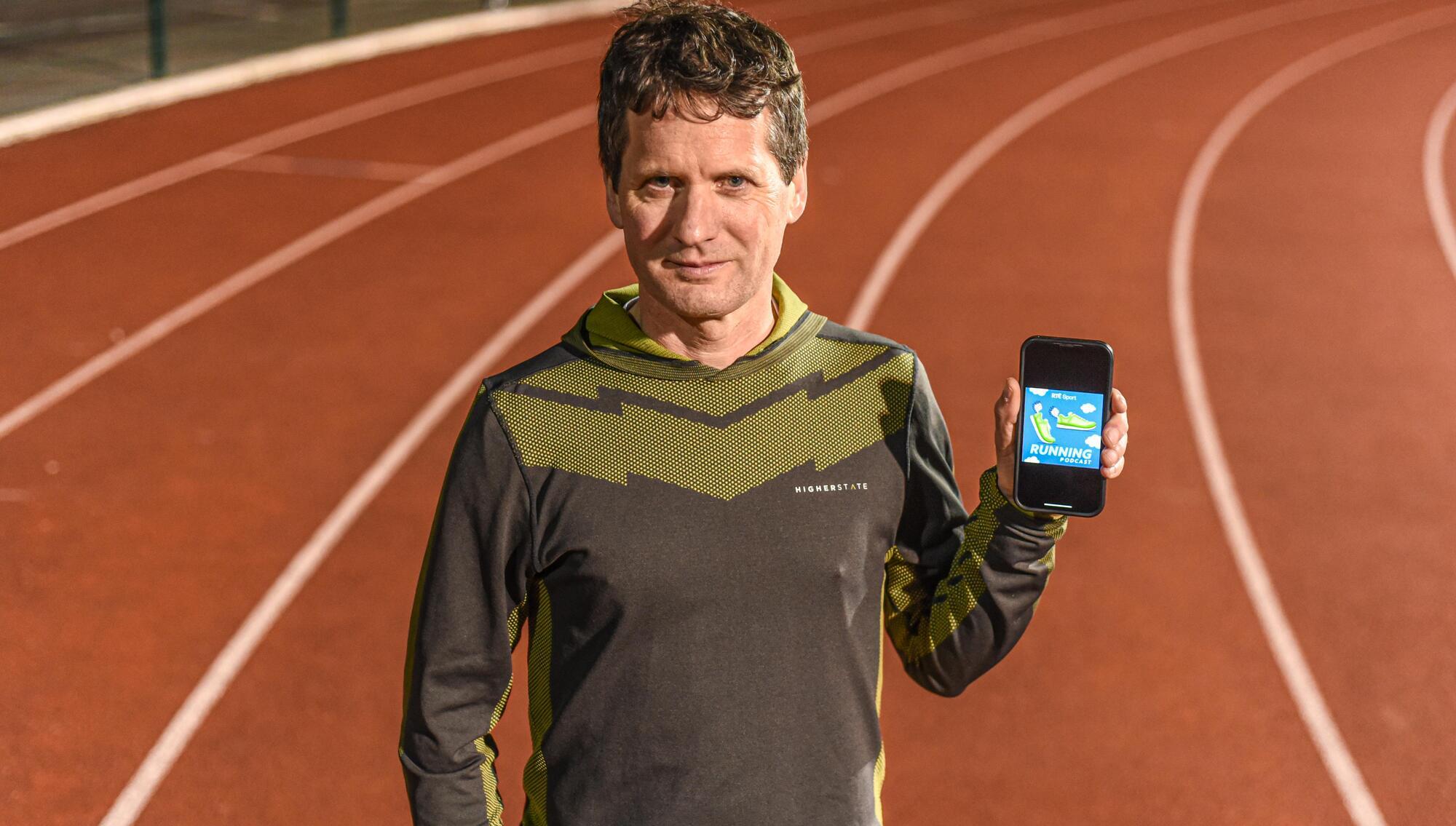
Brian O'Connell of the RTE Sport Running Podcast pictured during a training session at the Mardyke Arena, Cork. Pictures: Cian O'Regan.

Brian O'Connell has found a new tribe. It turns out it’s a little like his old tribe.

“I make the joke now when I am at a race that it’s like looking at the back bar in Sir Henry’s 20 years ago, except now people are chasing natural highs,” the writer and RTÉ reporter explains. “I see a lot of people from the 90s who would have had, let’s say, a very socially active lifestyle, and they are all running. You do get a high from it for sure.”

O’Connell, originally from Ennis in Co Clare but based in Cork, is currently in the throes of a training regimen that will see him compete in the Rotterdam marathon in mid-April. He is also documenting his preparations, and exploring running more broadly, in a new RTÉ podcast series that will follow his own progress while gathering insight and experiences from a range of people — elite runners, marathoners, late bloomers, and his own club mates out in Togher.

O’Connell’s relationship with running is effectively a love affair reignited after many years apart. He was one of the founder members of the Ennis track club and ran a mix of track and long distance in his youth, before switching to golf as his main sport. But he also had a tumultuous few years in early adulthood, culminating in a period in rehab. 

Next year will mark 20 years of sobriety and O’Connell has previously written candidly of his descent into alcohol abuse, not least in his book Wasted: A Sober Journey Through Drunken Ireland, published more than a decade ago. He says when it came to running, he arrived at a stage in life where it made perfect sense.

“When I turned 40 I decided to get back into fitness,” he says, adding that he had “the beginnings of a dad bod” that needed shifting. Starting off with a personal trainer, he then signed up for a half-marathon a little under four years ago. The golf clubs went back in the shed and Brian now has 20 pairs of runners in his wardrobe, footwear for every occasion and all weathers. “I am the running version of Imelda Marcos,” he admits.

Brian O'Connell: "It's really important to find your tribe."

MENTAL DRIFT

The podcast will run for a dozen episodes but it has already featured chats with Olympian Stephen Scullion and running legend Catherina McKiernan, as well as physiotherapist Patrick Connell, running coach Mary Jennings and Clinical Psychologist Dr Marie Coyne — a cast list that illustrates how running is more than the purely physical; instead, it can also allow for a mental drift, away from the pressures of modern life or individual stresses, a crucible for creativity while your thoughts meander and your feet keep tracking in a straight line. For O’Connell, running is elemental, personal, and also something to be shared and enjoyed with others.

“There is that social interaction element which I think for Irish men and women, as you get older and you’re not out socially as much, I think it is really important to try and find your tribe and drop in with a group of people once, twice, three times a week,” he says. 

“It was really evident during covid where we still had that social element. Obviously, there are the health reasons — I’m probably the fittest I have been in my life. It is difficult living in Ireland, you have to accept you are going to be out in difficult weather. Starting up from zero or after years away, it is really hard, there is no point saying you are going to be zen from week one or month one. It is going to take months before you get that feeling like your legs are not really heavy.”

But the benefits are manifold. McKiernan, in her chat with Brian, discusses how you “get into that quiet place, where there is nothing but you and the ground underneath you and you don’t think about anything else.” Dr Coyne, in her podcast interview, speaks about how running accentuates her surroundings in a “non-stressful situation”. 

I mention snooker legend Ronnie O’Sullivan as an example of a sportsman who ditched cigs and booze and became almost evangelical about running. O’Connell promptly reveals that he follows O’Sullivan on the running app Strava and was able to tell me that the seven-times World Champion had run six-and-a-half miles that very morning. O’Sullivan also had his demons, and running seems to have been the perfect antidote. For O’Connell, running is “the least destructive of all the addictions I have had”.

“There were times I thought I was running away from things and now I am running for things,” he continues.

“It was probably a natural fit that I have seen in people in recovery — people use fitness and physical exercise as a way to maintain sobriety and to keep their addictions at bay.

“It does make sense and it does in a way feed that part of your brain that was searching for something, escapism or whatever it was; marathon running, especially, does replace some of that yearning.” He adds: “I have to be conscious of that too because the running can become all-encompassing.”

Brian O'Connell: "There were times I thought I was running away from things and now I am running for things."

RUNNING COMES NATURALLY

The podcast also features a chat with Brian’s clubmate, John Casey, who in classic modern-day style sprang to wider attention when a photo emerged on social media of the 55-year-old Corkman outpacing former AC Milan and Real Madrid maestro Kaka at the Berlin Marathon last year. Casey, who took up running later in life, is “a continuous inspiration to all of us,” Brian says. “He is an example to what the body can do if you approach it right in terms of training.”

This comes back to a central point: that humans have been running for thousands of years, that it comes naturally to us and is good for us, and that any concerns about creaking knees or damage to hips are ill-founded and have been comprehensively refuted in peer-reviewed medical journals. The benefits, on the other hand, are tangible and there for all to see.

There is another bonus: “It is a great way to see other European cities,” Brian explains. Having already run marathons in Cork, Belfast and Dublin, this will mark a step onto the roads of the continent, a flat course, but running alongside club mates — a support network for a race that will also prove the finish line for the podcast.

His training will continue in the interim, running alongside a river on his favoured route near where he lives in Blarney, listening to the natural rhythm of his breathing and the rushing of the water. “I don’t wear headphones when I run,” he says. “Although maybe I shouldn’t admit that since I’m doing a podcast.”

Brian O'Connell: dispensing top running tips.

Tips on starting running, from Brian O’Connell and Conor Kavanagh of John Buckley Sports:

1. “I think if you can join a group or club they are going to help do some of the heavy lifting for you, you have that pressure of not wanting to let people down.” — BOC .

2. “Consistency — a lot of people will sign up, for a 5k or a 10k, train, do it, then go ‘that’s it’ for two months, whereas tipping away, doing two, three runs a week, you will find you will get much more out of it long term.”— BOC

3. “I am a big believer in the right gear — put the gloves on if it’s cold, a hat, get the layers so that you are making it as comfortable for yourself as possible.” — BOC. “Make sure you go to a recognised running store and get yourself scanned for the correct type of shoe — take into account width of foot, shape of your arch and so forth.” — CK.

4. “Getting on a programme is really good, there is so much virtual and in-person coaching available and it’s relatively accessible, especially compared to gym costs.” — BOC

5. “People are often afraid to sign up for an event or a race, but I think it is great to have something four, five, six weeks down the line. Sign up for a 5km, or a park run, and having that goal or target keeps you honest.” — BOC

x

More in this section

Lifestyle

Newsletter

The best food, health, entertainment and lifestyle content from the Irish Examiner, direct to your inbox.

Cookie Policy Privacy Policy Brand Safety FAQ Help Contact Us Terms and Conditions

© Examiner Echo Group Limited