Pete the Vet: Why is my dog behaving badly and how do I fix it?
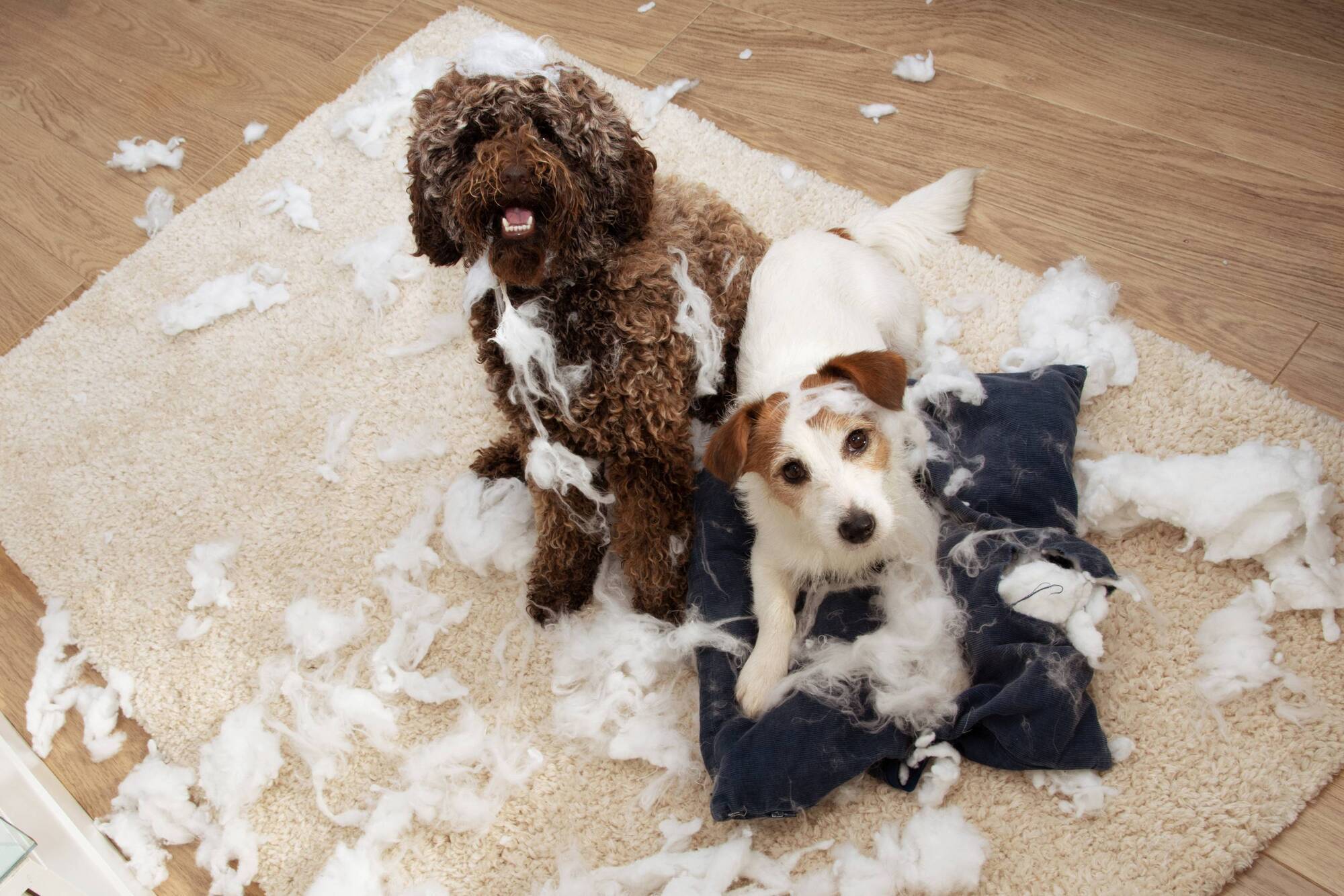
Pete the Vet: Bad behaviour like destruction of the soft furnishings can be caused by separation anxiety and can be fixed with obedience training concept.
Vets across Ireland have noticed a surge in the number of “badly behaved” dogs. This can be an inconvenience, with unruly dogs upsetting other animals that they meet when out on walks and causing mayhem in vet waiting rooms.
Common behaviour issues include jumping up, pulling on the leash, and fear and anxiety, including separation-related issues. However it can also be far more serious, with animals and people being injured by aggressive dogs, and some owners requesting euthanasia of their pets because they can no longer cope, or because a situation is becoming dangerous. Behavioural issues, including aggression, are the single biggest cause of death in dogs under the age of three years.

This wave of difficult dog behaviour has been caused by a perfect storm of several factors.
-
The surge in people looking for dogs from the start of COVID onwards (three years ago) led to a shortage of good quality puppies, encouraging people to take on any dog they could get their hands on. Puppy prices rocketed, it was boom time for puppy farmers, and many people took on animals that were not appropriate for their real life needs.
-
Many of these COVID era puppies were poorly socialised when young: this often leads to long term anxiety and nervousness, which can in turn lead to aggression.
-
Many of the new dog owners were novices: they had wanted to have a dog for a long time, but it was only when the lockdowns happened, and they were working from home, that they felt able to have their first pet. However their lack of experience meant that when faced with a nervous animal that was prone to being aggressive, they did not know how to manage the difficult situation.
-
Many new dog owners have had to return to working in the office, leaving dogs alone at home, unstimulated and bored, leading to exacerbation of behavioural problems.
-
Dog trainers and behaviourists have found themselves overloaded with new business, and unable to cope with the huge demand for help from inexperienced owners.
-
The cost of living crisis has meant that even when a dog trainer is available, many owners have felt unable to cover the costs of the one-to-one professional interventions that are needed to help such situations.
-
Dog rescue groups have been overwhelmed by the number of owners seeking to surrender their pets because of challenging behaviour. This means that if somebody is having difficulties, they will find it very difficult to rehome their pet. They may then be faced with the need to consider euthanasia of a physically healthy animal because they can no longer cope with the challenging behaviour.
-
The word on the ground is that the number of unwanted dogs being euthanased is on the rise. After an all-time annual low figure of less than 200 dogs being killed in Irish dog pounds in 2021, it’s expected that the 2022 figures will be higher, and the 2023 statistics may be higher again.
, owners of unruly dogs need to take responsibility. It’s easy to blame the animal, and to feel helpless when faced with difficulties. It’s easy to create excuses: lack of time, lack of money, unavailability of resources such as dog trainers. But there are simple ways of beginning to tackle the problem, and the first stage is to own the problem, and to accept that something must be done.
, we all need to do more to support our animal welfare charities. Many of these groups are doing their best to try to help owners in trouble: examples include ISPCA, Madra.ie, Dogs Trust and many local organisations. They are all under pressure, including the need for finances, personnel and physical facilities. If you can help in any way, please contact a local group and offer your services.
, more publicity needs to be given to possible ways to help those struggling with badly behaved dogs. Some examples of potential answers are listed below.
The ideal answer is to engage with a qualified, experienced dog trainer or behaviourist who uses reward based dog training methods. Reward-based methods rely on giving rewards (such as food, praise and play) for good behaviour, while removing the rewards for undesirable behaviour. These methods have been proven to be the most effective way of solving behavioural issues in dogs. Aversive dog training methods (punishing dogs for “bad” behaviour) tend to cause fear, anxiety, stress, and aggression. Many people are tempted to use such methods, as it can feel intuitively appropriate to shout at, and to physically discipline, animals that behave badly. The evidence tells us that this intuition is wrong: punishment does not help and can even make things worse.
The dog training/behaviour sector is unregulated in Ireland, but membership of a reputable organisation can be a useful indicator of proficiency. Examples include:
-
Association of Pet Dog Trainers Ireland http://apdt.ie/
-
Institute of Modern Dog Trainers imdt.uk.com
-
Association for the Study of Animal Behaviour https://www.asab.org/ccab
For those unable to afford the cost of professional behavioural help, it can be worth considering online assistance.
Smart phone apps such as Dogo and Puppr offer helpful guidance: just as you can learn a new language with an intuitive, gamified, reward-based app like Duolingo, so you can be helped to train your dog with intuitive, professional technology. You pay a small monthly subscription for a host of video courses combined with one-on-one instructional videos with experienced and skilled dog trainers.
Remember, early interventions are most likely to be effective. Don’t wait: if your dog is not well behaved in any way, take action now.