Pete the Vet: Managing pet temperaments, food dilemmas, pain issues, and more
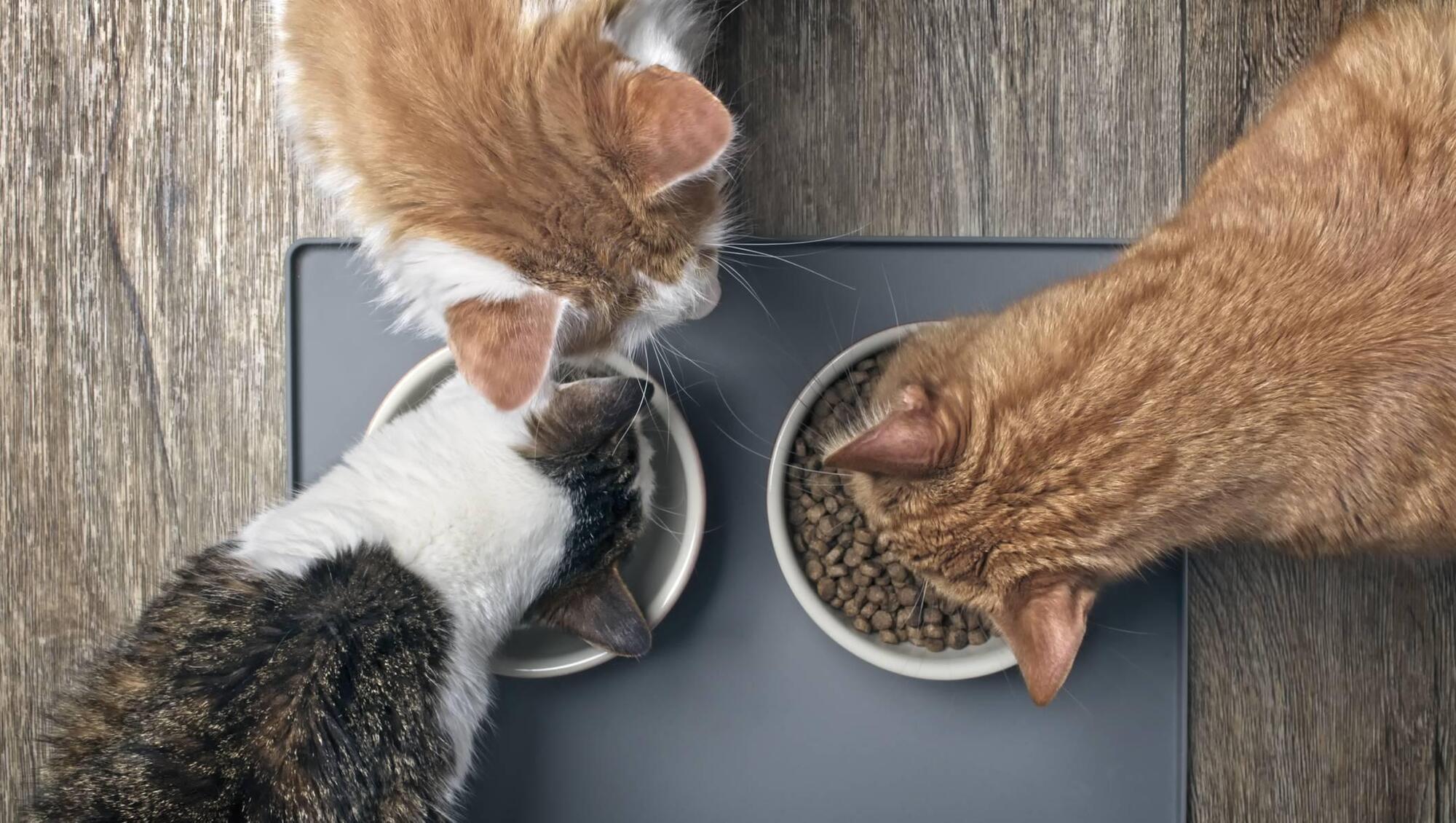
Ease feline feuds in your home by providing separate food bowls (one each), and several water bowls, advises Pete the Vet
Cats are independent loners by nature — not pack animals like dogs. It’s common to have incompatibility like this in a multi-cat household, but there are ways of lessening the tension.
First, you should provide three separate food bowls (one each), several water bowls, and four litter trays (one for each cat, plus one extra). These should all be in separate locations so that the cats can eat, drink and do their business without the threat of a competitor lurking nearby.
Second, try to divide your home up with a cats-eye perspective, to allow each cat to have their own private space. Use 'cat trees', or strategically placed shelves and furniture, to take advantage of vertical as well as horizontal space.
Finally, invest in plug-in pheromone diffusers (e.g. Adaptil) which release calming odourless vapours into the room: these help stressed cats to feel more relaxed and at ease.
You need to do a lot of talking: with your family, your friends, and your vet. While this is a large sum of money, you will never forget the decision that you reach: it will stay with you forever. It’s really important to make the best decision for your dog so that you have no regrets.
From what you say, it seems likely that this means proceeding with the operation. See if family and friends can help you get over the financial hurdle, and talk to your vet to see if you may be able to pay the bill in instalments.
Remember that one 'dog year' is equivalent to around seven 'human years', so proportionally speaking, an extra six months of life for your dog is similar to three years for a human.
This is a surprisingly common dilemma: owners feel so sorry for their pets when they do not seem to enjoy a particular food that they give in to them and offer treats instead. And of course, this completely undermines the goals that you are trying to achieve.
The best answer is for you to ignore Maisie at meal times: put the recommended amount of food down in front of her, leave her on her own for 20 minutes, then take the bowl away, whether she has eaten or not. Do not engage with her, and do not worry about her. Do this twice daily.
Nearly always, a dog quickly realises that there is no point in trying the big-eyes routine any more, and they learn just to tuck into the food that’s on offer. If she still turns her nose up at it after two days, talk to your vet. There are always alternative weight-reduction methods for the very rare dogs who are particularly fussy.
Changing Lego’s diet to a moist one will not help her: a vet visit to check out her dental health is the answer.
Middle-aged cats commonly suffer from a type of dental decay known as 'tooth resorption', or 'neck lesions' (this affects the 'neck' of the tooth, often below the gum margin). This is seen in 20-75% of mature cats, although not all show the same dramatic signs of pain as Lego. Vets are often able to make the diagnosis by physically examining a cat’s mouth, although sometimes anaesthesia is needed to do this effectively. The gold standard for diagnosis is dental radiography, just as is used in humans to assess tooth decay. Fillings and root canal treatments are not successful in cats: the only effective answer is to extract affected teeth. Cats can manage perfectly well without teeth on modern diets.
The most important goal is a comfortable, pain-free mouth. I have seen many cats like Lego whose personalities have been transformed after having painful teeth extracted. Cats that seemed grumpy and anti-social often become friendly and relaxed. It’s only with hindsight that owners realise that their cat had been in continual low-grade discomfort, and this was affecting their personality.
CONNECT WITH US TODAY



Be the first to know the latest news and updates