International Women’s Day: What it means to be a woman in Ireland in 2023
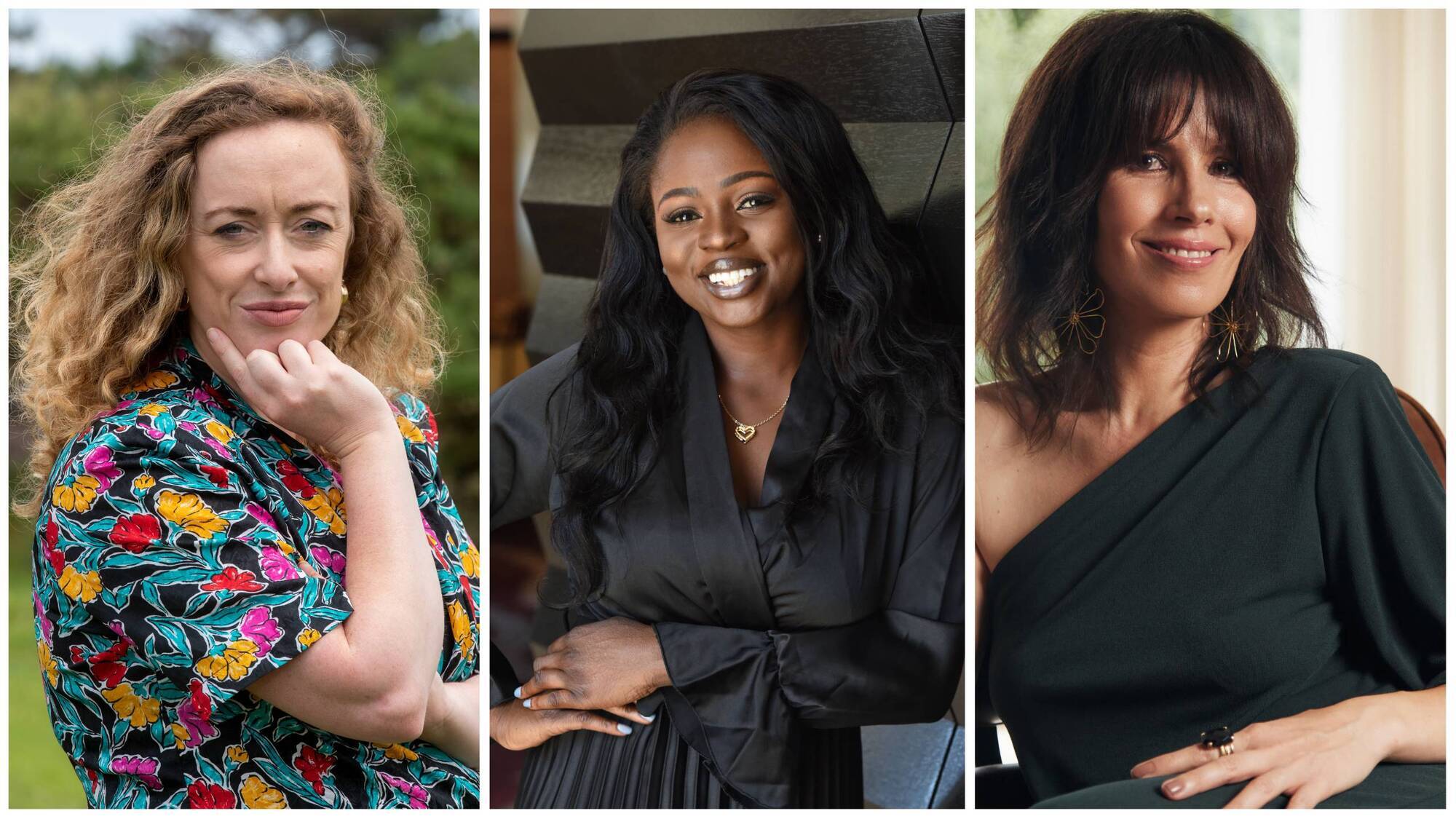
On March 8 the Irish Examiner celebrates International Women's Day with an event that sees Annmarie O'Connor, Deborah Somorin and Julie Jay discuss what it means for them to be a woman in Ireland in 2023. Here they write about how far we've come — and what needs to change
International Women’s Day: What it means to be a woman in Ireland in 2023

Annmarie O'Connor, Deborah Somorin and Julie Jay discuss what what it means for them to be a woman in Ireland in 2023.

Annmarie O'Connor

On International Women’s Day 2023, our mission was to #EmbraceEquity. By sharing our lived experiences in today’s Ireland, we can celebrate how far we’ve come and, crucially, assess what needs to change.

Taking action to accelerate a diverse, fair, and gender-inclusive society, however, doesn’t always involve government lobbying or global activism. In fact, there’s an easier way to move the needle. If change, as they say, is an inside job, why not start there? Everyone’s got a story to tell. Here’s mine.

In December 2021, I was diagnosed with Parkinson’s — a neurodegenerative disease that occurs due to low levels of dopamine and affects movement, speech, and co-ordination. I always thought Parkinson’s (PD for short) was the mainstay of elderly men with its signature stoop, shake and shuffle — not women in their 40s like me. To an extent I was right. Of the 12,000 people with Parkinson’s (PwP) in Ireland, roughly 40% are female. Apply this math to the 1,800 classified as early onset (diagnosed before age 50) in our country and the numbers are smaller still.

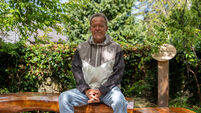
Annmarie O'Connor: Parkinson’s may not define me, but it is part of my personal narrative. Picture: Miki Barlok

What’s more, due to its rarity, early-onset PD is more difficult to treat. Coupled with menstruation and hormonal fluctuations, it is equally troublesome to manage. A survey conducted by dietitian, Parkinson’s advocate, and co-founder of My Moves Matter, Richelle Flanagan, showed that 74% of women experience a worsening in symptoms around their monthly cycle. To that, I can attest.

As someone who symptomatically is, in medical terms, ‘tremor dominant’, this makes for a hyperkinetic few days. What’s more, the gold standard of dopaminergic medication doesn’t always smooth my persistent shake, interfering with my ability to make a living as a writer and a stylist. Add daily fatigue, restless legs, pain and insomnia to the mix and it’s very easy to assume life to be unfair.

A few months into my diagnosis, I knew I had a choice to make. I could play small and hide my condition or I could share my medical coming out story and, in turn, forge positive visibility for those with PD, especially women. I never saw myself as an advocate. Then again, I never saw myself contending with a progressive incurable brain disorder.

One thing is certain, ‘the personal is political’. Parkinson’s may not define me, but it is part of my personal narrative: its characters, plot twists, and, crucially, its point of view. Moreover, each time a story is shared, it becomes part of an anecdotal anthology, one that serves a more insightful and equitable society.

I’m not going to take on ‘City Hall’ (not just yet), but I can use my platform to challenge stereotypes, increase awareness and inspire others to do the same. In the meantime, here are a few lesser-known facts about women with PD from the Parkinson’s Foundation 2019 landmark report, ‘Women and Parkinson’s: Closing the Gender Gap in Research and Care’.

  • Women with PD report different symptoms, and more often report side effects and changes in their symptoms throughout the day.
  • Women with PD are more likely to be single or widowed, whereas men with PD are more likely to have a spouse as their primary caregiver.
  • Women, especially minority women, are under-represented in PD research, including clinical trials, and studies often do not explore whether findings differ by sex.

That’s just a snippet. In order to accurately capture the entire population of women with PD, recruiting a broader representative sample according to demographic factors, stage and onset of the disease should be a priority, says the paper. Not to mention, designing research studies to consider barriers that prevent women from participating (e.g. time lost due to decreased productivity and family caretaking responsibilities). We have a long way to go to #EmbraceEquity in healthcare but sharing our personal insights, where possible, is a start.

“Real change, enduring change,” in the words of the late Ruth Bader Ginsberg, “happens one step at a time.” Or, indeed, one story at a time. Every International Women’s Day, we need to tell ours.

Julie Jay

Comedian Julie Jay: Maintaining some degree of pride in my appearance, I am realising, is so important to how I see myself. Picture: Domnick Walsh 

As an Irish woman in my late 30s, I have never been as ease with myself as I am now, and it is a beautiful thing. Coming of age is always going to be tricky, but back in the 1990s and 2000s there were no YouTubes or TikToks telling us how to do stuff like apply lipliner or style our untameable curly hair, so we just had to muddle though. Much like Princess Diana, I discovered fake tan long before I discovered exfoliation, and the results were harrowing. During the 2000s, my addiction to the fake stuff reached crisis point; so much so that in 2009 I asked a girl what fake tan she was using. Her response? She was Spanish.

I look at young women now and I love to see them embrace so many different styles and aesthetic influences. It is not as homogenous as it once was, and I adore that. Part of me likes leaning into a relaxation of the downright punitive regimes I had in place for years in a desperate bid to convince someone to shift me. So low have my current standards plummeted, that my toddler recently asked who the woman in the picture with Daddy was (spoiler alert, it was me, on our wedding day).

But maintaining some degree of pride in my appearance, I am realising, is so important to how I see myself. Even if it is a smudge of my favourite lipstick, a squirt of fancy perfume — it can bring us back to ourselves in times of domestic chaos. That said, I am definitely more immune to the pressures of media now when it comes to buying shite. And while the likes of J Lo and Gwyneth Paltrow are reminders that you can still be totally shiftable at 50, at what point can I eat white toast free from judgement? The only time it appears to be actively encouraged by society is after you’ve given birth. Yes, the price we pay for carbohydrates smothered in butter is a vagina that resembles a trampoline after Storm Eunice — which I’m sure we would all agree is a small price to pay.

I am currently touring my show Oops, This is Toxic, and a big part of it involves looking back at the toxic misogynistic culture of the 2000s, and at how within such a damaging media environment nobody emerged unscathed: not women, obviously, but not men either — not even Britney Spears, the most powerful pop princess in the world. Most attendees are women who are my peers, in their late 30s and early 40s and there is always such a heartfelt emotional response to the journey. Looking back on the abject objectification at the forefront of talent shows and late night comedy programmes back then, a time which was not so long ago, it is deeply upsetting to think that such overt misogyny was, up until recently, not just considered acceptable, but at times hilarious.

Still, it would be misguided to suggest such sexism no longer exists. Like most forms of discrimination, it is still there, but similar to the shape shifters of Irish folklore, it takes on a different face. One needs only to look at those coming out in support of Andrew Tate and the misogynistic abuse women receive across socials simply for daring to exist, and we would be fools for believing we are anywhere near where we need to be in terms of gender equality.

Until 1973, married women in Ireland were forced to resign from work after they got married due to the Marriage Bar, and whilst this law has long been discarded, I wonder how much has really changed in terms of facilitating women in the workplace. We are constantly told to pursue our girlboss dreams, but in reality lack of childcare is what prohibits most mothers from getting their fair shot at professional opportunities.

Both myself and my husband, Fred, are self-employed comedians. Without throwing himself under the bus, I can categorically say my first consideration when offered a job is to consider how I will manage childcare, and for Fred it isn’t quite at the forefront of his mind in the same way. We are lucky to have a childminder sent from the childminding gods (though we do live ridiculously far away from her, but the rental crisis is a whole other column). As much as I am only ‘delira’ that St. Brigid, the Lady GaGa of saints finally got her much deserved bank holiday, if this whole weekend is ostensibly to thank frontline workers for their work during their pandemic, wouldn’t better childcare have been a much more meaningful gesture? I don’t understand why successive governments haven’t tackled this. Oh wait, I do — it’s because it usually falls to the mammies.

For me, 2023 is already my best year to be a woman in my 20-year career of being an adult female, but I don’t know how much of that is that now is a better time to be a woman, or simply down to the benefit of age, and my newfound reticence to apologise for my untameable curly hair or my emotions that make a mess. I hope that things are better for women, but then I am reminded of the advent of abuses such as revenge porn, and wonder how far we have come.

Back in the 2000s, the worst thing that could happen to you online would be an employer might find your My Space page and discover you liked Nickelback. Now, the internet is a place where women in particular are much more vulnerable, and that is something that really scares me. In her recent autobiography, Pamela Anderson talks about her trauma after an intimate video of her was leaked to the public and used as comedy fodder for years. When we look at the internet today, I wonder how far we have really come in terms of protecting women.

Ultimately, we can only hope that 2023 is the year — finally — where women assume their rightful status as the most inherently heroic, effortlessly powerful and easily the most shiftable beings on earth. And yes, there are days when my alarm clock goes off on a work day and I yearn for a marriage bar, but mostly I am beyond grateful for the warrior women activists who came before us and fought for my right to pull a sicky, and who reminded us we have a right to be here. Because we don’t just have a right to be here — we have a right to shine.

Deborah Somorin

 Deborah Somorin, author. Picture: Moya Nolan
Deborah Somorin, author. Picture: Moya Nolan

It is certainly fair to say that there has been no better time in history to be a woman. As someone who was a young mother and had my own son when I was 15, I don’t know if, 30 or 40 years ago, I would have been able to get through life the way I have and with the same level of support I have had. From a societal perspective, it is certainly better to be a woman in Ireland today.

From a professional perspective, while things are better for women, the gender pay gap still exists. In the traditionally female sectors such as healthcare, there are much lower gender pay gaps but in those traditionally male-dominated industries, we are still seeing quite high gender pay gaps. That is something that requires a review of different structural areas within an organisation, but in particular, pay practices, and the disparity between men and women’s pay. So, there is still some work to be done.

With my charity, Empower the Family, we are trying to support women and men by helping them to successfully complete university. However, when we look at the statistics for single parents in university, there are a lot more women because, as we know, a single parent is more likely to be a woman. We are trying to define the factors that make it difficult a young parent to get an education. From my own experience, it’s not necessarily that the supports are not available, it is that they are not necessarily available in an accessible way. At Empower the Family, we put everything they need to be successful in one place, things I had to fight for myself as a young single parent.

I’ve always joked, since my son was very young, about how I’m going to teach him to be really respectful of women by raising him to be to be like the character Noah from The Notebook. Noah treated Allie with so much respect, and that’s huge for me; I’m raising my son to treat women and girls with respect and kindness.

 Deborah Somorin: Gender equality is more than just viewing women as a homogeneous population. Picture: Moya Nolan
Deborah Somorin: Gender equality is more than just viewing women as a homogeneous population. Picture: Moya Nolan

If I ever heard my son was in any sort of misogynistic WhatsApp group or anything like that, I’d be so disappointed in him. But at the same time, that’s the reality of the society we live in today and I think it’s up to the parents to make sure they are educating their kids — being aware those things exist and making sure our kids have enough of an understanding to steer clear of them, making those even when we are not there. I’m raising my son so that when I’m not there, when I’m not watching, he is constantly treating women in a respectful and kind way. I think awareness and not shying away from the reality of raising a teenage boy today is really important, of having your finger on the pulse when you’re parenting a young man.

The big thing for me when approaching gender equity is intersectionality. Because no woman is just a woman. Everyone is a woman and .... I’m a woman — and I’m a single mom. I’m a woman — and I’m black. There are, as for all women, different dimensions to me being a woman. Gender equality is more than just viewing women as a homogeneous population. The next step is addressing equity and that is what the International Women’s Day theme, of #EmbraceEquity means to me, embracing that equity for all types of women.

More in this section

Lifestyle

Newsletter

The best food, health, entertainment and lifestyle content from the Irish Examiner, direct to your inbox.

Cookie Policy Privacy Policy Brand Safety FAQ Help Contact Us Terms and Conditions

© Examiner Echo Group Limited