Vivienne Westwood: the self-taught great disrupter
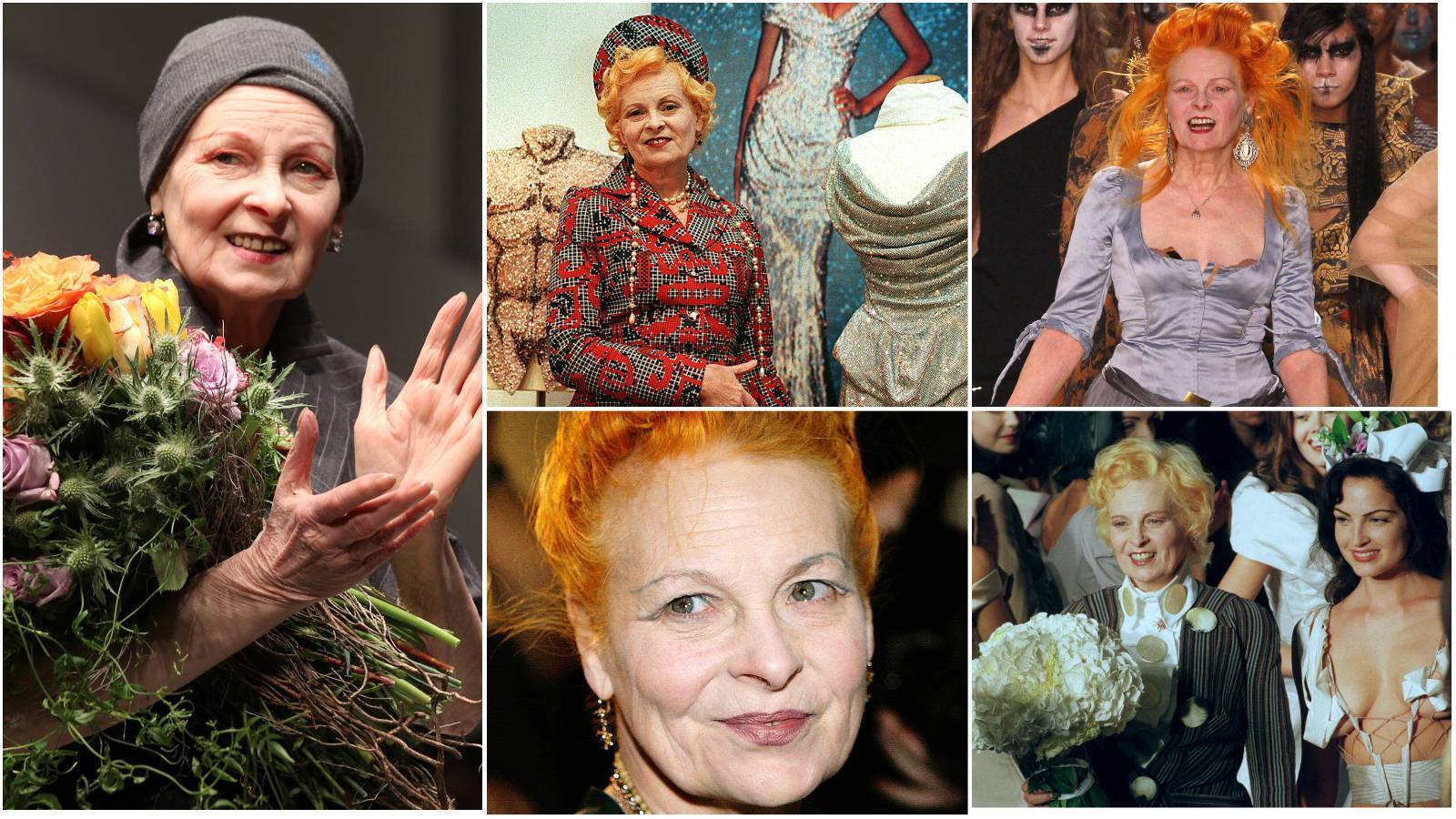
Vivienne Westwood: renowned for everything from the slashed t-shirts and bondage trousers of the 70s to the mini-crinis and rocking horse shoes worn so memorably by Sarah Stockbridge (and fallen off by Naomi Campbell) in the 80s to the bustles and corsets of the 90s
Such is the ageless timeless iconoclasm of Vivienne Westwood that news of her death seems a bit unreal, until you remember that she was 81.
She was to fashion what Bowie was to music — a perpetually shape-shifting force, visionary and genre-creating — she continually invented and reinvented ideas, using couture as her medium.
She was the great disrupter, entirely self-taught.
As a climate activist, she was about as far from the Karl Lagerfelds of the fashion world as you could get: while he dreamed of marrying his cat, she was driving a white tank to David Cameron’s front lawn, in a protest against fracking.
She said teen activist Greta Thunberg would make a great world leader.
Her life’s mission, expressed through her work, has been to “constantly [try] to provoke people into thinking afresh and for themselves, to escape their inhibitions and programming".
She got into fashion, she says in her 2014 biography, “to destroy the word ‘conformity’,” even as she reworked traditional fabrics — Harris tweed, velvets, crinolines — and remoulded classic silhouettes into era-defining designs.
It was punk that thrust Westwood into the collective consciousness, as she, rather than her second husband Malcolm McClaren, coalesced the London punk scene.
It was her vision, her aesthetic, her designs that kickstarted punk; she was its engine, while he was its mouthpiece.
Sex Pistol founding member Steve Jones, in his memoir Lonely Boy (recently made into Netflix mini-series, Pistol, by Danny Boyle) recalls being a lost, vagabond teenager who was welcomed into her tiny council flat, which hummed with sewing machines as her two school-age sons did their homework.
She lived there for 30 years, getting around London on a bicycle. She famously started fights at punk gigs.
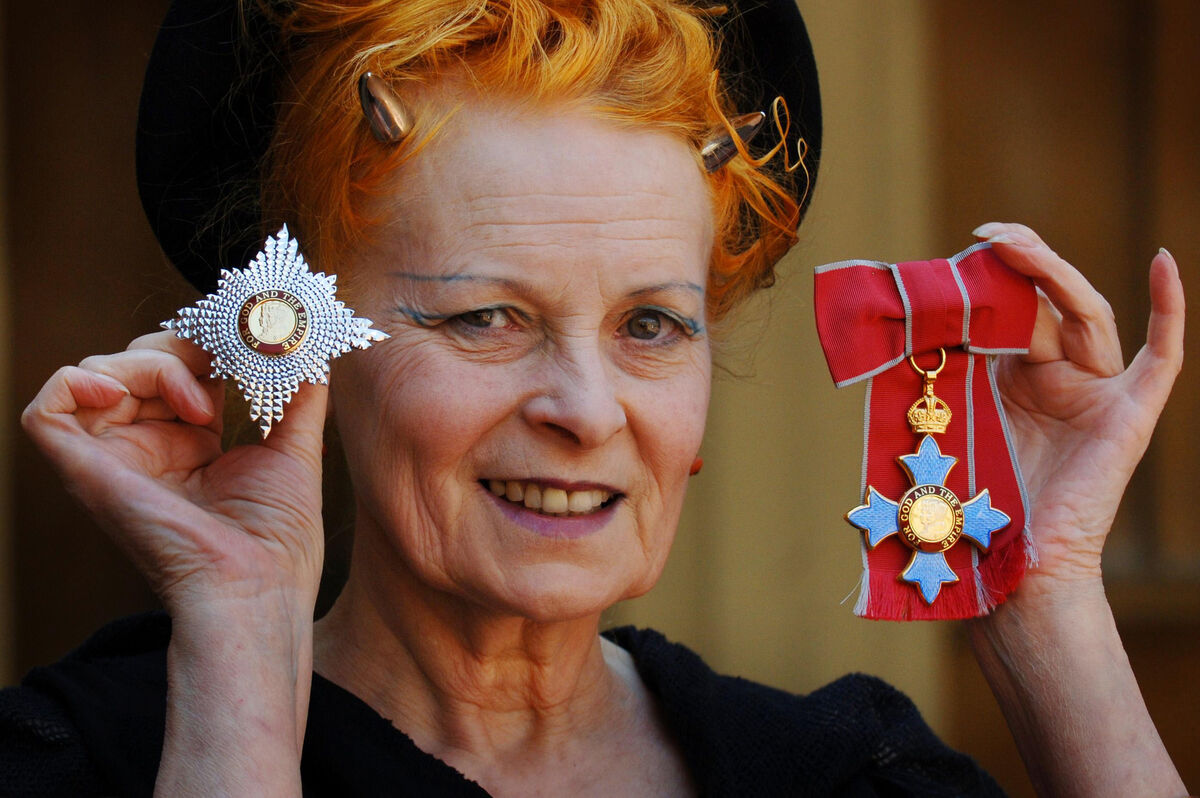
When awarded an OBE by the queen in 1992, she wore an elegant full-skirted suit; outside, she twirled for photographers, revealing she’d gone commando to the palace. (She was invited back for a CBE in 2006).
While presiding over what would become a global couture label, she would urge people to stop buying clothes, even as she dressed everyone from Johnny Rotten to Carrie Bradshaw to Julien Assange.
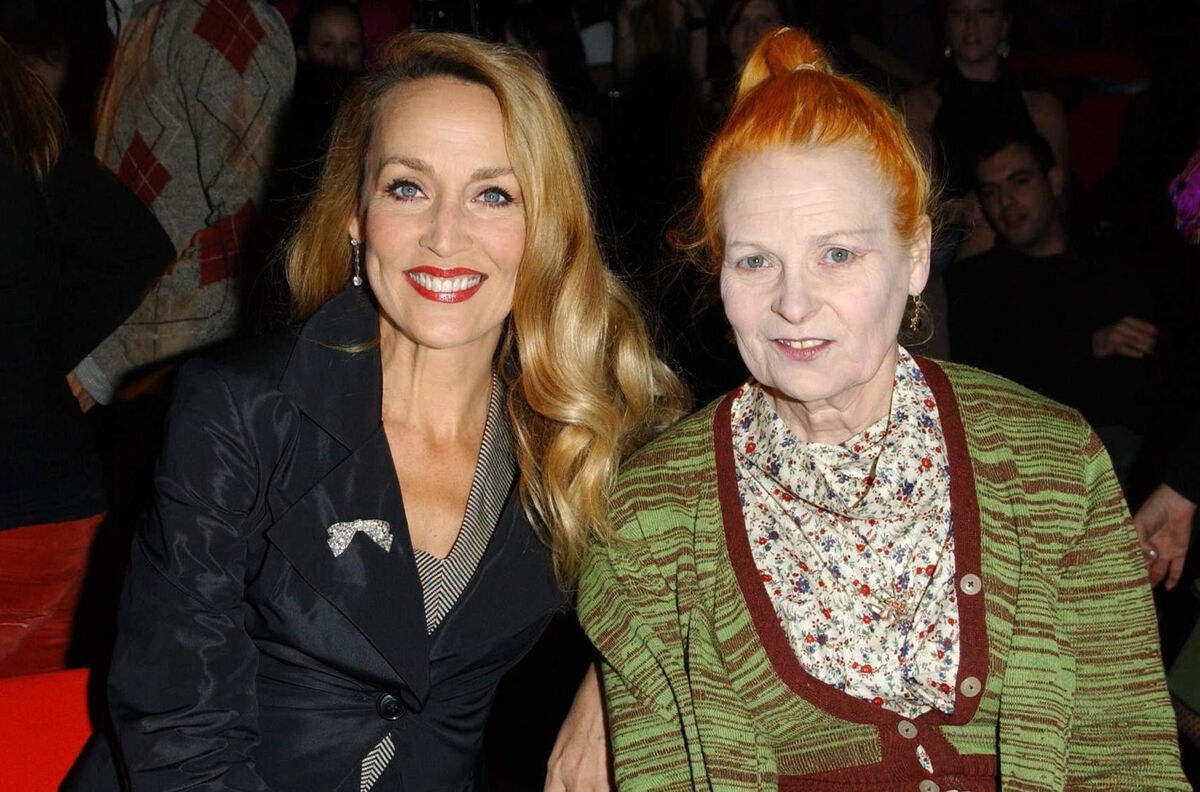
A plain-speaking, flat-vowelled Northerner in the foppish, capricious fashion world of the capital, Westwood remained single-minded, unapologetic, blunt.
She was a relentless campaigner who created items of incredible beauty; she is the only designer I have ever saved up to buy anything from (an Anglomania jacket and a pair of her red rubber platforms that will last forever).
In 2007, she told an interviewer: “I don't feel comfortable defending my clothes. But if you've got the money to afford them, then buy something from me. Just don't buy too much.”
Fat chance.
Even with her more affordable diffusion ranges, she was the antithesis of fast fashion. She did not collaborate with the high street as much as shape it — from the slashed t-shirts and bondage trousers of the 70s to the mini-crinis and rocking horse shoes worn so memorably by Sarah Stockbridge (and fallen off by Naomi Campbell) in the 80s to the bustles and corsets of the 90s, her work is identifiable for its perfect cut — she learned to make clothes by buying second-hand items and taking them apart to see how they were cut and sewn.
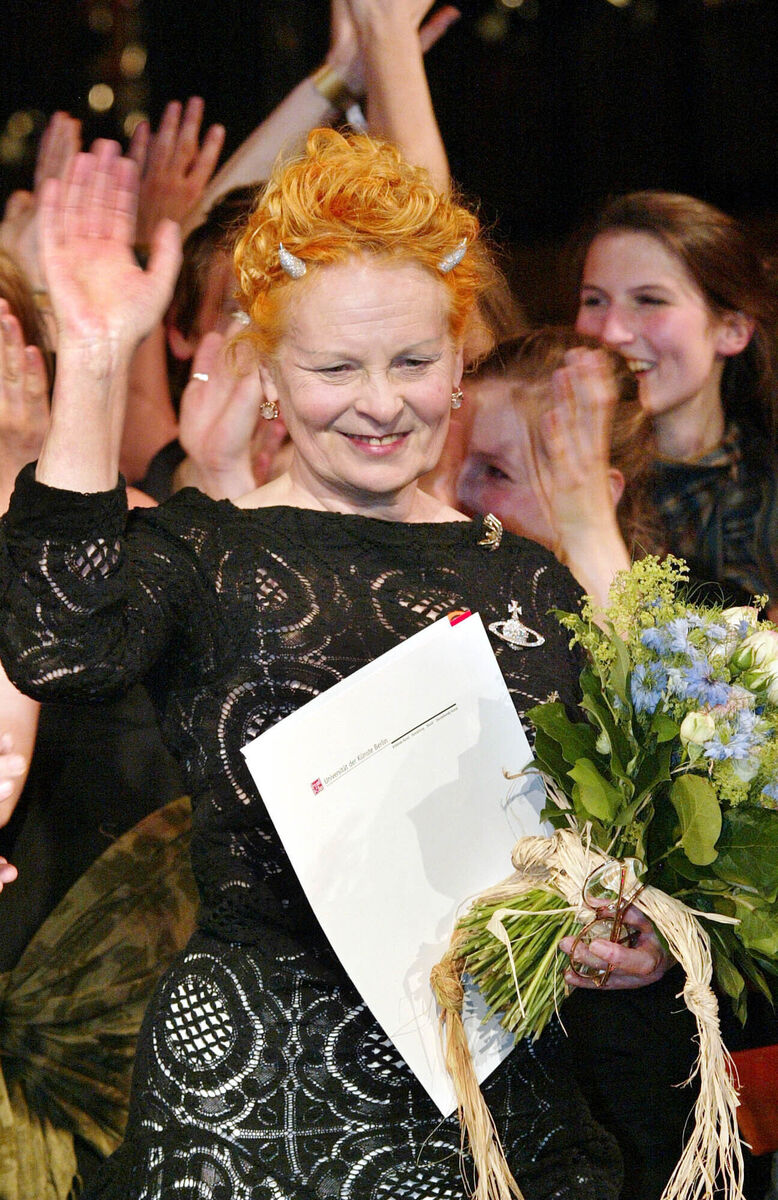
Vivienne Swire was born in Derbyshire on April 8, 1941, to working-class parents.
In 1957, when the family moved south, she began studying jewellery design at Harrow School of Art, but dropped out after a term, thinking it impossible to make a career in art and design.
Instead, she married a factory worker, Derek Westwood, in 1962, and had her first son, Ben — now a fetish photographer — the following year, splitting from his father in 1965.
She trained and worked as a primary school teacher, before meeting Malcolm McClaren at a house party, and marrying him in 1971. With him, she had her second son in 1967, Joe Corre, who went on to found lingerie label Agent Provocateur.
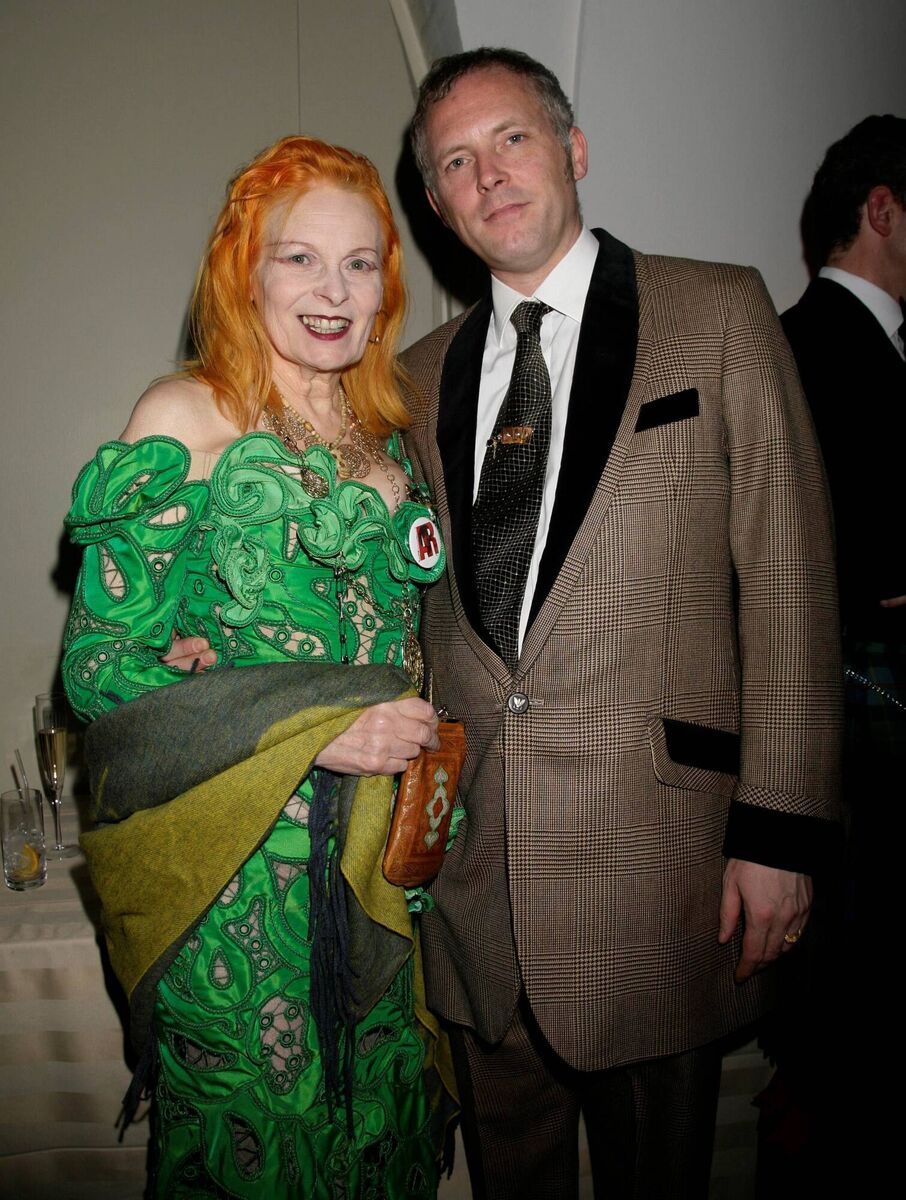
It was Westwood and McClaren’s Kings Road shop — initially called Let It Rock, selling Teddy Boy clothing, before changing its name to Sex in 1974 and selling fetish gear — which became punk’s crucible.
Everyone worked there — Chrissie Hynde, Glen Matlock, Sid Vicious, all overseen by the late Pamela Rooke — Jordan — whose outfits were so outrageous in the conservative 70s that British Rail had to put her in the First Class carriage for her own protection as she commuted to the shop from a sleepy south coast town each day.
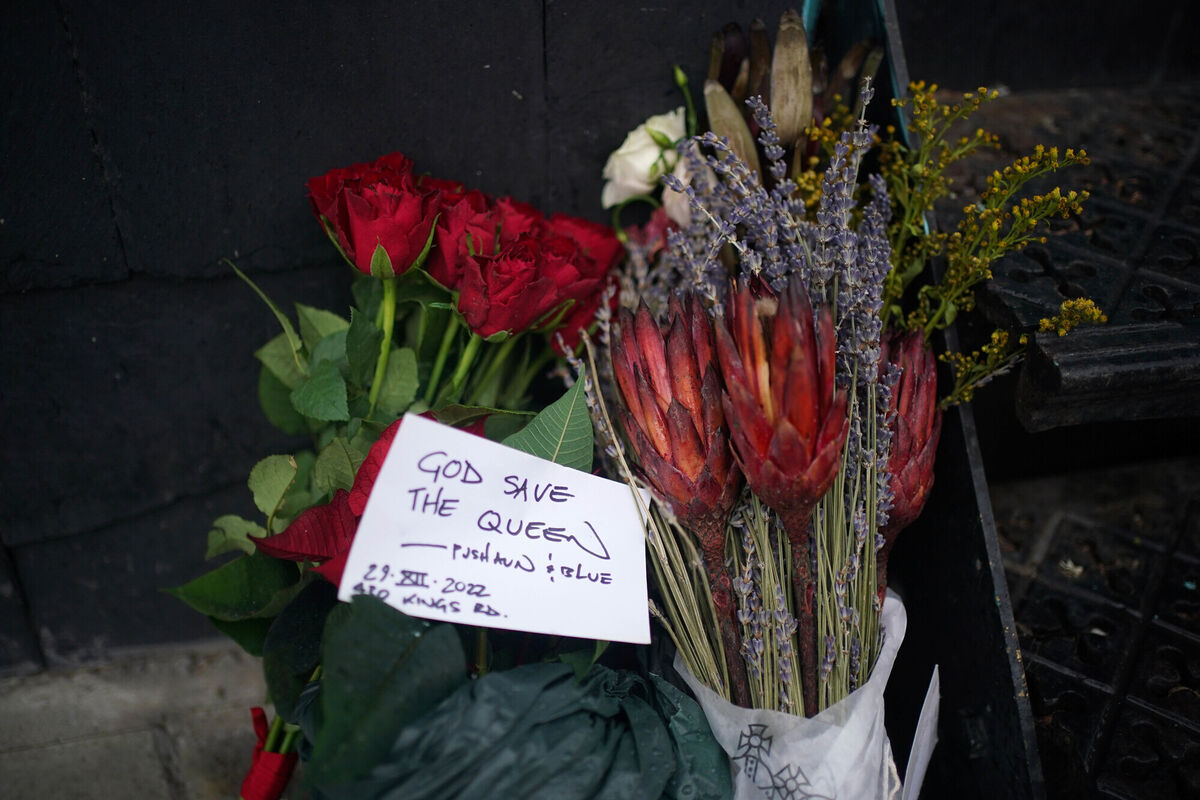
At Sex, Westwood showcased some of her most iconic designs, causing outrage with her safety-pins and swastikas. The shopfront is still there at 430 Kings Road, its façade dominated by a giant clock forever spinning anti-clockwise.
Westwood radically departed punk when she showed her first collection, Pirates, in 1981, coining the term New Romantic; between 1988 and 1992 she spearheaded what she called The Pagan Years.
However, her marriage with McClaren didn’t last, and she dissolved their business partnership in the mid-80s, later saying that she had never meant to get together with him in the first place.
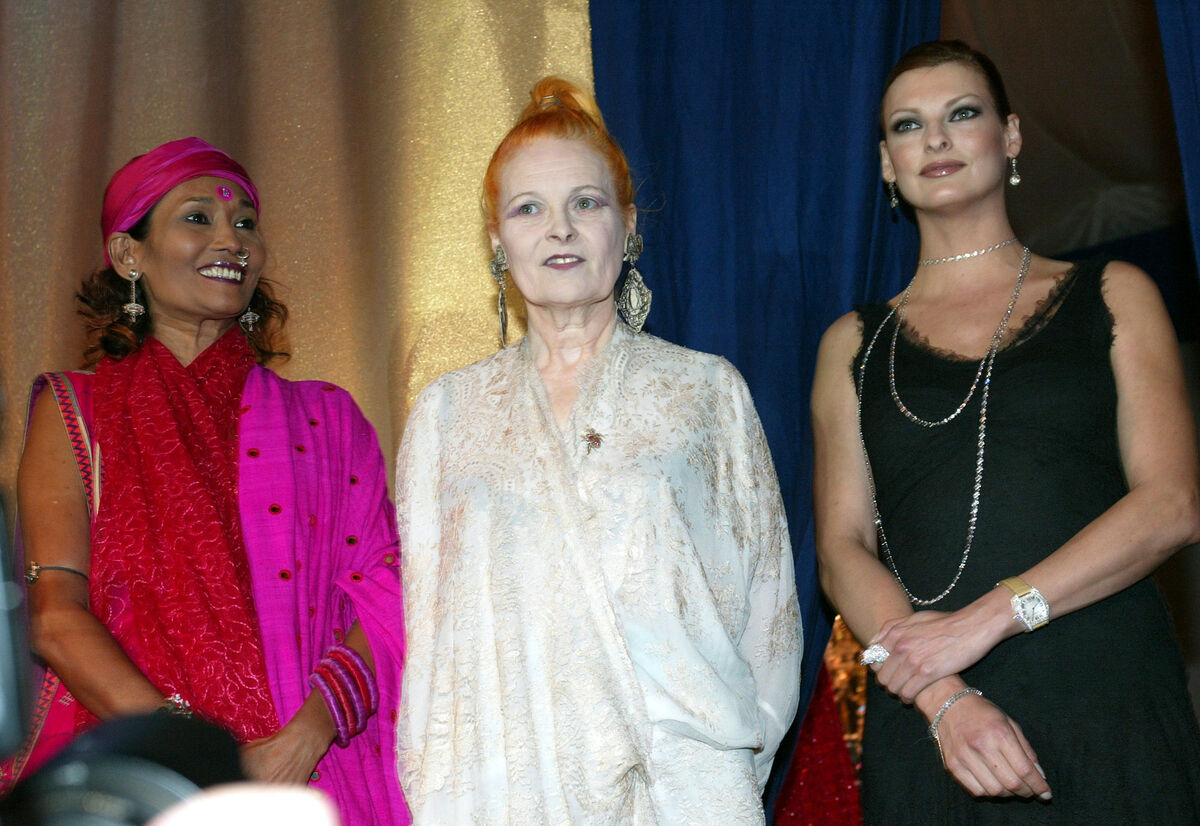
Meanwhile, her business was growing, even though she was not at all business minded; so was her public recognition and reputation as a designer. She famously dressed up as Margaret Thatcher in an Aquascutum suit ordered — and subsequently cancelled by the then PM — for a 1989 cover of Tatler, with the caption, “This woman was once a punk”.
She began doing wedding dresses, diffusion ranges.
In 1988, she met her third husband Andreas Kronthaler while teaching in Vienna; Kronthaler was an Austrian fashion student 25 years her junior whom she married in 1993, and with whom she would live and collaborate for the rest of her life.
It was Kronthaler who persuaded her to leave the two-bedroom council flat and move to a house in nearby Clapham.
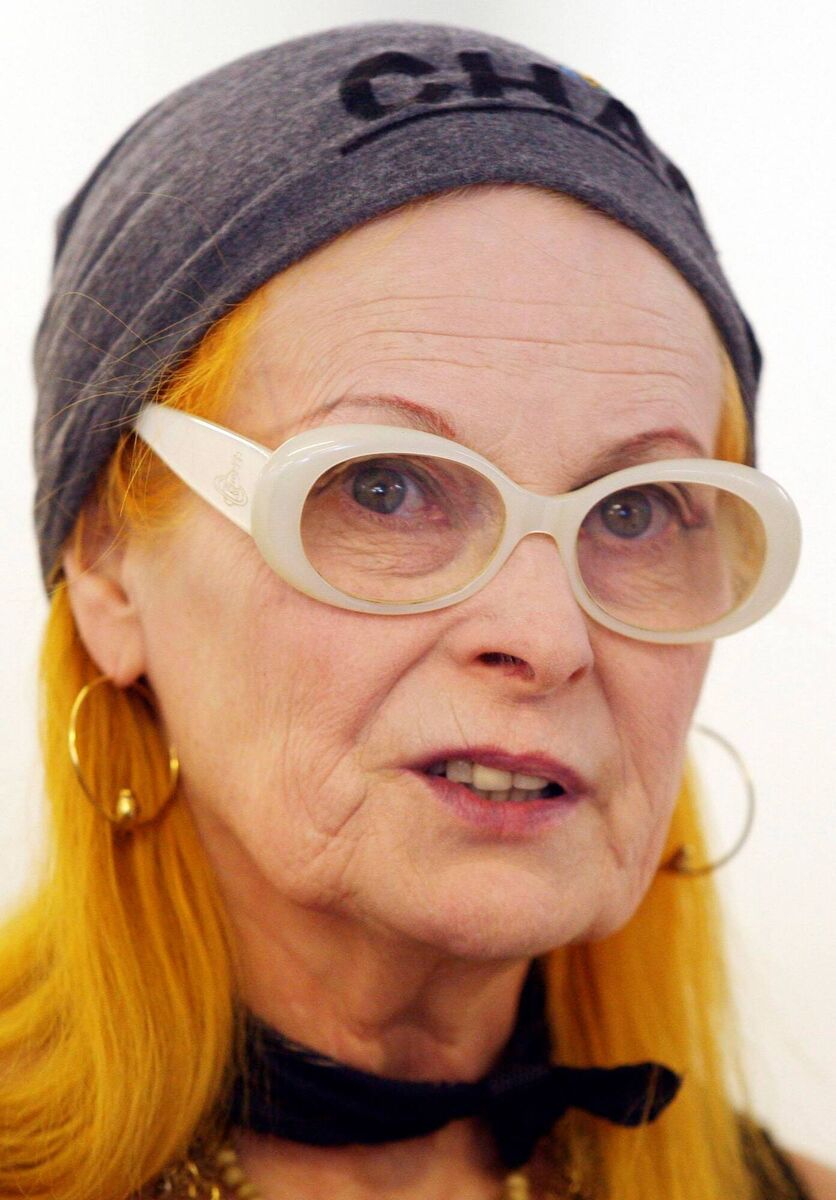
There have been tributes from everyone from old punks to the Green Party and Oxfam, Tracy Emin to Boy George, model Bella Hadid and fashion designer Marc Jacobs, politicians and activists.
“I will continue with Vivienne in my heart,” said Andreas Kronthaler. “We have been working until the end and she has given me plenty of things to get on with.”
Meanwhile, the world has lost a true original.
CONNECT WITH US TODAY



Be the first to know the latest news and updates