The optimist's bias: How and why you should prioritise happiness this New Year
Hands holding sad face hiding behind happy face, bipolar and depression, mental health, split personality, mood change,
When I started asking Irish people “what’s your number one tip for happiness?”, I noticed an interesting trend.
Many people said they weren’t comfortable with the word ‘happiness’ itself, appearing to be almost intimidated by the word, or not sure what exactly ‘happiness’ really means.
“We were having the same issues in psychology,” Dr Jolanta Burke, psychologist and lecturer at the Centre for Positive Psychology and Health, RCSI tells me.
“What I would call happiness is high levels of positive emotions, lower levels of negative emotions, and life satisfaction.”
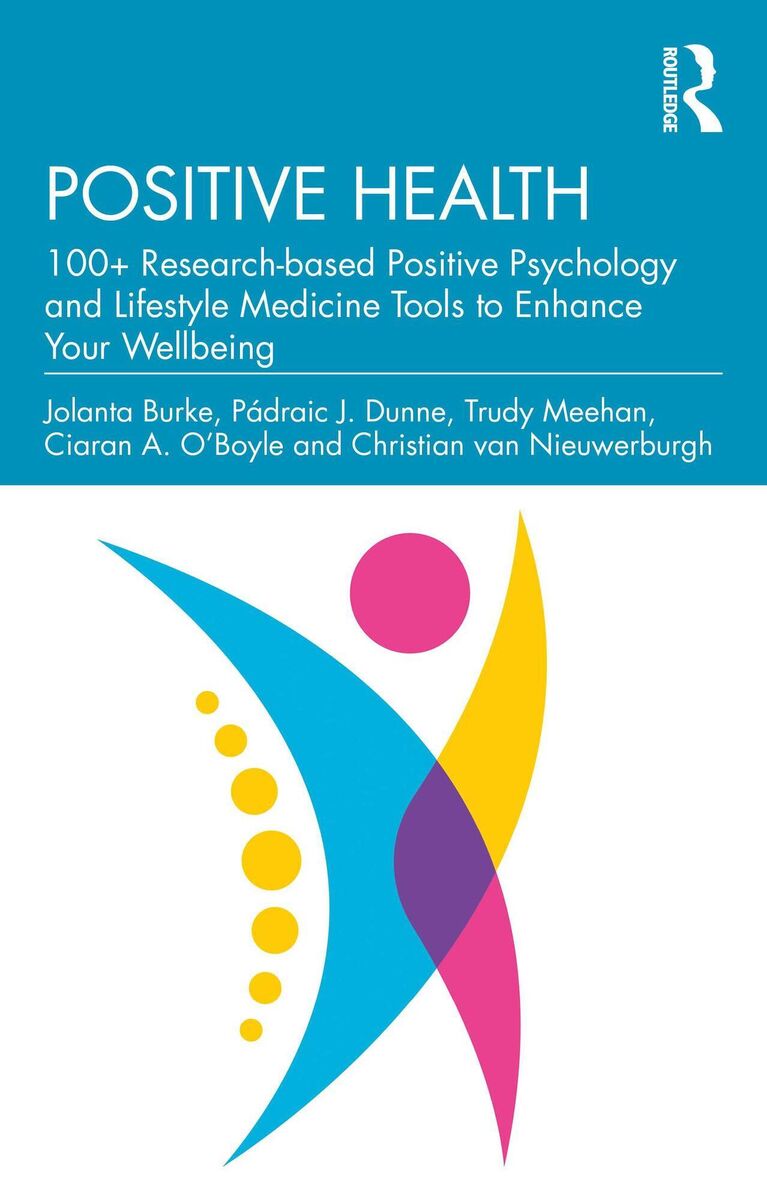
Dr Jolanta Burke is somewhat of an expert on happiness. She, along with her colleagues, Dr Trudy Meehan, Dr Padraic Dunne, Prof Ciaran O’Boyle and Prof Christian van Nieuwerburgh, recently launched a mammoth academic book, Positive Health, which provides over 100 research-based tools that are proven to enhance your wellbeing and lead to happiness.
Optimism, as famous American psychologist Martin Seligman defines it, is how we think about setbacks.
If you’re an optimistic person, you are likely to view a setback as something temporary, something that you can change, or something confined to this one situation. Pessimists, on the other hand, tend to believe the situation isn’t temporary, feel powerless to change their situation, and believe it will undermine everything they do.
Crucially, Dr Burke says we aren’t tied to our optimistic or pessimistic biases in the way many of us perceive.
“This is a thinking style, and just like any kind of thinking style, it can be changed if there is enough evidence for the change”.
And when it comes to evidence for optimism – well there’s lots we can do to shift our mindset away from pessimism and towards optimism, gratitude, and happiness.

“I’ve worked with many people who feel overwhelmed,” Dr Burke says, and the thoughts of trying to incorporate a list of ‘happiness’ activities into their already packed lives can just add to the sense of overwhelm.
“But there are really small changes that can make a big difference.”
One example is changing the way we look at household chores - something many of us have to find time to do on the daily regardless of how busy our schedules are.
“We found research on daily chores that showed how embracing them can make a big difference,” Dr Burke says.
The research, which was conducted with hotel cleaning staff in New York, involved telling half of the cleaners that their work was equivalent to exercising, with the other half not given the same information.
“The mindset shift resulted in lower blood pressure, lower BMI and lower levels of cortisol (the stress indicator) in the group [that were given the information].”
The stories we tell ourselves, along with circumstance itself, can have a significant impact on how we feel.
Dr Trudy Meehan, a clinical and positive psychologist who worked on Positive Health with Dr Burke, says there is strong research in the area of stress, for example, that proves this to be the case.

"People who have stress but do not perceive it to be a threat, but instead perceive it as a challenge or as an exciting thing, have less evidence of aging in their cells," she says.
"And that's something we have, to some degree at least, an impact on and we can work with by managing our thinking.
"I think that's really important for people to know."
Research from Harvard Business School has shown that even the simple act of saying "I am excited" about an event like doing karaoke or solving math problems can improve people's performance - their own view of it, and other's impression of it.
If we can reframe emotions such as stress as "enhancing rather than debilitating," Dr Meehan says, we can "increase our experience of positive emotions and be more flexible in the face of challenges".
- Acknowledge your experience/life events are indeed stressful. Say to yourself “I am feeling stressed right now”. There’s no need to avoid stress, it’s helpful to notice when it is happening and pay attention to your thoughts, feelings and behaviours that come up when you feel stressed.
- Pay attention to why you might be feeling stressed, look for the values behind your stress. Say to yourself “I am feeling stressed right now because X is important to me.”. That might be something like feeling stressed about finances and working too much but you do it because you want to provide for your family and or have personal security and build for the future. Everyone will have different values driving their stress but the important point is that we usually only get stressed about things that are important to us.
- When you feel yourself getting overwhelmed or stressed, pause and notice it and then ask “what’s important to me in this situation?”
- Look at your typical response to stress and ask is it getting in the way of what’s important to you or is it making it more likely for you to live in line with your values and goals? Chances are your typical stress response takes you away from your values. You might get stressed because you want everything to be perfect for your children and end up shouting at them because you are stressed. Pausing to notice you are stressed, noticing what’s important and then looking at yourself with some distance can help interrupt unhelpful stress responses.
- What can you do in response to stress that is in line with your values and goals? For example, giving up on perfect might be a good way to go if you want your children or yourself to have a good day.
One mistake many of us make when it comes to happiness is focusing on what we don’t have, rather than what we do – and thinking what we don’t have is the key to happiness.
“There is research showing that people who have a tendency, for example, to change their jobs frequently, get a temporary boost, but they then return back to their baseline [happiness] within a year, sometimes a year and a half, sometimes two years.
“It’s a temporary boost, it doesn’t actually make us happy.”
In the context of our jobs, Dr Burke says it’s much better to focus on improving our enjoyment of our current job than trying to seek it elsewhere.
"I worked once with a client who wanted to change his job yet again. Instead of working with him on what his next job might be, I asked him to identify his strengths and how he used them at work.”
At the time, the client felt they weren’t using any of their strengths in their work, Dr Burke says, so she helped him find ways that he could use these strengths at work.
"The guy emailed me two or three years later to tell me he's still in that job and he’s started to enjoy it a lot.
“Sometimes, instead of just thinking that there is something better on the other side, in another job, it’s about considering what you can do with what you have and how that would give you more satisfaction.”
While the idea of shifting your mindset might seem like an easy "hack" to happiness, it's much easier said than done.
"It's very difficult to change our thinking," Dr Meehan acknowledges, and with so much on our plates - is this elusive concept of ‘happiness’ really something else we need to do to our ‘to-do’ list? Well, science suggests so.
"[When you're happy], the immune system benefits,” immunologist Prof Luke O’Neill says.
“If you're stressed or unhappy, there's a lot of evidence that that can increase your risk of infection, or your risk of certain diseases.”
Studies also show that people who are “inclined to be more optimistic” have a stronger immune system and can fight infections more effectively, he says.

"Whatever it is about being a pessimist, your immune system doesn't work as well, and you're more prone to catching viruses and bacteria.
“Unhappiness in the broader sense, especially depression, or chronic stress, is very bad for you in all kinds of ways. You have an increased risk of infection, you also have a higher risk of developing cancer.”
As a biologist, Prof O’Neill says he sees everything “through the prism of evolution” and it makes sense from an evolutionary perspective why our bodies would want us to be happy.
“If you look at us from a zoological point of view, we're a pack animal, we hunt in packs, we help our tribe.
“To be content with your lot, the view would be that you need to have a purpose in life, in other words, you've got to be doing something meaningful. That normally means you're helping your fellow human beings.
"And we've evolved to try and be happy and content, because that means that we're going to be healthier, and then we're more likely to procreate and pass our genes on to the next generation.”
Evolution aside, is there another reason to prioritise this elusive concept of “happiness” this New Year I wonder?
“Because it makes life is easier,” Dr Burke says.
“Life is more enjoyable. And by focusing on flourishing, on these wellbeing elements, it's like creating a padding for life.
“People who experience flourishing are significantly less likely to experience depression over the next two years than those who experience moderate mental health, [which is] what the majority of us experience.
"Developing those elements of well-being will protect us against mental health issues. Bad things happen, but it’s about how quickly we can bounce back from them.
“And how well you are equipped to tackle them really depends on how well you’ve developed those wellbeing skills.”
As a final word of advice, Dr Burke offers "The more you pursue happiness, the less happy you become. Focus on living a good life, and happiness will follow".


CONNECT WITH US TODAY



Be the first to know the latest news and updates