'Keep learning about your brain!': CERN physicist Dr Claire Lee shares her ADHD journey
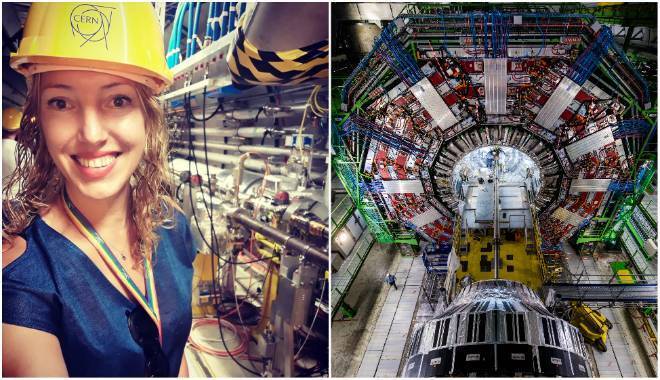
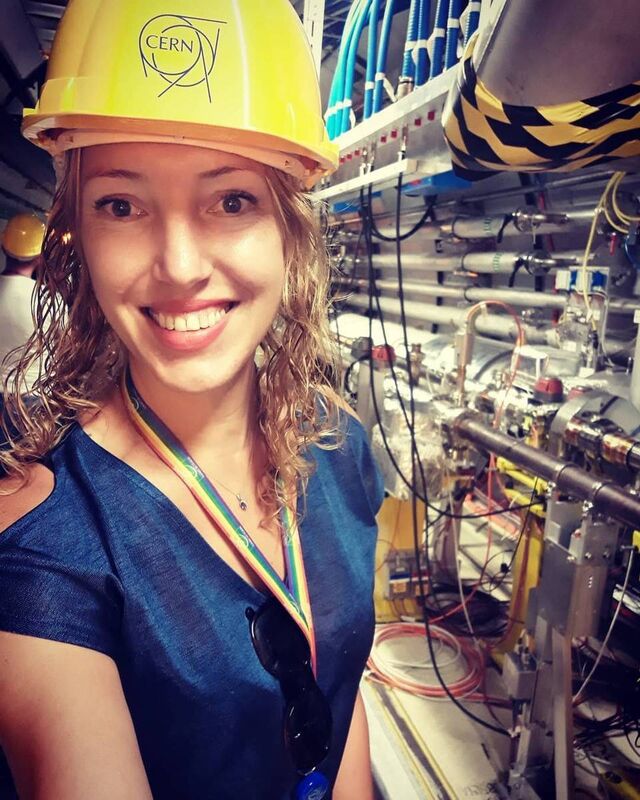
L-R: Dr. Claire Lee - particle physician at CERN and ADHD advocate; the CMS Experiment at CERN.
She works as a particle physicist in one of the most high-tech research centres in the world and was diagnosed with ADHD this year. But South African-born Dr Claire Lee says her diagnosis has provided knowledge and understanding and has actually made her life much 'smoother'.
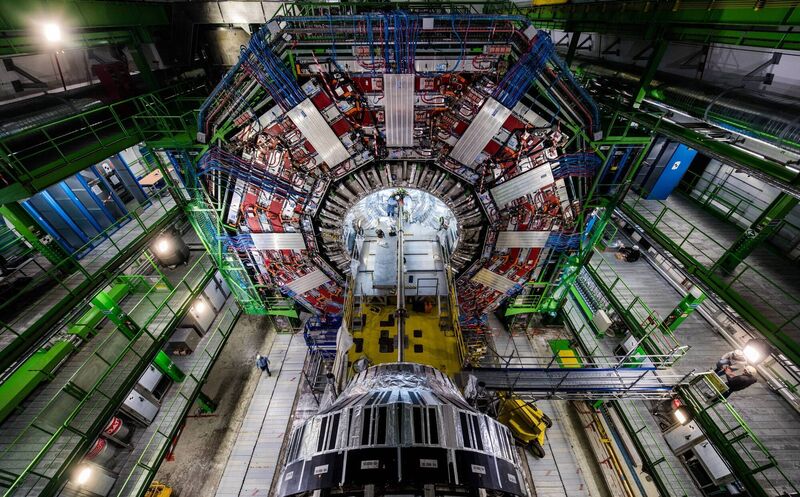
Dr Lee is currently working on the operations aspect of The Compact Muon Solenoid (CMS) experiment. This is a general-purpose particle-physics detector at the Large Hadron Collider (LHC) particle accelerator, located at the CERN agency's headquarters in Switzerland which is known for the discovery of the Higgs boson particle, a key discovery in particle physics.
“I've always been really interested in science and space and the universe, and when I was in high school, I read a book, a Michael Crichton book called , and there was an astrophysicist in the novel, and I thought that 'astrophysicist' sounded like the absolute coolest job title in the whole world, so I decided there and then that I was going to be an astrophysicist.
“I took four and a half years to do my Master's just because of undiagnosed ADHD. I would have long periods of executive dysfunction, no motivation, and kind of struggled through that without realising."
A diagnosis of Attention Deficit Hyperactivity Disorder (ADHD) in 2022 has led Dr Lee to a better understanding of herself.
Like many women who have received a diagnosis or self-identify with the neurodivergence conversation, however, her experiences were rooted in misdiagnosis: "I ended up being diagnosed with bipolar disorder in 2013, and, as it turns out, this was a misdiagnosis, we didn't realize it at the time. What happened over the last couple of years is, more and more of the scientists that I know and follow on Twitter speaking up about their own ADHD, symptoms and experiences. It resonated with me and it seemed more and more familiar. Finally, it got to the point where I sat down and did a bunch of research on ADHD."
"We've realised that my entire family — me, my husband, and my son — we all have ADHD. This has made our personal life a lot smoother, if that makes sense: things that used to bother us about each other, we now actually understand where it's coming from, and why we're doing these things. We can say, to each other, 'I'm sorry, my brain cannot handle this right now, can we talk about it some other time', and that's cool."
"The other big thing for me is spending so many years having this mismatch between who I felt I was inside my head, all of these thoughts, and all of these ideas, and all of these things that I want to do, but then with the executive dysfunction, you know, you just end up not being able to do all of that stuff. Since taking the medication, you know, that it's obviously not gone completely, but that executive dysfunction in so many ways has been reduced, and now I think of something, and I can go and do it much more easily. I feel more like myself, because the person who I am in my actions, to the outside world, matches up much better now with the person that I am inside my head."
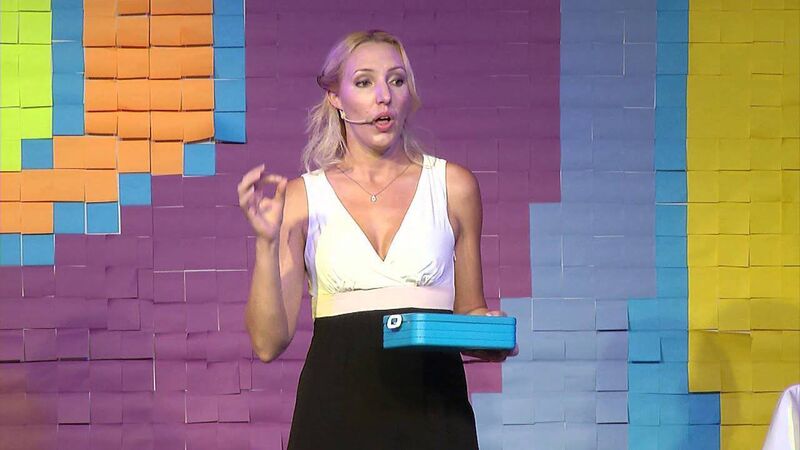
Tonight [Thursday], Dr Lee brings her 'From Quarks to the Cosmos and my ADHD in between' talk to DCU in Dublin at 7pm. It's part of a series of events that advocacy group ADHD Ireland has presented at the university's Collins Avenue location.
She said she's happy to be doing her part in bringing the wider ADHD discussion forward — and dispense advice for those on their own ADHD journey: "There is so much information available, find sources that are trustworthy. I understand I was just very lucky in that there was a period of about three months between [seeking a diagnosis] and actually being diagnosed, which I understand can be a longer process for people. But in that process, learning about yourself is completely valid. Just make sure that you use good reputable sources, for example, like, ADHD Ireland has amazing sources of information that you can trust, and learn about stuff yourself."
"And you know, if you feel like some diagnosis fits you that's very valid, and if even if you can't get the medication, if you're still able to use the tools and techniques that other people with ADHD use, if they're helpful to you, then that's absolutely great. So, you know, just keep learning about your brain. Brains are fun!"
- Dr Claire Lee speaks at DCU, Collins Avenue, Dublin, tonight at 7pm. Tickets available for free here.
ADHD Ireland's Cork and Kerry branch is hosting a special screening of the film on Thursday November 24 at the Gate Cinema, North Main Street, Cork; featuring contributors like pop mogul will.i.am and swimmer Michael Phelps — with a special Q&A featuring ADHD Ireland panellists, including singer and musician Louise Barry.
- Tickets €5 available at gatecinemas.com


CONNECT WITH US TODAY



Be the first to know the latest news and updates