The future of play: why it’s time to let toys be toys
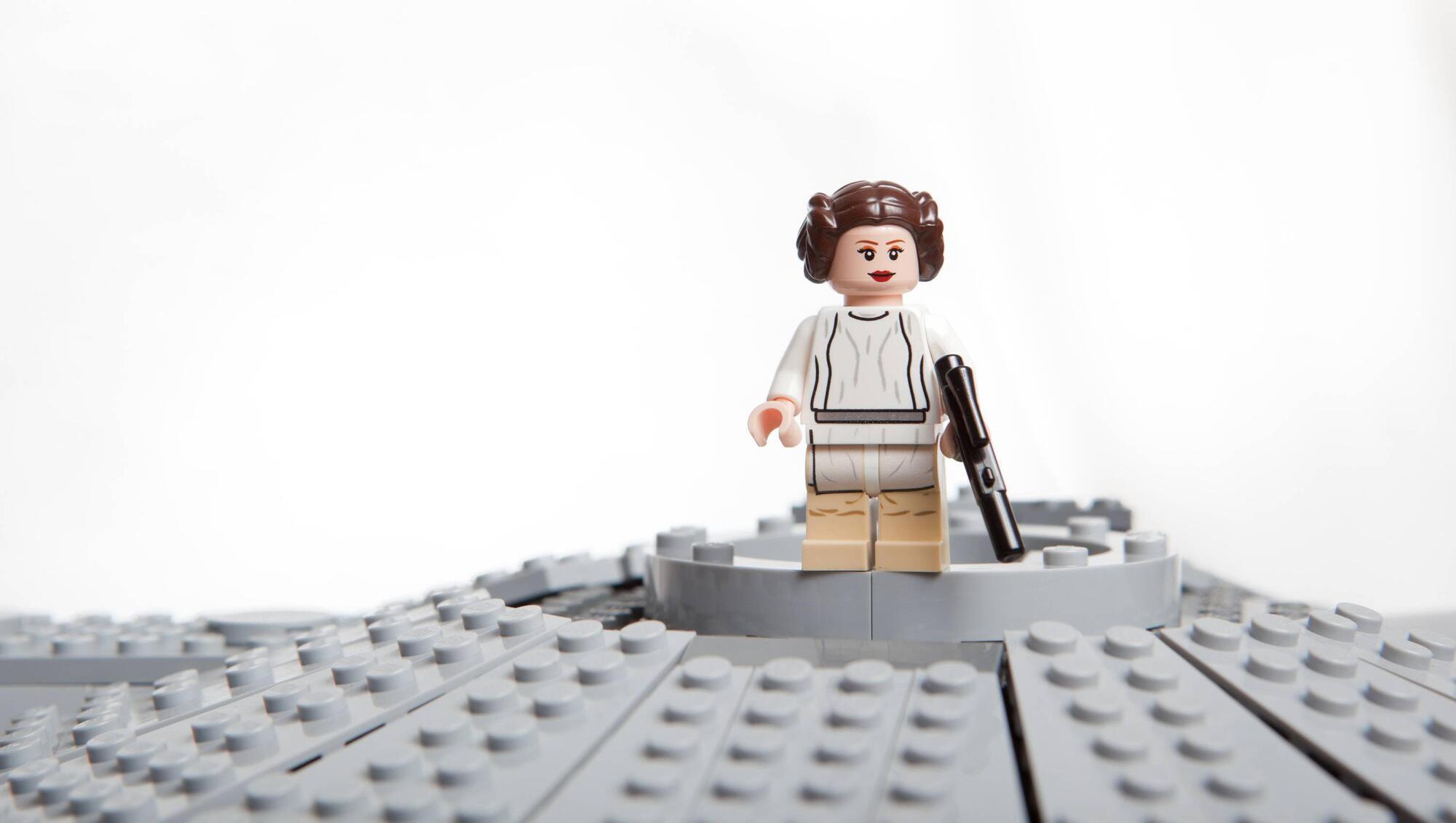
While a study shows how girls are more confident in all types of play, boys remain hemmed in by gender bias - we are so focused on liberating girls from the Barbie world that we forget some boys would like access to this world
The future of play: why it’s time to let toys be toys

Princess Leia: a strong pop-cultural symbol, and an arguable gender non-conformist

Want to influence your kid’s future career? Let them loose in a toy shop. There they will discover, depending on whether they are a boy or a girl, which toys are ‘for’ them, and therefore what they ‘should’ be interested in. Adventure for boys, nurture for girls.


Thanks to explicit labelling, heavy use of the colours, pink and blue, and entire departments given over to toys marketed gender-specifically, kids are being fed a strong message: this toy is for you; that toy is not for you. Princesses versus astronauts, steering kids towards false and narrowed narratives. Even gender-neutral toys – scooters, for example – are marketed separately to boys and girls; the ‘boy’ scooter decorated with a dinosaur, the ‘girl’ scooter with a unicorn.

And while it was ever thus – growing up Gen X, you either had a Sindy or an Action Man, with zero crossover – recent years are seeing a change, at least in our thinking, if not yet in actual toy outlets. A whistle-stop tour of one of the world’s most famous toy shops, Hamleys in Regent Street, London, confirms this, with floor after floor stacked with toys packaged not just for children, but specifically for boys or for girls.

With some notable exceptions – the face of Rey Skywalker (actor Daisy Ridley) on the side of a light sabre box – the only gender-neutral department seems to be board games. Even the dolls in astronaut costumes are pinkly packaged, while anything involving weaponry – slingshots, nerf guns, archery – have boys on their boxes. Girls are still being presented with all the dolls, from babies to Barbie, with boys being directed towards action stuff.

A 2020 study from London’s Birkbeck College, Gendered Marketing of Children’s Toys and Clothes, describes how “The marketing of children’s clothing and toys has become increasingly gendered as stereotyped gender roles and narratives are promoted by brands. ‘Boy toys’ encourage action, physicality and competition; ‘girl toys’ encourage socialising, domesticity and concern with appearance.”

This gendered marketing is done “either by implicit labelling through advertising, using models of one gender to promote the item, or by packaging – using gender-associated colours such as pink for girls – and physical segregation, organising retail layout by gender”. It’s hugely profitable to make pink and blue versions of the same toy, as well as separate categories of pink toys and blue toys – last year the global toy market was worth $102.4bn.

Change is coming, however. Lego commissioned research involving 7,000 parents and children aged 6-14, which showed gender bias negatively impacts both kids and parents – as a result, Lego is removing all gender stereotypes from its products. Hopefully others will follow.

A UK campaign group, Let Toys Be Toys, has Silliness Awards for gendered toys: pink globes, chocolates for girls, gendered sketchbooks (monsters for boys, mermaids for girls), guessing game cards where the boy cards are doctors, scientists, footballers, and, yes, astronauts, while the girl cards are nurses, maids, witches and, yes, mermaids. 

And while such silliness may seem just that, silly, it does impact, subtly baking itself into our concept of what is for men and what is for women. The Lego research, for instance, found that 89% of parents surveyed thought of engineers as men. Still. Today. Now.

In zoologist Lucy Cooke’s book on female animals, Bitch, she reminds us it’s only human animals who have gender – that it’s a “social, psychological, cultural construct.” And it starts before a baby is even born, via ‘gender reveal’ parties.

Yet in terms of freeing our kids from gendered toys and play, we are only halfway there. While the study shows how girls are more confident in all types of play, boys remain hemmed in by gender bias; we are so focused on liberating girls from the Barbie world that we forget some boys would like access to this world.

This seems both poignant and myopic – where does adult toxic masculinity come from, if not from instilling early years messaging that boys must be boys, while girls can be whatever they like?

71% of boys feared ridicule if they played with toys associated with the opposite sex, compared with 42% of girls, which means from the very start, boys are largely excluded from engaging in nurturing play traditionally foisted upon girls.

Not all boys want to play with dolls or ‘girly’ toys, but do those who do face mockery? I ask an expert.

“Oh yeah,” says Zara, 12. “My friends who are boys would never play with dolls or dress up because they’d get teased.”

Does it happen the other way around?

“Nah, we play how we like.”

And pink?

“I like pink. But it should be for everyone, not just girls.”

Consultant psychologist Eva Doherty says the problem with gendered toy marketing is that in order to be effective, that is, to shift units, it has to portray gender in simplistic terms.

“So for example, men are strong and powerful and women are beautiful, kind but often passive,” she says. (Ever seen a Be Kind t-shirt in the boys section of the clothes shop? Why not?)

“There is evidence that this can have an impact on the development of children’s gender identity and that advertising has a role to play in the pressures that children feel to conform to gender expectations,” says Professor Doherty. “The key is education, empathy and monitoring of attitudes by both parents and teachers. What advertising is trying to achieve needs to be called out and discussed openly within the context of an open, calm atmosphere. Prohibition doesn’t work but understanding, openness and frank discussion does.”

We are increasingly aware of the ‘pink cage’ and encouraging our girls to step beyond it, thanks to long-term campaigns like Pink Stinks, started in 2008 by twin sisters Abi and Emma Moore, or A Mighty Girl, set up by American parents Carolyn Danckaert and Aaron Smith to showcase books, toys and films for “smart, confident and courageous girls”.

Dr Rebecca Whiting, who conducted the Birkbeck study into gendered toy marketing, believes the internet has played a key part in these changes, reminding us that at one stage we were going backwards in terms of gendering toys.

“It sounds surprising, but analysis of toy catalogues shows that the gendered marketing of toys was more prevalent at the end of the 20th century than at the beginning,” she says. “One of the features of the first two decades of the 21st century was that even iconic brands such as Lego, which had been traditionally marketed to all children, began to promote stereotyped gender roles and narratives, for example, Lego Friends.

“What we’ve seen in the last decade is gendered marketing like that being called out and challenged by consumer-led campaign groups such as Let Toys Be Toys and Pink Stinks, especially on social media. This has been effective in raising the profile of the issue and in naming and shaming manufacturers and retailers. There have been some changes, Lego being a case in point.”

Dr Whiting says that in the social media data she has researched, there were examples of parents being fully aware of how toy gendering “ensures that they often end up buying both girl and boy versions of toys over time, not wanting to pass down what might be seen as misgendered toys to a younger sibling”.

In other words, not wanting to shame little Johnny with his sister’s hand-me-down unicorn scooter, he gets a new dinosaur one instead. But why is it shaming? What are we telling our boys? Overall, we are waking up to it.

“Many parents support the campaign against gendered marketing and reported actively seeking out non-gendered toys,” says Dr Whiting, citing a positive example of an older child saying to his little brother: “That’s not a girl toy, that’s an everyone toy. The shops tell you it’s for girls, so parents have to buy two of everything and more stuff”.

Which is exactly the kind of message we want our kids to share, unless of course you work in the marketing department of a toy manufacturer.

More in this section

Lifestyle

Newsletter

The best food, health, entertainment and lifestyle content from the Irish Examiner, direct to your inbox.

Cookie Policy Privacy Policy Brand Safety FAQ Help Contact Us Terms and Conditions

© Examiner Echo Group Limited