Ultimate Hell Week: Eoin Cadogan faces his post-GAA fears head-on
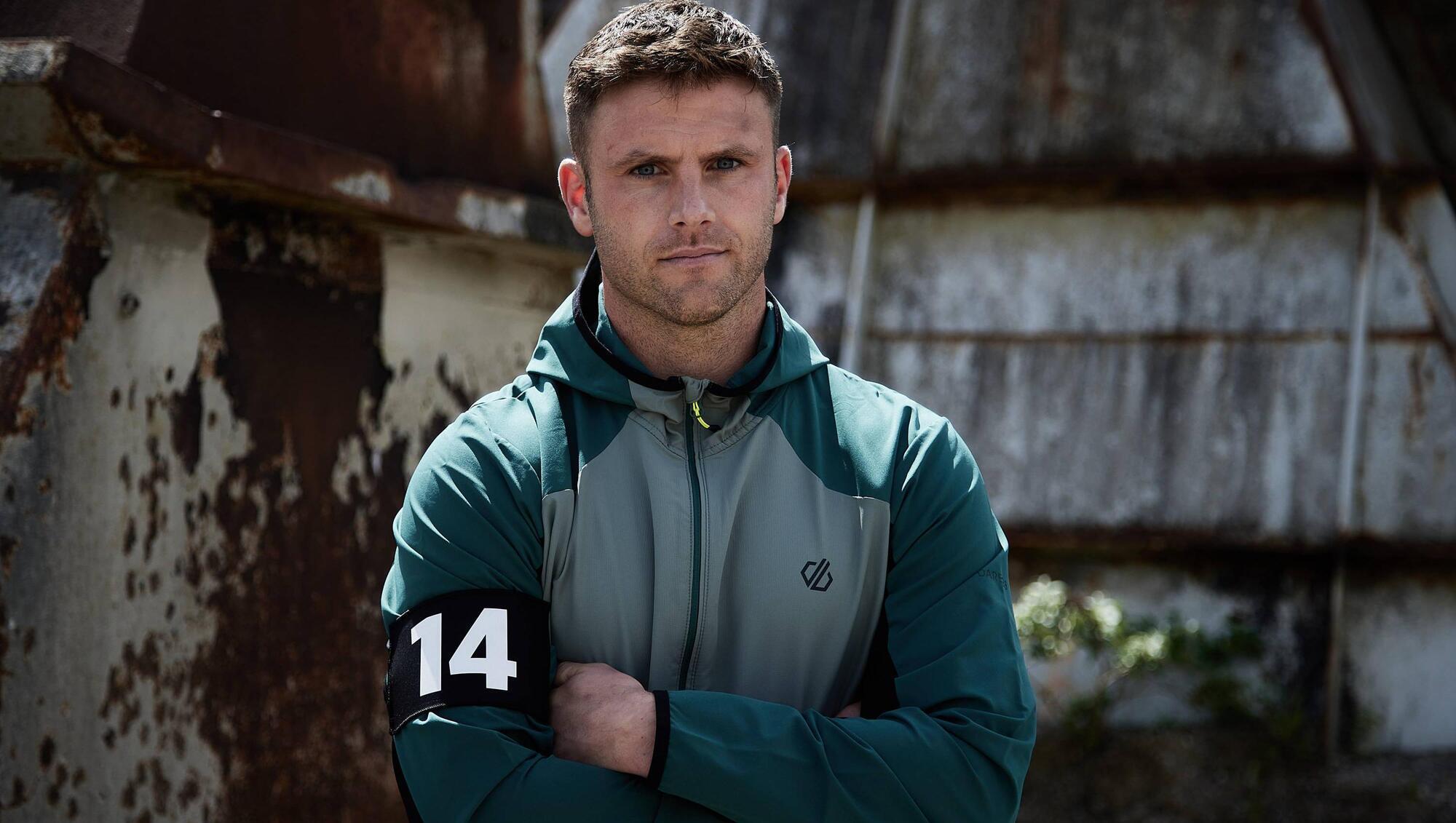
Eoin Cadogan on the set of Ultimate Hell Week Picture: Miki Barlok
After Cork won the All Ireland football championship in 2010, Eoin Cadogan, along with other members of the squad, visited an old people’s home in Blackrock. He’ll never forget the reception.
“I was only 23. One of the standout moments for me was going to that nursing home. I’d been at loads of events where there had been big parties, great celebrations. I went into that nursing home and I came out in shock as to the lift that sport can bring to the elderly. That might seem a bit cliche. I couldn’t believe that people who had been unwell and bed-bound, got such a lift. Sports has the ability to raise people’s spirits.”
Twelve years later, Cadogan, who has lined out for both the football and hurling intercounty teams, is adjusting to life off the field. He retired from intercounty GAA after Cork lost the 2021 hurling final to Limerick. But he hopes that void can now be filled with the RTÉ One reality series, Ultimate Hell Week, which broadcast its first episode this week and will run for seven weeks.
Ultimate Hell Week represented a stark departure from the GAA, says Cadogan, who works as a fitness coach and who has founded the start-up DarkFocus, which offers “sustainable structured training plans” that help clients reach their training goals.
Croke Park or Semple Stadium on a blazing summer day felt a long way away when he arrived at Camden Fort Meagher, near Crosshaven, in Cork for filming. He spent six days taking on a punishing series of physical and mental challenges – all whilst surviving on two to three hours of sleep a night. Think of it as I’m A Celebrity…Get Me Out Of Here, with fewer bugs and more shouting.
He at least did not suffer alone. RTÉ had assembled a cast of 20 “sporting legends and TV stars, singers and comedians”, including Cork GAA and AFL star Setanta Ó hAilpín, presenter Bláthnaid Treacy and Fair City actor Johnny Ward. All were put through their paces by Army Rangers drill sergeants. Cadogan has been in testing environments before. This was different.
“There is absolutely no comparison whatsoever,” says Cadogan. “All your environment for an All Ireland final is perfectly prepared. You have loads of people supporting you. Telling you that you’ve done all the right things. Whereas the [drill sergeants] are challenging you continuously. They’re making you question whether you’re good enough to continue.” The sleep deprivation was tough. They were also tasks involving heights and confined spaces designed to trigger claustrophobia. As day followed day, Cadogan found the best way to cope was by taking each challenge as it came rather than looking towards a bigger picture.
“The key is to focus in on each step individually rather than getting caught up in loads of different moments – to focus on the direct challenge that’s right in front of you. And showing composure is a huge, huge part of being successful in the show.” Did he feel any competition with the other Cork contestants – who, alongside Ó hAilpín included former rugby player Billy Holland.

“Not at all really,” he says. “While it might come across as an individual show it’s very much about the collective. To achieve a lot of these tasks you needed the collective rather than the individual and you see a lot of that first-hand on the show.” Was there ever a moment he felt he was out of his depth and regretted signing up? “I can safely say that in my 36 years it was, without doubt, the most challenging thing physically and mentally I’ve ever put myself through. I don’t say those things lightly. For me to be able to say I put myself where I was vulnerable, I was challenged… it was hugely rewarding to be able to say that Army Drill instructors getting in the faces of the participants conjures images of Andy McNab SAS thrillers or Stanley Kubrick’s Full Metal Jacket. Is that how it was?
“Yeah absolutely. When I say shouting in your face, an inch away from your nose, that’s not exaggerated. But again you have to bring it back down to the fact that they are trying to make your environment feel uncomfortable. Most of all, they’re trying to make you question yourself. The only person who can give up physically during the show is yourself. That’s what the challenge is – to see if you can push through the hardship and through feeling sorry for yourself. And see what you’re really capable of.”
Cadogan signed up for the series after announcing his retirement from intercounty GAA last November. Playing for Cork had been part of his life since he was a teenager. But now that he had stepped away from the highest level he found there was a gap to fill.
“It has been a very different year for me,” he says. “It was my first year out of intercounty. I’d been part of either a senior hurling or football team for nearly 15 years. I felt that I always enjoyed a challenge. I couldn’t’ think of anything that would have pushed me more – and which was completely outside my comfort zone.” He’s seen a lot of changes in the game during his decade and a half. People are more upfront about talking about their mental well-being nowadays. On the flip side, social media makes it easier to abuse players and managers.
“It’s a positive in terms of people speaking about their mental health. That is positive. Social media can be used as a plus but also as a negative. Everyone is much more accessible. Ten years ago if someone needed to contact you to tell you that you were terrible in a game they’d have to text or ring or write you a letter. Now they can slide directly into your messages on Instagram, Twitter, and Facebook and give an opinion.
“That can be quite challenging if you’re not trusting in yourself and trusting your ability as a person. And not everybody is like that. I certainly wasn’t away like that, where it was water off a duck’s back. Those comments can be quite hurtful. And they can more hurtful for family members. As a whole mental health is spoken about more openly which is a positive.” He feels he’s coming out of Ultimate Hell Week a stronger person – with a better understanding of the inner workings of his mind. To say it was “fun” would be a stretch. It was, however, hugely rewarding.
“I confronted some fears, some challenges. I bonded with people, some I had never met before in my life. It gave me a greater understanding of what makes a good leader. It’s not all about being sporty – being GAA player, a rugby, player, a track athlete. Everyone can be a leader, in their own way.”
- Ultimate Hell Week runs on RTÉ One Wednesdays, 9.35pm