Waking up the dead: Much-loved ‘Dead Zoo’ is back following revamp
The National Museum of Ireland’s Natural History facility — best known to Dubliners as The Dead Zoo — was faced with moving its entire collection of preserved specimens and models into storage. Ahead of an RTÉ 1 documentary on the task, and its reopening, Mike McGrath-Bryan speaks with senior curator Paolo Viscardi
Waking up the dead: Much-loved ‘Dead Zoo’ is back following revamp

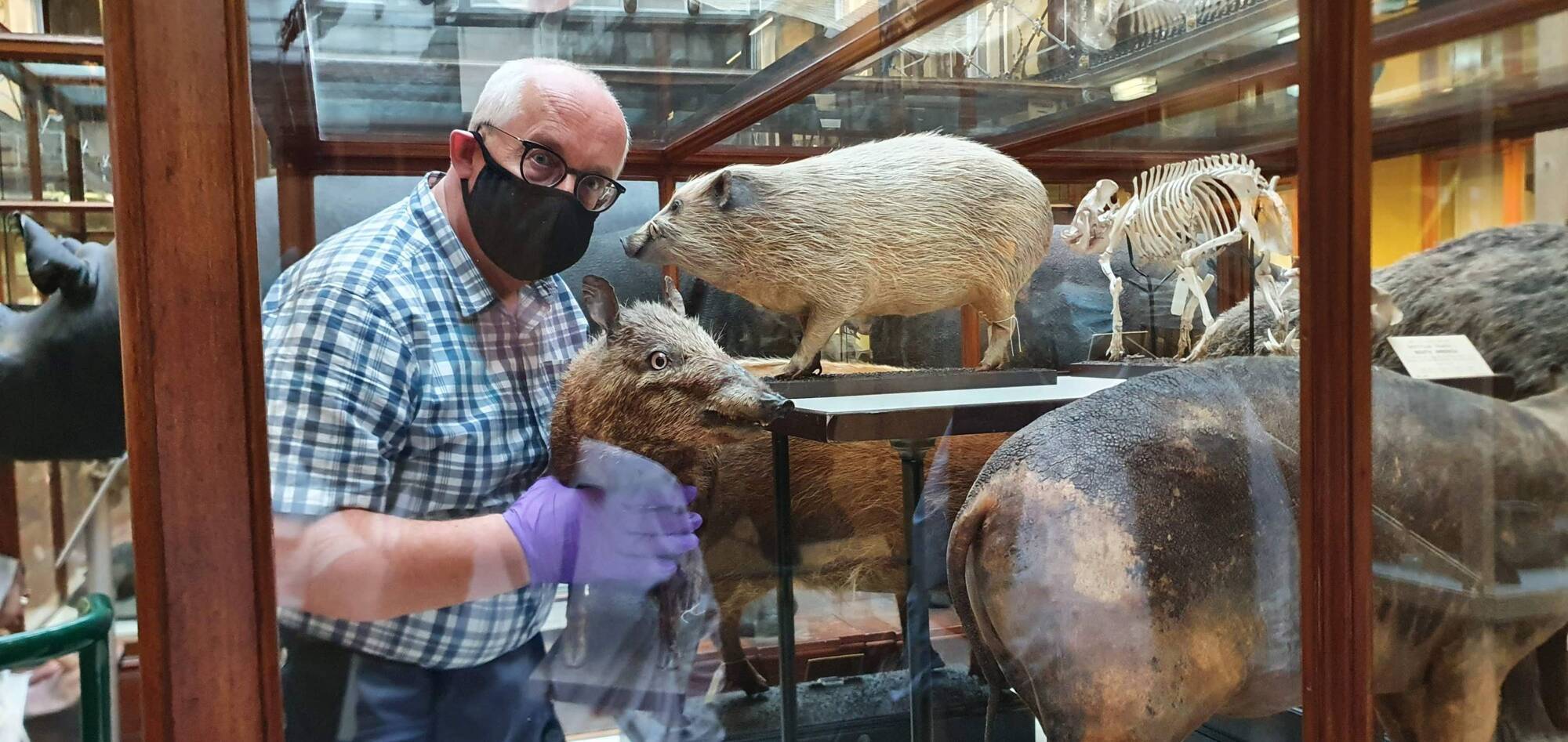
Nigel Monaghan, keeper at the Natural History Museum, hogs the spotlight. The National Museum of Ireland - Natural History partially reopens at Merrion Street Upper, Dublin on Aug 2.

Throughout 2020, the curators, keeper and staff of Dublin’s National Museum of Ireland — Natural History facility, were tasked with dismantling and moving a collection of thousands of animal specimens into storage, as the Merrion Street building that housed the city’s much-loved ‘Dead Zoo’ was beginning to show its age after over a century.
It was no mean feat to plan and execute a months-long move, that ranged from priceless mahogany cabinets full of preserved specimens and intricately-detailed models, to dismantling and unmounting a full-size whale skeleton from the facility’s ceiling.

A documentary airing this Monday on RTÉ 1, filmed by a three-person crew during the Covid crisis and narrated by actor Brendan Gleeson, chronicles the size and scale of the task at hand while also endeavouring not to obstruct a delicate process.

“That’s the very first conversation we had, to say, ‘if you get in my way, we’re cutting this and you’re out’”, says senior curator Paolo Viscardi, “purely because we had a job to do, and we needed to be able to do it.

“The filming was fantastic, and I can honestly say working with the team was an absolute pleasure. They were incredibly respectful, incredibly conscious of what was going on around them, and they would rather get out of the way and risk doing something that would cause a problem — they were fantastic.”

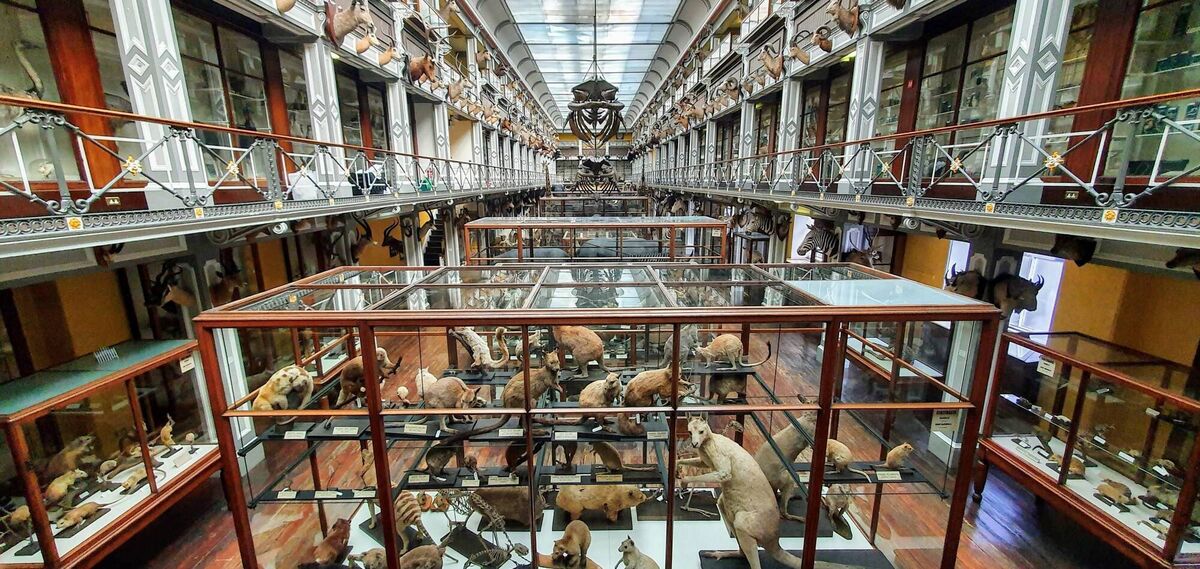
The ground floor of the National Museum of Ireland, home to thousands of preserved animal specimens that have earned it the name 'The Dead Zoo'.

Throughout the process of dismounting and moving the museum’s collection, the final ‘boss’ of all the big jobs loomed literally overhead: the aforementioned skeletal whale specimens, hanging from the facility’s ceiling for over 100 years, requiring a breakdown and transport process that took several months to complete on its own, bone by bone.

“The skeletal material is really hard to move. The actual individual bones tend to be quite strong — how they’re put together is the issue. If you’re moving historic skeletons, it’s the armature that they’re mounted on which you have to be worried about.

“We have certain approaches to that; you remove weight from the end of levers. It’s quite an engineering-focused approach, because it’s about how force is transmitted through the skeleton. If you take the skull off something that’s moving around, that is an extremity, you take a lot of weight off, and it means you tend to make that object much more stable and safer to move.

“And then what we’ll tend to do is use what we refer to as a stillage. So we’ll build a sort of frame around it, and then tie, depending on the scale of the object, big lifting straps, or cotton ties, or bits of string, even, just to secure in a few places, so that it can move around, but not too much.

“That’s really the balance — if you’ve made it too stiff, it will break. If you make it too floppy, it will break. So it’s just a case of knowing and understanding how these objects behave.”

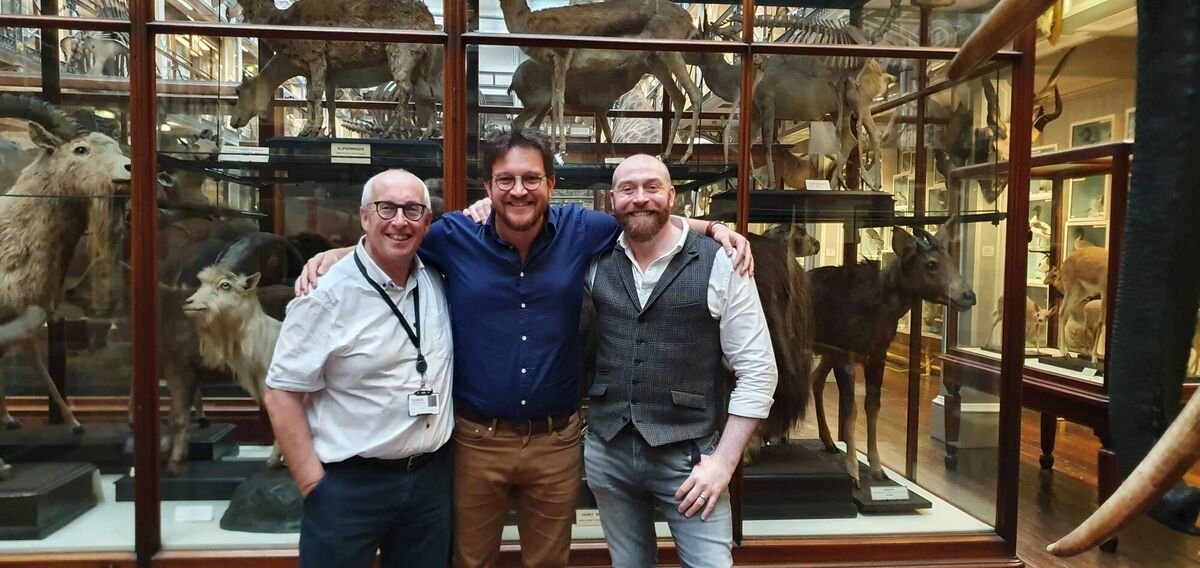
Natural History Museum staff Nigel Monaghan, Dr Ben Garrod, and Paolo Viscardi.

As viewers will see throughout the documentary, The Dead Zoo is as much a story of the fixtures, furniture and other aspects of a century-old building, as it is about the exhibits. Respecting the layout of the building, and the integrity of its memory for generations of Dubliners meant confronting the museum’s age and idiosyncrasies.

“One of the things that I love about this place is the historic feel to it. Everyone who likes this place [loves that], so obviously, we’re incredibly respectful of that. It’s something we don’t want to lose [through the redevelopment of] this building. We don’t want to throw the baby out with the bathwater. We want to keep what makes it special.

“Everything we’ve done around this project has been trying to minimise a risk to the furniture, we really considered the furniture as almost one of the objects. Everything we did, so when we moved furniture around, we had a plan for it in the same way that we’d have a plan for moving the whale. Everything was properly thought through, and in a few cases, it had to be thought through quite quickly.

“We would spend days, or weeks even, figuring out how to do something. Obviously, within the documentary, you can’t really capture that. Figuring out how to move the whale out through the window takes a few seconds in the film, but the actual planning that went into that took months because it was dependent on so many factors.”

A preserved specimen of a mysterious nature is ready to enter storage as restoration works are due to begin at the Natural History Museum.

Committing a collection of such social and historic importance to the people of Ireland to storage was another significant undertaking, stored for over two years ahead of a staggered repatriation to the overhauled Merrion Street building, which partially reopens next week with the resumption of ground-floor exhibits.

“Everything was fine. Most of [the earmarked dates for checking on the exhibits] were about the integrated pest management procedures that we have; you quarantine things when they’re too big to go in the freezer. It was really about checking them to make sure they weren’t full of moths and beetles and things, which might cause damage to the collections. And they were, thankfully, fine.”

With the process of that gradual reopening underway, Viscardi’s sights are now set on the Dead Zoo resuming its place in Dublin life at a time of profound, post-Covid change, as he hopes Monday’s documentary conveys the enormity of the work done to preserve the facility for generations to come.

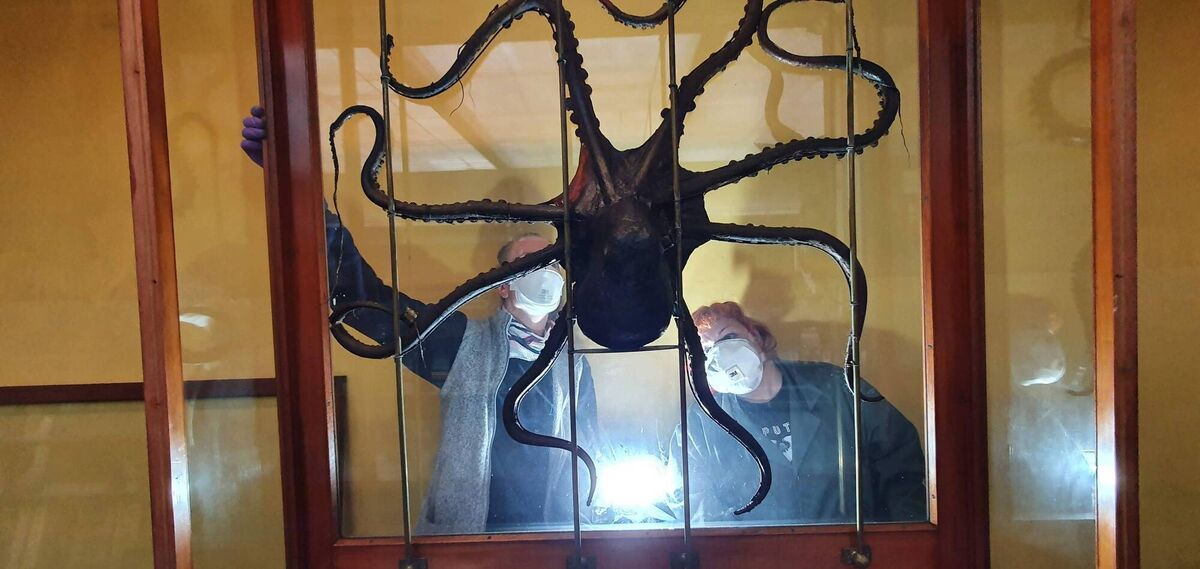
Curators look tentatively at preserved octopus specimens as it moves to storage.

“What I hope we end up with is a museum that is very, very much like it used to be, but accessible and with a better environment, a better internal set of structures and systems in place, so that we can look after the collection better, and the people can get access and see it better. It’s two duties of care: to the collection; and to the public.

“A large part of that, I think, is maintaining the look and feel of the old, historic museum, [because it bears] a societal connection. People used to come with their grandparents, and their parents would have come with their grandparents... and we want to maintain that link, whilst also making it a better place for people to visit, by having lifts, etc eventually.

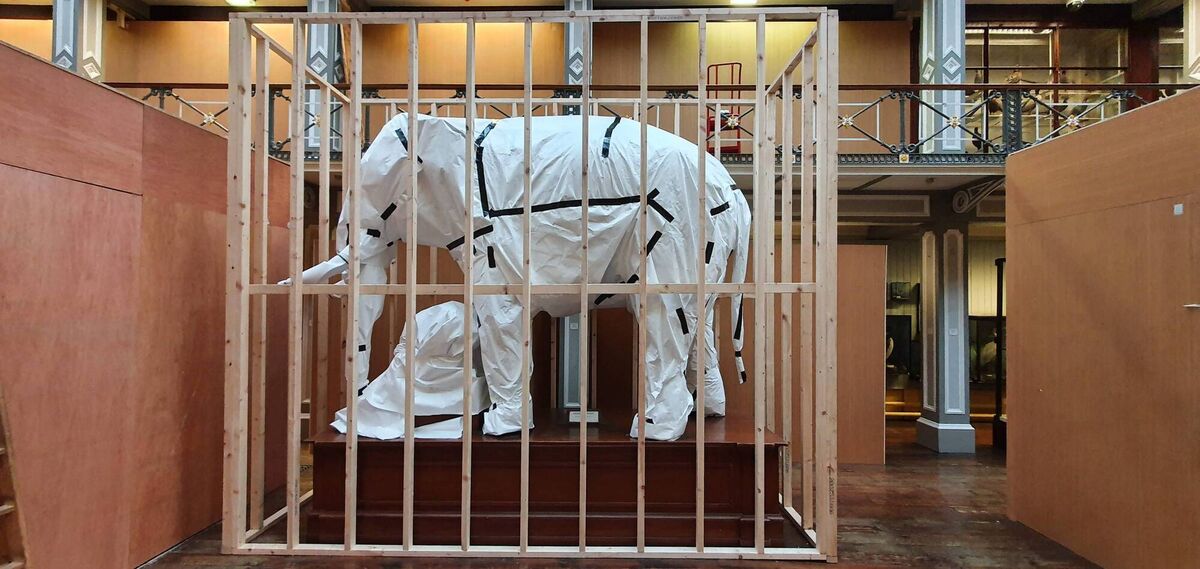
“Just making it better for the collection, by getting rid of the pests and stopping the leaks from the roof. If we end up with a space where I don’t have to build a tent for the elephant when it rains, I’ll be happy.”

The Dead Zoo airs Monday, August 1 at 6.30pm on RTÉ One and RTÉ Player.

  • The National Museum of Ireland - Natural History partially reopens at Merrion Street Upper, Dublin on Aug 2; Admission is free, but advance booking is required at museum.ie


More in this section

Lifestyle

Newsletter

The best food, health, entertainment and lifestyle content from the Irish Examiner, direct to your inbox.

Cookie Policy Privacy Policy Brand Safety FAQ Help Contact Us Terms and Conditions

© Examiner Echo Group Limited