Secret Cyclist: Cork bike share scheme fails to shift gear
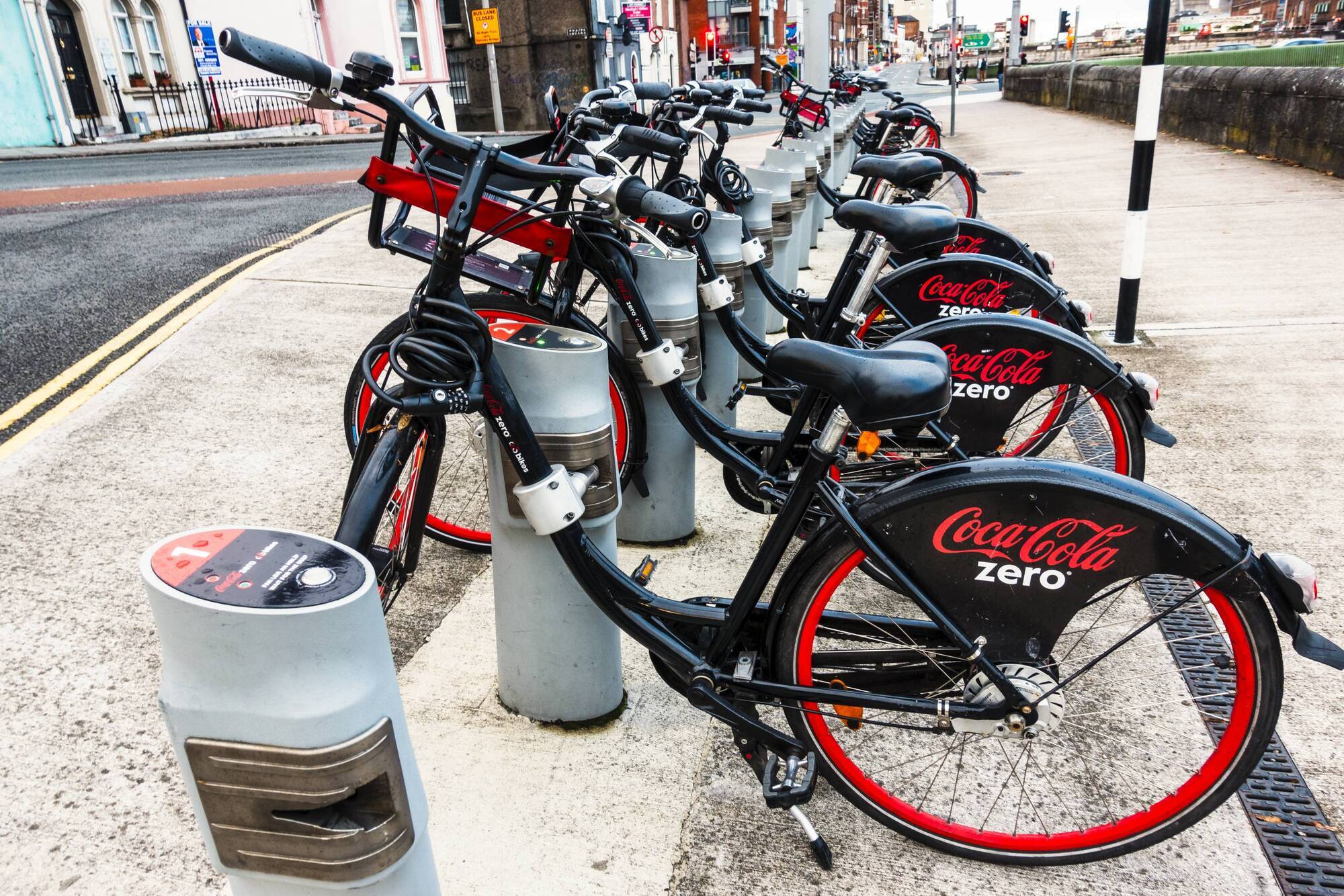
Bike rental station in Cork sponsored by Coca-Cola Zero, now known as Coke Zero.
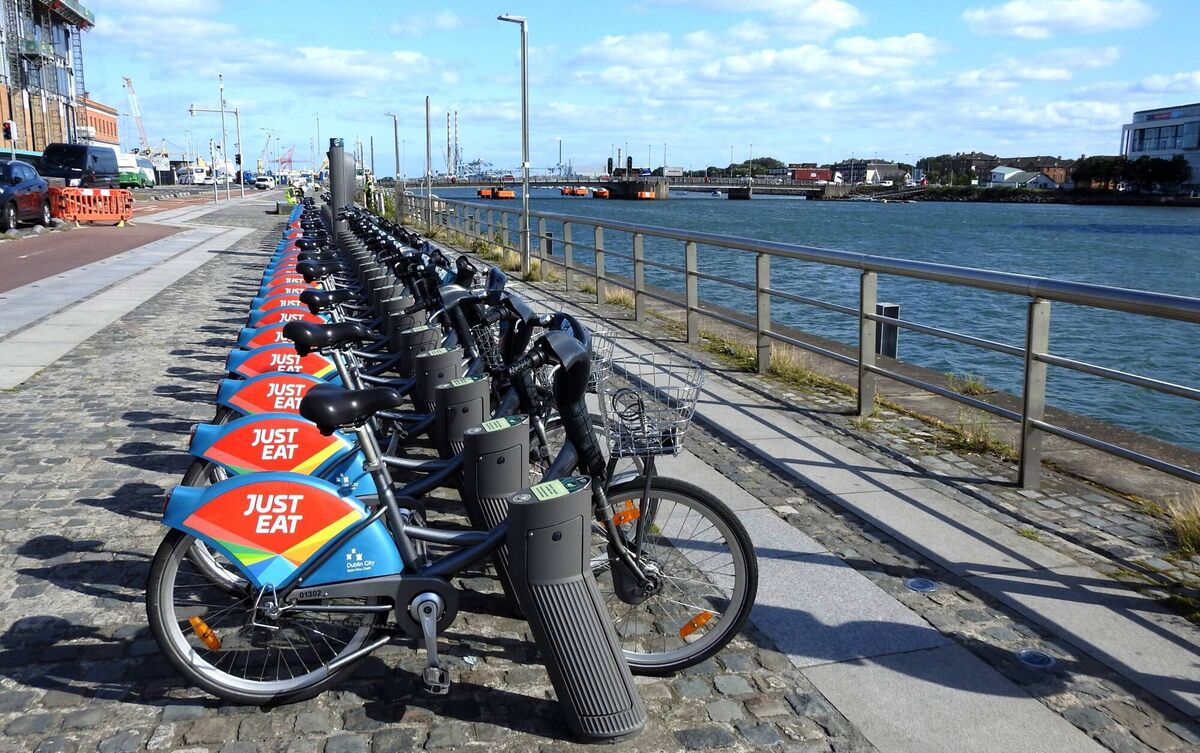
Dublinbikes launched in 2009 and the capital’s public bike share scheme hit the ground running. Within five years, it had over 50,000 subscribers annually, and 10m trips had been taken on the bikes. By 2018, almost 70,000 people had signed up.
For many years, Dublinbikes was a bit like Bayern Munich football club: competitive on the European level with sound financial backing, and firm support from loyal members. Much like Bayern has fallen short on the European front in the last two years, the Dublinbikes scheme is also facing challenges. A lack of capital investment has seen the number of stations remain stagnant at 117, a far cry from the 300 stations proposed in 2010. Membership has plunged in recent years and is currently just over 33,000.
If Dublinbikes is Bayern Munich, then the Cork bike share scheme is Everton; struggling domestically but not at the races internationally, with supporters that are only staying on out of loyalty to their home city. I signed up for the Cork Coca-Cola Zero Bike Scheme around five years ago. It seemed like a no-brainer; for €10 a year you can pick up a bike and ride it for free once you drop it back within 30 minutes.
I usually travel to the city centre on my own bike so I saw the membership as a sort of insurance policy in case I was ever in town and didn’t have my own bike. After around two years, I gave up. The system was offline all too often and when I did get a bike, there were too many issues with the pedals and gears. People in Limerick and Galway face bigger problems. They wished they had an Everton. They support a club that could go into voluntary administration because nobody is turning up to the stadium anymore. It always struck me as unusual that I was never asked to take a survey as to how I would rate the scheme or how many issues I encountered. I often wondered why the scheme wasn’t expanded to more parts of Cork city or why some stations had red tape over the bays for months on end. I wondered why no sponsor came on board after Coca-Cola.
In 2020, the body that oversees the scheme, the National Transport Authority suggested that ‘improved’ bus services were the reason that the number of trips in Cork was down for three years in a row. That raised a few eyebrows. Especially for those of us who had been following the Cork, Limerick, and Galway schemes in the news, and knew all about the court case, and legal issues involving the companies making up the consortium that operates the schemes. People can make up their own minds as to what hindered the progress and attractiveness of the Cork, Limerick, and Waterford schemes: improved bus services, or long-running legal issues.
Politicians and key stakeholders seem to have been happy to shrug their shoulders regarding the well-documented and much-talked about maintenance and operational issues that users of the scheme are faced with in the cities outside Dublin. This is probably due to the general “sure haven’t we done enough for you” type of mentality that is all too pervasive in council chambers and boardrooms when cycling is being discussed.
Councillor Elisa O’Donovan from the Social Democrats party in Limerick stands apart in this respect as she has consistently tried to flag the issues surrounding the scheme in Limerick.
Lots of people, from politicians to business people and cycle campaigners, have put hope and energy into the success of traditional public bike schemes but we need to face up to realities. People want more flexibility than the current docking-stations provide. People want GPS-enabled routing and e-bike assistance. Bike share schemes with these characteristics are referred to as ‘fourth-generation’ systems and they are already here. The latest fourth-gen system to launch in Ireland was ‘ Bolt’, with 100 e-bikes hitting the streets of Sligo town in recent weeks. Sligo Cycling Campaign chairperson Joan Swift has been using the bikes, as have her fellow campaign members, Kieran, Richard, Úna, and Caroline.
“We are delighted to see the arrival of Bolt,” Joan informed me.
“The bikes are easy to operate, are a real boon on the hills, and enable us to move around quickly.” John Buckley is the operations manager of Bolt Ireland.
“For a public bike share scheme to be successful, it needs to be convenient for the end-user. If you cannot provide this, then users will ultimately find another source of transport”.
The Bolt model ticks a lot of boxes for me; it’s not reliant on public funds, it can be scaled up without having to ask the purse-bearers in Dublin, and the bikes go easily uphill. Bolt wasn’t the first dockless e-bike sharing scheme to launch here. Bleeper and MOBY Bikes have been in Dublin for a few years and Fingal County Council recently announced the launch of TIER e-bikes in north Dublin. Lots of people will be looking at these companies to hear their plans for other parts of Ireland, especially in Cork, Limerick, and Galway. A rental e-bike to take you out to the Salthill prom, to the UL Campus, or up to the Shandon Bells? Now wouldn’t that be the thing?
CONNECT WITH US TODAY



Be the first to know the latest news and updates