'The exercise is different to the reality': How it feels to be at the centre of a disaster
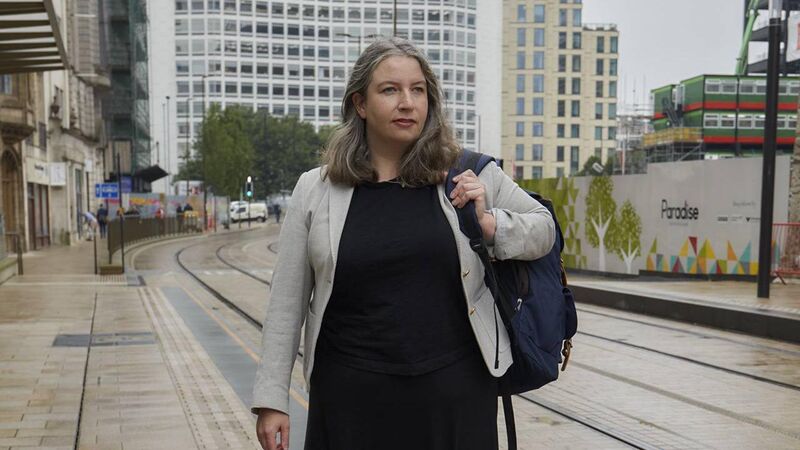
Lucy Easthope
The plant rooms of the run-down power station were thick with the noise of several hundred excited students. Some were studying ‘public service’ programmes at nearby colleges; others had travelled from all over the country from theatre make-up courses. Packed into minibuses before breakfast, they now sucked on Capri-Sun cartons and chewed gum. Half of them would soon collect their ‘character’ and pull on torn clothing and perfect their limps. Others would spend the day using putty and gloss to paint vivid red scars and open fractures, shards of bone sticking out, on their fellow scholars’ legs. Clangs of shutting metal doors cut across their shrieks of excitement at their fake injuries. This was Exercise Unified Response, March 2016, the most ambitious disaster exercise ever attempted in the UK.
Just like children in nursery school set up imaginary shops and pretend kitchens, we disaster specialists practise for disaster. In fact, playing pretend disasters is the way that we spend most of our time and might be the only action some see for years.
Depending on the available resources, events may be ambitious and months in the planning with hundreds of extras, make-up, fake blood and costumes – a bit like historical re-enactments or war-games. Sometimes there is simulation technology or virtual reality equipment. Or, at other times, they are what we call ‘table top’, where we all just pretend that something has happened and then discuss it, like actors reading through a script. To be honest, all versions can feel very silly. They test how our disaster plans will hold up and give everyone – the blue light responders, the advisers, the civil service – the chance to practise making decisions and taking action. The only people who aren’t there are the public, who will need to experience the consequences of the decisions for the first time when it actually happens. These exercises are also designed be a display of preparedness and strength and they are usually given impressive- sounding names, often in Latin, which are an endless source of amusement for me – Exercise Brassica was a highlight.
Sometimes we do them at no notice, like a fire alarm, to try out the processes for real. If you’re doing this sort of disaster exercise you have to start the ‘activation’ (usually a phone call) with the words ‘Exercise, exercise, exercise’. Then everyone understands and enters into the game with the person at the other end of the phone, like with a toddler pretending to sip the tea. But people can forget to say the code word. I have known hospital emergency planners who have activated an entire helicopter response team and a blood bank delivery by mistake. When I was working at Kenyon, I once picked up the phone to a major African airline who informed me gravely that our full response would be needed to an all-fatal crash near Nairobi and travelling on the flight had been all of the Spice Girls and Elton John. A showbiz massacre! I ran breathlessly up to Alan to inform them that this was BIG. ‘Just ring them back,’ he counselled calmly, ‘and check if there was something they should have said at the start of the call.’ To the relief of pop fans everywhere, it was an exercise.
It is a popular policing trick to include celebrities to liven up scenarios but I never put them in myself – too likely to cause confusion. I write a really very good disaster scenario, mainly due to many years of watching Brookside, the gritty soap opera set in my hometown of Liverpool in the 1980s. (The show loved a disaster – one storyline involved a helicopter crashing into a house in lockdown due to plague, while one of the characters was mid-seduction.) My very first major exercise was one year after the 9/11 terrorist attacks of 2001. A full scale, ambitious script involving several counties in the south of England. The crash of a jumbo airliner.
We activated a full disaster mortuary, all the kit, hundreds of people, in a series of military buildings in Hampshire. It was a memorable experience. For one thing, I was slightly alarmed by the presence of a group of very well-meaning locals who had volunteered to play the dead. This is a phenomenon that I have encountered several times since and always freaks me out. There is something fundamentally wrong about someone dressed in their swimwear helping you zip them into a body bag. And then, in what would be the first of many times as the new girl, I was pranked by my disaster colleagues. I was told that to give further protection from contamination you wore your white forensic suits without clothes underneath, stark naked. You don’t.
I spent a number of hours wandering around the exercise, perfectly transparent. To this day, some colleagues will recount the tale at major international conferences. It has often been remarked upon in recent years how much I seem to have been embraced by certain aspects of the forensic community, as a nonologist. Other disaster planners express surprise that I am always greeted with big hugs and a cheery tale by the crime scene investigators and the mortuary teams.
I would like to say that it is because they recognise my insight, skill and fervour. I think it is much more likely that it’s because they have seen my nipples.
So to plan for an exercise, you start with a scenario – a three-counties-wide flood, a motorway pile-up, a terrorist attack – and then design a series of action points, or ‘injects’, to move the story along a bit. The police, fire and ambulance responders are at their most comfortable exercising the first few hours or days – moving kit and vehicles around. Recovery exercises, covering the later stages, are always harder. Everyone has run out of enthusiasm by then.
Of course, the exercise is different to the reality. People tend to be more bullish in the exercise. The general rule is that no one should leave with egg on their faces, particularly any senior bosses. A recent terrorism exercise I organised involved a room of police tactical support units in full, shiny kit, looking a little like scuba divers. The scenario placed terrorists all around an urban centre, armed with both guns and knives, and was based on real tragedies that have played out in areas like Nairobi, Paris and Mumbai. The police played their parts seriously, they spoke only in gruff shouts and made decisions about ‘deploying assets’ directly into the ‘hot zone’ without hesitation. But I knew that in a real terror attack it would feel different; those ‘assets’ would be men and women who will potentially be shot or blown up in front of you. Men and women with families and made of flesh. And one of the most common themes in disaster inquiries is frustration with delays in sending in help.
Nobody pisses or shits themselves with fear in an exercise but many real survivors do. I caused havoc once at an airline exercise by pointing out we’d made a major error when evacuating the ‘survivors’. They had all been neatly processed straight from the scene into a witness interrogation area by counter-terror cops, without even so much as a cup of tea. It was assumed they would be fully clothed and dry. But the kinetic forces acting on our bodies during an explosion or a crash mean our clothes are often ripped off completely. We needed to address basic issues of dignity and decency before we did anything else. Before they could be questioned, the survivors would need clothes and a chance to clean themselves up. A silver blanket wasn’t going to do it.
A similar mistake was made for real after the 7/7 bombings. Survivors were hustled out of spaces without their trousers and with urine running down their legs. For a few years, the Met had a stockpile of tracksuits in many sizes. I am not sure if anyone could find them now.
The scenario for Exercise Unified Response was the collapse of an office block onto a busy station during rush hour. It had been two years in development and would last for four days. It involved thousands of people, including representatives from a number of European governments. It cost millions of pounds and had received a large European grant.
47 Responders were allowed to take over Littlebrook power station in Kent, which was due to be demolished. A mock-up of Waterloo tube station had been built and rubble, scaffolding and eight retired tube carriages had been brought in. The BBC beamed some of their Breakfast show from within the scene of make-believe carnage. By nightfall, it looked like the set of a Hollywood blockbuster.
CONNECT WITH US TODAY



Be the first to know the latest news and updates