Irish Teacher: Surely the purpose of education is more than just getting a job?
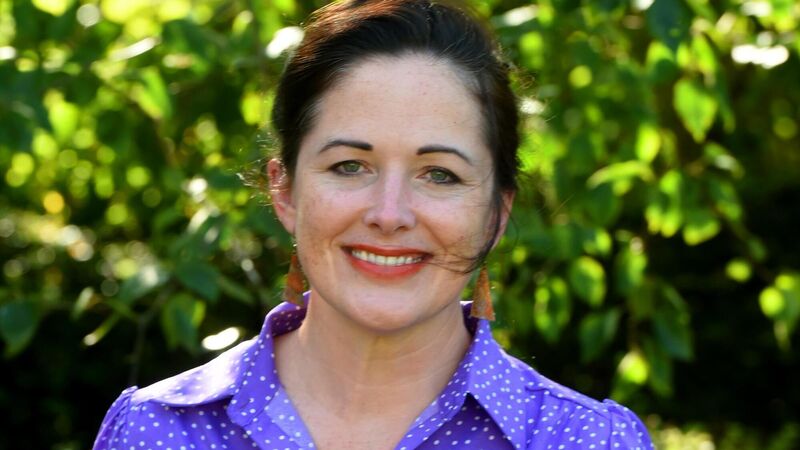
Pic: Larry Cummins
The purpose of education is difficult to define. It’s a complex process of becoming.
Education recalls the poet Louis MacNeice, gazing beyond his roses, to the glass, the snow, appreciating what it is – “things being various.”
For others, defining education seems simpler.
Speaking at a press conference about recent reforms to the senior cycle, Norma Foley proudly announced that she’d consulted the OECD and businesses at home and abroad to come to her conclusions. She referred to these discussions as ‘very important’ before adding that employers are now looking for “skills where they’re not just knowledge-based but have an application.”
She went on to make the most chilling comment of all: “That’s what is informing our reform of senior cycle.” To be fair, she also referenced the NCCA report, the reflections of students, educators, and other experts, but throughout her delivery, there was an undeniable focus on student employability.
Nobody is naïve enough to think that this shouldn’t form a part of our education system, but does it deserve such prominence? Indeed, is this focus reflected in the NCCA report – the culmination of a lengthy consultation process that began in 2016?
No. It’s not.
The NCCA report discusses “human flourishing.” It envisages “varied and coherent pathways.” It aspires to create true “flexibility.” It aims to “serve every student on an equitable basis,” in a senior cycle that helps every student “to become more autonomous and independent, and more fully themselves, with views and perspectives on their lives and on society.”
The report hopes to create a senior cycle that’s “much more than a perceived sorting mechanism for who goes to higher education, who proceeds to further education and who joins the workforce.”
Where is any of this ambition in Foley’s reform? Where is the revolution against the points race, the system reducing us to the ‘sorting mechanism’ mentioned? Foley’s watered-down reform brings home a disappointing truth – education is purely political in Ireland and it’s mostly about money. It’s about the avoidance of funding and the creation of a workforce.
What Foley has missed throughout her deliberations is the importance of treating human beings as humans before they are organised into human capital. Foley has decided, and publicly announced that education in Ireland is a means to an economic end. She has lost faith in creating spaces in our schools in which individuals form and flourish.
But Norma Foley is not everyone.
Dr Robert Grant, co-founder of Hearlisten, a philosophical dialogue project, offers a different view of education and one far closer to the spirit of the NCCA report.
“The framing of education in terms of economic output often sets up a division between the arts and science. Science might offer quicker returns, but it suffers when denied the space for creative blue sky, open-ended thinking. That’s where the real innovation happens – the spawning of ways of thinking we haven’t even imagined yet.”
Dr Grant sees an inherent lack of trust in our education system.
“We have this sense that we need to keep students on track. What we really need to do is preserve the sacred space offered by education, away from the daily pressures of politics and economics. This is when real change happens, when young people are given the freedom to examine and question their world from the outside, looking in.”
He also sees Foley’s remarks as short-sighted. “We’ve no way of knowing what skills will be required in thirty years. Instead, we must focus on far more ambitious, timeless, human concerns: the fostering of curiosity, creativity, imagination, and care.”
The one simple fact of which I’m certain, is that to achieve this type of education, one that aspires to do the best for our students, we require more funding. We can’t simply re-pack our students’ mental load by offering exams at different times of the year and although I welcome a diversification of assessment types, it is a tiny part of a much broader, more complex endeavour.
We need far more funding, and we need to dismantle the points system entirely. We need more pathways in our schools, adequately funded and resourced pathways. We need to understand and respect the intrinsic value of education, and its potential to transform and inspire human beings.
Instead, we have Foley’s myopic remarks about good business.
Make no mistake, we are being spoon-fed a cynical, politically motivated definition of education as being whatever the employer demands. We are being spoon-fed a downgraded, soulless definition of education to avoid deep reform and adequate funding.
The question for the Irish public is this – are we stupid enough to swallow?
CONNECT WITH US TODAY



Be the first to know the latest news and updates