Edel Coffey: Forget the New Year, March is a much friendlier month for self-improvement
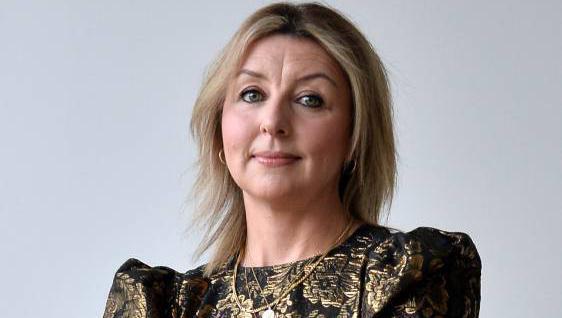
In my twenties, I decided instead of giving things up, I would take things up. I have taken this approach ever since and it’s been a really positive, productive habit in my life
Edel Coffey: Forget the New Year, March is a much friendlier month for self-improvement

If, like me, you missed your window of opportunity to reinvent yourself at New Year’s, a second opportunity to do so is now upon us. I’m not religious, but I realised last week that we are in Lent. I do love an excuse for self-improvement, so I thought I might hop on the bandwagon.

March is a much friendlier month for self-improvement after all. How are we expected to plunge ourselves into self-denial in the dark, cold days of January? At least now the mornings are bright, the hyacinths are blooming and the prospect of having to expose our bodies in light summer clothes seems terrifyingly, indeed motivatingly, real.

But all of this thinking about deprivation and self-punishment that we usually associate with Lent and New Year’s resolutions made me wonder, particularly in the light of Covid and recent world events, does anyone give things up for the sake of it anymore?

You might be able to tell by the look of me that I am not one to forego too many pleasures, but I realised suffering for suffering’s sake hasn’t really been part of my philosophy for a very long time.

I used to try to give things up at New Year’s, subscribing to the whole New Year, New You ideology, but I soon discovered it was a miserable way to face into a new year, in a tortured state of mind with an expectation of failure hovering over you. And so, in my twenties, I decided instead of giving things up, I would take things up. I have taken this approach ever since and it’s been a really positive, productive habit in my life.

At the start of each year I take stock of the many, many things I don’t know how to do, and then I make a list of the things I might like to tackle that year. 

I have learned how to drive, how to swim, improved my French, and many other practical things with this approach.

This is not to brag. I’m not saying I do any of these things particularly well but I can do them at a rudimentary level, which is more than I could do before, and certainly much more useful in my life than giving up chocolate.

Taking things up doesn’t have to take the shape of big projects either. You could decide that you’re going to go for a daily walk or, if you already go for a daily walk, you could decide that you are going to pick up any stray items of litter that you notice on your walk. It feels like a much more positive, achievable and satisfying approach to self-improvement than counting calories.

The other thing about taking things up, or learning something new, is you never really know where the experience might lead you. Often, changing our habits can have unexpected, secondary effects. 

For example, you may decide to take up a sport instead of cutting out sugar, but the knock-on effect might be that you start eating healthier and sugar takes a back seat anyway. The difference between this and giving up sugar directly, in my mind, is the experience is less about punishment and guilt, and more about a positive lifestyle change. 

In my own life, a few years ago, I signed up to a creative writing night class as part of my taking-things-up resolution and I ended up meeting some brilliant people who I am now good friends with and meet with regularly. Again, much more enjoyable and useful to me than, say, giving up caffeine.

That’s not to say I think we shouldn’t ever give things up. I am all in favour of giving things up for a reason, whether that’s for our own health or to make a positive contribution towards the climate crisis or to improve our communities, but just let there be a reason.

The idea of depriving ourselves just so we can feel punished or pious strikes me as a shameful misdirection of good resources. Personally, I find it a much more edifying experience to do something constructive, to feel like I have helped someone, or achieved something purposeful, than to fail at pointless things like giving up cake or coffee or the little things that bring moments of joy in my day.

And I don’t really want to hand down the psychology of self-flagellation and punishment to my children either. I do want them to always be aware of and grateful for their good fortune, and their privilege, but I don’t want them to feel like a failure, as I did, for not having the will power to resist a chocolate bar. So instead of giving up treats, we have all committed to being kinder to each other during Lent, and to making an extra effort to be kind to others.

And by the end of this period, instead of having deprived and pummelled ourselves, we will hopefully through our efforts have learned something, bettered ourselves and, with a bit of luck, improved the lives of those around us too.

x

More in this section

Lifestyle

Newsletter

The best food, health, entertainment and lifestyle content from the Irish Examiner, direct to your inbox.

Cookie Policy Privacy Policy Brand Safety FAQ Help Contact Us Terms and Conditions

© Examiner Echo Group Limited