Pete the Vet's guide to manicures and pedicures for pets
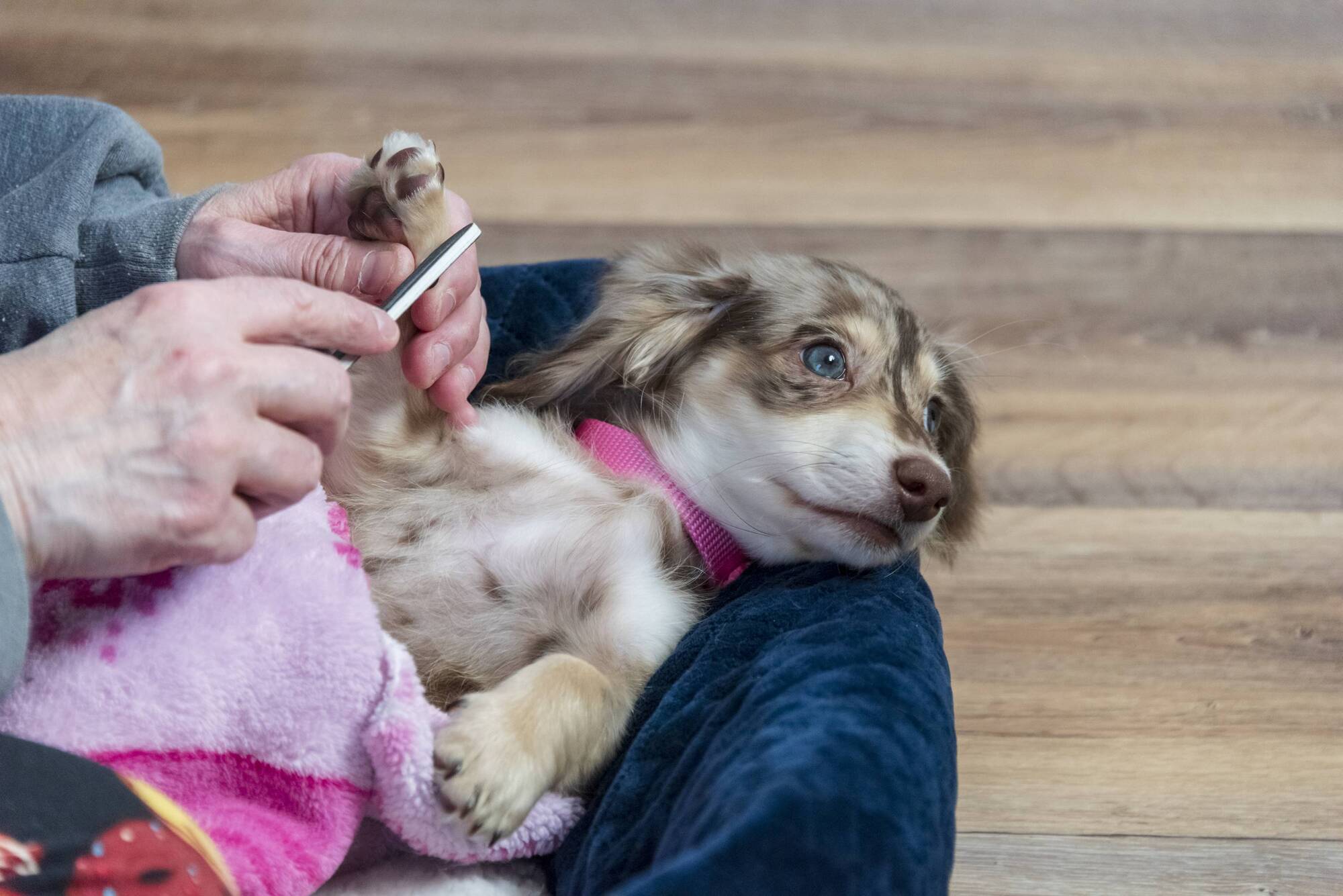
Pete the Vet: Dachshund puppy getting Mani Pedi Pedicure, grooming.
From dogs and cats, to guinea pigs and rabbits, to reptiles and birds, nearly all living creatures have nails or claws. Some nails are sharp and claw-like (cats), while others are blunter and more tool-like (dogs).
Nails are made from a type of compressed hair, and just as hair grows, so do nails. For this reason, they sometimes need to be trimmed. In many cases, nails are self-caring. Dogs that regularly walk on hard surfaces naturally wear down the tips of their nails. Cats use trees (outside) or scratching posts (indoors) keep their nails short and sharp. And many animals nibble their nails with their teeth, smoothing off irregular edges.But monitoring a pet’s nails, and trimming them when needed, is part of responsible pet care.
Some nails are more likely to become overgrown than others.So-called “dew claws” are the small digits in dogs that are the equivalent of human thumbs (in the front legs) and modified “big toes” (in the back legs). These are located on the inside of the legs, a couple of inches about the foot. They’re far more common in the front legs compared to the back legs.
Dew claws don’t touch the ground during normal exercise: they are used by dogs to obtain greater grip or traction in specific situations (a greyhound running around a corner at speed, or a dog trying to get a better grip on an unwieldy object that they are chewing). Dew claws often grow into a hooked or circular shape. If they are not trimmed, the end of the claw can grow into the skin of the dog, causing pain and discomfort.
Fourth, some individual animals are more likely to develop overgrown nails than others. In elderly animals, the structure of nails become tougher with old age, and with less activity, there’s less natural wearing-down. Older dogs and cats sleep more, spending less time moving around, less time playing, and less time exercising.
Animals can’t complain to us, asking us to do something about uncomfortable nails and the signs that nails need trimming are not always obvious. Typically animals begin to their feet repeatedly, in a way that they would not normally do. Sometimes they may start to walk gingerly, or even limping, because overgrown nails are pushing their toes into uncomfortable positions. Other times, there may by physical signs, such as bleeding or discharge if the end of an overgrown nail is digging into the animal’s skin.
If any of these signs are seen, owners should take the time to closely examine their pets’ feet. Even in healthy pets, once a month, it makes sense to pick up each foot and examine the nails, one at a time. They should look healthy, comfortable, and they should be the correct natural length. How long is this? If you place the nail in a standing position on the palm of your hand, the tip of the nails should rest on the surface of your hand without the toe being displaced at all. If the toe is forced upwards by an overlong nail when you do this, the tip of the nail needs to be trimmed.
There are some nail diseases that can cause nails to have an abnormal appearance. These include a common type of auto-immune disease (where the body’s immune system starts to attack the nails). The nails appear broken, brittle and dry, and often they fall off, leaving the raw nail bed exposed.
A type of ringworm (fungal infection) can also affect nails, causing a similar type of irregular, dull, ragged appearance. If your dog has nails like this, you should talk to your vet: effective treatment is available for these conditions. Diagnosis of the precise nature of nail disease can be challenging: samples of nail clippings may need to be sent to the laboratory for bacterial and fungal culture. In rare cases, the nail and nail base may need to be surgically removed and submitted for detailed analysis by a pathologist.
The routine care of healthy nails is an art and craft. If owners are confident around animals, they may be able to trim their own pets’ nails. You can buy clippers from pet shops. They come in two types: the “guillotine” style, where you insert the nail tip into a small hole at the end of the clippers, and as you squeeze the handles, the blade slices through the nail. The alternative is the scissor-like clippers that are more direct, similar to the type of nips that are used to clip cables.
Both types of nail clippers work well: my own preference is the scissor-like ones, as they allow you to sculpt the shape of the nail more accurately. You can also buy vibrating devices designed to burr down the nails, smoothing off the ends with a buzzing machine. This sounds clever, but many animals dislike the idea of buzzing machines coming close to their feet.
The main aim when clipping nails is to avoid cutting the quick, the fleshy, living tissue at the base of the nail. If you accidentally cut this (by cutting the nails too short), the nail base bleeds. It’s best to avoid doing this by leaving the nails longer rather than shorter. If you do cause bleeding, apply pressure (eg with a clean tissue or kitchen roll).
Vets, vet nurses, and dog groomers are experts at nail clipping. So if you are in doubt about any of the above, you know what to do. Professional help is often the best answer: they can do the job for you, and they can teach you how to do it yourself in future.
By the way, nail varnish, coloured or not, is never needed!