Sky Matters: If you are lucky, you might catch a glimpse of the Northern Lights this month
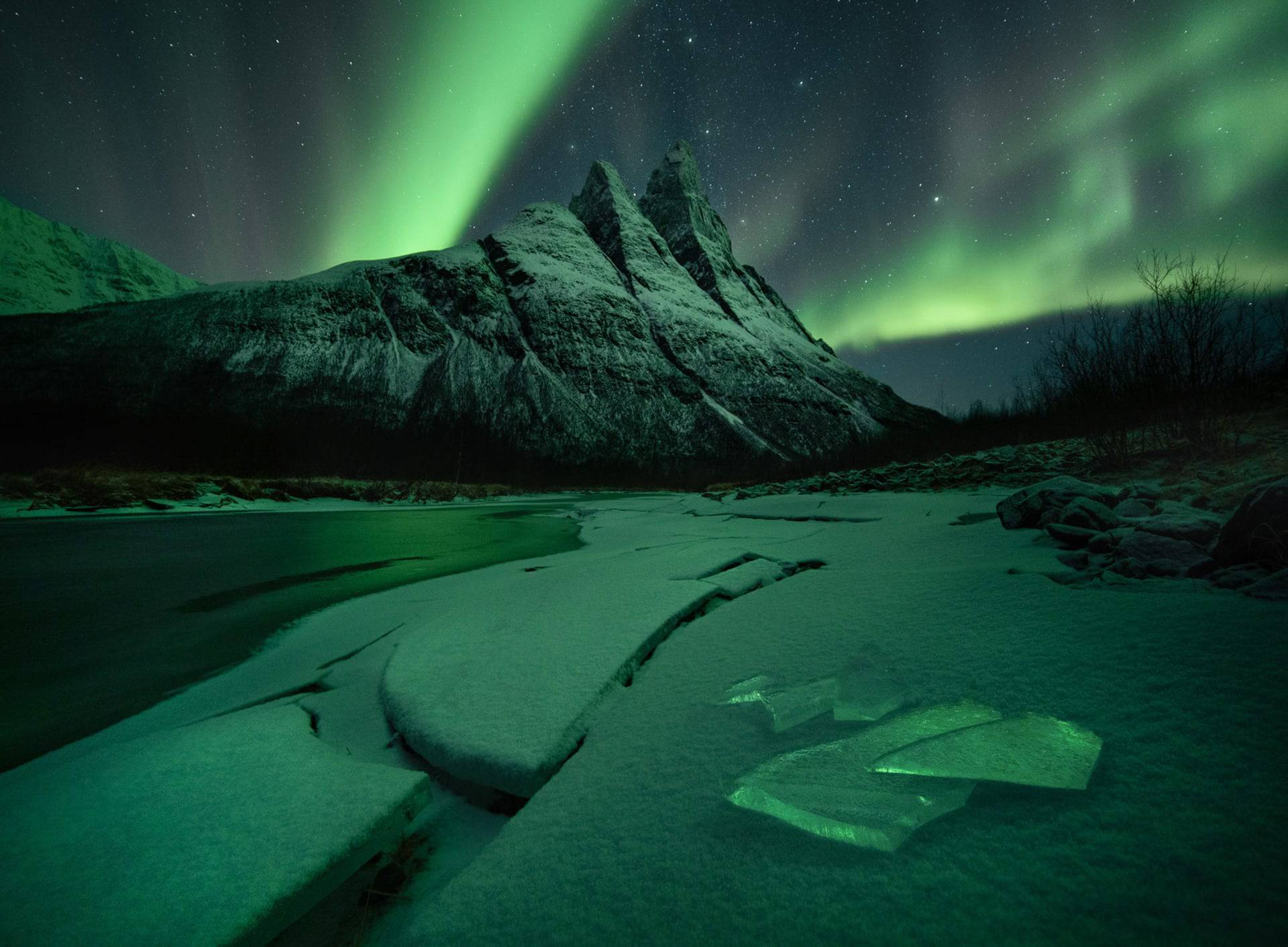
Picture: Virgil Reglioni
January skies tend to be among the best of the year. Darkness falls early, and by around 7pm the sky is about as dark as it gets at any stage throughout the night.
This contrasts with the summer months when the skies never get fully dark because the Sun never fully sets.

Consequently, the number of stars that can be seen is only about 60% of those visible in winter. It’s not surprising, then, that a winter sky has a more immediate impact on the casual or even dedicated observer.
So what should one look out for in winter skies, specifically this January? Some phenomena are transient, such as the positions of planets.
For example, by mid-January 2022 the only planet easily visible is Jupiter. It sets in the southwest just after sunset.
Both Venus and Saturn, which had been visible in December, are now lost in the glare of the Sun.
Roll the clock forward to January 2023 and Venus will be invisible (behind the Sun as seen from Earth) while both Jupiter and Saturn will be prominent after sunset for most of the night – a completely different situation to this year.
While it’s tempting to imagine that Jupiter, say, is always visible at a given time of the year in the same location in the sky it isn’t true. Like all planets it wanders (hence the name planet, derived from the Greek planetes meaning wanderer). So think carefully when your mind wants to convince you that Jupiter was always visible in the west during the Christmas holidays when you were young. Just like the appearance of snow, it really wasn’t.
Another transient phenomenon is meteors. Although it’s true that meteor showers happen at predictable times of the year, the number of meteors or their direction or brightness is impossible to predict exactly. And once a meteor has appeared and disappeared, the dust particle which caused it has disappeared forever, now vaporised by its high-speed encounter with the Earth’s atmosphere.
These eerie green-and-red sheets of light are the result of interactions between particles emitted by the Sun and the oxygen and nitrogen (primarily) in the Earth’s atmosphere. They are transient because the Sun’s emission of particles waxes and wanes over periods of hours to days. We can’t always predict when the heightened activity of the Sun will occur, but thanks to a suite of spacecraft and observers on the ground we can get an early warning once the activity has begun, giving us time (usually a few days) to prepare the tea and sandwiches and warm clothing.
What about phenomena that re-appear at the same time and place every year? Here we can rely on the stars and the constellations they make up.
One of the most recognisable in January is Orion (the Hunter), easily visible to the SE a little after sunset as a line of three stars that make up the Hunter’s belt.
To its upper right is Taurus (the Bull) with its bright red star Aldebaran. To the upper left is the bright blue star Capella in Auriga (the Charioteer).
These stars would have appeared fixed relative to each other to our ancestors, with the certainty of reappearing at the same time every year – eternal and unchanging.
Except that they too are also transient. With the unaided eye all of these stars can be seen to be moving relative to each other over millions of years, but with telescopes and spacecraft, we can measure their tiny movements with exquisite precision over a period of only months or years.
We live in a transient Universe where everything moves and everything has a finite lifespan. But you’ll only miss them if you don’t look up!