Pete the Vet: Should we let the dog lick the dishes in the dishwasher?
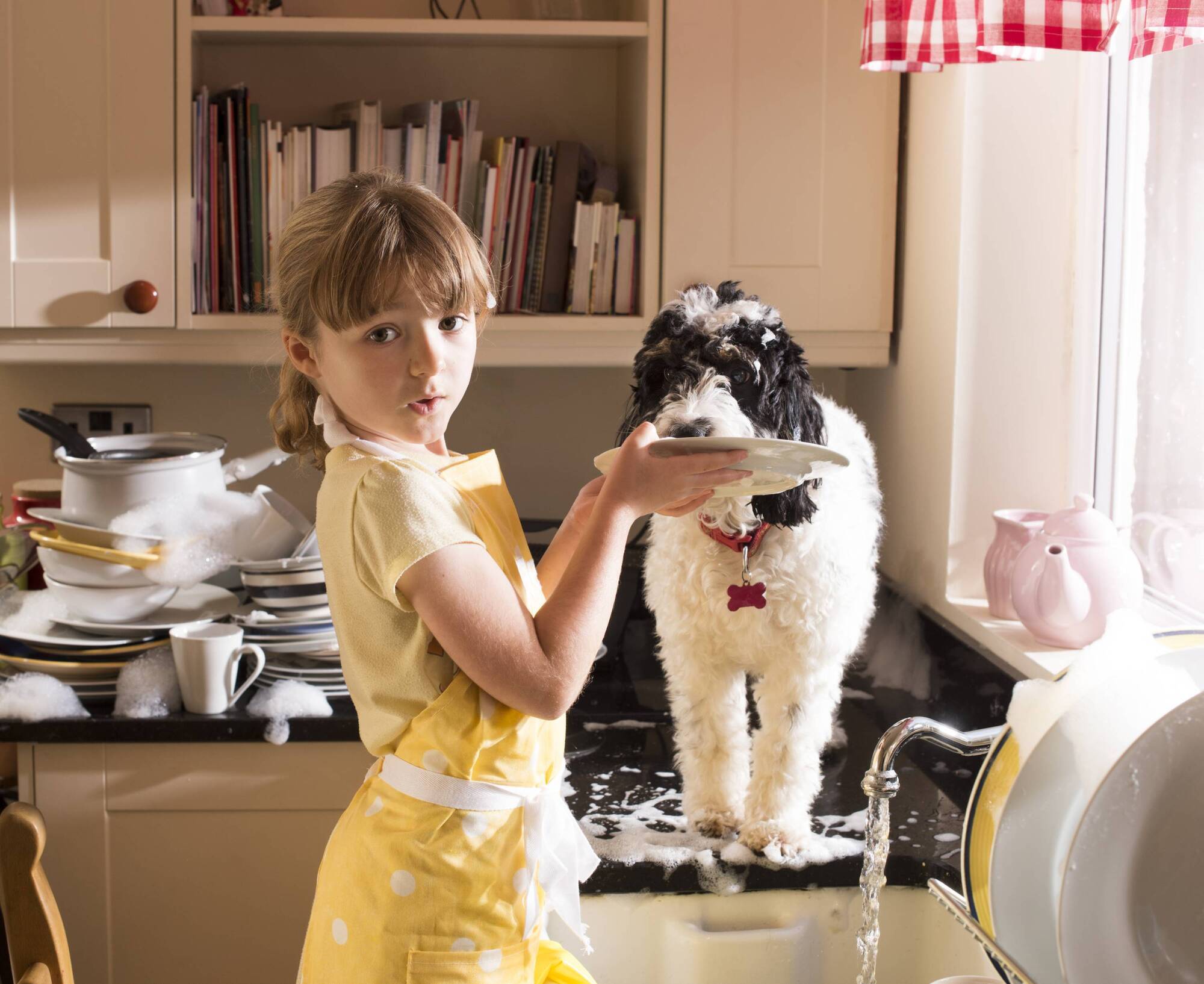
Pete the Vet: I’m not convinced that allowing dogs to lick out dishwashers is a good idea in terms of having appropriate behaviour boundaries for your pets, but that’s a different question!
It’s true that dishwashers are generally far more effective than handwashing at removing germs from plates and bowls, removing over 99% by a combination of washing off food and debris (and flushing it down the drain), creating an alkaline environment with the dishwasher detergent, and then using heat to kill any residual bacteria and viruses.
That said, many dishwashers now have a quick or eco programme, using shorter times and lower temperatures. I’d suggest that you avoid these, and use the hotter, longer cycles instead. If you do this, you can be extra certain that your husband’s home hygiene practices are ultra-safe. I’m not convinced that allowing dogs to lick out dishwashers is a good idea in terms of having appropriate behaviour boundaries for your pets, but that’s a different question!
The timing of vaccines is important. If given too early, the antibodies from the mother’s milk neutralise the vaccine, preventing it from “taking”. If given too late, there’s a gap when the pup may be vulnerable to infection. Each different brand of dog vaccine comes with a data sheet that specifies the precise age when the vaccine should be given.
Two vaccines are usually needed, with the second normally given at ten or twelve weeks of age.
The best answer is to talk to the vet who will be giving the vaccine: they’ll let you know the requirements of the vaccine brand that they use.
Yes, this is your fault, no he does not hate you, and to become the boss, you need to change how you are reacting to him. Behaviour that is rewarded tends to increase, so you must be accidentally rewarding him for shouting and nipping (eg by giving him what he wants).
Instead, you need to ignore his bad behaviour, and start to reward him for good behaviour (give him what he wants when he is behaving in a way that you want him to behave).
It’s difficult to ignore shouting and nipping, so put him in another room when he does this. You may need a sheet of wood to help you gently herd him away from you at such times.
Greyhounds don’t generally need professional grooming: they have short, easily-maintained fur.
However some folk still like their dogs to be shampooed, brushed, and beautified by a professional, and there’s nothing wrong with that.
Nail trimming is an important part of dog care. You can do this yourself with appropriate equipment, but I’d advise professional instruction at first, from a groomer or your vet.
Yes. Cats are highly vulnerable to social stress in situations like this, and illnesses like cystitis are a common consequence. I’d consider making him an indoor only cat, with a couple of litter trays, a cat tree and some toys to entertain him. I’m afraid it’s impossible to “put manners on” other people’s bossy cats.
I’d recommend two or three simple common goldfish: they are social creatures, so it’s wrong to keep them as singletons.
Some cats do become captivated by the temptation of moving, shiny, small prey like this, so you do need to keep the fish out of reach (and perhaps out of sight) of your cats, with a securely fitting lid on the tank, and a solid base that can’t be tipped over. Choose as big a tank as possible, and avoid a traditional bowl.
The simple answer is to ask people to “be like a tree” when she does this, staying still and non-reactive. She will learn that this is not fun for her, and will stop. This is the tip of the important iceberg of potentially difficult animal behaviour. You need to engage with a good dog trainer to get good, individual advice on every way that you interact with her.
There may well be more economical options, either at the vet, at pet stores, or online. However, you need to factor in the risk of the high cost of a recurrence of tummy issues. It’s easy to provoke gastrointestinal irritation all over again by suddenly changing to the wrong food. Explain your budgetary concerns to your vet, and they may be able to guide you to a cheaper but still safe option.


CONNECT WITH US TODAY



Be the first to know the latest news and updates