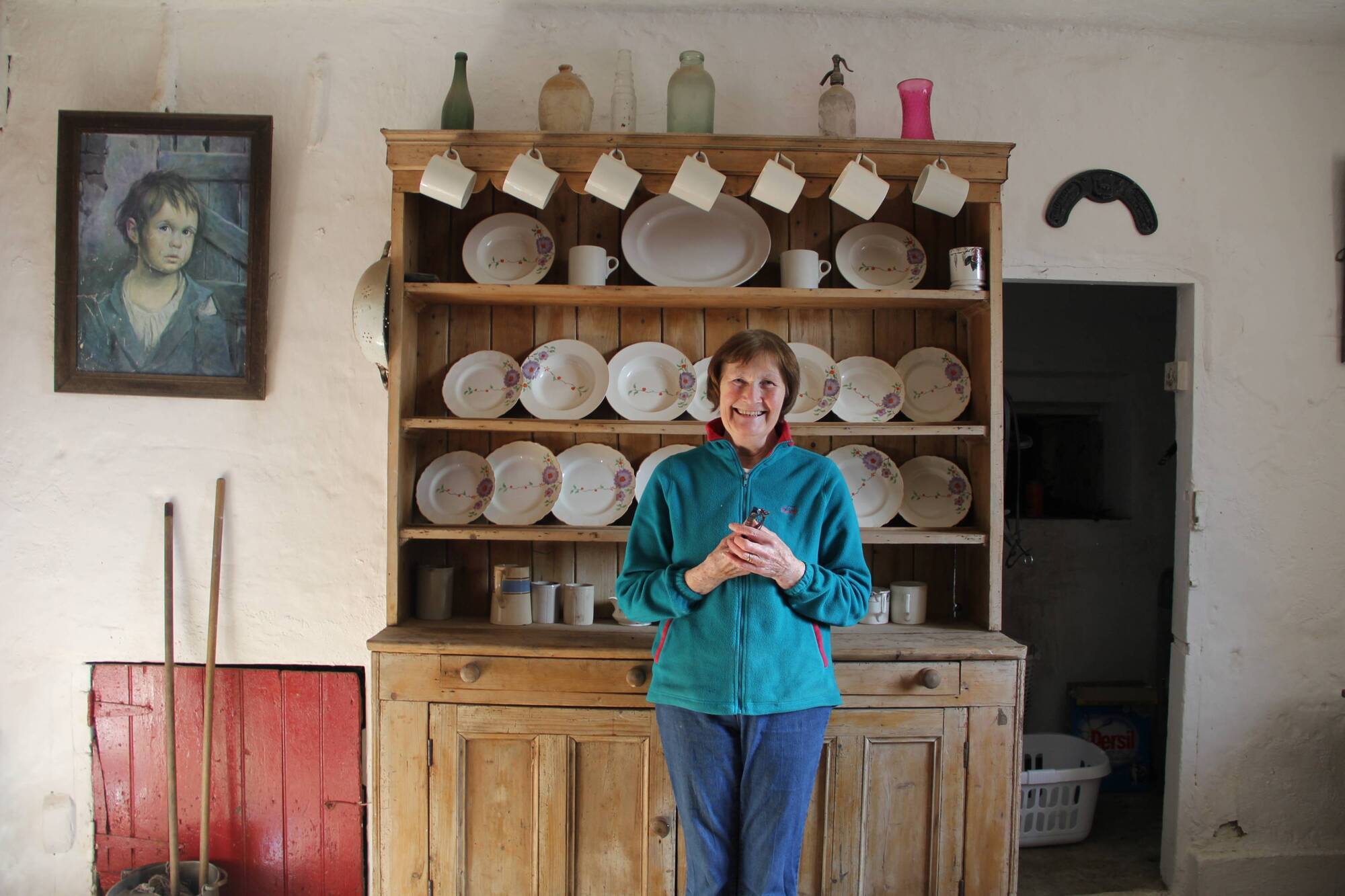
There is something in us as humans where we find comfort in the past —- a safe place where we can remember good things from our lives and also connect with the memories of those gone before us. Some connect with stories or songs while others with objects; an old photo, a vintage tractor or a piece of furniture.
The humble kitchen dresser is one of these objects that has caught my attention over these years. It wasn’t until February 2015 though, after the passing of my then 103 year-old grandmother, that I began working on this collection which is now known as The Irish Dresser Project.
The seed
In many ways, the seed for this collection was planted in the mid-1970s when I spent the first years of my life with my grandmother in her ‘two-up, two-down’ cottage in Ballygarrett, Co Wexford. At the epicentre of this small house was a simple, practical and well-used kitchen dresser.
In October 2014, her independent lifestyle changed due to ill health and she simply could not make it upstairs to her bedroom. Many options were considered and one suggestion that came from a visiting nurse was that she move her bed downstairs. The kitchen space was so small, the nurse suggested that her dresser be removed. Not a woman to mince her words, she responded, “Like shite, no one is touching my dresser”. She passed away in February with her dresser remaining intact.

The Dresser Project
Since then I have teamed up with various Arts Departments around the country who commissioned me to photograph and film these dressers and the owners. Since then I have been in over hundreds of homes around the country drinking tay and chatting to the owners and presenting the findings at local talks and exhibitions.
One thing that struck me on this journey was the overwhelmingly positive connection that many Irish people have with this humble piece of furniture. The dresser was at the heart of many homes from the farm labourer to the small farmer and from the big farmer to the big house. The dresser was the fitted kitchen of the day - the space where everything lived. In fact, you could often find a setting goose, hen or duck in the bottoms of many.
From functional to shrine-like
Invariably it was a woman’s space. Her domain from where she managed the running of the house; it was as much a filing cabinet as it was a place to keep plates and mugs.
Interestingly I thought I’d collect more women’s stories while in fact I found the opposite.
For many men these loaded spaces, overflowing with memories of the women in their lives; their mothers, their aunts, their sisters and their grandmothers.
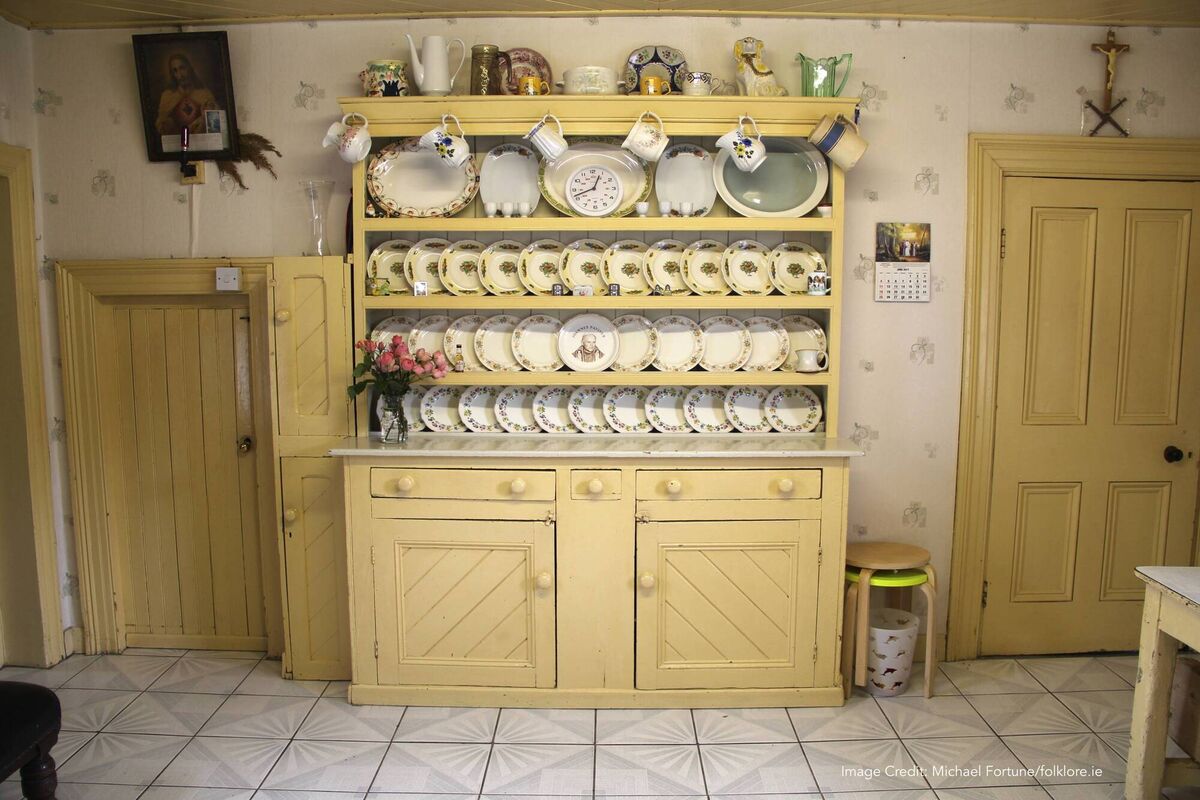
One thing that became apparent to me was how the role of the dresser changed over the years from a practical place to hold ware, cups, milk, flour, sugar, etc. in the kitchen to a more shrine-like position in the home. I noticed this shift in my own grandmother’s dresser as you can see from the two photographs included.
In the late 1970s it held daily-used plates and cups, while at the time of her death it was loaded with ornamental cups, plates, knick-knacks and souvenirs. This is a pattern I noticed in other homes too where the dresser became a form of museum where it told the family history ie souvenirs brought home from school tours by their grandchildren or knick-knacks brought by the English cousins who came home during the summer months.

From centre stage to abandoned
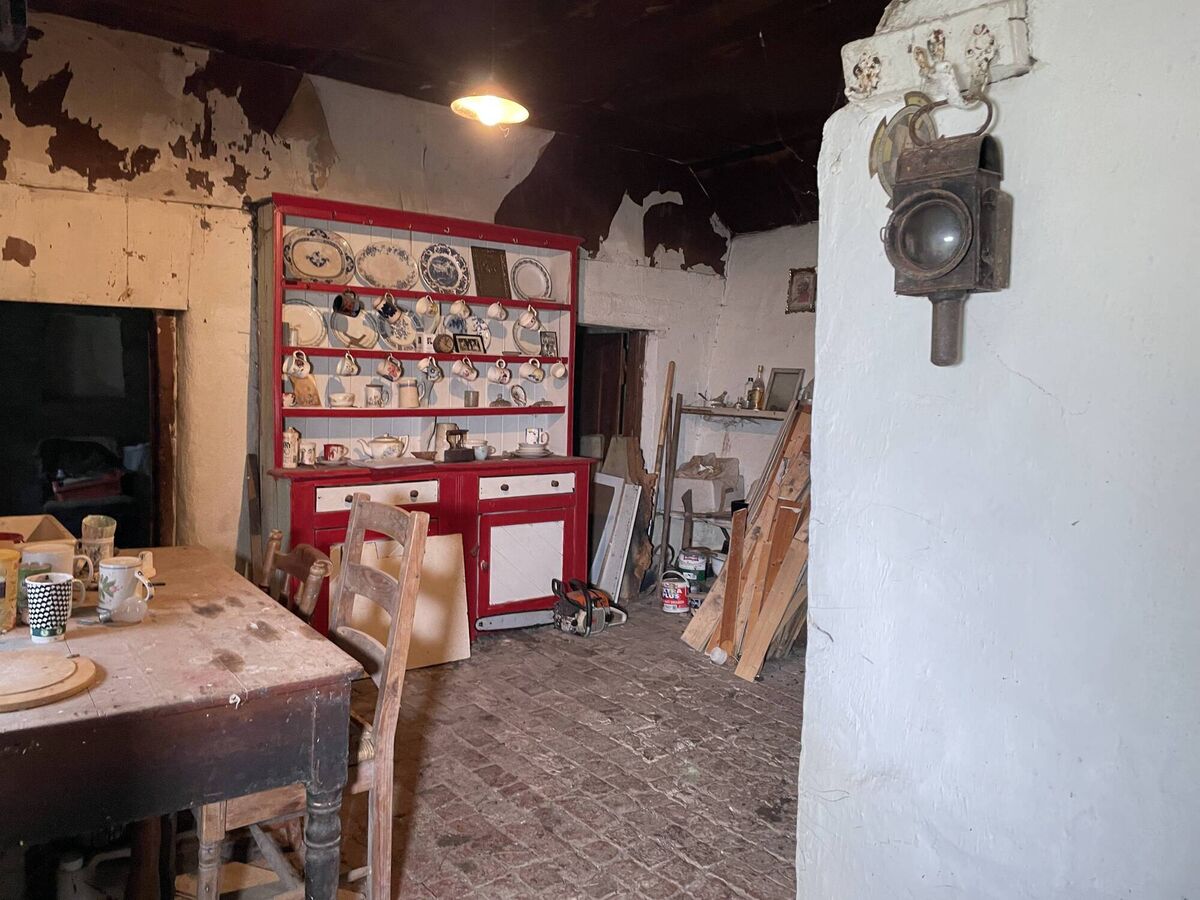
The nail in the coffin for the freestanding dresser came about when the fitted kitchen and presses arrived en-masse in the 1970s and 80s. No longer did we have room for them and so many were sent outside to end their days in sheds and barns holding tins of paint, tools and God knows what.
Sadly, some never got that far and I’ve documented dressers falling apart in abandoned houses around the country, many still adorned with the cups and plates of their departed owners. Many also left Ireland by the container load across the sea to America and Canada in the 1980s.
Wedding presents
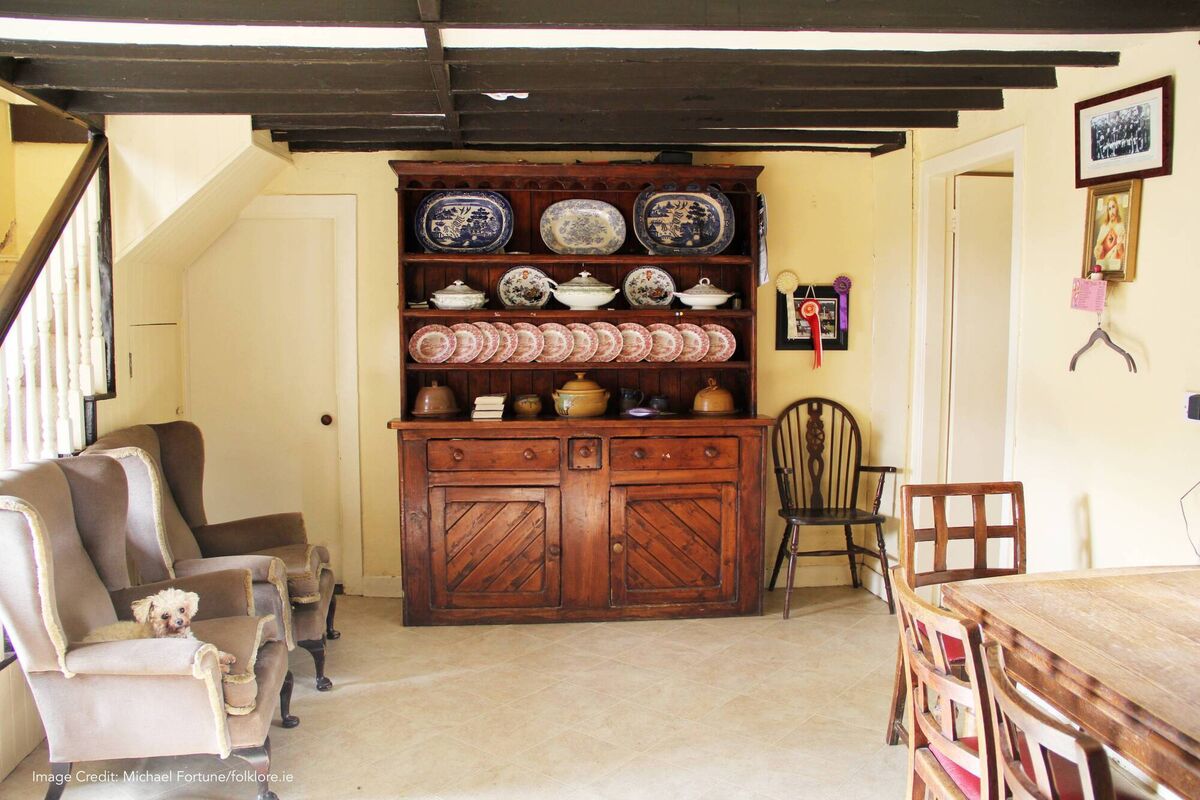
One thing that struck me was how many were made as wedding presents by husbands for their wives. I found this from Mayo to Wexford and Carlow to Clare and from a period spanning from the 1890s to the early 1950s. This was the ultimate gift from a husband to his new wife. Such was the case of the dresser belonging to Patrick and Margaret Niland from outside Claremorris, Co Mayo where you can see love-hearts adorning the head of the dresser. In another wedding present dresser from Carlow, you can see the text ‘God Bless Our Home’ cut into the head by John Brennan when he married his wife Annie in 1929.
In cases where the husband wasn’t the handiest the work would be commissioned by the husband or his family to a local carpenter and gifted to the bride as a wedding present.
In many cases fine wood was scarce so lesser quality pines were used and painted to cover up any blemishes. In some cases people re-used wood from old shipping crates and tea-chests and you will often find lettering and text remains on inside door panels. As paint was often scarce too, the insides also avoided the lick of the brush and this is why quirks like this survived.

IRL experience
Nothing will ever beat the experience of standing physically beside the dresser and chatting to its owner, rubbing your hand off it, noticing the layers of dripping paint and the marks and scrapes left by the owners over the years.
It is here people will bring you on a tour, pointing out plates belonging to a grandmother, wedding present gifts, a little jug they used to hide money in as a child or the place where they put the important letters or bills.
The calendar on the wall
Last year during lockdown I went sorting hundreds of photos of dressers on hard-drives and thought I should do something to make these physical. So I combined two loves of mine and produced The Irish Dresser and Folklore Calendar.
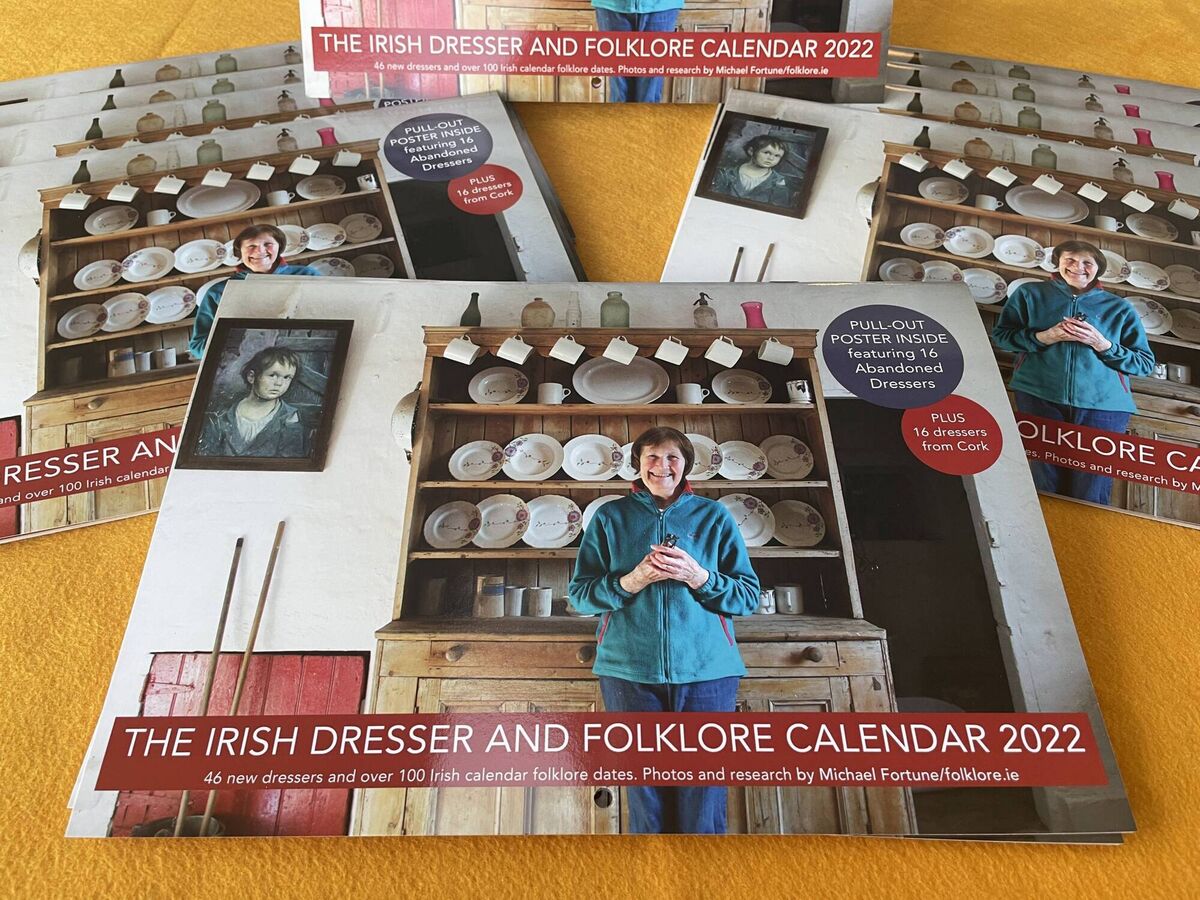
When we think of calendars we often think of half-naked firemen or oil lorries so I knew I was moving into interesting territory. I’d also toyed with the idea of a book but I was drawn to having something with a purpose in someone’s kitchen. So a different dresser and story appears. Each month also contains dozens of seasonal folklore dates from weather lore and when to plant spuds, to when to put up your May Bush and to when take down your Christmas decorations. I even included dates from our new Irish communities such as the Polish Basket Blessing tradition at Easter and the Chinese New Year.
So this year, I have produced the 2022 version complete with 46 new dressers and their stories plus over 120 dates in the Irish folkloric calendar year. This year also contains a special feature on Cork Dressers and Abandoned Dressers.

- If you like to own a copy you can order at thedresserproject.ie

Subscribe to access all of the Irish Examiner.
Try unlimited access from only €1.50 a week
Already a subscriber? Sign in
CONNECT WITH US TODAY
Be the first to know the latest news and updates