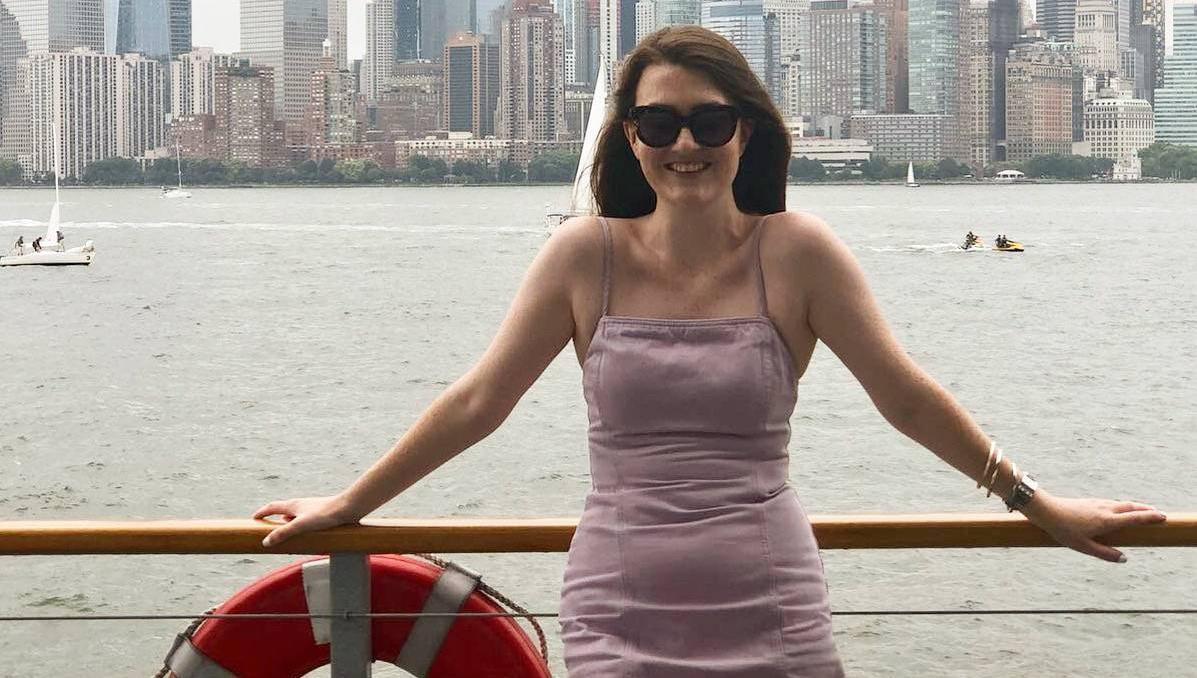
UPON returning home from a year living in New York, I read ‘Goodbye To All That’, a 1967 essay by Joan Didion. It was about her experience of vacating ‘the city that never sleeps’ in favour of much-needed rest in California. Didion loved everything about New York, until one day she found herself crying on a street corner and riddled with stress.
For one year, I lived far out in Brooklyn, where the rent was cheap and the subway ran above ground. I commuted by train for two hours each day, standing pressed against others like a sweaty sardine. On the weekends, I crashed with friends, who lived close to our favourite bars in the West Village, and I arrived home Sunday evening to find that, finally in my own bed, I was still unable to sleep.
I worked in a corporate communications agency on Wall Street, where I managed entire accounts alone, despite only having two years of experience. On any given day, I could arrive at the office to find that a colleague had been let go that morning for an unknown, or unspoken, reason. Run by an industry veteran CEO, the agency was dog eat dog, and the humble employee was bottom of the food chain. All of us were in our early 20s, cheap, and hungry.
As a coping mechanism, co-workers told me to find what they called a ‘cry spot’: Working in consultancy in New York meant finding a place nearby the office where I could cry in peace. I chose a Starbucks across the road. I would walk there alone, after client meetings, call my mother, and finally exhale.
Outside of the office, I took up writing. I made up stories about characters with similar experiences to mine, but who lived them better. I wrote in the cafe near my apartment, where I befriended other writers, some actors, and general creatives. Around me, everyone had more than one thing to do: There was the thing we were all doing, and then the thing we were working toward — a dream bigger than our current reality.
When I stepped out of my American Airlines flight into Dublin Airport for the last time, I breathed a sigh of relief. Telling stories about New York takes me back to midnight subway rides, skyscraper nightclubs, dinners with C-Suite clients, and the view of the city from Brooklyn Bridge.
I’m thankful for the rose-tinted glasses, which allow me to remember my year abroad fondly, but I’m more thankful for what I learned about the pace of a happy life.
Achieving contentment while also trying to thrive in modern capitalism can seem impossible. The engrained desire for material fulfillment — through status, fame, and wealth — presents us with a list of goals that might seem accessible for the first few years out of college, but which, after that, and after the fight to achieve, wrestling with those ambitions, often leaves us burnt-out and miserable.
Constantly hustling, grinding, and aiming to be a ‘boss’ at multiple ventures comes at the cost of a peaceful and balanced life. In New York, where everyone around me bought into the culture of being ‘busy’, the people were the most overworked I’d ever met.
Setting boundaries in a perpetual ‘busy’ culture
For years now, analysis of ‘busy culture’ has highlighted the detrimental effects of the constant hustle to mental health. The impact of stress caused by overwork is well documented, with the Mayo Clinic outlining a list of potential effects, including fatigue, migraines, insomnia, mood changes, and chest pain.
Stress also has worrying and profound impacts on behaviour, such as increased drug and alcohol dependence, tobacco use, social withdrawal, and damaging eating patterns.
Often, our capacity to say ‘no’ to stress-inducing situations can be unclear. In the workplace, prioritisation of mental health and wellbeing is a cultural trend that needs to be implemented from the top down. Where junior employees see management reject busy culture, they’ll feel more comfortable doing the same. Choosing a job based on balance and wellbeing is likely to be a defining trend for the future of work.
In our own lives, when confronted with the pressure to work longer and harder, to be seen to be adventurous on social media, to rack up extracurricular achievements, and to pour time into side hustles, the strength to say ‘no’ and to do less has to come from within. We can make informed choices to engage with social-media personalities who don’t encourage busy culture and to surround ourselves with positive people and reinforcement.
Living through a global pandemic, we might feel increased pressure for results, personally, physically, and professionally. What else would we be doing with all this ‘down time’? Despite this seemingly logical approach, the fact that our bodies and minds are under increased stress because of the state of the world means that it’s fine to take this time locked indoors to do nothing. It’s acceptable to exit the most testing year of our lives without having lost weight, started a new business, or undertaken any personal resolutions.

Where happiness lives
The idea that we have to work relentlessly, and toward multiple pursuits at once, to be successful ignores the question of whether this kind of success is the key to happiness. It’s unlikely that anyone theory or individual can definitively say what the key to a happy life is, but the negative impacts of busy culture on mental health indicate that the answer is not hyper-productivity.
The Harvard Business Review conducted a study of 100,000 adults and found that the key to a happier life is to have more time than money. Of the participants, a stunning majority of those who gave up money in favour of time ended up with longer-lasting relationships, stronger friendships, and a better sense of wellbeing and identity.
The research posits that there’s a sweet spot of financial success — a stage where people aren’t burdened with money worries or poverty but don’t have so much as to make them miserable.
Having enough to get by comfortably, and then taking a step back out of the rat race to have more free time, is where happiness lives.
Of course, saying ‘no’, stepping back, and doing less might bring up ‘fear of missing out’ (FOMO). When it comes to the endless plethora of side hustles that other people have, the feeling that everyone else is more successful than we are can be deeply upsetting. Conquering this requires a conscious and long-term shift in how we measure success and achievement.
Rather than studying the achievements and actions of others, overcoming FOMO, and being happy while doing less work, means paying more attention to ourselves, where we are, and how we feel, but without any toxic comparison. Research shows that giving gratitude and being more thankful for what we have right now, as opposed to always striving for more, lead to a better quality of life.
Pressing pause on the race to success
Sitting in that Brooklyn cafe with writers, artists, and students from various fields, one thing was abundantly clear: Every one of those hustlers was too young to be so overwhelmingly busy. Studies show that Generation Z (those born between 1997 and 2015) and millennials (born between 1980 and 1996) are highly likely to suffer from anxiety and other mental health issues associated with stress.
Young people are also prone to burnout, as a result of emotional and mental exhaustion.
The root of the problem is the idea that life stops at a certain age. Millennials, many of whom are now approaching the dreaded 30-year mark, feel immense pressure to achieve while in their 20s, as though the possibility of doing anything significant diminishes with age. For generations, ‘30’ has been sold to young people as a deadline for assuming responsibility; the age when we should give up on whatever dreams we have and settle down.
Many millennial hustlers haven’t considered that ‘settling down’ might actually be good for them. It’s no wonder studies show that most people feel happier in their 30s than in their 20s.
While we idealise youth and possibility, at 30 we tend to realise that not only does the world not end, but in a more established phase of adulthood there’s a comfort and contentment in taking the foot off the pedal and just doing what you want. Perhaps it’s only when we stop holding ourselves to onerous checklists of achievements, and quests for more, more, more, that we begin to find joy in the small things.

Goodbye to all that
When Joan Didion arrived in New York for the first time, she said that some instinct told her nothing would ever be the same again. She remembered the first moment she saw New York, but she couldn’t quite remember the moment when, for her, the allure ended.
New York comes to me in flashbacks of either intense elation or intense hardship. While living there, I was either on top of the world or I was in a metaphorical gutter, crying in my Starbucks spot. I remember my first night there, riding the subway to Times Square and standing mesmerised, staring up at the lights. I remember when I truly began to feel like a New Yorker and knew, suddenly, that Times Square was vile and that downtown was where I belonged.
I remember one night, while drinking in an Irish bar after work, a group of Wall Streeters put a $100 bill in front of me — ‘to pay for a round’, they said. I remember going out on Christmas Eve, dancing until 4:00 am with a bar full of people dressed in thermal layers.
Just as profoundly, I remember the feeling of being brought for coffee by my boss, thinking, for the third time that month, that I was getting fired. I remember seeing rats on the street eating discarded pizza slices. I remember feeling the energy of someone crying beside me on the subway, only to be ignored — their psychological privacy respected — by everyone. I remember friends on crash diets with no carbs. I remember the ever-present feeling that, at any moment, I might collapse from utter exhaustion.
In explaining retrospectively why she no longer called New York her home, Didion said that she left in the midst of heavy despair and never returned. Much like everyone else, she cried in public places (laundrettes, in her case) to deal with the stress of it all.
Years later, Didion’s essay inspired an entire collection of work on the same subject. The book, titled Goodbye To All That: Writers on Loving and Leaving New York and edited by Sari Botton, forms the same conclusion as its muse: That a demanding pace of life is not conducive to personal wellbeing.
Recently, an Irish friend of mine left the Big Apple for the first time in years.
Upon returning to Dublin, she compared living in New York to pushing a boulder up a hill, while people were throwing things at her. She told me this on the phone, while in her family home in Dublin. I could picture her drinking tea on the couch — a survivor.
All over the world, people are living happy lives having removed themselves from stressful environments.
The reality might be that pulling away from work and ambition, in favour of relaxation and time for friendships, family, and personal pursuits, leads to a sense of calm that is rewarding in itself.

Subscribe to access all of the Irish Examiner.
Try unlimited access from only €1.50 a week
Already a subscriber? Sign in
CONNECT WITH US TODAY
Be the first to know the latest news and updates