Aoibhinn Ní Shúilleabháin: There wasn’t a question that I wouldn’t breastfeed, but I was naïve
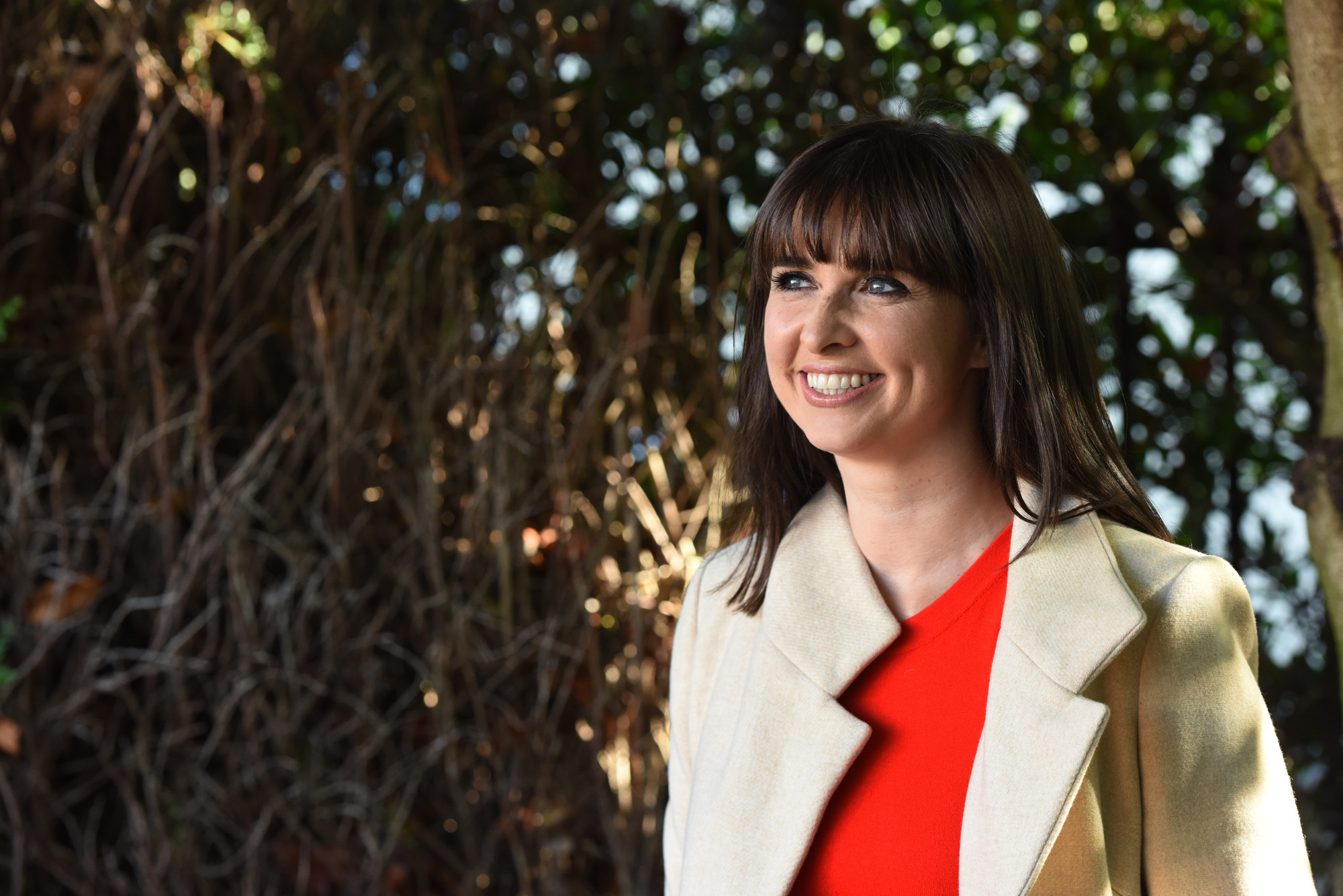
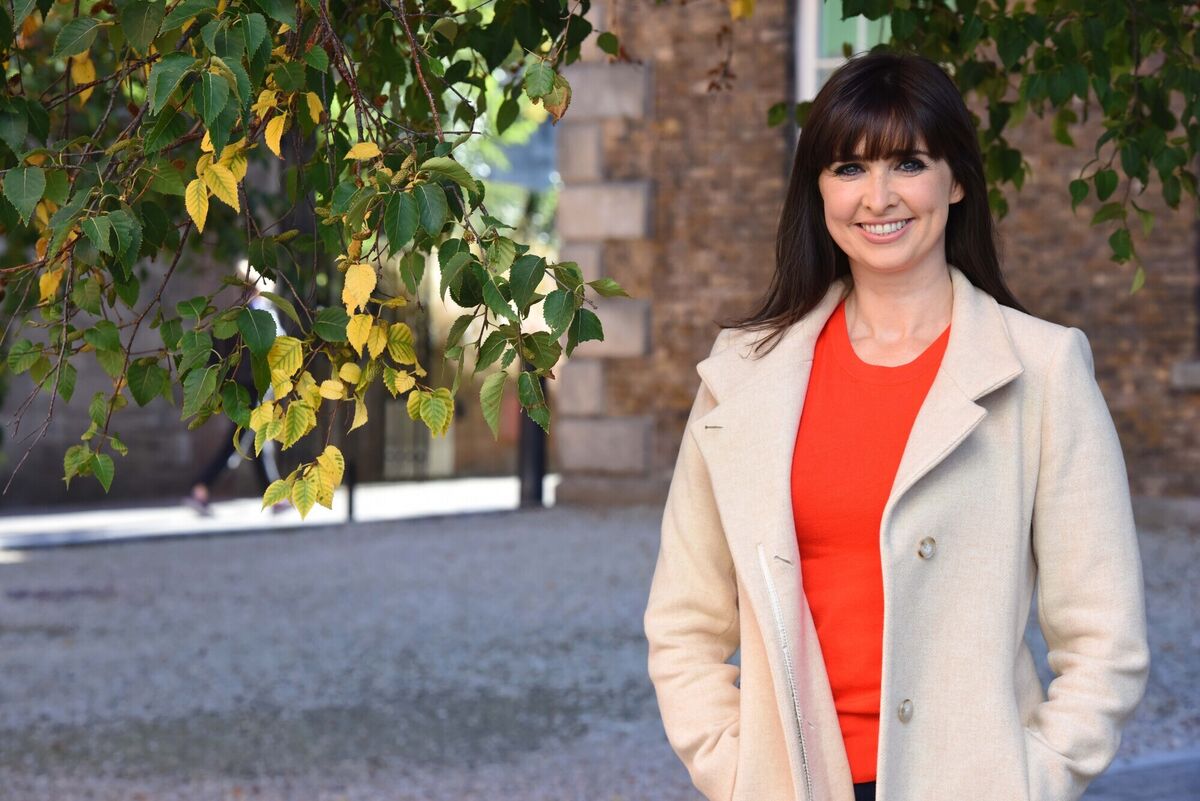
Aoibhinn Ní Shúilleabháin. Photograph Moya Nolan
Aoibhinn Ní Shúilleabháin isn’t trying to be a superhero — and she doesn’t want to be portrayed as one.
“I’m just one of those annoying people who, if I see something wrong, like to try and fix it. Some of my friends are the same. We ask each other ‘how did we get like this?’”
The mum-of-two has become more passionate about “making small bits of the world a little better” since the births of sons, Naoise in January 2019 and Daragh in October last year. “When you have children you see the world through a different lens. You realise we can all make the world a bit better for someone else.”
With the first week of October designated National Breastfeeding Week, Aoibhinn’s mind is on that. Her own experience crystallised for her some glaring gaps in the supports women need around breastfeeding.
“With both boys there wasn’t even a question that I wouldn’t breastfeed. But as a first-time mum, I was naïve. I just expected it to happen.” Instead the broadcaster and lecturer saw Naoise unable to feed and whisked off to Neonatal ICU with low blood sugars. “I just wasn’t prepared for this. You’re very worried, waiting for baby to come back, wondering what’s wrong with the breastfeeding, why isn’t it working, are you doing it the wrong way.” Aoibhinn didn’t realise her breast pain was because baby was trying to latch any way he could — and this was because he had tongue-tie. “In hospitals in other countries, babies are routinely checked for tongue-tie before they’re let go home,” says Aoibhinn, who finds it frustrating that those early difficulties were down to something that could have been diagnosed and fixed so much sooner.
Once home, she was at her wit’s end, “thinking 'is it supposed to feel like this?'”. Immediately the PHN saw Naoise she confirmed really bad tongue-tie. Aoibhinn and photographer husband, Carlos Diaz, booked him in with a private consultant, and the problem was fixed. “After that we got a rhythm and it all worked fine. I breastfed for nearly seven months until I returned to work,” says Aoibhinn, assistant professor in the School of Mathematics & Statistics at UCD and director of the Initial Teacher Education programme in the College of Science.
With Daragh, Aoibhinn immediately suspected tongue tie when he couldn’t latch. She asked the hospital lactation consultant if he perhaps had tongue-tie. “She said no.” Unconvinced, Aoibhinn rang the private consultant she’d booked before, but he was on holiday and she had to wait two weeks for an appointment. “It was two weeks of excruciating pain. The lovely PHN visiting me could see I really wanted to breastfeed — and the pain I was in — and encouraged me to just hold on. When the consultant saw Daragh, he diagnosed an extreme form of tongue-tie and fixed it.” Aoibhinn doesn’t see it as just one person’s responsibility to get things right for mums and newborns.
Her experience highlights for her that whether women succeed at breastfeeding can be down to financial resources – and this just isn’t right. “I’ve the resources to go to a private consultant who could attend to the tongue tie. But what are the options for those who don’t have resources? Whether a mother breastfeeds or not shouldn’t come down to finances.” And then there’s her house move a week before Daragh was born — and her sudden access to a public lactation consultant, simply because she had a different post-code. “She was amazing, so helpful with Daragh. She held a weekly online webinar for mums and it was such a resource. But why is it a post-code lottery that you can have a public lactation consultant in one part of the country – but not in another?” It’s not that Aoibhinn thinks women should be required to breastfeed.
“It’s everyone’s choice how they want to feed their baby, but those who want to breastfeed should be supported.” She’d like to see the National Maternity and National Breastfeeding strategies implemented. And she’d love to see the WHO Code for marketing of infant formula implemented here. ‘Ireland has the lowest breastfeeding rates in the EU and OECD, but it still hasn’t enacted these recommendations,’ she tweeted recently in a post that began with the observation ‘breasts aren’t good for business.’ Currently, fewer than six percent of babies in Ireland are exclusively breastfed at six months versus the European average of 25% and a global average of 38%.
“What WHO advises — and has for four decades — is curtailing advertising of infant and young child food and drink up until 36 months. Our current legislation only does this for six months. The companies are finding workarounds through social media, supermarket campaigns and the like,” says Aoibhinn.
With Daragh, Aoibhinn chose to use formula at four months because he had a tooth breaking through, making breastfeeding uncomfortable. “I’m not against formula. I am against the aggressive marketing of it. The only people who should be giving advice on how to feed babies – breastfeeding or formula — are health professionals. It shouldn’t be left to industry to tell you how to feed your baby.”
Aoibhinn’s children continually open her eyes to issues she mightn’t readily have considered before. Both boys attend crèche. “They absolutely love it. They’re thriving. The workers are fantastic. The management’s brilliant at setting up a lovely vibe.” In casual conversation a few weeks ago, she discovered workers weren’t always paid if they were off due to a Covid outbreak in their pod/class. “Through no fault of their own, they weren’t getting paid. Incredibly qualified workers — and we’re not treating them as such. This is a frontline job, minding children for healthcare workers and those working at home. The least we can do is to ensure they’ve fair working conditions.”
She’d love to see a not-for-profit early education system, like many of our European neighbours enjoy. “There’s state-provision. The cost isn’t crippling for parents — maybe €200 a month to have a child in childcare/early education. It’d make you green with envy.”
Aoibhinn, who endured two years of workplace harassment at UCD, spoke publicly about her ordeal because she wanted to highlight that it could happen to anyone — and to show you can go outside your own institution for help. “It has been documented that harassment, sexual violence and bullying are a problem in all third-level institutions around the world. Some people I’ve spoken to feel that however their institution deals with it is how it’s dealt with. But if it’s a criminal act, [dealing with] it doesn’t have to stay in the institution. These are issues the Gardaí are more aware of now and they’re better at building the case.”
She appreciates that Minister Simon Harris has really taken the issue on board. “It’s wonderful to see measures being put in place. All Higher Education Institutions have a policy on harassment — and a separate policy on sexual harassment, because sexual harassment is different to harassment of other kinds.” This policy would have benefitted her, she says. “I believe it would have. In a harassment policy, there can be a suggestion of informal mediation between the people. In a sexual harassment case that would be completely inappropriate.”
Back to work since August, she doesn’t have much time to relax, to “go for a walk outdoors in nature with a friend”. But she’s grateful for all the time she had with the babies during the pandemic, though it was tough that her five brothers couldn’t visit until Daragh was a few months old. “I really missed my friends, being able to sit, chat and hand the baby to someone else for 10 minutes while I had a cup of tea.” And now she continues to do the small things that matter. Passionate about lowering her carbon footprint, she and Carlos are “driving fully electric now and really enjoying it”. They’ve also invested in solar panels for their home.
When she thinks about where she might have got that gene for extending beyond herself to help others, she recalls stories told of her Mayo grandparents who, on both sides, had the great tradition of helping out neighbours. “Stories have been told to us of lovely things they did.” Clearly, their granddaughter is already creating her own multiple legacies.
- Aoibhinn co-presents RTÉ science series 10 Things to Know About; it begins airing in November.

CONNECT WITH US TODAY



Be the first to know the latest news and updates