Sky Matters: Autumn Equinox brings science and mythology together
At the present day we’re in a period where the Moon’s influence on high tides is relatively benign, but in the 2030’s the reverse is true.
We’re all pretty familiar with the idea that the Moon causes tides twice a day. These play a key role not only at the coasts where they are most obvious but also deep within the oceans where they contribute to the movement of huge volumes of water that, amongst other things, help support sea life.
What we’re probably less familiar with is the longer-term influence of the Moon on our planet. Careful observations show the Moon goes through an 18.6 year cycle, a fact that may have been known for thousands of years.
There is credible evidence that some ancient Irish stone structures (circles or tombs) integrated this long period cycle into their design. Prehistoric communities may have noticed that the Moon’s rising position on the horizon would move more and more northerly for 9.3 years and then drift more and more southerly for another 9.3 years before the whole process started again.
Those who built stone circles poured their hearts and souls into their construction, and it’s not unreasonable to imagine them carefully surveying the motions of celestial objects over generations so they could accurately reflect these in their designs. Should we ever doubt this, we only have to look at Newgrange which is unequivocally designed to align with the rising Sun on the midwinter solstice.
If these same ancestors who built the stone circles lived near the coast they might have noticed that the high (and low) tides also followed an 18.6 year cycle. Today we know this is the result of changes in the gravitational interaction between the Moon and the Earth (and the Sun) and we can predict its effect with high accuracy.
At the present day we’re in a period where the Moon’s influence on high tides is relatively benign, but in the 2030’s the reverse is true. High tides will be higher, up to 4m in places, and alongside rising sea levels from global warming will place increased pressures on coastal communities.
The sheer predictability of the phenomenon means we can take it into account when constructing sea defences or planning new towns, for example. Through astronomical knowledge we can act now to protect ourselves against (some) future phenomena – feigning surprise is not an option.
In September the Moon acts as a very handy pointer to three planets. Around sunset on 9th it will be close to the planet Venus. On 16th it will be below and to the right of Saturn and on 17th it will be below and to the right of Jupiter.
Venus and Jupiter are the brightest objects in their vicinity and unmistakable, while Saturn is somewhat fainter but still brighter than anything in the vicinity except for Jupiter. A pair of binoculars will show evidence of Saturn’s rings and although the view won’t rival the kinds of images we’re familiar with it will nevertheless enable you to be sure you’ve got the right object!
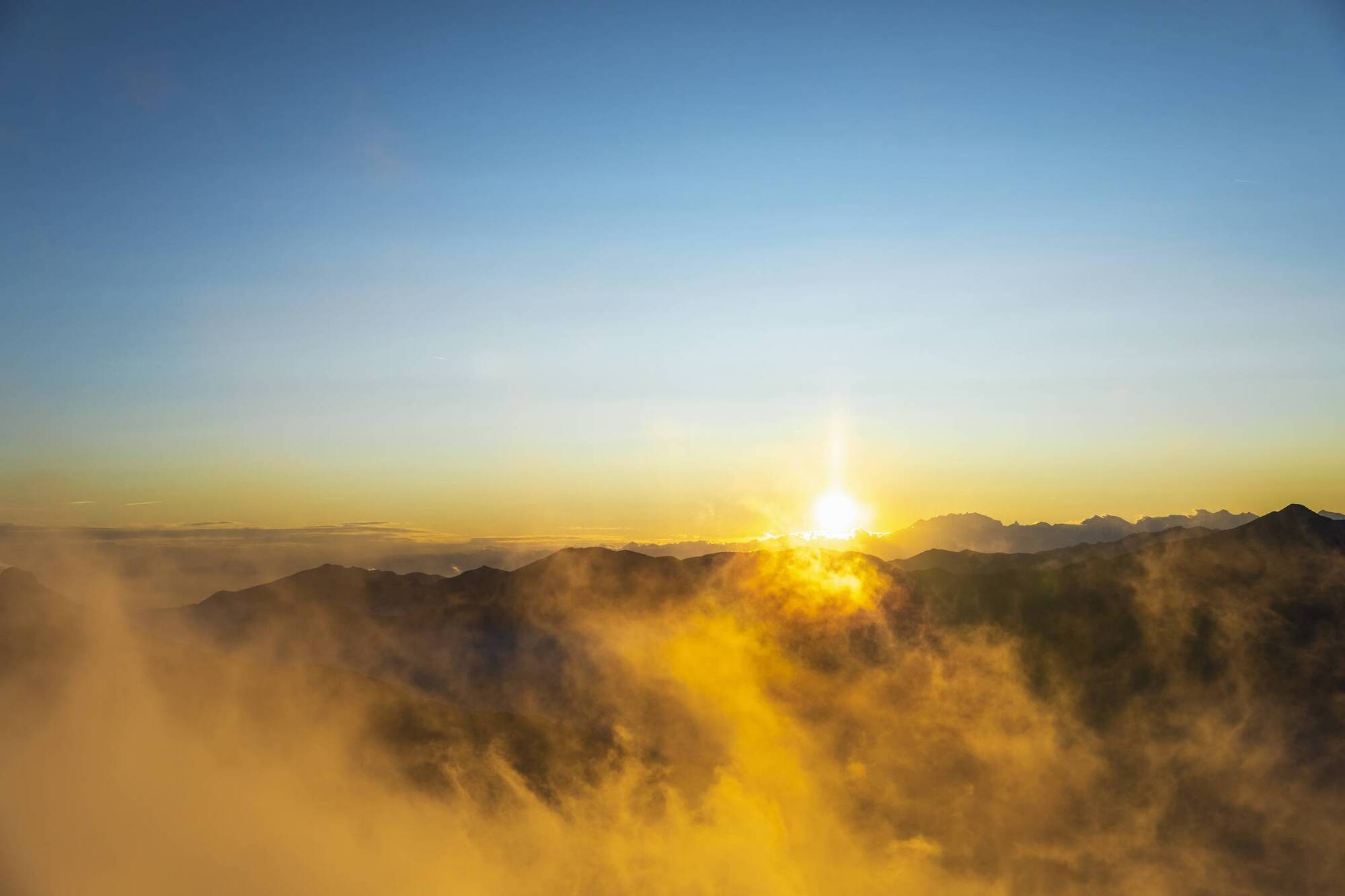
On September 22nd the Autumn Equinox marks the date when night and day are of equal length (well, almost). In astronomical terms it also represents the first day of Autumn, while in Meteorological terms Autumn begins on 1st September.
Unlike the 18.6 year cycle of the Moon, this annual solar event is much easier to predict and observe and it has a clear connection to the end of the longer days of summer and the associated harvest that has been made possible by the energy from the Sun’s rays driving photosynthesis in plants throughout summer.
Not surprisingly, then, our ancestors built state-of-the-art stone structures to align with the Sun on the Equinoxes, with one of the finest examples being the passage chamber on Carnbane East, Loughcrew, Co. Meath.
Without a scientific framework capable of explaining or predicting the motion of the Sun and Moon it may have been inevitable they would invoke a mythological framework to do so. Thankfully, today we can both understand the science and enjoy the mythology.
CONNECT WITH US TODAY



Be the first to know the latest news and updates