Sky Matters: Look out for spectacular Perseid showers this month
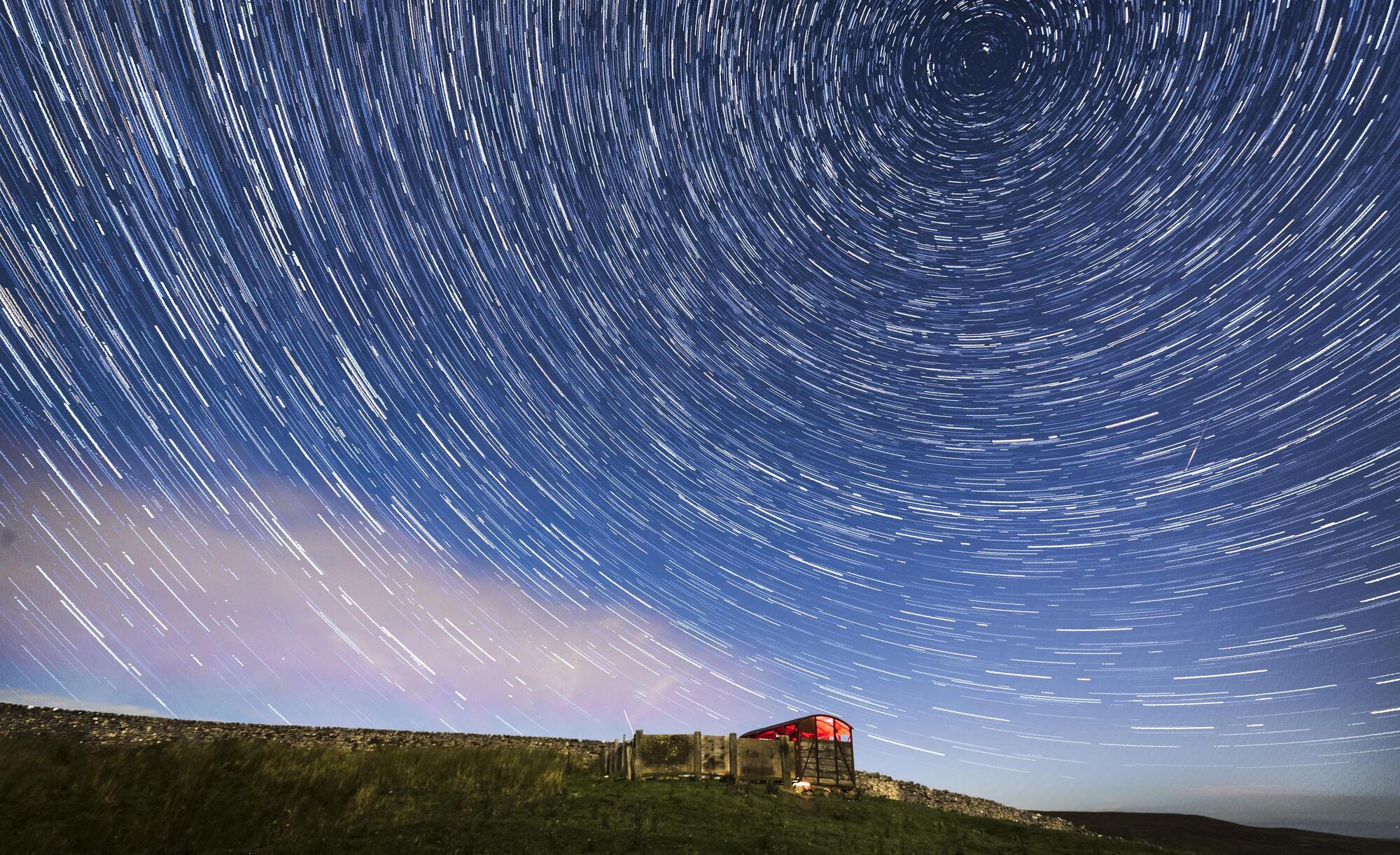
Meteors and star trails during a Perseid meteor shower. Picture: Danny Lawson/PA Wire
The August skies this year are filled with celestial spectacles for us all to enjoy. From 10pm or thereabouts the planet Venus can be seen setting in the west while at the same time in the south-east the planet Saturn rises. An hour later the planet Jupiter follows suit and the two planets are visible throughout the night thereafter. Saturn is at “opposition” on August 2, meaning it is at its closest this year and it’s an excellent time to look at it with binoculars or a telescope. You should be able to catch a glimpse of the rings which are so characteristic of this planet (although Jupiter, Uranus and Neptune also have rings, albeit extremely challenging to see from the Earth). Don’t worry if you can’t take a look on the 2nd as Saturn will look pretty much the same throughout August, with the added advantage that it rises earlier as the month progresses. On August 19th Jupiter reaches its opposition with Earth, so again the month of August is ideal for viewing it, largest of our Solar System’s planets.
The real showstopper this month is the annual Perseid meteor shower, all the better this year for the Moon being almost “New”, meaning it’s a thin crescent which will set early in the night leaving the skies free of interference from moonlight. This makes it easier to see fainter, and therefore more meteors. The Perseids are the result of the Earth crossing the orbit of comet Swift-Tuttle. As it does so, the tiny particles previously ejected from the comet burn up in our atmosphere and leave the characteristic trail of a “shooting-star” (erroneously named as they have no connections to stars). The Perseids are amongst the most reliable meteor showers of the year, and if we’re lucky and the Irish skies remain cloud-free then we’re in for a treat, especially on the night of August 12th and morning of August 13th when you might expect to see 60 meteors an hour. The best way to view a meteor shower is simply with your eyes. Give them 10 to 20 minutes to adapt to the dark (no lights, no mobile phones, and definitely no selfies complete with flash!). Perseids can appear anywhere in the sky and do so without warning, so ideally you should sit or lie comfortably and just look upwards. Even in August it can get cold, so do wrap up warmly. I find a hot water bottle to be very helpful!
The chances of death or injury from a meteorite – the name given to a meteor which reaches the ground – are vanishingly small. In incredibly rare instances, however, there have been recordings of people being hit by meteorites. None have been Perseids, I hasten to add! In fact, the only truly reliable example of such an occurrence happened on November 30, 1954, in Alabama. Ann Hodges was snoozing on her couch when a meteorite weighing 1.4 kilogram crashed through the roof of her house, hit a radio and/or some furniture and struck her on the hip. Other fragments of the meteorite were found in a nearby farmer’s field (who incidentally sold it and bought a house and car, unlike Ann Hodges whose celebrity status ultimately contributed to her early death at the age of 52 in poverty).
In 2020 a group of researchers uncovered manuscripts written in Ottoman Turkish and reported to Abdul Hamid II (34th sultan of the Ottoman Empire) by the governor of the city of Sulaymaniyah in Iraq. The manuscripts seem to independently document accounts of a rain of falling stones on August 22nd 1888 which killed one man. Hard to imagine a more unfortunate example of being in the wrong place at the wrong time.
Individual meteors are unpredictable. Blue Moon’s are not. The next one will occur right on schedule on August 22nd. It just won’t be blue. They never are.
- More information on August’s night skies can be found at www.bco.ie/sky-matters
CONNECT WITH US TODAY



Be the first to know the latest news and updates