Bernard O'Shea: Peat briquettes are the new Bitcoin
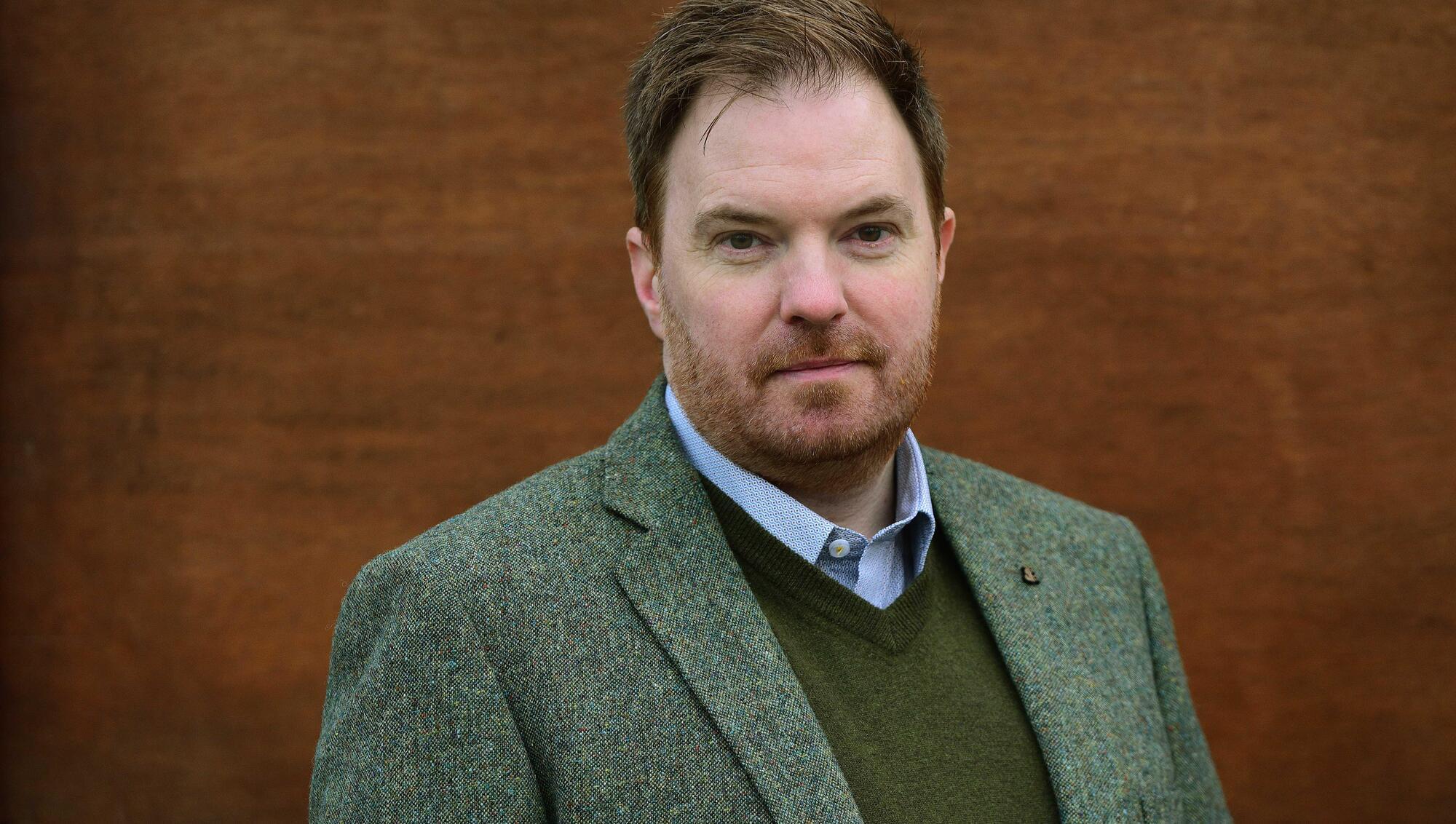
Bernard O'Shea. Photograph: Moya Nolan
There are a lot of elusive goods that retailers and customers canât get their hands on right now like luxury electric cars, Rolex watches and, believe it or not, the most exclusive of them all briquettes.
Last year as part of its âBrown to Greenâ strategy focusing on renewable energy, Bord na Mona announced that they were going to cease peat harvesting for good. Which means that the peat briquette as we know it will be gone as soon as stocks run out in 2024.
If you can get your hands on a bale, consider keeping it in a safety deposit box instead of lighting the fire. It could be worth millions in a few decades. I personally think it's going to be the new Bitcoin.
Iâve actually had quite the chequered past with these peaty rectangles. I was always the one who had to carry them into the car and then into the shed. The orange twine holding them together could cut through a human hand if you held them for longer than 60 seconds (this is possibly not true) and I always for some reason destroyed whatever clothes I had on.
Remember the iconic Bord na Mona ad featuring John Sheahanâs Marino Waltz? The lovely warm fire being gazed into by children with teddies, families, and an adoring couple. One thing about that ad that never made sense to me nobody ever shouted, âCLOSE THE DOORâ.
The catchphrase in our house growing up was, âclose the doorâ quickly followed by, âYOU'RE LETTING THE HEAT OUT.â From an early age we were trained in how to enter a room without even opening a door. David Copperfield visited our house several times to see how I did it, but I would never reveal my secret.
The heat was treated like an elusive spy who would cunningly try to escape any way possible and head off to London to buy forbidden things, like condoms or mint Kit-Kats. I always remember one viciously cold night counting how many times my parents said, âclose that f##king doorâ. The final tally was close to three hundred.
As if the danger of leaving a door open or lighting a Superser wasnât petrifying enough, we had a heating system in our house called âThe Pumpâ. Most houses on our road didnât have oil or gas heating. They were heated with solid fuel and for us that was mostly briquettes. There was one house, about thirty miles away, that had a thermostat. We went there once on our school tour instead of to the sugar-beet factory in Carlow.
There are two major problems with solid fuel. Firstly, it's dirty and secondly, there is no way of controlling the temperature of the radiators or the water. There is a third problem, but this was still long before anybody cared about the ozone layer.
In every house, there was a massive copper cylinder full of water. This tank got its own room. Our family called it âthe cubby holeâ. In every other village, town, city and county it was called, âthe hot pressâ, or, if you were posh, âthe airing cupboardâ.
The first time I moved in with my wife I told her that Iâd put my toolbox in her cubby hole. When her reply was, âI'm not into thatâ, I said, âOK, well I can put them under the sink?â.
 It took a frank and honest discussion to eventually iron out the confusion.
When you lit a fire in the fireplace or cooker, it would heat a back burner that would heat the water that in turn, would pump hot water into the radiators to heat the house. Simple, except for one problem. How did you know when the water was boiled? You had to listen for it. That's right, you had to listen for the tank to make some grumbling noises and when it did, you had to race as fast as possible to switch on âthe pumpâ. If you didnât switch it on in time, the cylinder would expand with steam and explode. Basically, everybody in Ireland had a bomb in their house.
I'd often be walking home from school and see houses flying through the air. Ah, they didnât get to the pump in time, I'd think. Every time I see an open fire, I think, âthey'd better listen out for the pumpâ, and âIâll have to clean that out in the morning.â Itâs the reason I donât like open fires, they're too much work compared to the alternative: pressing of a button on our smartphones to heat the house.
But my fondest memory of the iconic B.N.M stamped briquette is a joke my father played on me. I was in college in Dundalk in the 90âs and had a habit of putting the money I earned working in pubs straight back into pubs.
Going home to Laois on the bus pre-motorway was an arduous affair. Castlebellingham, Dunleer, Monasterevin and Kildare are all lovely towns but spending hours looking at them from a condensation-filled bus window while desperate to go to the toilet isnât a fun way to spend four or five hours on a Friday.
One weekend I arrived home penniless. On the Sunday as I was leaving, I asked my parents for a âloanâ. These âloansâ were never paid back and thankfully they donât contribute to your credit rating. âWhat do you want it for?â my father asked in his thick Kerry accent. I had my pitch ready, âTo buy food.â âSure, your mother just filled your bag with food.âÂ
He knew right well what I wanted it for. So, I played my ace card: âWe need to buy fuel, the house is freezing.â My father disappeared and returned twenty minutes later with two bales of briquettes. âThere you go now that will heat the house for you.âÂ
He thought this was hilarious. He actually laughed to himself while he watched the news, but I wouldnât back down. So I carried two bales of briquettes along with my two rucksacks of washing all the way from Durrow to OâConnell Bridge in Dublin, then onto Busaras, then to the I.T in Dundalk and all the way to the house we lived in on Mary Street North. It took me a grand total of five hours and my hands were sliced to bits and every stitch of clothing I had on smelled of turf.
I learned a valuable lesson that night as me and my housemates stared into the fire at the well-travelled briquettes. No matter how right you think you are. No matter how smart you think you are and moreover no matter how resilient you think you are never ever going to get one over on a Kerry man.