Sky Matters: The super-moons are on their way back
And we might be able to see meteor showers at the end of April, if the full moon doesn't block our view
Sky Matters: The super-moons are on their way back

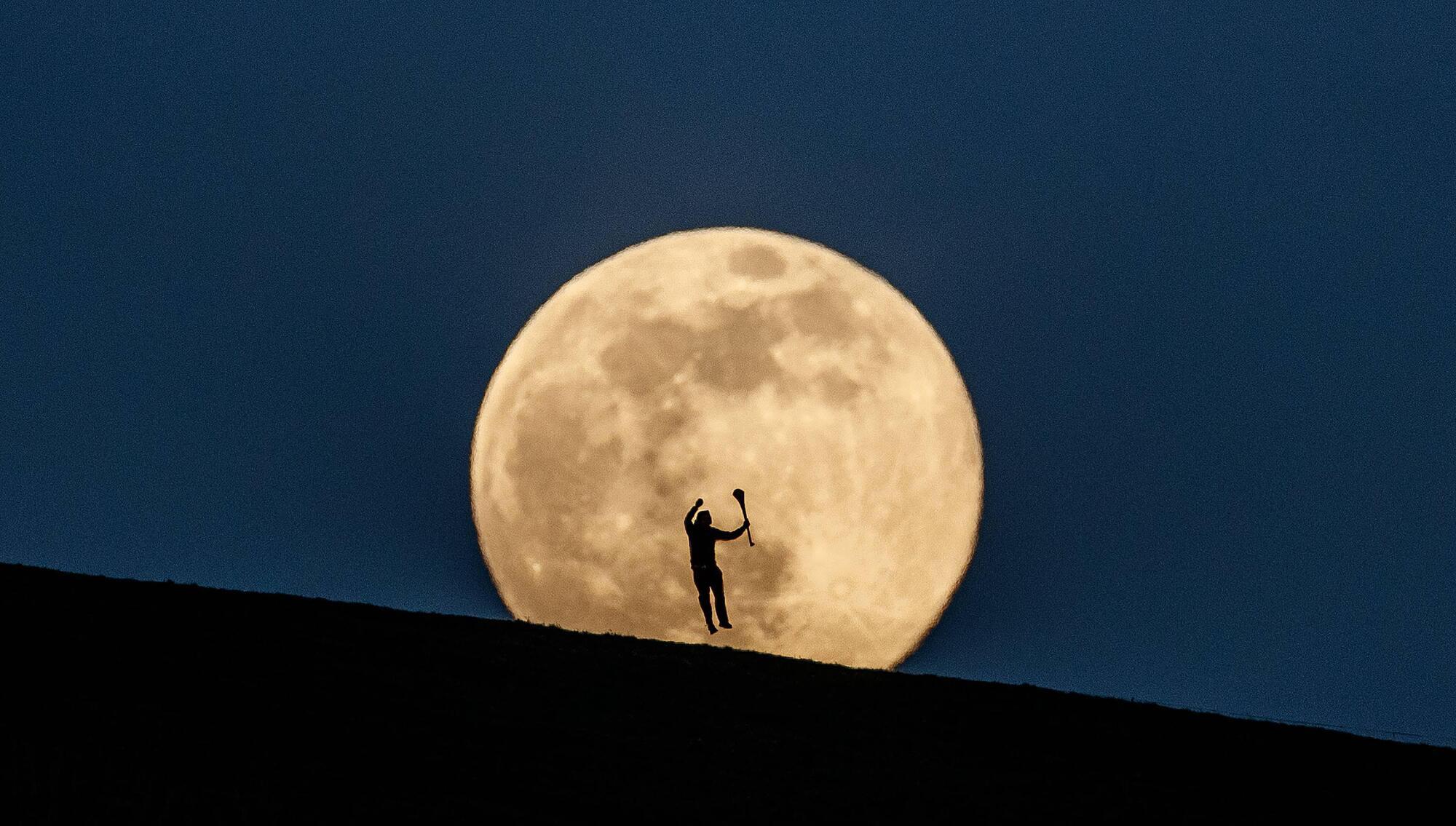
A view of the super moon near Croghan Hill, Co. Offaly Picture: ©INPHO/James Crombie
Planet watchers may find April frustrating. Apart from Mars, none of the other planets that can be seen with the unaided eye are well-placed to be observed. Mars is past the brightness it displayed in the latter part of 2020, but it can be seen after dark throughout the month. Look towards W-SW and you should be able to spot it by its red colour. If in doubt, the Moon is close to the left of Mars on April 17, but the Irish weather might not oblige. You could, possibly, confuse Mars with the nearby star Betelgeuse, in the constellation of Orion. 

Similar in brightness and colour (Betelgeuse is a little less reddish), they look like poor clones of one another. Closer inspection with your eyes may reveal that Betelgeuse twinkles, while Mars does not (at least not much). This is a clue to their different structures, but more particularly to their different distances. Light from Betelgeuse takes over 640 years to reach us, whereas light from Mars takes, on average, about 12 minutes. 

This massive difference means that Betelgeuse looks like a point of light in all but the very largest telescopes and the turbulence in our atmosphere continually distorts it to make it twinkle. By contrast, Mars is close enough to look extended, rather than point-like, and the effect of our atmosphere is much-reduced. Lack of twinkle is true of all the planets and ‘twinkle, twinkle, little star’ is more apt that one might have imagined. It’s a good example of how a subtle observation uncovers a powerful reality and a good example of how careful observation is important in science. Ignore subtlety at your peril.

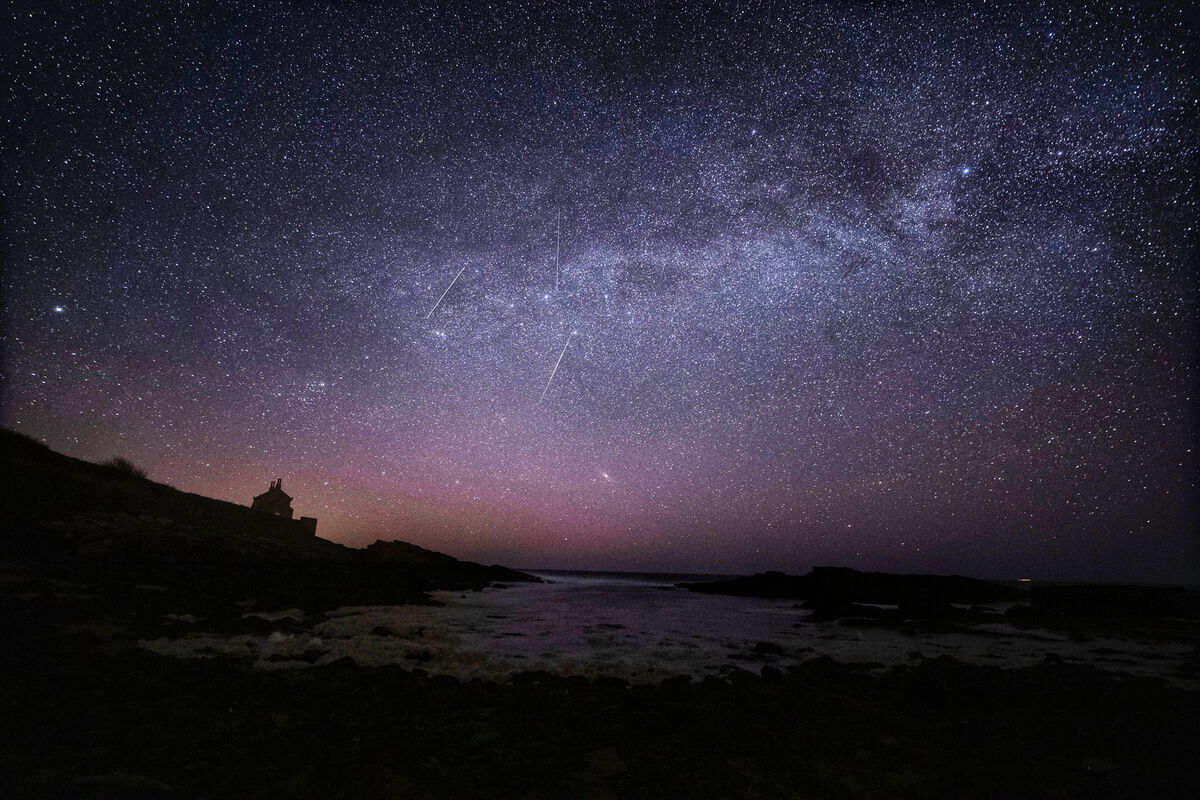
The Milky Way and Lyrid meteors falling through the sky at the Bathing House near Howick, Northumberland, as the Lyrid meteor shower reached its peak in 2020.

The Lyrids meteor shower will peak on the night of April 22 and morning of April 23. It is produced by dust particles left behind by comet C/1861 G1 Thatcher, which was discovered in 1861. Lyrid meteors are known for generating trails that can last for a few seconds. Unfortunately, this year, the almost full Moon will make it difficult to see any but the brightest meteors, so special patience may be required. 

As always, the best way to observe meteors is with the unaided eye, rather than with binoculars or a telescope. Dust from comets and from their cousins, asteroids, holds potentially vital clues to the origin of our solar system and thus our own origins and evolution. Many comets/asteroids are believed to have changed little in the last 4.5bn years and they could help to answer important questions, such as where all of Earth’s water came from. Observing meteors is one way to glean some information about them, but comets and asteroids are so important that several spacecraft have already performed incredibly complex rendezvous missions to get a closer look. Some have even returned samples, such as Japan’s Hayabusa2 spacecraft, which landed in the Australian desert last December 22 with a stash of material from asteroid Ryugu.

Similarly, NASA’s OSIRIS-Rex mission to asteroid Bennu will start its journey back to Earth in May, having successfully filled its sample capture pod with about 2kg of material.

April also brings the first of the so-called super-moons of the year, on the 27th. Recent years have seen a flurry of interest in super-moons. The name refers to occurrences when the Moon is both full and closer to the Earth than at other times of full Moon. Super-moons appear larger and brighter than the ‘usual’ full Moon.

While the difference is not immediately evident to the naked eye, if you take a photo, with a standard camera, of the full Moon on April 27 and compare it with the next full Moon (May 26), you’ll definitely notice a change. It’s an easy, fun, and simple project for all the family! And I didn’t even say ‘during lockdown’.

  • Further information on April’s night sky can be found on the MTU Blackrock Castle Observatory webpage, www.bco.ie/sky-matters.

More in this section

Lifestyle

Newsletter

The best food, health, entertainment and lifestyle content from the Irish Examiner, direct to your inbox.

Cookie Policy Privacy Policy Brand Safety FAQ Help Contact Us Terms and Conditions

© Examiner Echo Group Limited