'I love me too.' Why listening to children can make us learn a thing or two
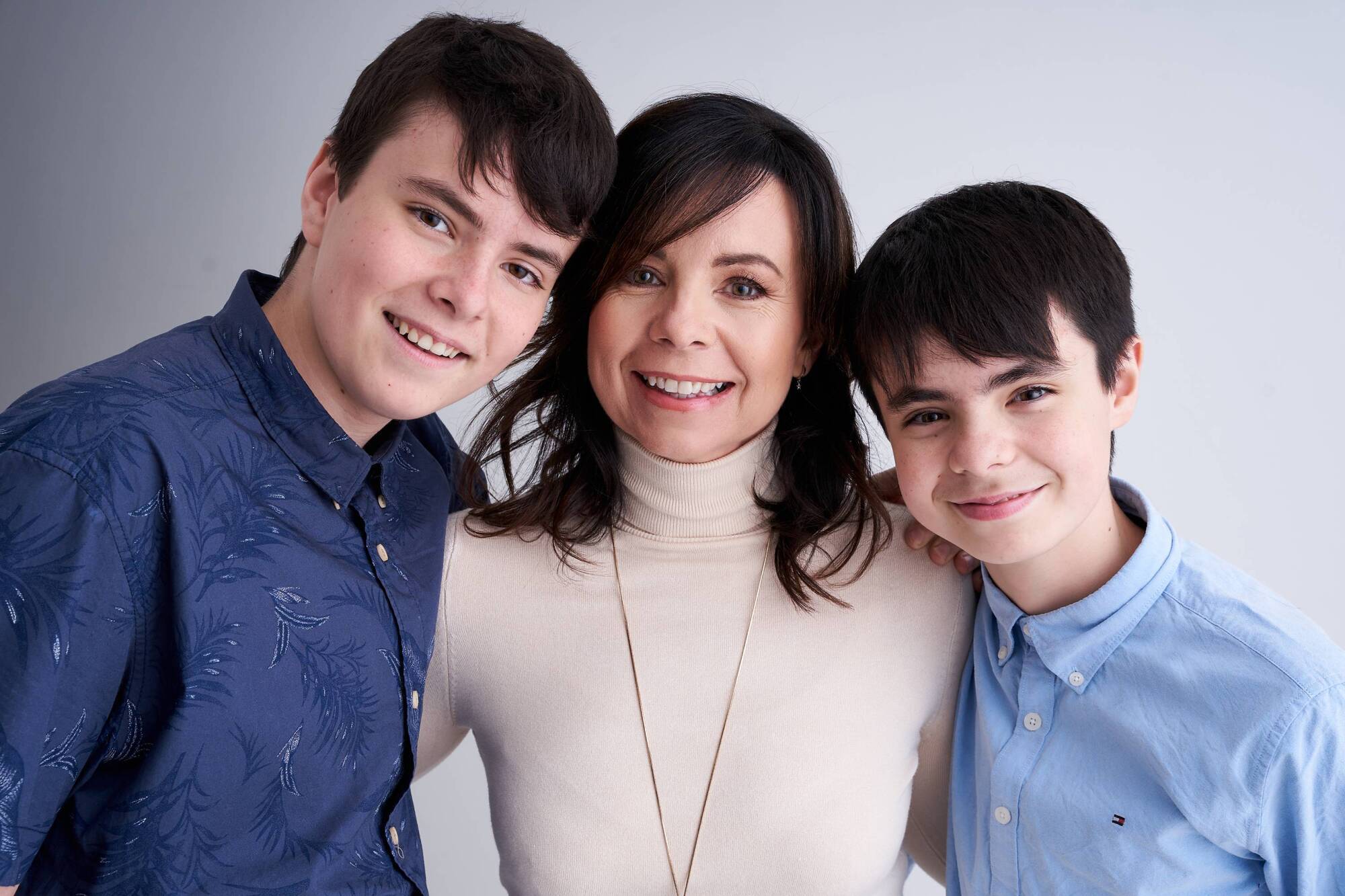
Ollwyn Moran with Matthew and Alex. 'Young children’s propensity for brutal honesty is literally down to brain-wiring,' she says.
We’ve all heard them — those cute things kids say that in the space of one little phrase reveal their adorably unique take on the world. Fun, free, and totally original, these little verbal gems are precious for their capacity to brighten up your day.
Like when five-year-old Sophie, asked in school if she’d ever had chickenpox, replied: “Nope, but I've had chicken nuggets!” To a child everything’s new. They make surprising associations based on what they know and it’s totally logical from their perspective. Like Vicki O’Callaghan’s seven-year-old who, when she was three, was obsessed with her granddad (he had a beard). “Everything he said, she repeated. She’d say ‘now we’re sucking diesel’ or ‘let’s get the show on the road’,” says Vicki, co-founder of baby clothing shop babyboo.ie, recalling the day Ruby fell and hurt her chin. “I said ‘where did you hurt?’ and she said ‘on my beard’.”
And showing just how literal — and wired for positivity — young kids are, Vicki remembers how whenever she’d say ‘I love you’ to Ruby, Ruby would reply ‘I love me too’. These days, Ruby’s obsessed with false teeth. “She calls them click-clack teeth,” says Vicki, who gets regular reports from her daughter as to which elderly relative has click-clack teeth “just like Granddad”.

Caroline O’Sullivan, a part-time producer for Hudsucker Media, recently asked her four-year-old, Simon, what he’d like to be when he grows up. “He said a farmer. And he asked ‘what would you like to be when you grow up Momma?’ So he obviously doesn’t see me as a grown-up!
“I picked something I’d have liked to be as a kid — a singer. And he said ‘when you’re a singer, you can visit my farm but don’t sing — you’ll frighten my cows’. I never stop singing at him and he’s clearly done with it at this stage!”
Young children’s propensity for brutal honesty is literally down to brain-wiring, says Ollwyn Moran, founder of Cognikids.com, a former teacher who has studied neuro-developmental psychology. “They don’t have full understanding of the impact of their words.”
Her sons, Matthew and Alex, are 15 and 13, respectively, but she recalls what Matthew, then five, said about a gorgeous jumper she’d just bought. “I’d paid a few quid for it. I was trying it on in the living room and I just loved the burnt orange ruffles on top. I said ‘hey guys, what do you think?’ And Matthew said ‘it makes you look like a pumpkin’!”

Carlow-based Elaine McDevitt has two daughters, Leila, 8, and Cara, 5. Aged four and having just got her vaccines at school, Leila — trying to encourage her classmates who hadn’t yet got vaccinated — said, "Don’t worry. It’s not the end of the world. My Grandda died — that’s the end of the world."
Sometimes what children say may not be conventionally correct but it contains an unerring truth. Like when Leila, then 6, said rap music’s "like real music but basically [has] rhymes that are shorter, feistier, and bolder, with bad words beginning with ‘sh’". And at the same age, she commented about advertising: "She said soft skin makes us the women we are. Do you know what makes us the women we are? Ourselves.’ And she also asked ‘how can God be alive if he’s a man and he created humans?’ Her sister, Cara, also puts her finger on things. About lockdown, she said ‘I even miss the people I don’t like'."
And of course every kid has come out with some utterance that just drops you in it. It happened to Ollwyn when Alex was a three-year-old in his buggy in the supermarket — scene of humiliation for many parents. “My marriage broke up when Alex was one, so he didn’t remember me with his dad. He’d obviously seen my dad kiss my mum in the kitchen that morning. So we were in the queue for the checkout and Alex just looked up at me, and at the man in front of us, and said ‘Mom, do you see his lips — are you going to kiss him?’ “My blood just drained. The man turned around — he was a good 20 years older. The lady at the cash desk nearly fell off her seat, and I was thinking what will they think, that I’m going around kissing random strangers?”
Laura Erskine, parenting expert with BabyDoc Club and mum of three, says it’s hard sometimes not to laugh when your little one drops some comedy gold into her very earnest conversation or observation. “I recommend parents save these little gems by emailing them to themselves. This way they’re date-stamped, ready to share when your child’s all grown up.”
Ollwyn wishes she’d recorded some of the cutest things her kids said. “You think you’ll never forget but you do. It’s the big moments stayed with me.”

Vicki has set up a Gmail address for Ruby and sends emails when Ruby says funny things. “It’s like a diary I’m keeping for her.” Elaine isn’t a big social media user but puts her kids’ comedic gems up on Facebook. And Caroline records them in her phone or in a notebook. “Simon’s dad, Colm, is always the first person I tell. And my mum loves hearing the stories. When she’s going to meet her friends [pre-Covid], she regularly rings to hear ‘that story again’. She loves dining out on them.”
Psychotherapist Joanna Fortune says children peak on saying these cute, even brutally honest things, between the ages of two and four years old, when they’ve little or no filter.
“So they tend to say it quite literally as they see it, or have overheard and misinterpreted it. They’ve such great imaginations at this age, which likely fuels their little ponderings,” says Joanna, who has endless sayings from her three-year-old, Maisie.
“She once said, ‘ouch I hurt the knee of my foot’, meaning her ankle. Playing out in the rain, she came in soaked and I asked what happened. She said, ‘I got watered’. And when we were working on counting and asked how many sheep do you see on the hill, she replied, ‘all of them’.
“We actually do write them down in a lovely notebook we were gifted. It’s such a nice keepsake of her imagination, how she developed her understanding of the world and herself in it.”
Joanna says this is a window of childhood when children are soaking up so much information from the adults around them, but it doesn’t all quite make sense to them. “They’re trying to be like everyone around them and they’re doing this in a very literal, concrete way, which is how we glean these nuggets.”