The Home School Hub teachers have your Halloween arts and crafts for the children sorted
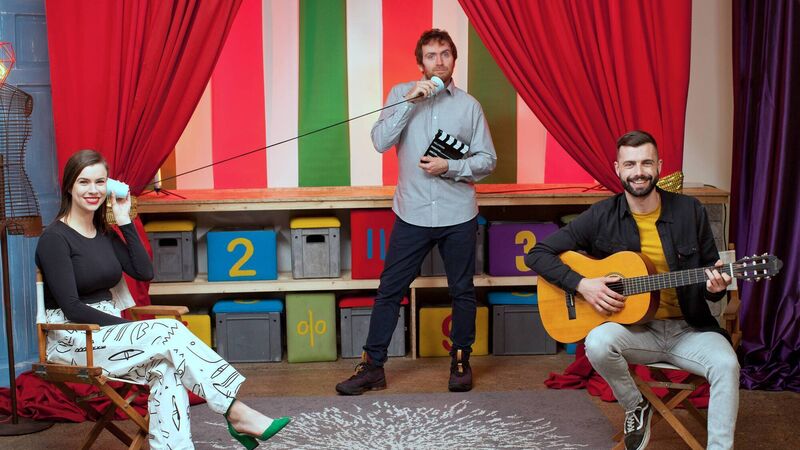
The After School Hub múinteoirí (L-R): Clíona Ní Chiosáin, Ray Cuddihy and John Sharpson.
“Hey buddy, what’s the craic now?” grins Ray Cuddihy down the phone in warm North Cork tones, while audibly scrambling for his car keys and waving goodbye to colleagues on his way out of the studio.
Another day is down on production of RTÉ and Macalla’s After School Hub, the nationally-televised education programme that’s doing what it says in the title: providing families with an entertaining and educational after-school club, as different levels of Covid-19 restrictions around the country impact on kids’ in-person social options.
Following on from the success of Home School Hub, which brought a touch of kids’ telly charm to the primary curriculum while the country was in lockdown, the show sees Múinteoirí Cliona, John and Ray lead the way on a range of home-based activities, from physical education to arts and crafts, accompanied by a whole cast of characters, including human-puppet duo Mary-Claire and Martin, and Phil the Science Guy.
It’s made an impact on households around the country, making space to balance lessons with craic at a deeply uncertain time. Cuddihy talks about how the team reacted quickly to the Covid crisis back in March, and formulated programming and lessons in line with multiple levels of national requirements.
“The thing about lockdown is we find out as everyone else finds out. The whole scramble for Home School Hub was a big blur back in March, and this one, After School Hub, came about as quickly. I was supposed to be back in a classroom in North Cork, then this came around, and while I was here shooting another show, I said I’d stay on, do this.
“I’ve heard people joking, to see us back, ‘what does it mean, are the schools closing again for a while?’ But we’re certain with this, being designed for after school, which has affected the tone of the show and what we include in it as well.
“You’d be wondering how it might be received after a successful run in springtime, but people are happy to see us again. We had the curiosity factor in springtime, and it’s great to see people remember who we are, it’s really nice.” Having worked in media for years as a television and radio producer (more on that later), Cuddihy had returned to college in recent years to retrain as a primary-school teacher.
Studying an MA in primary education at Mary Immaculate College in Limerick, he’s recently taught at schools in his native Cork, bringing his presentation and communication skills, as well as his natural approachability, to the classroom.
It was an interesting halfway house, then, for him to help produce ‘Home School Hub’ and bring his classroom skills in front of a camera.
“D’you know what, it’s interesting. I’m still amazed that Home School Hub happened. It hasn’t been like any other production anybody has worked on, because of the circumstances, why it was commissioned. It came together in a matter of two weeks.
“When the pandemic hit, and it was very sudden, our producer, Suzanne, knew straight away she wanted to put school on the television, and knew I’d gone back to go teaching, so I was the first person she called. I said ‘John Sharpson and Clíona Ní Chiosáin are teachers as well’, they worked on kids’ TV.
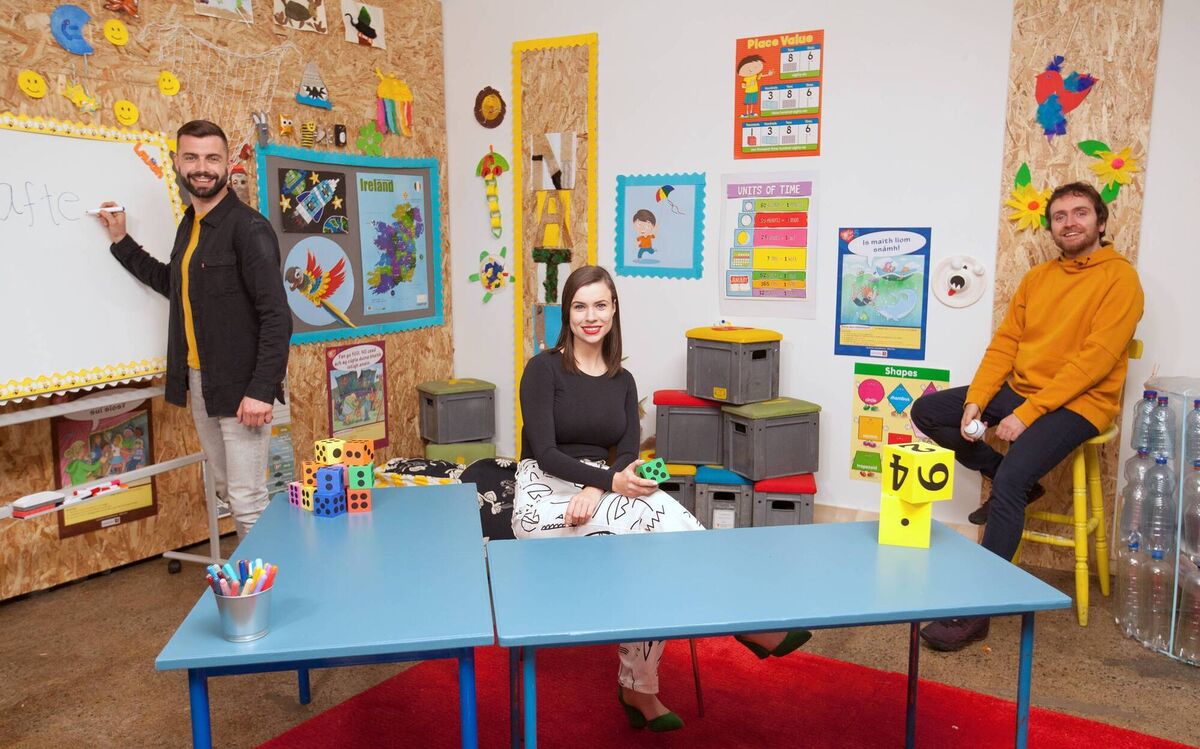
“We were working with the Department of Education. Classroom-style delivery, curriculum content, with basic supplies that everyone has at home. And they trusted us as teachers to deliver this, but I’m normally a puppeteer: it took these extreme circumstances for anyone to allow my face on TV (laughs).”
It’s one thing to be in a studio, working within certain restraints and riffing on different themes with your colleagues while making educational television.
Quite another, though, to use that same oratory ability to keep a classroom of thirty kids engaged, with the procession of personalities and circumstances that will inevitably occur.
They’re both daunting tasks, ultimately: Cuddihy muses on the differences in approach.
“I find it much easier to teach on television than in front of a classroom. I can honestly tell you it’s such a demanding profession, and I was still finding my feet as a teacher. Stuff like challenging behaviour, there are so many variables.
“In a TV studio, it’s a controlled, settled environment. When you’re dealing with 30 personalities in a room, any age, there’s so much to negotiate.
“There are an awful lot of parallels, and doing kids’ TV gave me a sense of what worked, but being in a classroom gave me perspective on how to handle myself on TV as well. It cut both ways.”
What is in evidence throughout Cuddihy’s work, not just in kids’ telly but as a DJ, a streaming presenter, and as a teacher fond of puppeteering as a visual aid, is a very real grá for RTÉ’s young-peoples’ output in the ‘90s.
While the rich comedic duality of alien brothers Zig & Zag and the open social commentary spewed forth by professional chancer Dustin the Turkey-Vulture were pop-cultural factors for a generation of Irish children, there was a backbone of alternative music and sensibility that ran through the like of The Den, as well as cult classics like RTÉ Cork’s The Swamp and Sattitude.
Irish indie bands’ videos were given daytime play, musical guests were as eclectic as they were numerous, and a sense of curatorship is evident, in hindsight - from Ragga Zagga toasting the birthday kids of the day, to impromptu set-dances featuring Kerry techno/trad fusionists The 4th Dimension.
For a music lover like Cuddihy, it’s a vast and varied legacy to help bring forward.
“I’m enormously influenced by The Den. As an adult, I’m still finding things where I go, ‘aw, yeah, I would have first experienced that watching The Den’, y’know? It’s only now that I realise how rich The Den was, as a cultural experience, a musical experience: The Den still lives in my imagination, and Zig and Zag certainly still do.
“They were so musical, and had such a sense of fun, and I still think about how they write jokes, how their artwork works, how their music came together, and they were such a creative force. They’re a pillar in my life.
“Any work for TV that I do, everyone has their muse, I’m always chasing that flavour of anarchy, that flavour of warmth they have as well, so when you’re taking from that, you know you won’t go too far wrong. But you’ll never find it, because it was unique, and completely of its time.”
Of course, long-time music anoraks will be familiar with Cuddihy’s years of service to the scene in Ireland.
Over the years, he’s been at the helm of Wingnut Records, an independent record label; recorded music of his own under the Deadball Specialist moniker; hosted the long-running Spin Alt show every Sunday morning on Spin Southwest; and helped with countless festivals, blogs, podcasts, community media and online streams, including lockdown staple Live at Guerilla Studios, a raw and ready take on studio music shows, streaming every second Thursday on YouTube.
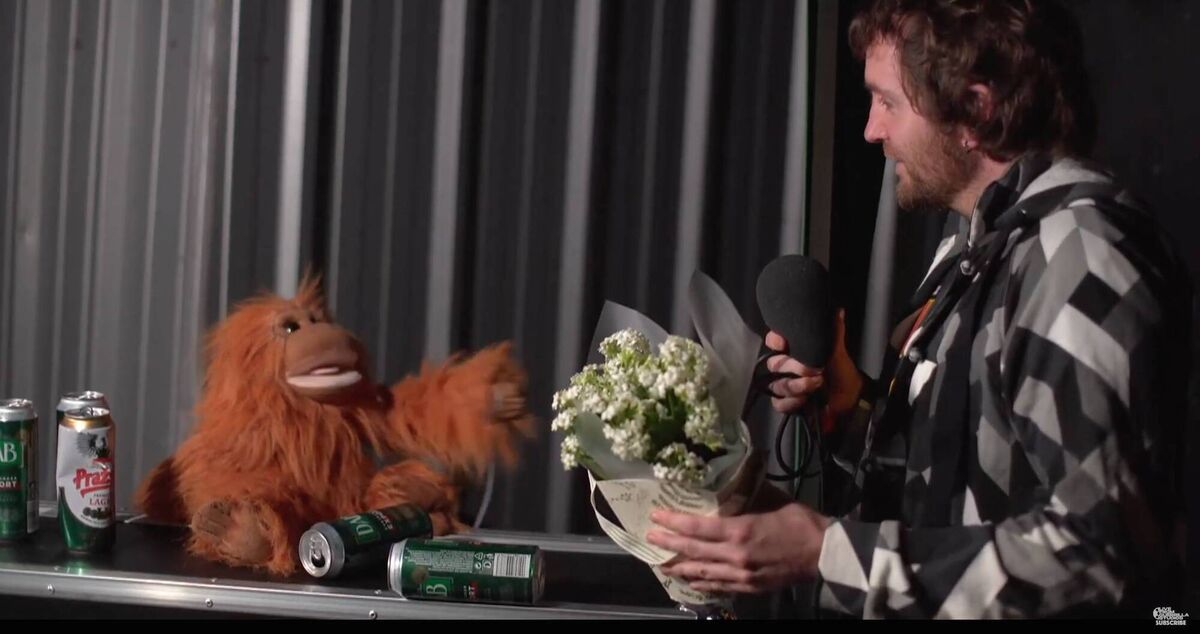
The latter sees Cuddihy in his element, speaking with artists after live in-studio performances about their lives and work, albeit with the hindrance of simian co-host Moojoo the Merch Monkey. By Cuddihy’s own admission, it’s tided him over in lean times for gig-goers.
“I have been impacted by the pandemic - I would have been going to gigs, solidly, every weekend, and I think we tend to under-estimate how important that part of life is. I thought about it and started to realise what I was missing, seeing my friends, the potency of that social interaction, bumping into people and making plans to go to other gigs together, and I really miss that whole pinball machine of going to gigs or the pub on Friday.”
“We started doing Live at Guerilla Studios to help my friend Spud Murphy, the resident engineer with Lankum, to keep his livelihood going. We started that, and for me it’s lovely, to hear live bands, and see some people, do this little production, as the presenter, but it’s a lovely crew working on it.
“It’s been grand in some ways: I’ve been motivated to buy albums, buy merchandise. The community support is there. Going to indie bookshops, buying Irish writers. The community thing kicks in, but there’s also the immediacy of meeting people again.”
While the wider societal uncertainty has led to the inventiveness that spurs the Hub project on, the ever-changing circumstances have made it difficult to fashion a plan of action.
Will there be a need to revert to morning and afternoon lessons in the event of an escalation of restrictions? Will a long-term plan be needed for After-School Hub as the next academic year approaches?
It’s anyone’s guess, really, but in outlining the situation for himself, Cuddihy maintains the optimism that’s endeared him to the nation.
“If anything, I’ve realised in this pandemic, I’ve completely lost the ability to plan anything, to anticipate anything more than two weeks ahead. What I’m thinking about now, is how to get back to Doneraile for Christmas. If I can figure that one out, I’ll be delighted. But I’m working really hard, staying out of trouble… and that’s how I roll anyway, I’m cool with that.
“I’m healthy, I’m grateful, my family have all survived it, absolutely everybody. It’s a time for positivity, and community, so it’s a question of rolling with the punches, and everything will be grand.”
Halloween is not only a time to engage in the suspenseful and spooky, but also for family to come together, have a chat about the changing seasons, get caught in a web of history or slime up the gaff in a scientific experiment!
We've got a pair of activities as recommended by Múinteoir Ray, with thanks to ScoilNet, an online resource for Irish primary and post-primary educators to share their activities, lessons and videos.
This is a fun and easy video experiment that looks at how to create slime. Depending on how you mix the ingredients, you will get something that is stringy, slimy or more like mála. This is a great, quick and easy sensory experiment or video demonstration.
- PVA Glue (regular water-soluble)
- Borax Powder (available in any chemists' or pharmacy)
- Water
- Food Colouring
- Mixing bowl and spoon
- Two equal sized jars/glasses to measure the glue and water
- Teaspoon - Droppers
- Wear aprons.
- Wash your hands after the experiment.
- Do not eat the slime, and avoid contact with eyes and fabrics.
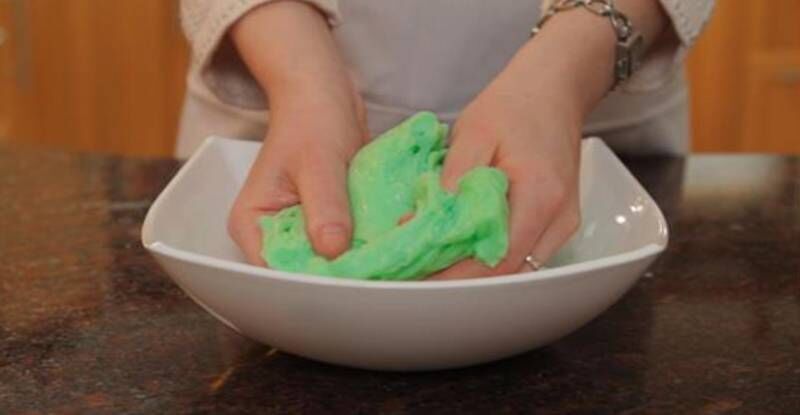
Measure out equal amounts of water and glue. (approximately half a cup of each).
Add them to the mixing bowl.
Mix them together thoroughly.
Add a few drops of food colouring.
To make the Borax Solution: Add one teaspoon of Borax powder into another clean cup and half fill it with water. Mix well.
Add a few drops of Borax solution to the mixing bowl that contains the glue, water and food colouring and stir. As you stir the slime will start to form.
You may need to add more Borax solution to ensure that all the liquid turns to slime.
Slime can be stored in a zip lock bag (to keep it fresh and pliable for many weeks to come).
If you do not use food colouring, your slime should wash off most surfaces and out of most washable fabrics. Food colouring will stain your skin for quite a while and may stain clothing permanently, so use care if you create coloured slime. You can use disposable gloves to handle the slime until it dries.
Halloween is a popular holiday that takes place on October 31.
On this day, many people carve jack-o'-lanterns out of pumpkins, or play games such as snap apple. Some people dress up as ghosts, skeletons, witches, and black cats. These activities are Halloween traditions that have been passed on from one generation to the next!
- A big sheet of paper
- Pencils, markers, and other art supplies
- Some grown-ups to help with stories and colouring
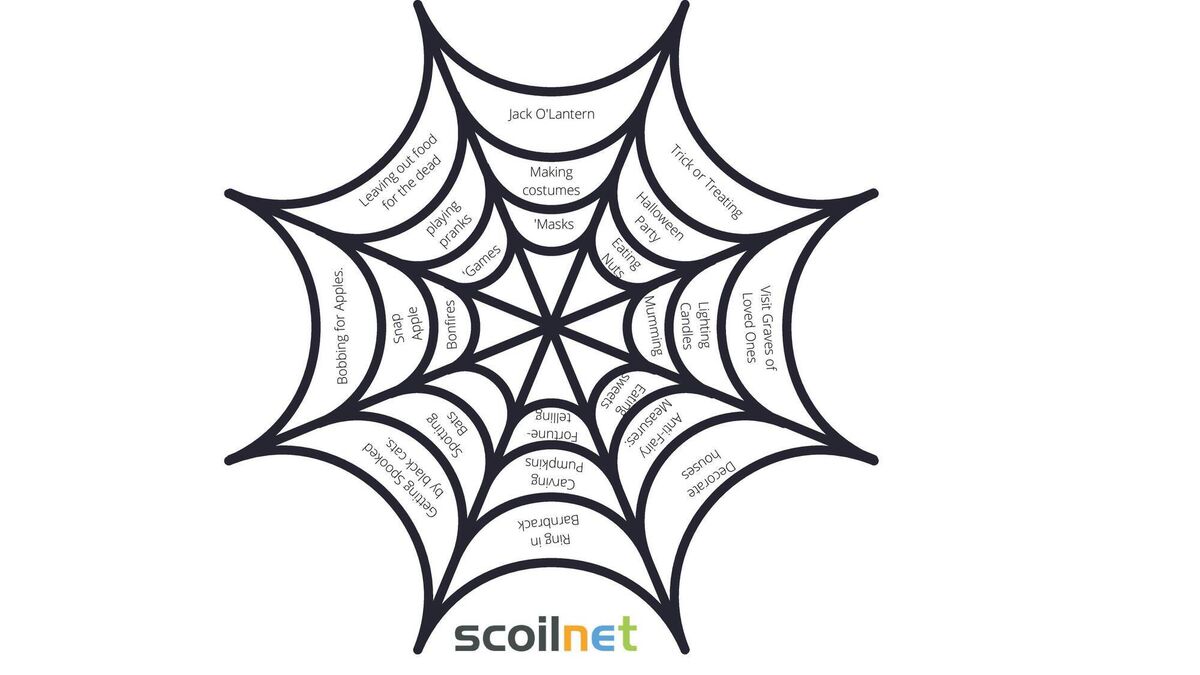
With the big sheet of paper, a black marker, and some adult supervision, draw a big spider web, like the pattern you see here.
As a big group at home, talk about the Halloween traditions that happen in Ireland, like eating barm brack, dressing up like ghosts or witches, and games like bobbing for apples, and fill the gaps in the web either by writing them out, or filling them with your own pictures in pencil or marker.
Be sure and get the grown-ups involved at home and over Zoom, and ask them what Hallowe'en was like when they were kids!
CONNECT WITH US TODAY



Be the first to know the latest news and updates