What Frederick Douglass thought of Daniel O'Connell and Fr Matthew
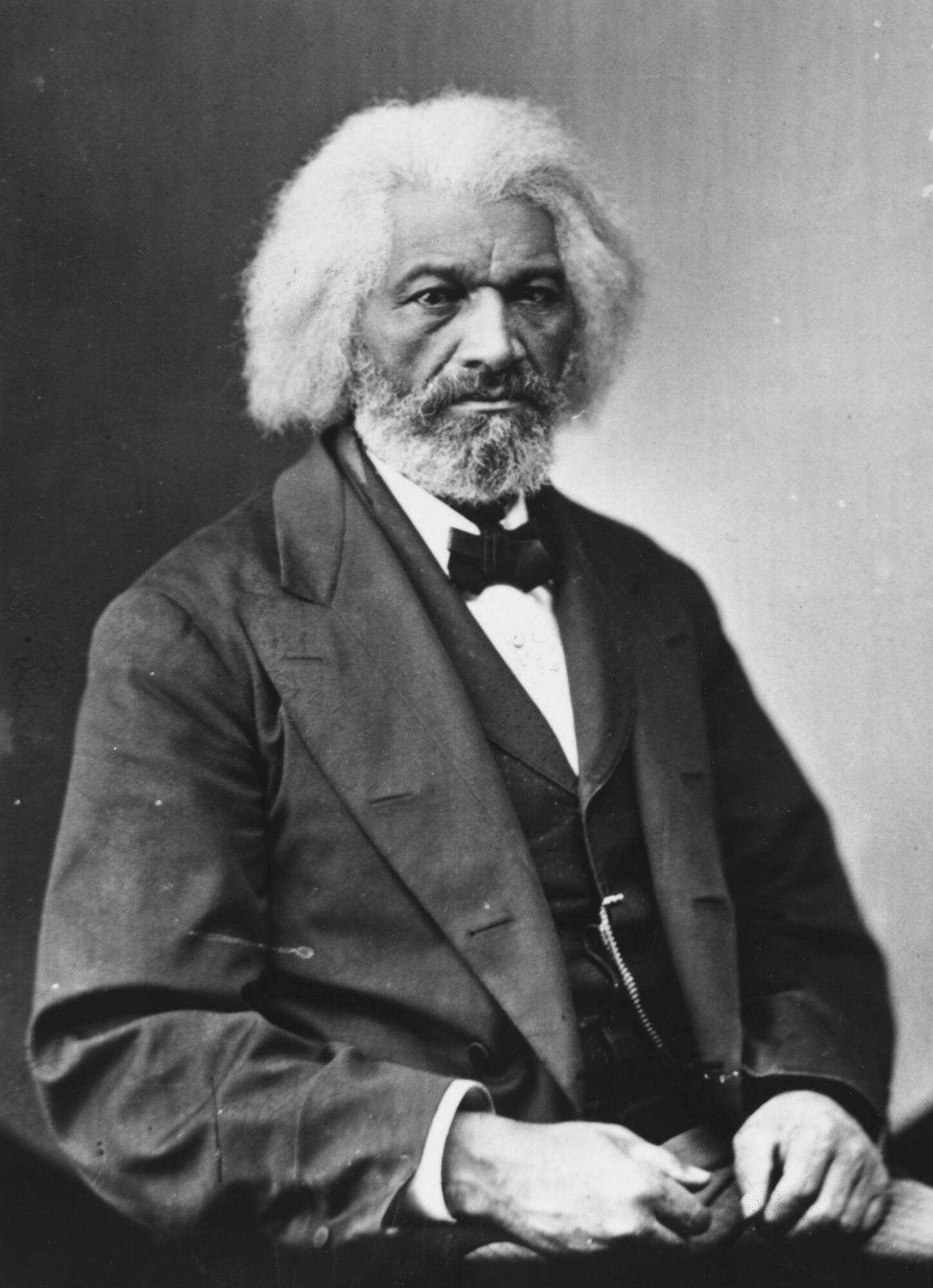
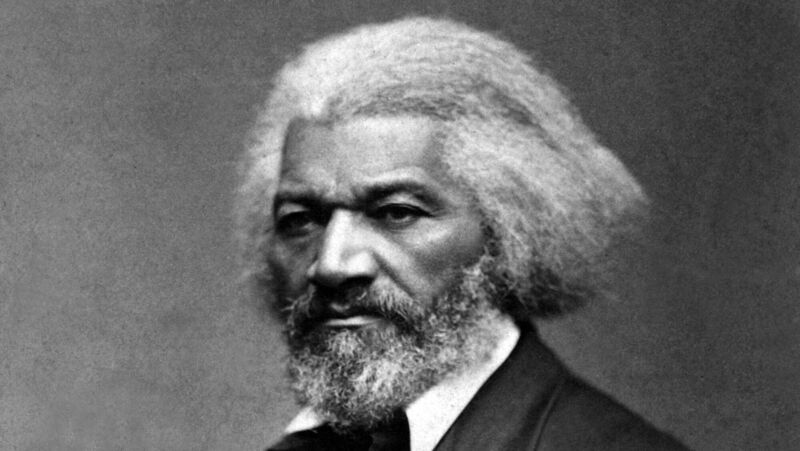
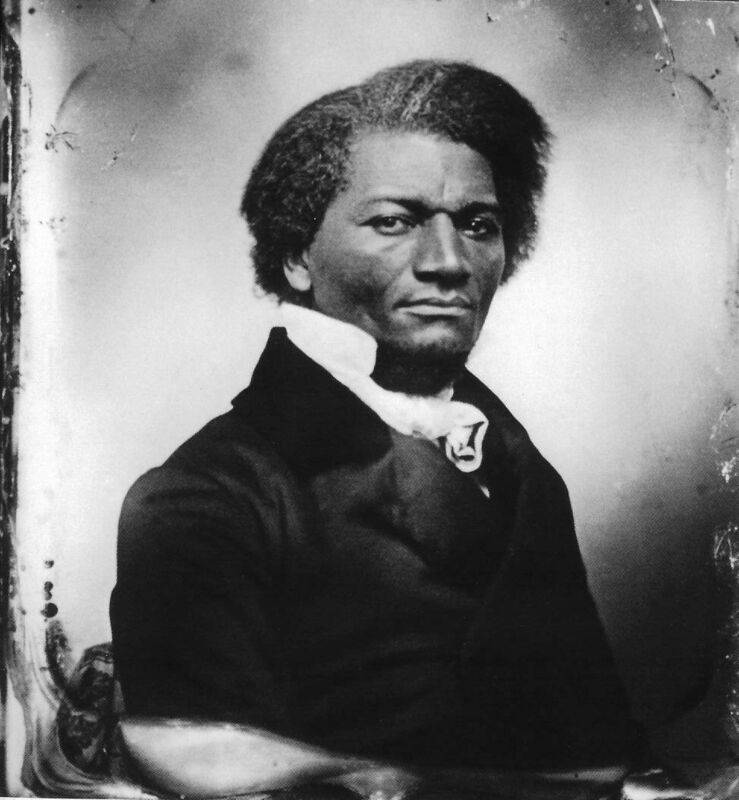
circa 1879: American journalist, author, former slave and abolitionist Frederick Douglass (1817 - 1895). (Photo by Library Of Congress/Getty Images)
Frederick Douglass, escaped slave and abolitionist leader, visited here 175 years ago, befriending two of Ireland’s most prominent leaders. He would always speak highly of Daniel O’Connell, but the same would not be true of Father Mathew.
The sight of a black man was not so unusual in the prosperous port city of Cork in 1845, but perhaps heads turned that October morning as a tall young African-American strode past the building site which would, more than a decade later, become the church of Saints Peter and Paul, on his way to visit Fr Mathew.
Frederick Augustus Washington Bailey was born into slavery, probably in his grandmother’s cabin, on a plantation in Talbot County, Maryland, sometime in February 1818.
“The opinion was … whispered that my master was my father; but of the correctness of this opinion I know nothing,” Douglass wrote. “My mother and I were separated when I was but an infant … common custom, in the part of Maryland from which I ran away, to part children from their mothers at a very early age.”
Escaping north at the age of 20, he took the surname Douglass, and soon became famous for his anti-slavery writing and powerful oratory. He was also an advocate of temperance, knowing how slaveholders dulled slaves’ spirits by plying them with alcohol at Christmas and other holidays.
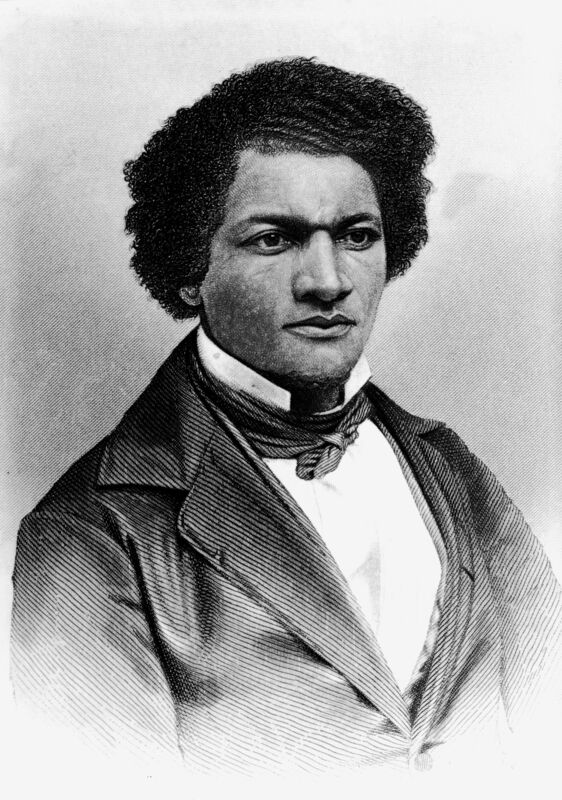
Douglass became a leader of the abolitionist movement, and, years later, Abraham Lincoln would tell him publicly: “There is no man in these United States whose opinion I value more than yours”.
Douglass’ 1845 autobiography, The Narrative of the Life of Frederick Douglass, an American Slave, worried his friends, who urged him to leave the country.
Embarking on a two-year lecture tour of Britain and Ireland, Douglass arrived in Dublin in late August. There he befriended Daniel O’Connell, himself a passionate anti-slavery campaigner. Then 70, and displaying what has been called his characteristic “affable arrogance”, the Liberator introduced the 27-year-old to a spellbound audience as “the Black O’Connell of the United States”.
Douglass was met with loud cheers when he said he had first heard in the “curses of his masters” the name O’Connell.
“For, while with one arm the Liberator was bursting the fetters of Irishmen, with the other he was striking off the literal chains from the limbs of the Negro.”
As Laurence Fenton says in his invaluable Frederick Douglass in Ireland: The Black O’Connell, “Douglass would always speak well of O’Connell; the same was not true of the other major Irish figure with whom he would spend time: Father Theobald Mathew”.
After a month in Dublin, Douglass travelled down through Wexford and Waterford, before arriving in Cork, where he would stay for three weeks.
On the evening of Monday, October 20, as the South Main Street Quadrille Band played from the gallery, Douglass was guest of honour at a public meeting in the Temperance Institute on Academy Street. Introduced by Father Mathew, the revered “Apostle of Temperance”, Douglass marvelled at the warmth which welcomed him: “Amongst them all, I saw no one that seemed to be shocked or disturbed at my dark presence. No one seemed to feel himself contaminated by contact with me.”
Douglass had seen Mathew administer the temperance pledge to a thousand people in Booterstown, and when he met Mathew in Cork, they quickly became friends.
Next morning, Douglass left his guest-quarters in the home of the wealthy Unitarian Jennings family on Brown St — a street now buried under the Paul St shopping centre — and headed for Father Mathew’s home on Cove Street.
As Douglass approached, the 55-year-old Mathew rushed out to welcome him, crying: “Welcome! Welcome, my dear Sir, to my humble abode.”
Douglass thought Mathew’s home indeed humble, “all of a very plain order … too plain, I thought, for so great a man.”
Douglass, already teetotal for eight years, proudly took the pledge from Mathew. “He … gave me a beautiful silver badge. I now reckon myself with delight the fifth of the last five of Father Mathew’s 5,487,495 temperance children.”
Their friendship would end in 1849, when Mathew, on an American tour, declined an invitation to an anti-slavery rally. Unwilling to antagonise anti-abolitionists, Mathew said: “I have as much as I can do to save men from the slavery of intemperance, without attempting the overthrow of any other kind of slavery.” He also appeared to suggest that nothing in the Bible prohibited slavery.
“(G)rieved, humbled and mortified”, Douglass “wondered how being a Catholic priest should inhibit him from denouncing the sin of slavery as much as the sin of intemperance.”
On January 1, 1846, leaving Ireland, Douglass recalled his earliest experiences here:
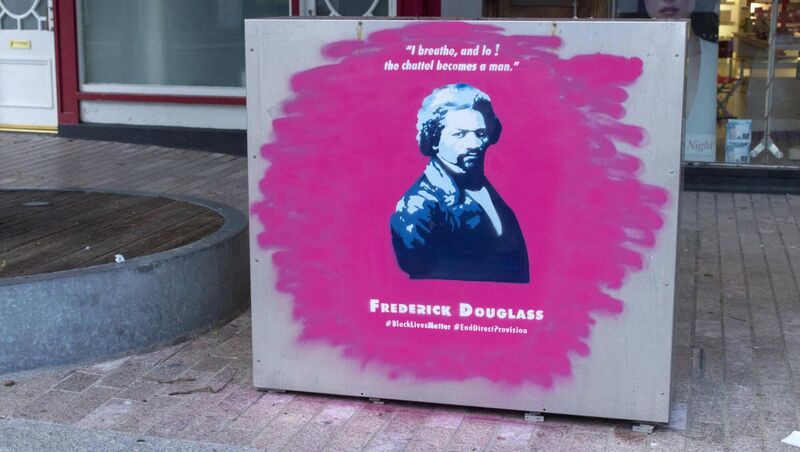
“Instead of the bright, blue sky of America, I am covered with the soft, grey fog of the Emerald Isle. I breathe, and lo! the chattel becomes a man.
“I find myself regarded and treated at every turn with the kindness and deference paid to white people. When I go to church, I am met by no upturned nose and scornful lip to tell me, ‘We don’t allow n*****s in here!’”
Some 175 years after Douglass’ visit, an online petition with 4,000 signatures is demanding Cork name a street after Douglass. A plaque in the Imperial Hotel commemorates his visit, but perhaps Cork’s best tribute to Frederick Douglass is Kevin O’Brien’s glorious Grand Parade street-mural, which ties Douglass’ “I breathe” to George Floyd’s last words: “I can’t breathe”.
CONNECT WITH US TODAY



Be the first to know the latest news and updates