Brian O'Donovan: 'Between Donald Trump and Conor McGregor, I was kept busy'
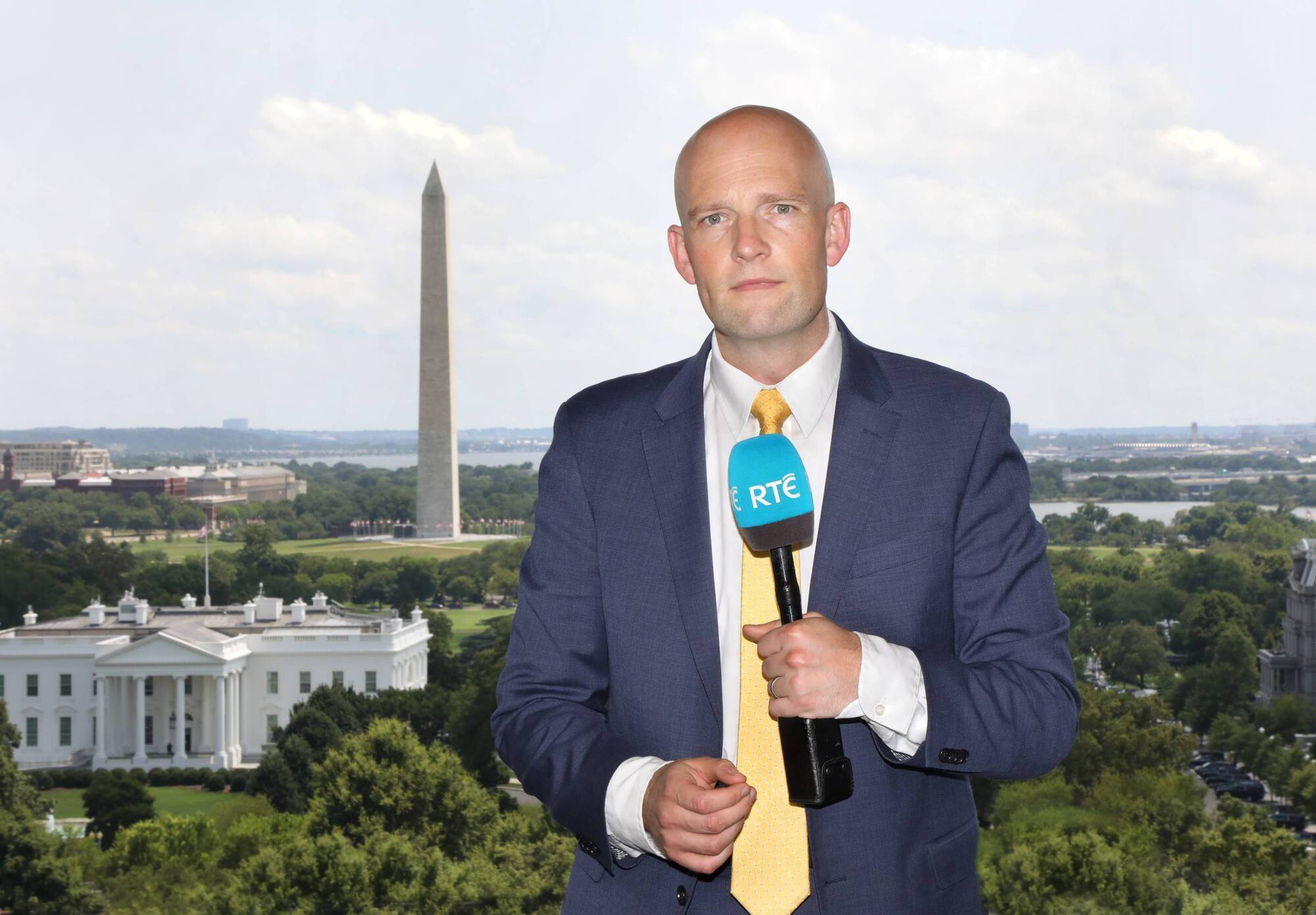
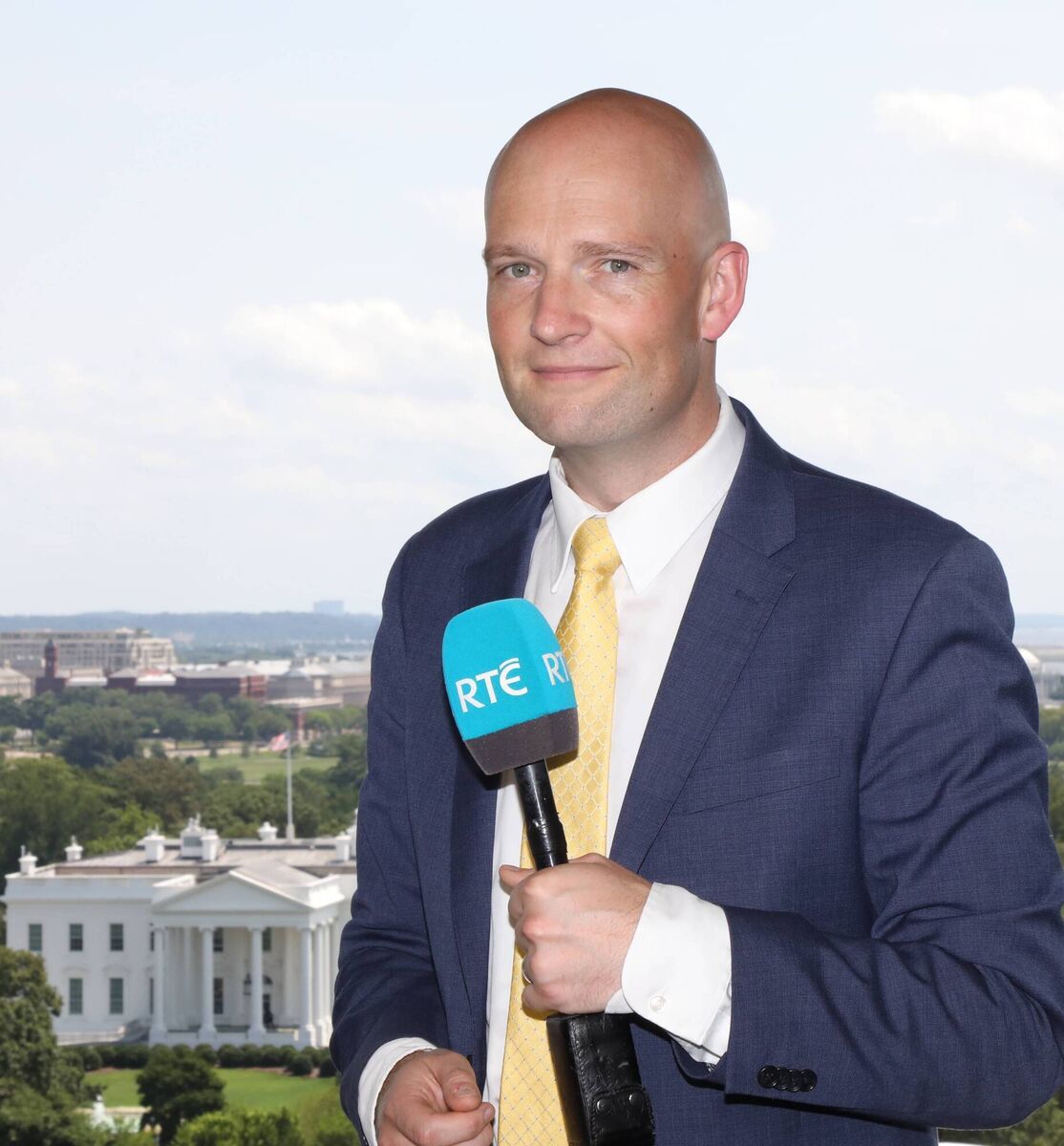
Brian O'Donovan, RTÉ Washington correspondent, picture: Marty Katz/washingtonphotographer.com
As the saying goes, ‘May you live in interesting times’, and one thing is certain, there have never been more interesting times to be a news correspondent in Washington. When Brian O’Donovan, RTÉ’s representative in the US capital, took up the high-profile post at the start of 2018, he knew it was going to be eventful but no-one could have quite predicted the rollercoaster ride on which he was about to embark. And, while the rest of us look on queasily as the US lurches from one crisis to another under the leadership of Donald Trump, O’Donovan has relished every moment.
“When I started the job in January, 2018, Donald Trump had been a year in office and was making headlines every day. He was such a controversial figure, it was a huge story. You have the wild rollercoaster that has been the Trump presidency anyway, between impeachment, the Brett Kavanaugh confirmation hearings, the Ukraine investigation, the Mueller report, so many other things, then no sooner were we getting into the swing of things with the election campaign and the coronavirus hit, and all that came with that. Then we had the Black Lives Matter protests. Never a dull moment, it has been great,” he says.
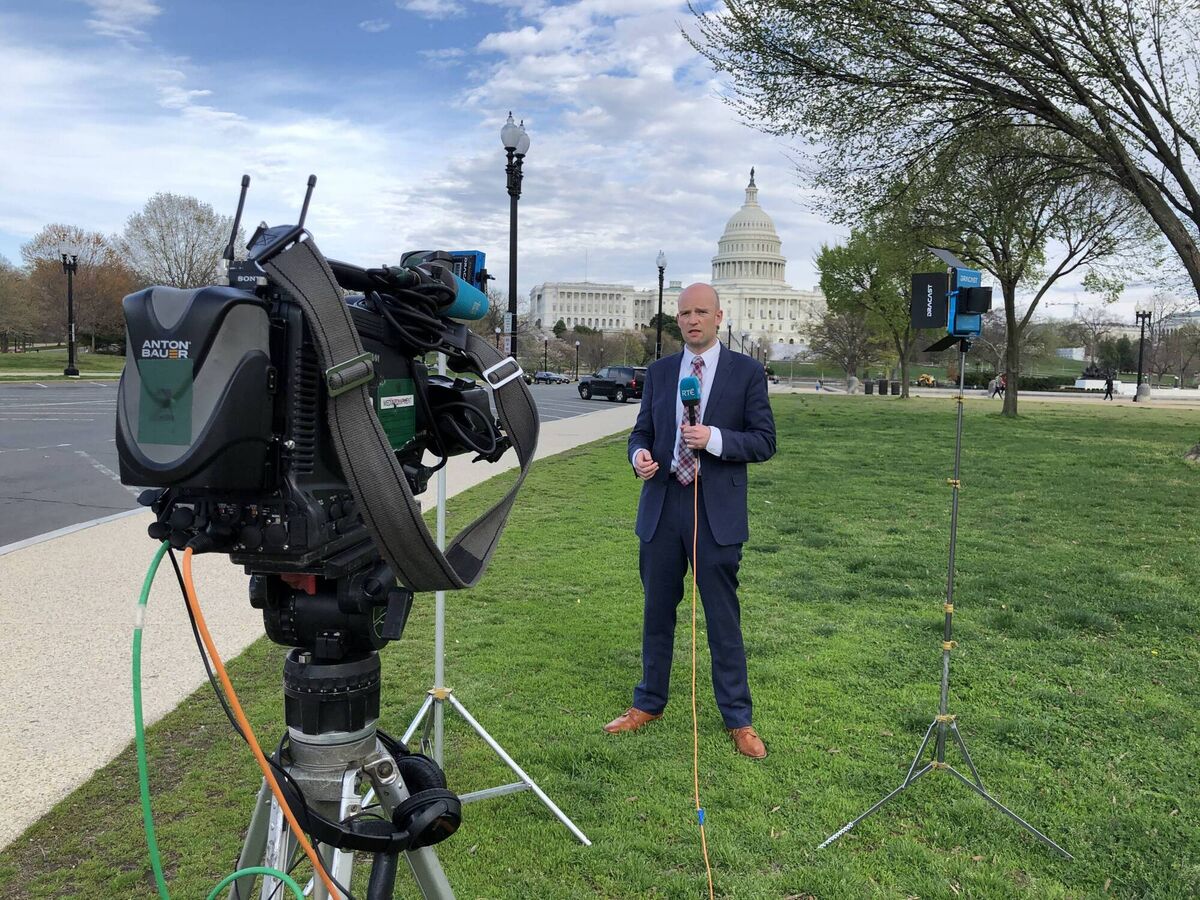
O’Donovan, from Farran in County Cork, didn’t hesitate when the career opportunity of a lifetime arose, although he made sure to get his wife Joanna’s seal of approval first: “She immediately said ‘go for it'. She is a news and politics junkie as well, and loves travel. She embraced the idea of a big adventure. So I went for the job and was delighted to get it. I remember I arrived late on a Saturday night/Sunday morning and I did a story that day. I hit the ground running. It has been busy ever since.”
Like millions around the globe, O’Donovan has been working within the constraints of a pandemic in recent months. During lockdown, he shifted operations from the RTÉ office, close to the White House, to the basement of his home in Glover Park, a Washington suburb.
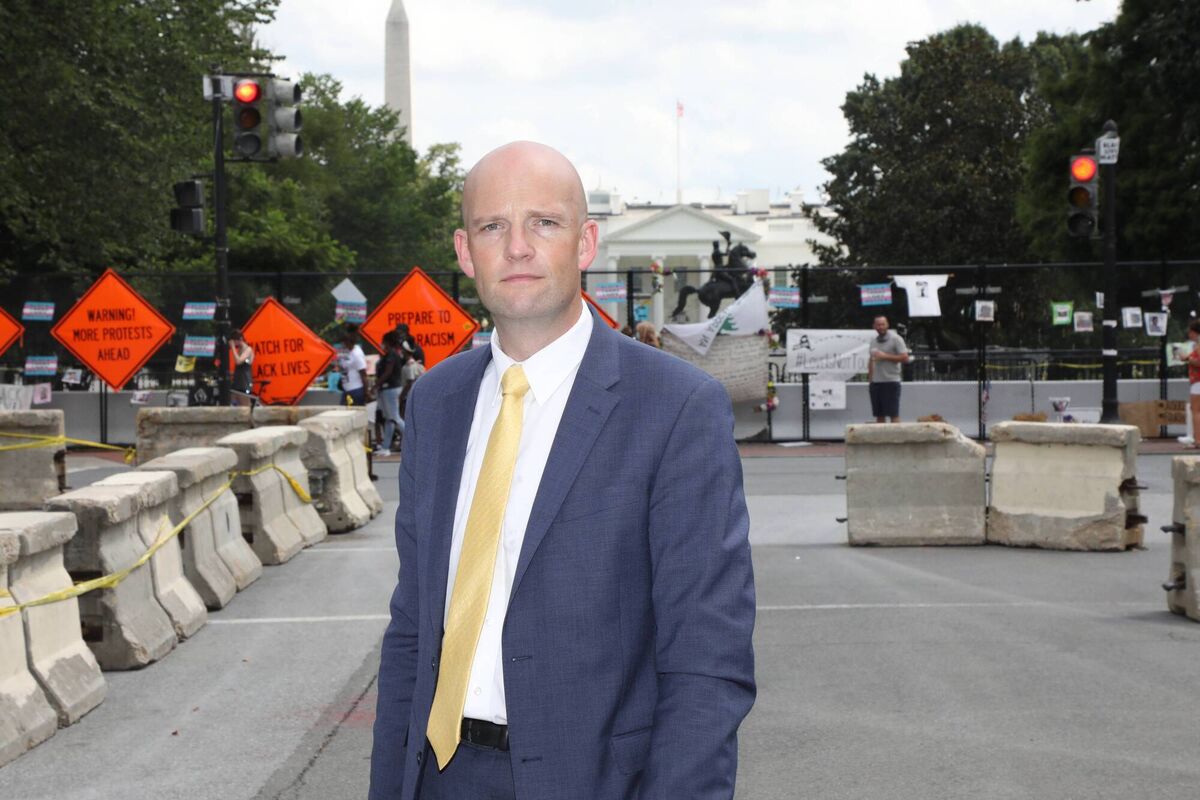
“Like a lot of American houses, we have a small basement so that became my home office and studio. I was able to do an awful lot from home. I still had the cameraman and I would go out to shoot stories but I didn’t go near the office for the first couple of months of lockdown. Come June and July, they started easing restrictions and then the race protests kicked off. All of a sudden, you had a very big story happening on your doorstep that wasn’t coronavirus-related that we had to cover. For logistical and technical reasons, it made sense to go back to the office.”
Schools in Washington have yet to reopen, so O’Donovan’s two daughters, Lucy, 10, and Erin, 7, are being taught remotely. Joanna’s skills in that regard come in handy.
“My wife is a primary school teacher back in Adamstown in Lucan, she has taken four years out for this posting. She has been able to home-school them as well, which has been great,” he says.
While the restrictions on travel have curbed their plans to visit home, O’Donovan says they are counting their blessings: “My parents are based in Farran, Joanna’s parents are in Crosshaven. We are lucky on both sides because when we go home, we have the beautiful Farran Woods to explore, and then we have the beaches and the sea. We had planned a trip in May and in August and they both got cancelled. My parents were due to visit in March/April and Joanna’s parents around now. It has been tough but technology has helped us stay in touch. I am very lucky in many ways, I am with my family here. We’re happy, we’re healthy, I’m not going to complain or moan.”
O’Donovan is a seasoned reporter, studying communications in DCU before going on to work in RedFM and TV3 before RTÉ. However, he acknowledges that covering Trump’s White House, where the ‘normal’ rules don’t apply, presents many challenges in terms of reporting.
“People say ‘oh, you should just ignore what he says’ and I don’t think you can do that. And they say ‘you should just ignore what his supporters say’, and I definitely don’t think you can do that. Everybody was left scratching their heads back in 2016 saying ‘how did this guy win, how did that happen?’. He won because he struck a chord with a whole group of people. My job is to put it out there and say you may disagree with him but actually the people who vote for him love him and they love him for all these reasons.”
O’Donovan must also deal with the fact that never in the history of US politics has a president needed such sustained fact-checking.
“When it comes to [the lies], as soon as he says something, you report that he said it but the very next line in the reportage is, ‘of which there is no evidence’ or ‘which has been proven false’.” When the President also has a direct line to the world through Twitter, the news cycle takes on an even more surreal hue.
Following his return to the @WhiteHouse from hospital @realDonaldTrump says: “Now I’m better, maybe I’m immune, I don’t know” @rtenews https://t.co/bxVMT0Ixld
— Brian O'Donovan (@BrianOD_News) October 6, 2020
“I feel I have developed a filter now. I remember at the start, almost everything he tweeted, it was like, ‘oh God, here’s the story’, and it could dictate your day. I find a lot of his tweets get repetitive. You need to take a step back and say, 'okay, he’s repeating himself'. I remember the last time I based a story on a tweet of his, it was in August when he said ‘maybe we should delay the election’. That was unprecedented. But there are definitely layers with the tweets now, because some of it is totally just putting stuff out there to trigger shock and outrage, and sometimes as a distraction if he is under fire with something else.”
Twitter also gives viewers a direct channel to O’Donovan himself, and they are not shy about voicing their opinion on his bulletins.
“It is great that people have direct access to you. It isn’t always nice. Sometimes you get the compliments, sometimes the insults, and you balance the two. What I find fascinating is that after some stories, particularly if it is an online analysis piece, I will get an almost even number of ‘you are so anti-Trump’ and ‘you are so pro-Trump’. Then you know you have done your job. People will see what they want to see and people will say online things they would never normally say. When you are angering both sides, you have clearly hit a nerve. I am at pains to be balanced.”
While O’Donovan is understandably focused on the US election campaign at the moment, he has also enjoyed covering other non-political assignments: “I spent a lot of time covering Conor McGregor in various ways, both his fights in Las Vegas and then his legal battles. I used to say to my wife, between Donald Trump and Conor McGregor, I was kept busy. Katie Taylor’s big fight last year in Madison Square Gardens was great to cover. it’s interesting to get out and do something completely different. As RTÉ’s Washington correspondent, you are really their North America correspondent, you are not a White House correspondent, so if an Irish person gets into difficulty, if there is a tragedy or a criminal case, that is as a story you have to cover. With Brexit, there was also a lot of focus on Capitol Hill in terms of supporting Ireland’s position in respect of the Good Friday Agreement and the Border. It is very important to be here to cover all those kinds of issues from an Irish perspective and tell those stories.”
Of course, with Trump, there are always more surprises in store. When I initially speak to O’Donovan, he has just covered the Democratic and Republican conventions and is gearing up for a hectic month of debates and campaign coverage.
“It is going to be a crazy couple of weeks, and it is going to be really interesting, I cannot wait. They often talk here about the election campaign October surprise — that something happens in October that can change everything,” he says.
O’Donovan turns out to be remarkably prescient, and the surprise is a humdinger, with the news on October 2 that Trump had tested positive for the coronavirus. When I get back in touch with O’Donovan, he says it has been a frenetic week, covering one of the biggest stories of his career.
“The news was confirmed at around 6am Irish time on a Friday morning and the following hours and days were hectic. My cameraman and I were outside the White House as Donald Trump was transferred to hospital on board the presidential helicopter Marine One. We then spent the next three days outside the Walter Reed Medical Centre where the president was being treated. I have covered lots of major stories during my time in the US but I’ll always remember this as one of the biggest.”
And, with the looming spectre of a drawn-out result due to postal voting, as well as Trump suggesting that if he loses, he may not go quietly, one wouldn’t bet against even bigger stories to come. And O’Donovan will be there, riding the rollercoaster all the way.
- Brian O’Donovan and Jackie Fox host States of Mind, a weekly podcast on the US election, available on rte.ie


CONNECT WITH US TODAY



Be the first to know the latest news and updates