Colman Noctor: Grand Theft Auto VI release poses a dilemma for parents
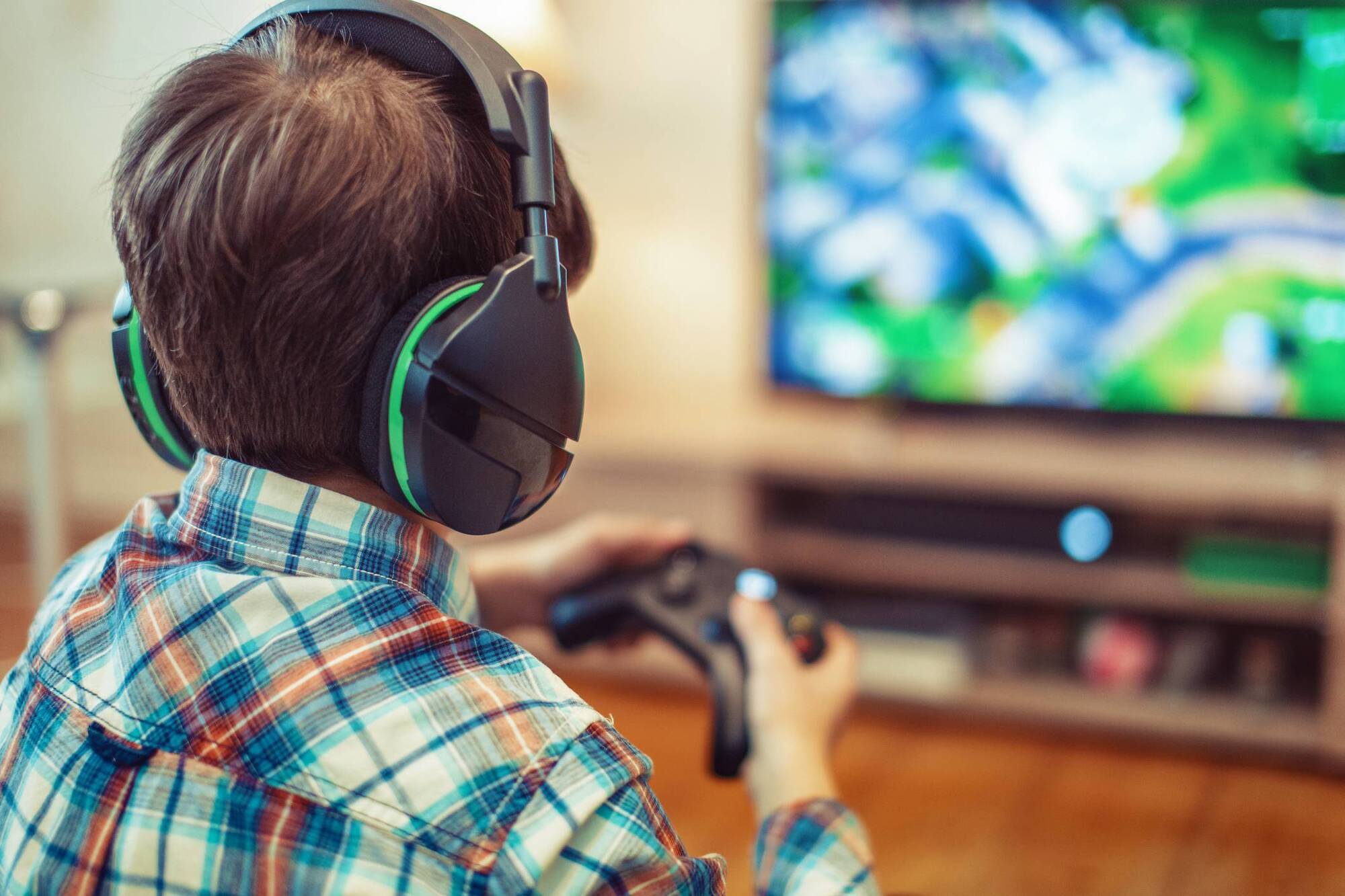
"We would not ordinarily allow a nine-year-old to watch a film containing graphic violence, sexual content and drug use simply because their friends had seen it. Yet somehow, when similar content appears on a gaming console, parents are often far less discerning," says Colman.
The arrival of Grand Theft Auto VI last week generated considerable excitement among gamers, as the latest instalment in one of the world’s most successful gaming franchises became available.
However, this release posed a dilemma for parents, as younger children across the country asked for a game clearly designed for adults because all their friends have it.
Grand Theft Auto has been around for almost three decades; however, gaming has evolved considerably during that time. Graphics have become more realistic, environments more immersive, and the opportunities for players to interact with these fictional worlds have become increasingly sophisticated.
For those unfamiliar with the franchise, Grand Theft Auto lets players explore an expansive fictional world characterised by crime, violence, and a range of adult themes. These games are designed for a mature audience, a point that can be obscured when we refer to them simply as video games.
We would not ordinarily allow a nine-year-old to watch a film containing graphic violence, sexual content, and drug use simply because their friends had seen it. Yet somehow, when similar content appears on a gaming console, parents are often far less discerning.
There is a curious contradiction in modern parenting in that we can be extraordinarily protective of children in the physical world while being remarkably permissive about what they encounter in the virtual one.
We will hold a child’s hand when crossing the road and worry about letting them walk to the local shop alone. Yet we may then allow that same child to retreat upstairs to their bedroom and spend hours immersed in a virtual world of violence, crime and sexual content.
Perhaps this is because physical dangers are more visible and familiar to us, whereas the developmental implications of digital experiences are less immediately obvious.
The irony is that we sometimes restrict the very real-world experiences that help children develop independence, judgement and resilience, while granting them considerable freedom to navigate digital environments designed for adults without those skills.
Those of us who grew up playing Sonic the Hedgehog on a Sega Mega Drive in the 1990s will remember how absorbing gaming could be, even then. However, the complexity, realism, and immersive nature of modern games have taken that experience to an entirely different level.
Psychologically, games can satisfy several important human needs. They offer opportunities to experience competence, autonomy and, particularly in multiplayer environments, social connection. A young person who struggles academically or socially may experience a powerful sense of achievement in a gaming environment and feel skilled, respected and capable in ways that are not always available to them elsewhere.
This is one reason why dismissing gaming as pointless can be counterproductive. For some young people, it provides genuine enjoyment, friendship and a sense of belonging.
However, the very features that make games enjoyable can also make them hard to disengage from.
Modern games often present a series of goals, challenges, and rewards. Completing one mission opens the door to the next, encouraging users to keep playing. The brain’s reward system plays an important role in this process. Dopamine is involved in motivation, learning, and anticipating rewards, and the prospect of completing another challenge can encourage players to continue long after they originally intended to stop. Parents will recognise the frustration that can follow a request to turn off a gaming console. However, we sometimes underestimate how immersed a young person can become in the experience.
Imagine watching the final episode of a gripping Netflix series. After hours of following the twists and turns, you are about to discover who committed the murder when someone walks into the room and unplugs the television. Most adults would be understandably irritated.
Yet this is effectively what we sometimes do when we demand that a child stop playing a game immediately, particularly when they are nearing the conclusion of a difficult mission.
The difference is that the child is not simply watching the story unfold. They are actively participating in it and may have invested considerable effort to achieve an outcome. This does not mean children should dictate when gaming sessions end, nor should parents tolerate aggressive behaviour when limits are imposed. However, understanding the psychological investment involved can help us manage these situations better by giving advance warnings and agreeing stopping points, which can make transitions easier without surrendering parental authority.
We also need to be careful about describing all enthusiastic gaming as addiction. There is a significant difference between a teenager who becomes absorbed in a game and one whose gaming becomes so difficult to control that it interferes with education, sleep, relationships, and everyday functioning.
The World Health Organisation recognises gaming disorder as a persistent pattern of impaired control and continued gaming despite significant negative consequences. It does not describe every child who becomes frustrated when asked to switch off their console.
Nevertheless, adolescence is a period when the capacity for self-regulation, planning and consideration of longer-term consequences is still developing. Expecting children to consistently regulate highly engaging digital experiences without adult guidance is unrealistic.
Another concern relates to the content itself.
Grand Theft Auto has traditionally featured graphic violence, criminal behaviour, sexual references, drug use, and strong language. These themes are central to the franchise.
The concern is not simply that children might imitate what they see. The relationship between violent video games and real-world aggression is considerably more complex than that, and we should resist simplistic claims that playing violent games inevitably leads to violent behaviour.
Most children can distinguish between fantasy and reality, but recognising that something is fictional does not automatically mean a child has the emotional maturity to process everything they encounter.
We need to consider how relationships, sexuality, aggression and criminality are portrayed, particularly when young people are repeatedly exposed to adult themes during gaming.
It is also worth remembering that a game’s suitability is not determined by whether a child becomes frightened or distressed while playing it. A child may appear perfectly comfortable engaging with material that is developmentally inappropriate.
This is where age ratings become important. In Europe, the PEGI classification system provides guidance on the suitability of games based on their content. These ratings are not simply measures of how difficult a game is to play, but indicators of the maturity required to engage with its themes. GTA 6 has a PEGI rating of 18 years.
Of course, the difficulty for parents is that gaming is also a social experience. Young people discuss games with friends, watch trailers and follow gaming personalities online, so by the time they ask for GTA 6, many may already feel socially invested in it. Refusing can therefore be seen not merely as denying entertainment, but as excluding them from something crucial to their peer group membership.
This is where parenting requires both empathy and boundaries. We can acknowledge a child’s disappointment without abandoning our judgement on what is appropriate.
Remember, popularity of ownership amongst a younger age group does not make it appropriate for their stage of development. Indeed, sometimes all it takes is one parent buying the game for their 11-year-old to create considerable pressure on every other parent in the friendship group to follow suit.
One of the challenges of raising children in a digital world is that access to adult experiences has become increasingly easy. Yet the developmental process of becoming an adult has not accelerated to match this. Children may be technologically capable of navigating these environments long before they are emotionally equipped to understand them.
As parents, we need to remember that access and readiness are two very different things, and that one of the most challenging aspects of parenting is giving our children what they need rather than simply what they want.
If you have held out and have a grumpy 12-year-old at home this week who believes you are the cruellest parent in the world, take some comfort in knowing that sometimes good parenting involves making unpopular decisions. Even when it doesn’t feel that way.
BLACK FRIDAY
50% off monthly and annual subscriptions.
Already a subscriber? Sign in
CONNECT WITH US TODAY
Be the first to know the latest news and updates