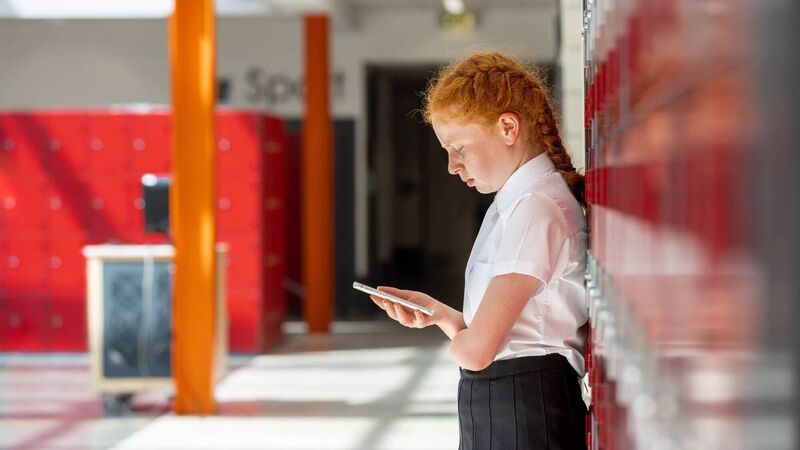
A 14-year-old boy described his approach to managing school life, saying: “My strategy is to be as invisible as possible because that’s the best way of getting through it.”
When I asked if he thought this was sustainable until he finished sixth year, he replied: “Well, I am going to try.”
He also said he doesn’t use the school toilets because he was frightened of the older students, who are constantly vaping there, and described having a strict rule: “Only speak if you are spoken to and keep your answer as brief as possible.”
He is not alone. I have met many young boys and girls who use a similar strategy to survive school.
Being quiet and being shy are often confused. Being quiet refers to a communication style or a preference for listening rather than speaking, while shyness involves feelings of nervousness or fear of social judgment.
While the two traits often overlap — a shy person may appear quiet in social settings — they are not the same, as someone can be quiet and confident, or outgoing yet shy internally. The key difference is whether quietness is chosen as a comfortable way of being or is driven by fear, sadness, or avoidance.
In every classroom, playground, and school corridor, there are likely to be quiet children who rarely appear on anyone’s radar. Usually, they are polite, compliant, and often academically capable. They do not disrupt lessons, demand attention, or end up in the principal’s office.
Teachers might describe them as “no trouble at all” or even use the familiar phrase of “a pleasure to teach.” Parents may feel reassured by their good behaviour and independence. However, their quietness can also mean that they are among the most vulnerable students in the school.
The quiet child often becomes the invisible child, or the wallflower who blends into the background, whose struggles go unnoticed precisely because they do not announce themselves loudly.
Quietness is not a flaw or a problem to be fixed. Temperament is a fundamental part of who a young person is, and many quiet young people grow into thoughtful, empathetic, and creative adults.
In my experience, they often observe deeply, feel intensely, and think carefully before speaking, and our world would be poorer without them.
However, problems emerge when a child’s quietness clashes with school and sports environments that do not recognise differences. When participation is equated with speaking out, confidence with extroversion, and wellbeing with visibility, the quiet child can be unintentionally excluded.
While in some instances, quietness can also conceal anxiety. Compliance may be a way to hide distress. And independence can mask a young person who feels deeply alone, though this is not always the case.
Schools are busy, high-pressure environments. Teachers are managing large class sizes, packed curricula, and increasing emotional needs. Understandably, attention is often focused on children who are struggling loudly, such as the child acting out, refusing to engage, or disrupting others, as well as the confident participants who are always quick with a verbal contribution to any discussion.
Bullying can be subtle
The quiet child seldom triggers alarm bells. They sit still, complete their work, and avoid drawing attention to themselves. While for many this is intentional, it can mean they go unnoticed if they are being subtly bullied, socially excluded, or quietly overwhelmed.
Bullying of quiet children often occurs in subtle ways, like being excluded from or undermined in group tasks, ignored during games, or spoken about rather than directly addressed in conversations. Since there are no obvious incidents, adults might assume all is well. The child may choose not to report the bullying, fearing that bringing attention to themselves will make things worse or that it is somehow their fault.
Academically, these children may also face difficulties and struggle to ask for help. Oral participation, group presentations, and fast-paced classroom discussions can put those who need more time to process at a disadvantage. When learning is measured by visibility and speed rather than comprehension, the quiet child might be underestimated.
Socially, quiet children often desire connection just as much as their more outgoing peers, but they may find initiating and maintaining friendships daunting or tiring. They are frequently overlooked in group settings where louder personalities take centre stage, as commonly seen in sports and other extracurricular activities.
They are often the first to be substituted or not played at all because their silence is interpreted by coaches as disinterest or passivity. However, a lack of protest does not mean that a quiet child is unaffected by being overlooked; indeed, the opposite may be true.
Playgrounds and break times can be especially challenging. Unstructured social time demands skills that quiet children may not yet have, such as negotiation, assertiveness, and quick responses. Without support, they might withdraw further, creating a cycle of invisibility.
Over time, repeated experiences of being ignored can shape a child’s sense of self. They may start to believe their thoughts or voice do not matter, that it is safer not to speak, or that connection is something other children are entitled to, but not them.
Disconnection
Adolescence can heighten these challenges. As peer relationships grow more complex and social hierarchies become more rigid, the quiet child may feel increasingly disconnected.
There is a specific risk that emotional distress in quiet teenagers goes unnoticed. While some express pain externally through anger or risk-taking, others internalise it through withdrawal, perfectionism or self-criticism. These young people may continue to function well on the surface while struggling deeply beneath the surface.
Research suggests that mental health issues like anxiety and depression are more likely to exist in quiet children, but they can also be harder to detect because they don’t disturb others. By the time concerns are noticeable, the distress is often already longstanding.
Parents of quiet children can worry about either pushing too hard or not enough. The goal is not to change the child’s nature but to help them feel safe and valued as they are.
Listening is essential. Quiet children might need time and gentle encouragement to open up.
As with many other young people, conversations often occur side-by-side in the car, while walking, or during shared activities, rather than face-to-face.
Parents can support by validating feelings instead of trying to fix them. Statements like “That sounds really hard” or “I can see why that upset you” promote safety and understanding.
It is also important to advocate when necessary. If a child is being overlooked at school, parents can raise concerns without portraying the child as a problem. Asking how participation is encouraged, how group work is structured, or how social inclusion is supported can lead to constructive discussions.
Perhaps the most critical shift is moving away from viewing quietness as a deficit.
Schools can support quiet children by diversifying how participation is recognised. Wallflower children are unlikely to earn behavioural merit points at school compared to their louder peers. Written reflections, small-group discussions, and creative responses enable children to demonstrate understanding without being pushed into uncomfortable roles.
Teachers have a strong role in recognising the overlooked. A quick check-in, a purposeful pairing with a caring peer, or a private acknowledgement of a child’s contribution can have a meaningful impact.
Anti-bullying strategies should also tackle subtle exclusion rather than only overt aggression. Creating classroom environments that actively promote kindness, inclusion, and diversity can help safeguard those who might otherwise be ignored.
On a broader level, education systems need to recognise that wellbeing is not always visible.
Screening tools, guidance counselling structures, and staff training should include awareness of children who internalise difficulties, not just those who externalise them.
The child who feels invisible doesn’t need to be thrust into the spotlight. They require space to develop at their own pace and environments that recognise and support where they are. When we slow down to notice the child who never complains, who never causes trouble, who never demands attention, we often discover someone carrying far more stress than we realised.
In a world that often rewards the loudest voice, we must learn to listen more attentively to the quiet ones. Not because there is something wrong with them, but because they matter, and we need to make sure they know it.’ And sometimes, the child sitting quietly in the corner is not invisible at all - they are simply waiting to be noticed.
- Dr Colman Noctor is a child psychotherapist
CONNECT WITH US TODAY
Be the first to know the latest news and updates