‘Innocence of pregnancy forever taken after a loss’
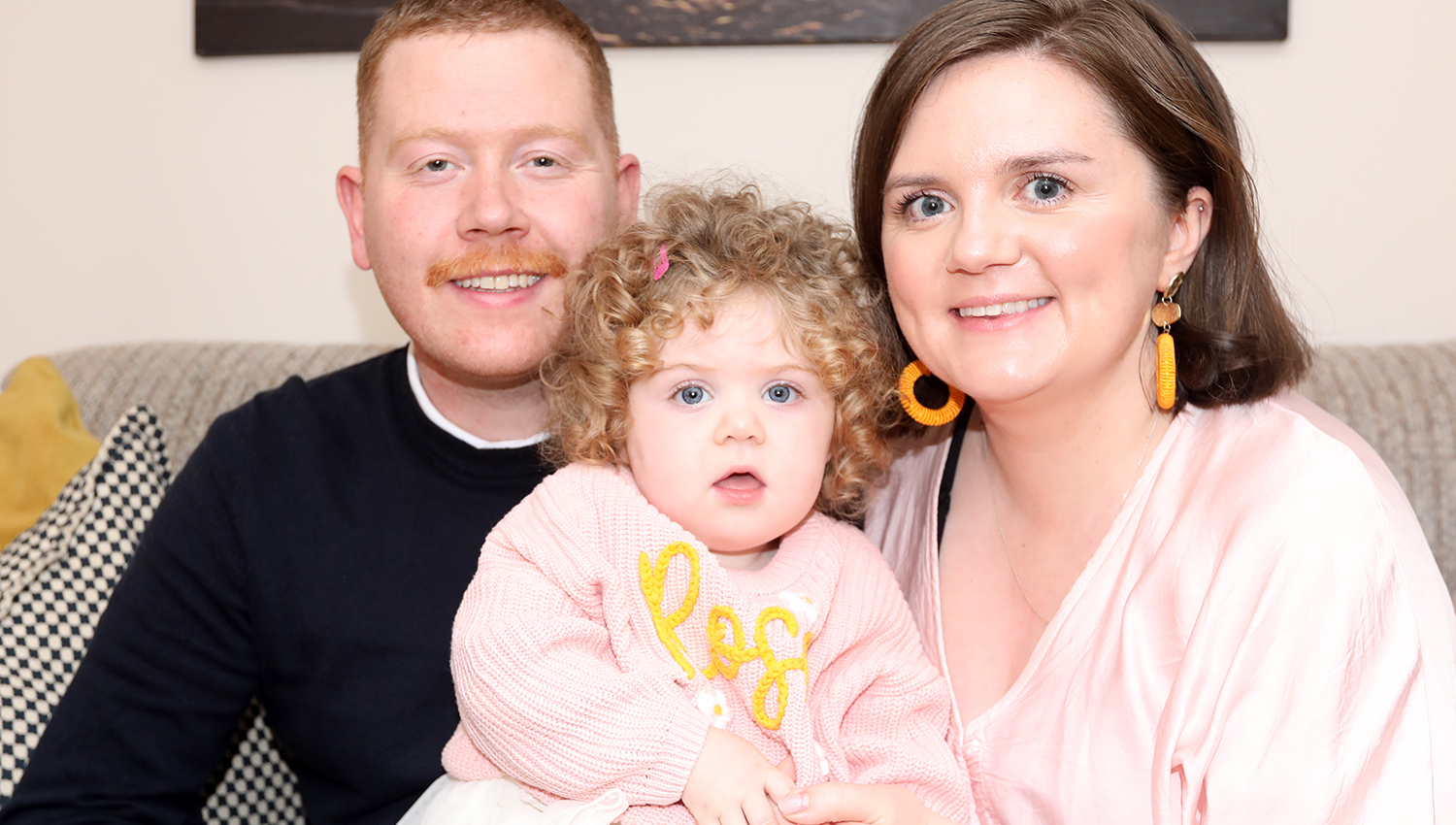
Mike Mulcahy and Eleanor Fitzgerald with their daughter Rose. ‘We wouldn’t have Rose if it weren’t for Jack. Essentially, Rose is our gift from Jack.’
“The scariest thing I’d ever done was tell him I was pregnant. From day one, he said: ‘We’ll give it a go, I’ll stand by you’. And from then, it was unspoken that we were together, it all felt very right.
“We were so excited once we’d told our parents — they didn’t even know we were seeing each other. We felt free then to enjoy the pregnancy.”
Eleanor, 34, loved being pregnant. Mike, an electrician, works abroad a lot. “We were getting to know each other, doing all the things couples do when they’re first dating. Whenever he was home, we’d go away together — I socialised more while pregnant than I had in the previous few years.”
As soon as they discovered they were having a boy, they named him. “He was always going to be Jack.”
In late November 2022, 34 weeks pregnant, Eleanor recalls feeling Jack kicking, telling Mike to feel him too. “That’s the last time I ever remember him kicking.”
In the following days, as her baby’s reduced movement began to dawn, she drank orange juice and ate spicy fajitas — “old wives’ tales said to cause the baby to kick”. But nothing happened. The maternity hospital said to come in. “We still didn’t think anything was wrong.”
A scan was arranged, and Eleanor recalls the utter silence as they and the doctor looked at the monitor. “That silence felt like it went on five minutes… The doctor said: ‘I’m sorry, there’s no heartbeat’. It didn’t register. I said: ‘Are you telling me my baby’s dead?’ He said, ‘Yes, I’m sorry’.
“Everybody responds differently to trauma — Mike started crying, I went into shock, I couldn’t say anything… The doctor said a consultant would confirm and tell us the next steps. The doctor went out, and I vomited.”
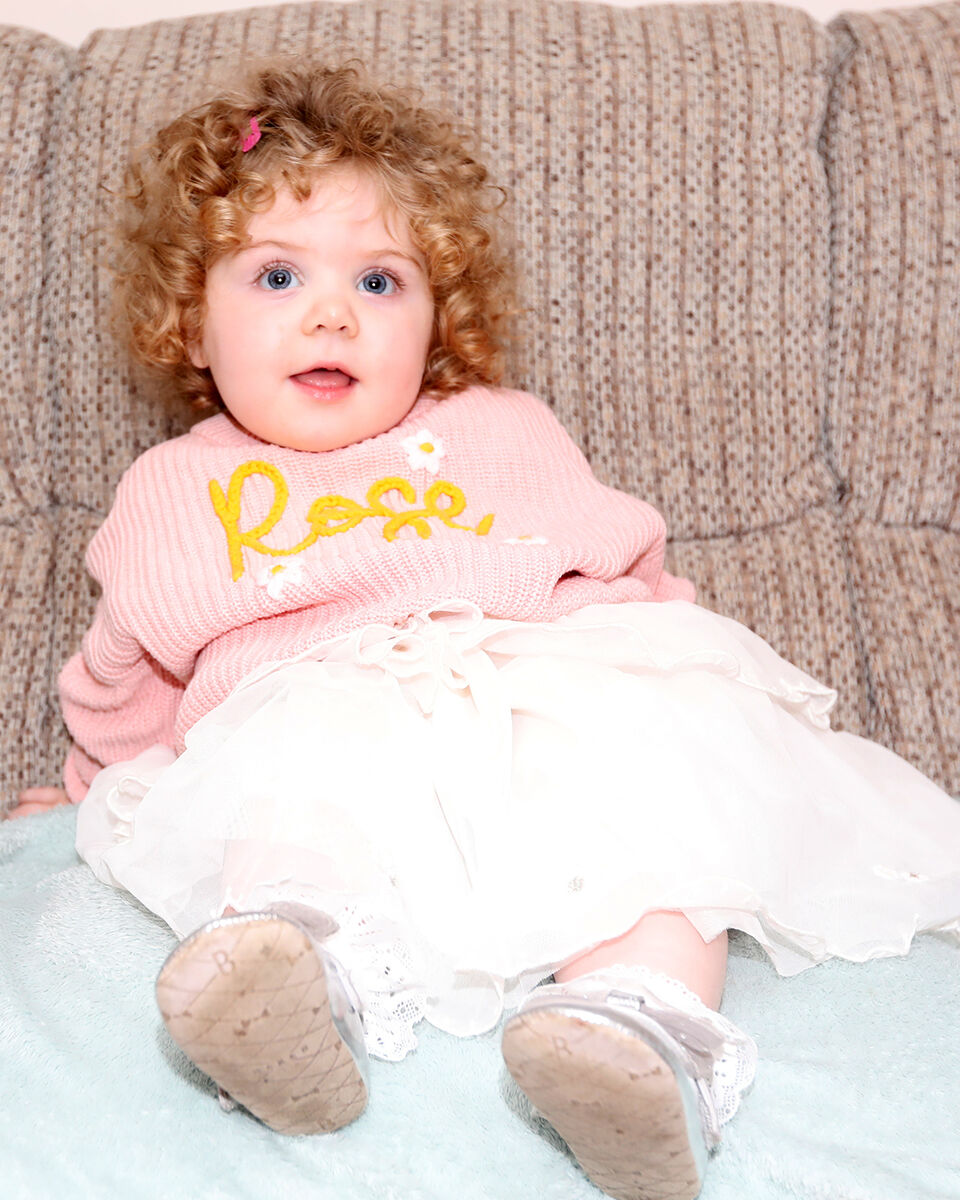
Sent home that night, Eleanor would return the next morning to begin the process of inducing labour. “We drove home in silence. Later, sitting on the edge of the bed — we’d only been living together three months — Mike said: ‘We’ll get through this, and we’ll have another baby’.
“I didn’t know I needed to hear that. I knew then we would get through it.”
Those two days, waiting at home for the medication to precipitate labour, were the hardest. “I didn’t want to go into hospital or go through this. Not knowing how I’d react after giving birth, just so scared about the difficult emotions I’d feel, about how I’d cope.”
In fact, Jack’s arrival brought relief. “I hadn’t cried that whole week until they put him in my arms. And then I cried, just seeing this little baby, his perfect little features, perfect little hands. Then it just hit home.
“Some of his features were similar to mine, a reddish tint to his hair like Mike has — seeing all this brought him to life.
“Holding Jack just made it real. No one can take away from me that I did have a little boy, and I got to hold him. He did exist.”
Eleanor is grateful to University Maternity Hospital, Limerick (UMHL) perinatal services for gently advising her on what would help her to process her grief. “The midwife specialist, a psychotherapist in perinatal loss, was amazing in her support and counselling.”
There was also relief in learning what caused the stillbirth — there had been a serious issue with the umbilical cord. “It was easier, knowing it was nothing I did”.
Eleanor feels, however, that she and Mike didn’t initially deal well with their grief, and it was a few months before “the floodgates opened” and she cried for 45 minutes without stopping. Soon after, she was pregnant again but suffered a miscarriage at six weeks.
“That really floored me. Someone had said the only way to get over a stillbirth is to hold a crying baby in your arms, and that’s what we really wanted. I had pinned all my hopes on this pregnancy to heal. It hit both of us hard… After that, we decided we needed to forget about pregnancy, look after ourselves, enjoy ourselves — we booked a holiday.”
In June 2023, Eleanor realised she was pregnant again.
When she was 10 weeks pregnant, a consultant with a specialty in high-risk pregnancy made weekly scans available to her at UMHL. “I went every Monday at 7.30am. Knowing I just had to get through a week before I’d see the baby significantly reduced my anxiety.
“At 33 weeks, close to the [stage] I’d lost Jack, I was admitted to hospital for peace of mind. Rose was born at 37 weeks on the button, a perfectly healthy baby. They induced me, I wasn’t going one minute past 37 weeks — technically, that’s full term.
“Bizarrely, I had no emotion. I still felt we’re not out of the woods yet. It took 24 hours to feel the happiness. We thought her the most beautiful baby — a big, massive mop of hair. All we wanted was to take her home.
“For the first few months, I was on cloud nine. I just wanted to show her off. Every so often, it’d hit me about Jack, and I’d feel guilty for celebrating.”
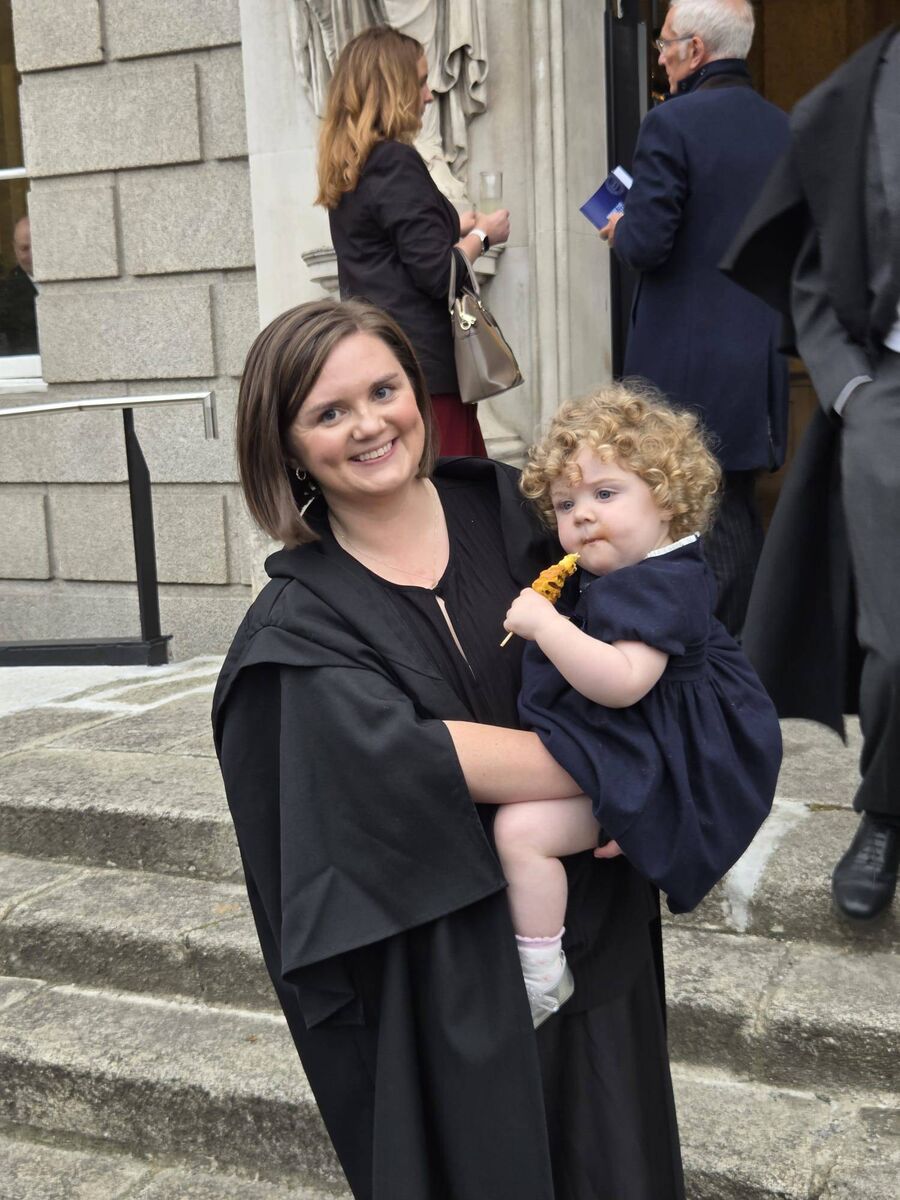
Six months after Rose’s arrival, Eleanor, who works as a lawyer in finance, returned to her barrister training, passing the Bar exams this summer. While expecting Jack, she had visualised graduating with a baby in her arms. “It became a dream, I wanted that full circle moment.”
This year, after qualifying as a barrister, Rose was at her graduation.
Now 20 months, Rose is “such a little rogue”, laughs her mum. “I’ve a teddy with the name Jack, and I’m saying to her, ‘your brother’s name is Jack’, and I’m trying to teach her to say ‘Jack’.”
Stillbirth, occurring at or after 23 weeks, and/or over 400g, affects about 200 families a year in Ireland and one in 250 pregnancies.
“It’s uncommon but not rare,” says Professor Keelin O’Donoghue, consultant obstetrician at Cork University Maternity Hospital.
Historically, stillbirth was seen as tragic or unavoidable, and without explanation. “We’ve a lot better understanding today of cause. With full investigation, the cause is found in 95% of stillbirths in Ireland,” says O’Donoghue.
The most common cause is placental, while foetal anomalies also contribute. Risk factors include smoking, drinking alcohol, high maternal blood pressure, diabetes, or a small baby.
However, a national audit of stillbirths found the average age of affected women is just over 31, fewer than one-quarter smoked, and half of the babies were of average size.
“It shows all pregnancies are potentially at risk of stillbirth. Understanding this would help women reduce risk but we tend to avoid the conversation because we don’t want to frighten women.”
Stillbirth rates have fallen compared to 25 years ago, but could be further reduced through evidence-based clinical care, public health strategies, and timely intervention, says O’Donoghue.
“Ireland doesn’t have any expressed priority to reduce stillbirths. Yet other countries have shown, with targeted prevention strategies, stillbirth doesn’t have to be unavoidable.”
O’Donoghue says stillbirth continues to be a silent grief. “It’s a significant bereavement. Avoiding discussing it, disenfranchising this grief, isolates [parents] more and leads to poorer mental health outcomes.”
When Eleanor is asked: "Is this your first baby?" she says it’s her second. If the conversation continues, she explains what happened. “If they get uncomfortable, that’s on them, not on me. I’m not going to not talk about my baby because people get uncomfortable. What parents want is that you acknowledge their baby — the baby existed — and not be afraid to talk about it”
Eleanor and Mike know it was baby Jack who brought them together. “Maybe that was his purpose in life. We wouldn’t have Rose if it weren’t for Jack. Essentially, Rose is our gift from Jack.”
CONNECT WITH US TODAY



Be the first to know the latest news and updates