Why a sing-song voice helps babies learn to talk
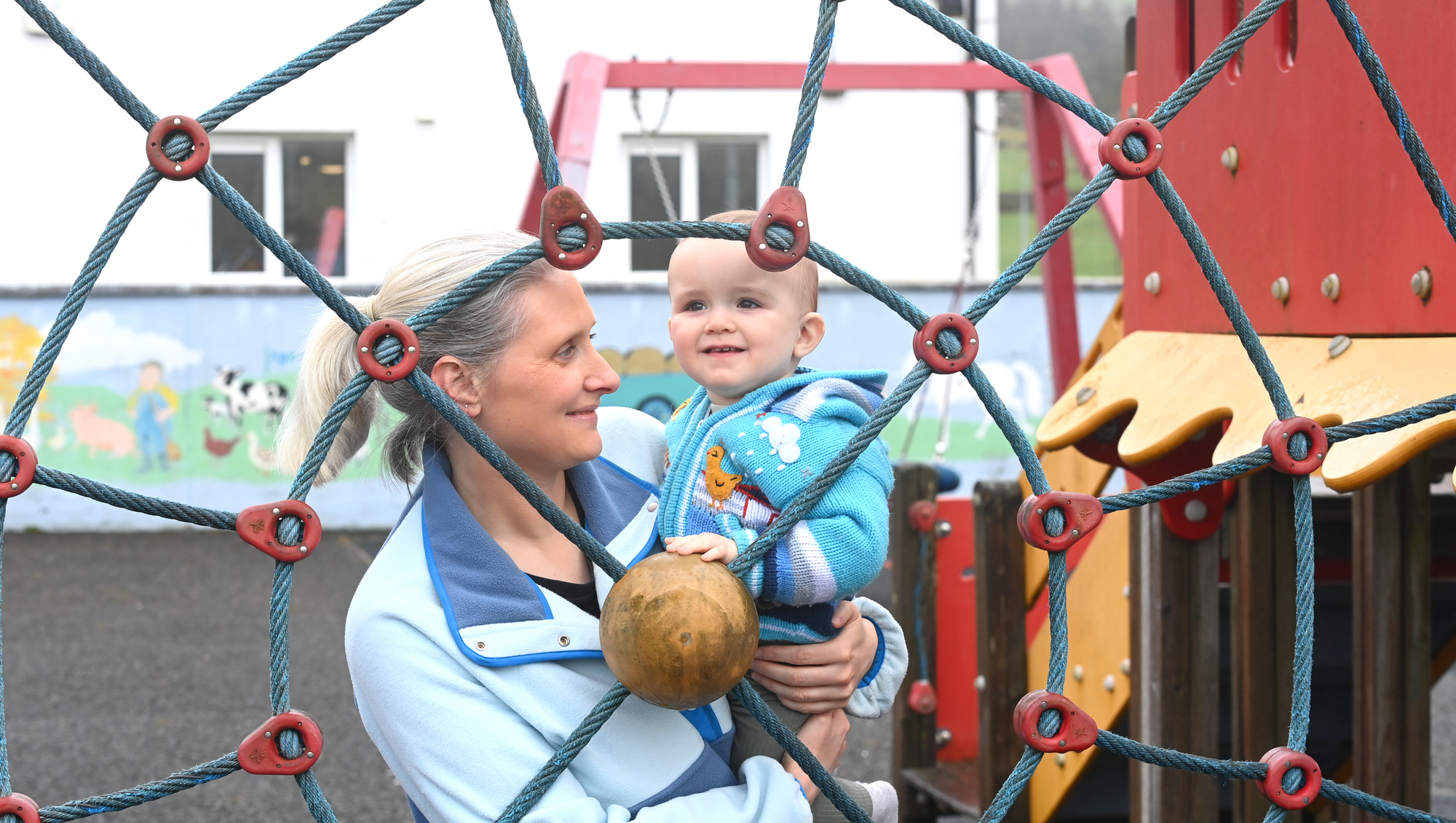
Abby O'Leary with 11-month-old Jack. Picture: Larry Cummins
“I go around the palm of his hand with my fingers, and then I do ‘one, two, three, and tickle you under there’ under his jaw or arm. And when I stop, he puts his finger into his own palm and looks at me as if to say, ‘You can play it again'.
“And if I pretend I haven’t seen, he’ll make the sound of it and he’ll laugh as if I’ve done it. And he’ll stay pointing at his hand as if to say ‘I’m ready’.”
Jack might not have words yet but the Ballymakeera mum of four absolutely knows her baby is making conversation — a great back-and-forth interactive conversation that involves listening and responding.
“Babies are naturally wired for connection before they’re even wired for words and vocabulary,” says speech and language therapist Ciara Daly, who practises privately in Douglas, Cork, and East Cork. “And connection is what builds communication long before the first real word appears.”
O’Leary makes her conversation exciting for her baby: “I raise my tone of voice a bit. There’s excitement in my voice — he gets all excited then, too. His dad’s an electrician and when we say, ‘Where’s the light Jack?’ he points to the light. He understands his environment.”
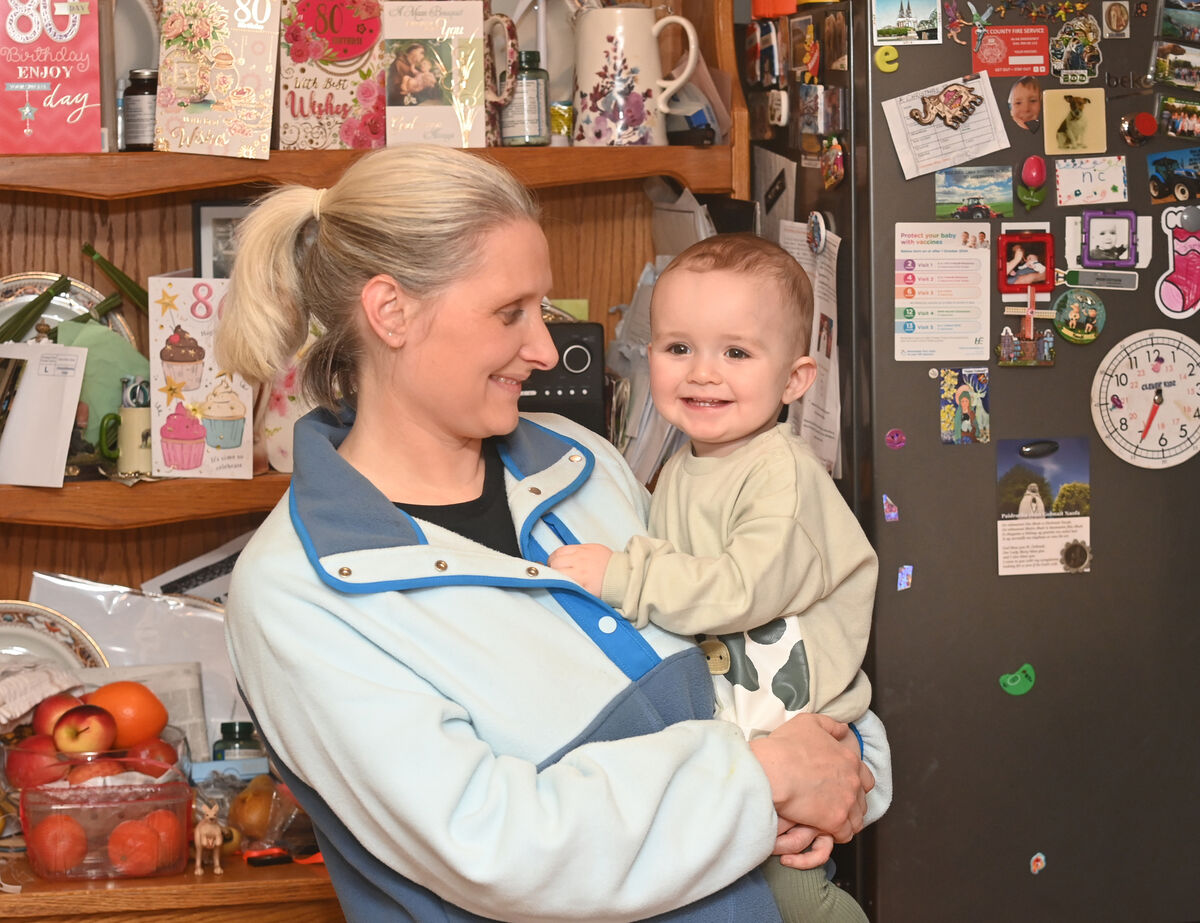
The Co Cork mother’s way of speaking to her baby has all the hallmarks of ‘parentese’, which speech and language therapist Deirdre Bradley describes as the exaggerated speech an adult would use with a baby: “It involves lots of repetition, animation in the voice, longer speech sounds, and a slower pace.”
Bradley says parentese is very different from ‘babyish talk’, which features over-simplified language and incorrect words and grammar. Examples are ‘biccie’ for biscuit, or ‘sip’ for cup, computing to ‘do you want your sippie/sip?’
“Another example is using ‘me’ instead of ‘I’ — ‘me want juice’, where the parent feels that by giving a simpler model it’ll help the baby. But actually it’s giving the baby an inaccurate model, which can cause speech errors in time.”
A bath-time example of babyish talk might be “Wook at da widdle tootsies! Splashy-washy time!”
This contrasts with “Splash! Big splash! You’re kicking your feet!” (parentese).
Commenting on this example, Daly says: “There’s the same warmth, the same engagement. But one is modelling real, grammatically correct language.”
O’Leary has never talked ‘babyish’ to her children: “I was afraid they’d pick things up wrong, that they’d have words that weren’t words at all. I think it’s a lot harder to get the wrong word away from them than to teach them the right word first.”
Bradley says talking ‘babyish’ slows vocabulary development: “They’re not learning the proper word. It’s confusing for them — they’re learning both the cutesie inaccurate word, as well as having to learn the accurate word.
“Talking ‘babyish’ also reduces complexity — babies aren’t learning proper grammar or sentence structure if we dumb down language. We mustn’t oversimplify language because we need to work on their long-term skills development.”
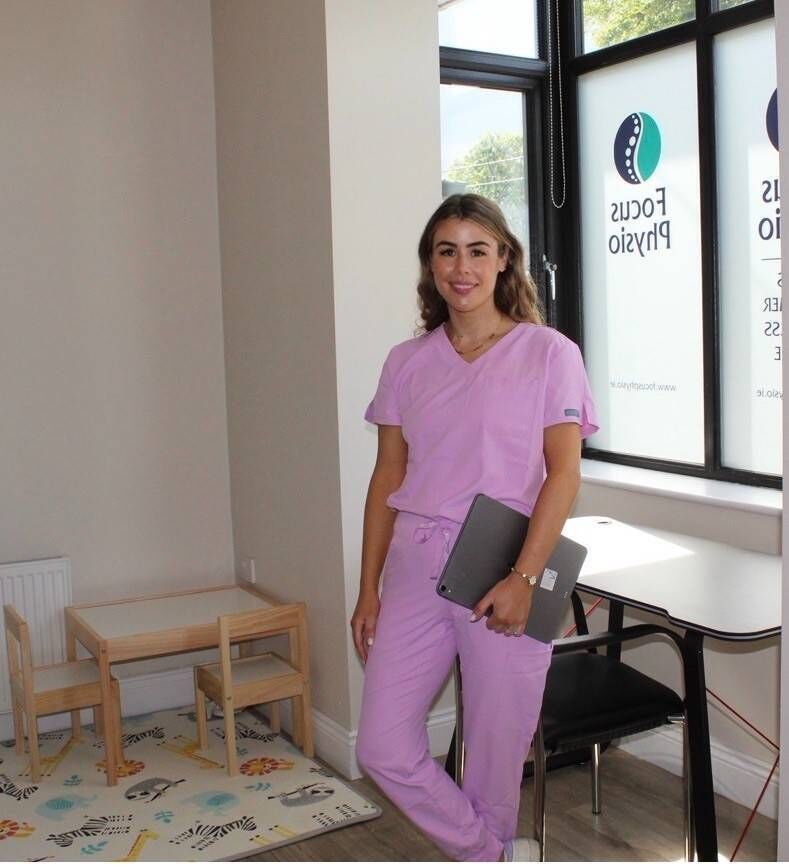
This, says Daly, is motivating for the baby: “Babies light up when you copy them. They make more sounds. They’re far more likely to keep vocalising when their sounds are noticed and responded to. It turns that random noise into communication.”
As well as copying your baby’s sounds, you can build on them, says Daly: “If your baby says ‘ba’, you can say ‘ba! Ball!’ Imitation shows you’re listening. It encourages more sounds — their voice matters.”
To best do parentese — or serve-and-return conversation with your baby — Bradley recommends one-to-one interaction and face-to-face with the baby: “Try to match what your baby’s interested in — what has caught his attention? That gesture of pointing is key for babies. Maybe they’ve seen a bird out the window, or the parent’s nose or chin.
“Baby has served by showing what they’re interested in. Once the parent spots the baby’s cue — their interest — they return the serve with an animated, energetic, excited voice and slowly elongated words. For example, stress the word ‘bird’ slowly. What you’re working on with this serve-and-return is the understanding.
“Respond with a nice clear label of what your baby’s interested in — be it ‘bird’ or ‘nose’. Then wait to see what baby does next. If they serve again, you return. Young babies may only do one serve and you might only do one return — like a short game of tennis.”
Bradley says parents sometimes have to wait a bit longer for the baby to take their turn: “Don’t give up if they don’t immediately take a turn. Babies are very responsive. They may not be able to take a turn with words. They might make a sound, use a gesture or smile. Observation and really clear face-to-face interaction will help with this.”
“She was communicating with gestures and hand signals that her dad and I could understand. When we went to speech and language therapy, I learned I was already doing a lot, like talking regularly to her throughout the day. But I learned more about supporting her — to speak slowly, use single words, and lots of repetition. And also to pause to give her a chance to respond in some way.
“It would take two or three times longer for her to respond compared to other children. And it might be a noise, a gesture, or pointing. Whereas before I’d have continued talking, I now left lots of pauses to allow her respond," she says, adding her daughter greatly benefited from this approach.
The parent’s familiar voice is really powerful for babies and, using parentese, is far more impactful than speech overheard from TV, radio, or media, says Bradley: “They can’t get that serve-and-return from something on-screen, there’s no to-and-fro — they’re not an active participant. They’re just watching.”
Daly agrees the parents’ voice matters more than they realise: “Parents don’t need special toys, flashcards, or learning techniques — just for them to be present, responsive, and engaging.”
She says research shows babies of parents who use parentese and are responsive have better outcomes, with more vocalisation and language than those exposed to passive screen videos. One study that summarised much of the research found parentese encourages more conversational turns between parents and babies, leading to stronger language development outcomes.
Daly recommends:
- Slow down. Babies process language slower than adults. Reducing speed makes words easier to hear and understand;
- Use real words, just fewer of them. Short phrases like “more milk”, “big splash”, or “bye-bye dog” are ideal. Parentese is simplified, not silly;
- Letting your voice be expressive holds baby’s attention — no need to exaggerate it;
- Follow baby’s focus. Talk about what they’re looking at. Language makes more sense when it connects to their world in that moment;
- Pause after you speak. Give baby time to respond with a look, smile, sound or movement. Communication is a two-way street from the get-go.
Babies exposed to parentese make more eye contact, and smile and babble more.
“They want to engage because it’s fun,” says Daly. “Getting reactions in real life feels like an invitation to engage. For babies, parentese is comfort, connection, and learning all wrapped in one.”
CONNECT WITH US TODAY



Be the first to know the latest news and updates