Sensory rooms: How lights, sensations and surfaces make an oasis of calm for Harry

Noise and brightness are harsh for children with autism, like Harry McGregor, nephew of MMA fighter Conor. So Harry’s mum had a space built at home for him to relax
Sensory rooms: How lights, sensations and surfaces make an oasis of calm for Harry

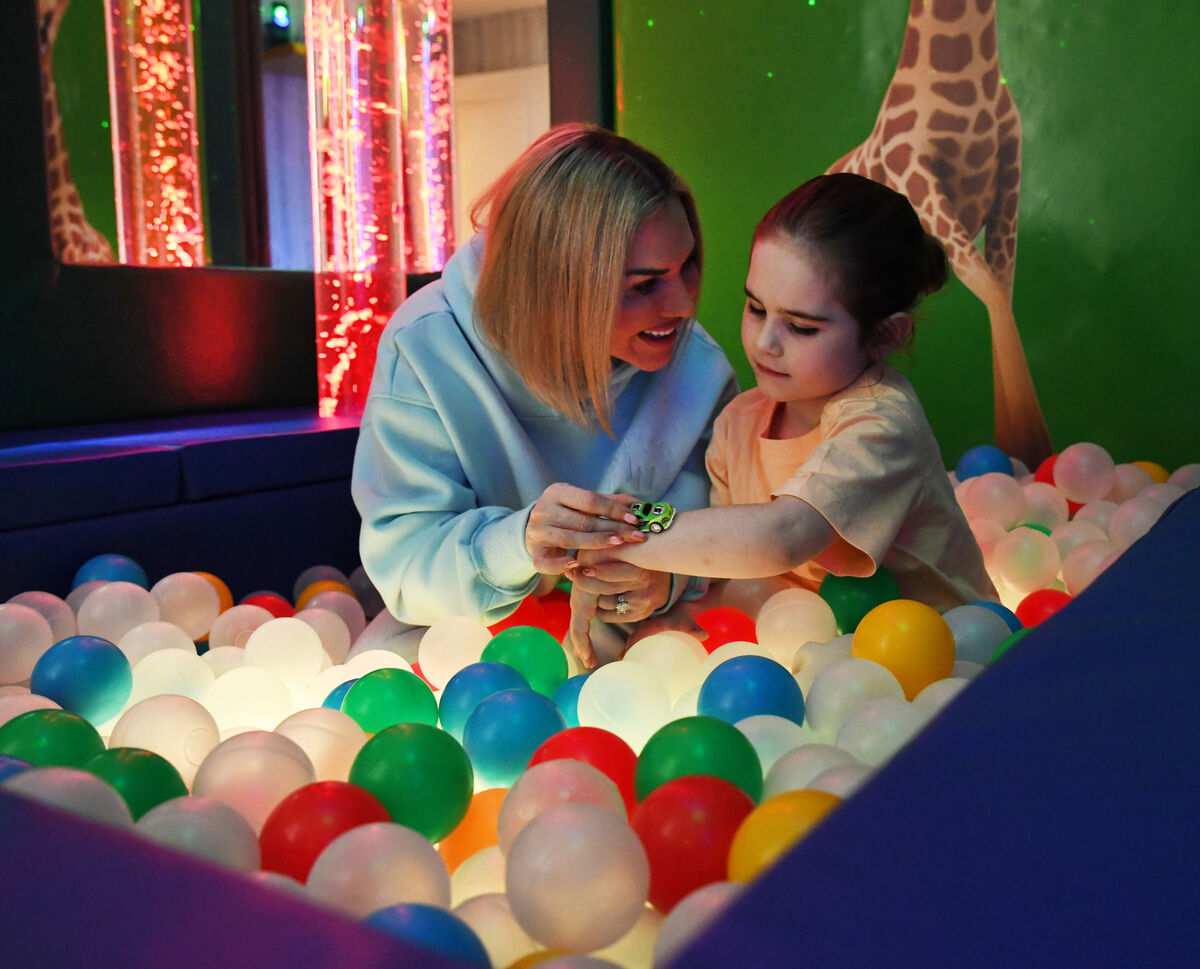
Erin Mc Gregor with her son Harry, 7, who is autistic, in his sensory room at their home in Dublin. Photograph Moya Nolan
THE sensory room at Tallaght Hospital has made a world of difference to seven-year-old Harry, who is autistic.

He was three when he was diagnosed and his mum, Erin McGregor — a sister of MMA fighter Conor — and her partner, Terry, had to confront something they knew little about.

“It was a world with words like ‘sensory issues’ and ‘intellectual development’ and ‘global developmental delay’, all these words that were brand new,” Erin says.

“Harry had quite a lot of different high-level needs. He’s non-verbal, though I call it pre-verbal, because he does have sounds. I like to say ‘love needs no words’; we find ways to communicate with him.”

Tallaght Hospital — “Harry has a lot of gut issues”, so goes there regularly — is a tough environment for a highly sensitive child with sensory issues. 

“He’s extremely sensitive to noise, crowds, music, fridges, clocks ticking,” Erin says. “His senses get quite heightened. So when we go to hospital, he’s already in a distressed state.”

Harry’s distress raises her stress levels, too. “We had a very sick and unhappy child and we didn’t know what was wrong with him, except we knew he was in a lot of pain,” Erin says.

“Trying to help a child who can’t tell you what’s wrong and bringing him to a hospital that heightens his anxiety, you’re actually terrified.”

When hospital staff invited the family into the sensory room, it had an immediate calming impact. “It was: ‘Wow! This is amazing. It felt like we had somewhere to breathe as a family. It was a lifeline to help us breathe.”

Knowing the sensory room is there gives Erin peace of mind before she even steps into the hospital environment with Harry. “It’s a little bit of safety,” she says.

Erin Mc Gregor: "You can start small and as the child’s needs change, you can adjust — he got some mirrors one year". Photograph: Moya Nolan

Christmas miracle

Coming up to Christmas one year, Erin was chatting with a nurse in Tallaght and wondering aloud if “Santa could bring a sensory room to Harry” — she meant in their home.

And Santa did. On Christmas Eve 2021, he left a key, a scroll, and some footprints on the landing that led to the spare bedroom, which had been converted into a sensory room. The room had been tailored to Harry’s needs.

Erin says: “From a very young age, he loved bouncing, so we knew we needed a trampoline. We also knew from Tallaght Hospital that he loved the bubble tube with little fish. There’s a ball pit, which he wasn’t into for a long time, but now he loves it. You can start small and as the child’s needs change, you can adjust — he got some mirrors one year.”

Erin, whose daughter, Taylor, is 24, describes their home sensory room as a necessity, not a luxury. “We’re very lucky to be able to financially afford one. I know not every family can, and I think there should be funding for families.”

Special moments in the sensory room have marked real progress for Harry.

Erin says: “His communication skills have developed. Before, he’d have been very isolated in his play: He’d want to play by himself and he had little interest in socialising with me or others. Now, we’ve had some really special moments, where he has taken me by the hand and asked me to jump on the trampoline with him.”

Harry doesn’t like socialising outside, so family and friends come to their house. “He loves company now. He adores children. He definitely communicates with them, and the children who come absolutely love the sensory room. So he’s able to be safe in that space and build friendships. And if he’s upset, he’s able to have space there to be away from other children and re-set.”

Ray O’Brien is founder of Senco Sensory Solutions, the Irish company that installed the sensory room in Erin’s home. Ray’s brother, Gerard, now in his 60s, has cerebral palsy. As a young child, Ray watched their dad, Billy, make aids to help Gerard. Ray recalls growing up in Dublin’s East Wall at a time when there was “nothing available” to cater for his brother’s needs.

He describes how his father made a baby walker when Gerard was two: “Out of an old pram, he welded together a frame, and from an army tent, he made a canvas centre with a drop in it and two leg holds.”

That Ray should set up a company specialising in the design, manufacture, and installation of multi-sensory rooms and safe spaces for people with special needs is no coincidence. “You’re always thinking of ways to make things easier for people. As Gerard got older, his muscles atrophied and tensed up. When we were about to make a water bed, we put vibration in it to massage the muscles and to encourage blood flow. So Gerard’s condition has inspired some of what we make.”

The company has done a lot of work in schools wanting to add ASD units to their programme. Parents wishing to install sensory rooms in their homes are encouraged to build up the room step by step, in tune with their child’s changing needs. “For houses that don’t have a spare room, we design multi-sensory sheds,” says Ray.

The company is supported by the Local Enterprise Office. “LEO has been extremely helpful. We got on their mentoring programme,” says Ray.

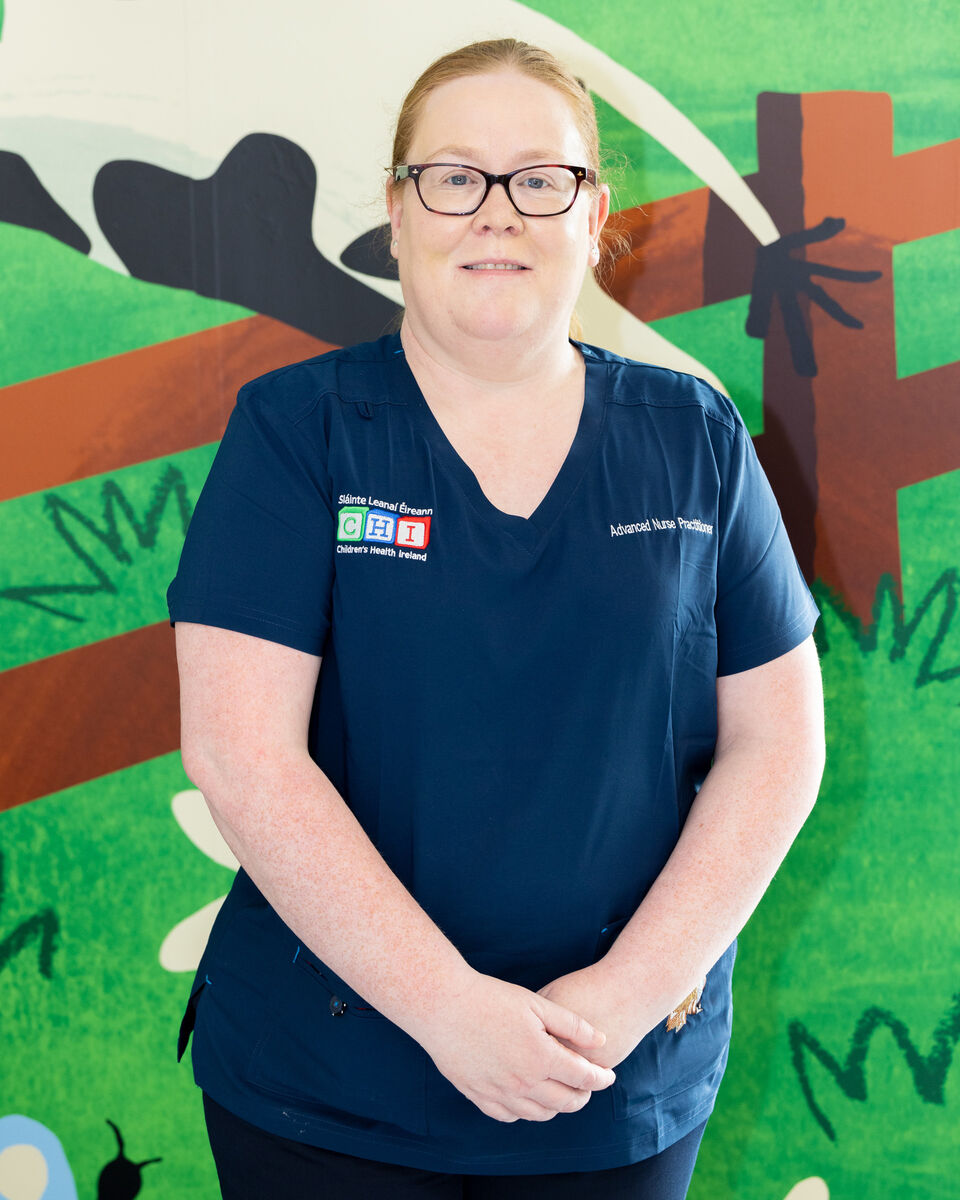
Stephanie Kelly, neuro-disability advanced nurse practitioner at CHI at Tallaght

Safe haven

Stephanie Kelly is a neuro-disability advanced nurse practitioner at CHI at Tallaght. She says the hospital installed three sensory rooms — two in outpatients and one in the emergency care unit — after seeing some children struggling.

“They were finding the waiting very hard. Hospitals are busy places and appointments don’t always run to plan. If a child has any sensory issues, they can be heightened by the bright lights, loud noises — talking, bleeps, machines, the PA system calling — and the crowds.

“There is a lot of traffic, people going by on trolleys, in wheelchairs. It can be overwhelming.”

Stephanie has seen children try to block out the lights and noise. “You can see they’re looking for somewhere quieter. In a hospital setting, it can be hard to find that space, so you have to make it.”

Describing the sensory room, she says: “It has fibre-optic lights cascading down, a bubble tube, light projectors that play calming images on the wall, twinkling lights, calming music, colourful bean bags. The room is dimly lit and wheelchair-accessible.”

Stephanie has also seen children and their parents relax in the sensory room. “Nothing negative happens in that room; there are never any blood tests, for example. It’s always a safe space. Or if a child has had a blood test, they might come to the room afterwards, so they can process and calm down and have a better experience before they leave.”

Stephanie says the sensory room benefits children, even in indirect ways. “If your child is very anxious and upset, it’s very hard for parents to talk to the medical team. But if the child is settled, happy and content, parents are able to have a proper consultation and express any concerns about their child.”

Thinking about the sensory room’s impact on Harry and his family, Erin says: “There have been sad tears in that room when Harry has been really upset; and happy tears when he has made connections. The room is like a little piece of Heaven.

“It’s difficult to put into words what it means to have a safe space for your child. Because, as a mother, all you want is for your child to be safe and happy: That’s my number-one priority.”

More in this section

Cookie Policy Privacy Policy Brand Safety FAQ Help Contact Us Terms and Conditions

© Examiner Echo Group Limited