Quality family time together has a lifelong impact
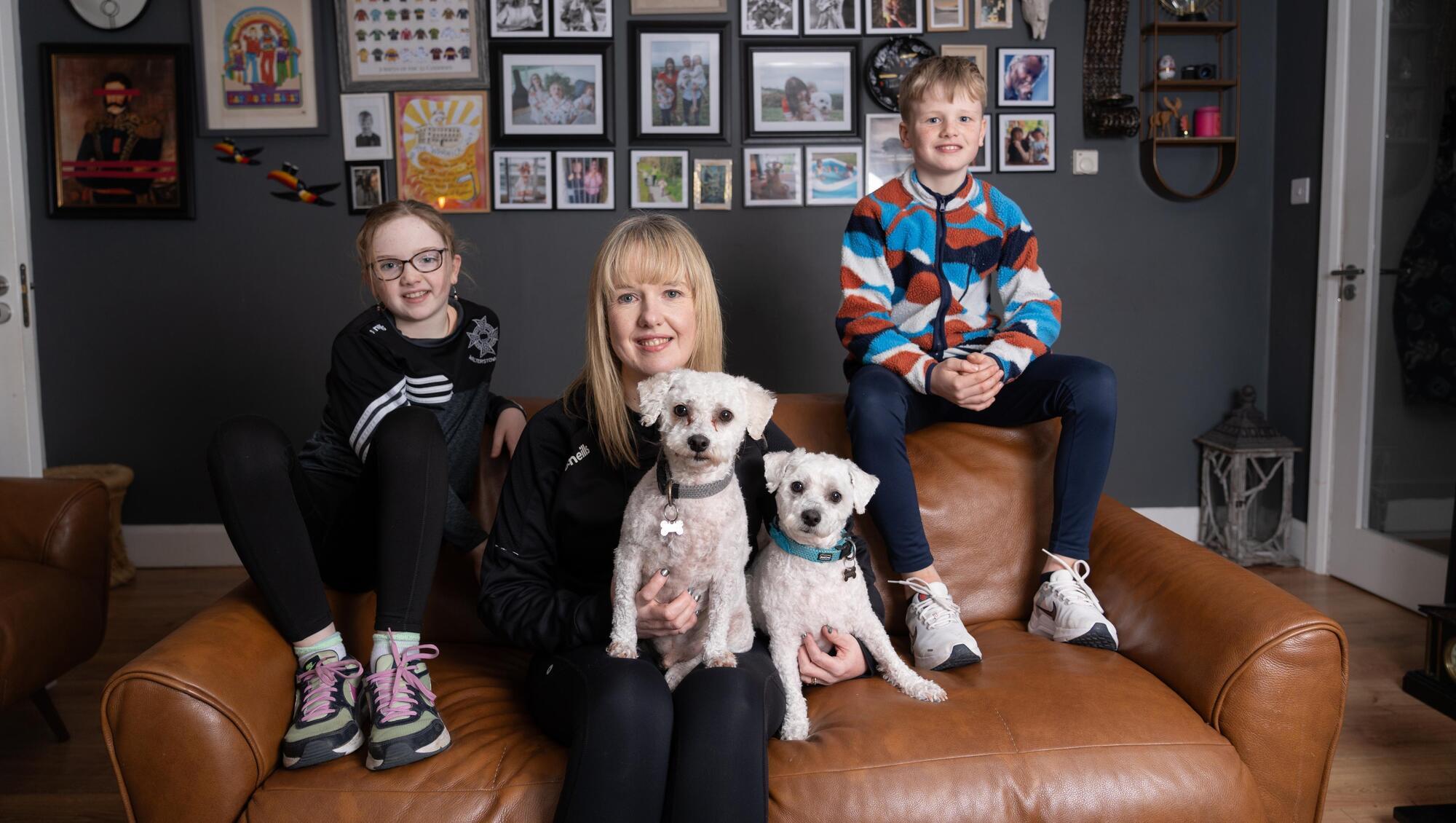
Ruth Chambers with Aidan, 10, and Sarah, 9, and dogs Dessie (blue collar) and Seamus (grey collar) at their home in County Meath. Pic: Barry Cronin
Ruth Chambers, her husband, Mike, and their children, Aidan, 10, and Sarah, nine, all marched together with their local GAA club in this year’s St Patrick’s Day parade in Navan.
“All four of us love the GAA. We spend all our time together in the club. Mike’s involved in admin and Aidan loves going down there with him, putting out the cones, hanging up the jerseys in the dressing room with his dad.
“Sarah lives down there too. I’m the club PRO. She comes with me, helps take photos — we often do Twitter updates on the sidelines together, posting [match] scores.”
Ruth prioritises time spent together as a family. “Aidan and Sarah play computer games and watch TV, but children don’t remember being on their games consoles — they do remember time spent with you. We love to get out and walk our dogs. We love going to the beach. The Hill of Tara is another favourite spot.
“Aidan, at nearly 11, is getting to where he’s more interested in being with friends than just being with us, but we still don’t let the family time go.”
A 2022 UK-based study found that, regardless of what activities the family engages in together, what they enjoy is being together. This echoed findings from the 2018 Family Togetherness Index, which showed that shared family activities don’t have to be a big production.
This survey of more than 600 parents of children aged 16 and younger across Ireland also involved focus groups with young people. The feedback from these young people was that they appreciated the simplest family activities shared together, like playing with Lego or building a fort from cushions.

Orlaith O’Sullivan teaches mindfulness with the aim of building happier communities — families included.
For O’Sullivan, family togetherness is about intentionally spending time together in a way that nourishes the family. “It means sharing our experiences, how we’re feeling. If we need help, we’re able to ask for it. We take time to wish each other well. Every member of the family can be an individual with different opinions and perspectives, yet we know we belong unconditionally — in good moments and in rubbish ones.”
Being together as a family, she says, is as quiet and as slow as our world is ever going to be. “Our lives have very strong momentum — when things are going OK we may not notice we’re not spending much time together. But when things become difficult, it’s then we realise we may have been growing apart.”
For this reason, we need to make a habit of having shared, engaged family time. “We do it when interested, bored, busy, tired — it’s simply just how we choose to be together. Because for all of us, as individual family members, life can get a bit noisy and fast. We need to push against that and create space where we can simply be.”
With parents very often “consumed with to-do lists”, O’Sullivan says it is important to prioritise “playfulness and unscheduled, unproductive time where we’re just hanging out together”.
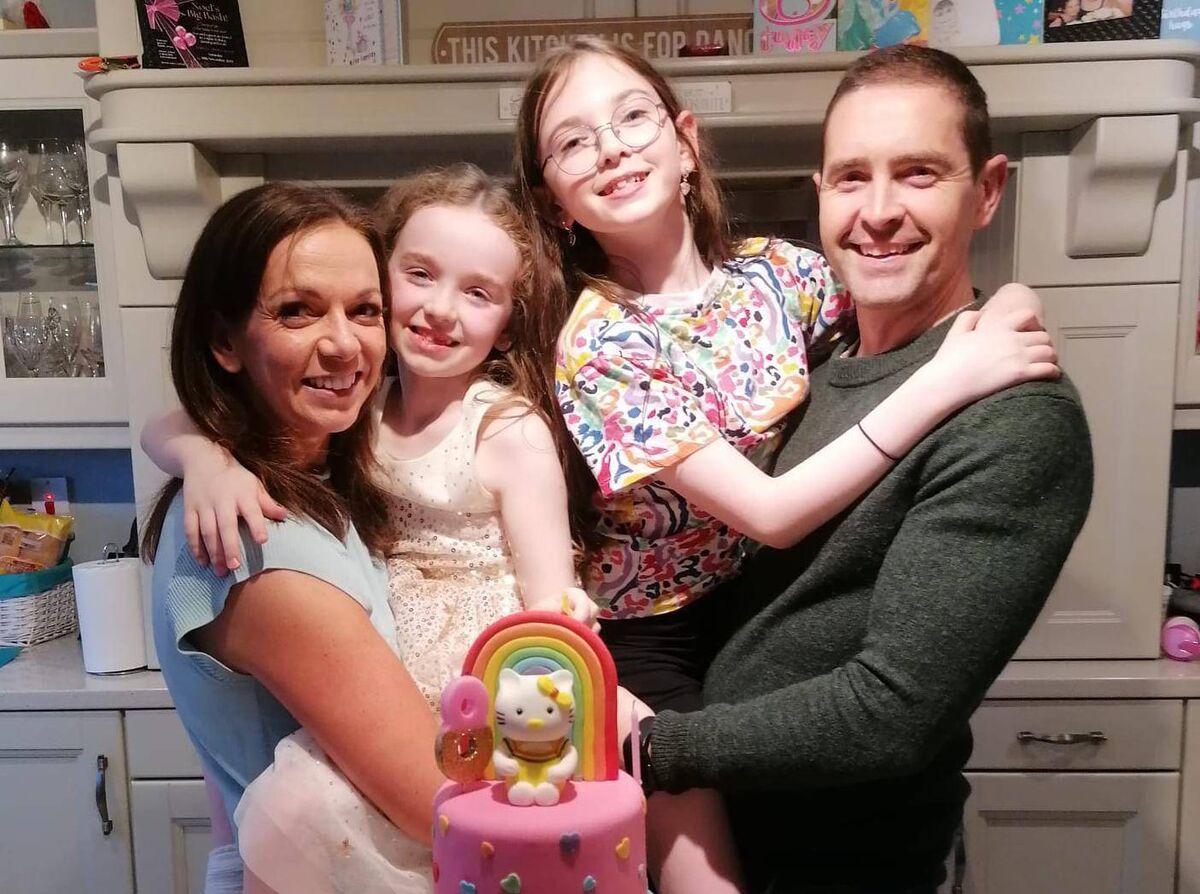
County Donegal-based Maria Rushe took a career break from her teaching job to join her husband, Emmet, working in the family fitness business. The couple wanted more time with their daughters, Julia, 12, and Danielle, eight.
“It has allowed each of us to have more time with the girls, but not necessarily to have more time for the four of us — during the week, one of us is working while the other’s with the girls, so we’re switching back and forth," says Rushe.
“As a result, we really value family time together. From when we close the gym at 2pm on a Saturday and [all through] Sunday is our downtime for the four of us together.”
Rushe most cherishes the weekends spent quietly together. “Where we don’t have anything to do, anywhere to be. We watch family movies, go for a walk with the dog. Sometimes, I think those weekends — nothing planned, just hanging out — are the most precious.”

Christopher Place, counsellor and psychotherapist accredited with the Irish Association for Counselling and Psychotherapy, says family of origin is our first experience of a team: “We will go through life in different teams. Our first team is fundamental in how we find our way in negotiating other teams.”
Place works with adults who often “have very difficult experiences of their first team — there can be a deficit of family togetherness”. He sees family togetherness as about supporting each other, being able to communicate healthily and having a sense of belonging.
As children move towards and into adolescence, Place says it can be challenging and emotional for everybody. “Being present to each other is all the more important. Adolescents want to be more independent and do their own thing, so it’s important certain family traditions start early, like sitting down to dinner together — and putting our phones away.”
In Letterkenny, Rushe and her family don’t often get to sit down and have dinner together as a foursome during the week. “So we value it more at weekends.
Place points to 2012 research from The National Centre on Addiction and Substance Abuse at Columbia University, which found children having dinner frequently with their parents were much more likely to report having a high-quality relationship with their parents.
“The impact of eating together has a positive correlation with wellbeing,” he says.
For Place — whose happiest childhood memories are of family holidays in West Cork — it’s important that families understand it isn’t about having loads of time together, but about having quality time. “We could all be sitting in a room, on our screens, and not together at all. It’s about finding a window where we can have shared activities together.”
It could, he says, be as simple as having a games night. (Rugby legend Donncha O’Callaghan posted recently on Instagram about his family loving "all things to do with games and competitions".)
O’Sullivan recommends families let individual members take turns to decide a 'lead' weekly activity — they all spend an hour together doing that activity with good grace. “It could be a cycle, a walk, children putting on a concert for the family, everybody getting creative together doing a craft.”
She also suggests starting and ending each day with family. “In the morning, take a moment to come together, to say ‘may we have a good day ahead, may we be safe, enjoy our day’. And in the evening check in — how was the day?"
She recommends having a common family language for our wellbeing — just as we talk about outside weather, we can talk about 'inside weather'. “Sometimes we’re sunny, sometimes stormy, other times rainy because we’re sad. When we’re worried it might feel like a little tornado. By sharing our weather together, we get to understand how we’re feeling as a family.
“And when a child sees the outside weather and understands it’s always changing, they can translate it to their inner weather — and know if they’re feeling furious, that won’t stay the same.”
How we communicate can enhance family togetherness. “Practising active listening, using ‘I’ statements rather than accusatory ones and being empathetic are all really important. And also being curious, trying to understand someone before we get understood — ‘I really want to understand your experience before I get to say mine’,” says Place.
Family togetherness is about memory creation, emotional support, feeling we belong, about learning conflict resolution. “How we’re together as a family has a lifelong impact,” says Place, adding that family togetherness is more important than ever today.
“There’s a whole set of challenges that can interfere with it — work and busyness of life, our screens and devices. Just think of the distraction happening all the time.”
At home, dad-of-one Place is constantly reminded about being together with his family. “My 21-month-old protests when he sees me on the phone. He’ll look up, see me browsing, and let me know. I have to put it down and play with him on the floor — with Lego, reading a book together. What he’s doing is teaching me to be present [and together] with him.”
CONNECT WITH US TODAY



Be the first to know the latest news and updates