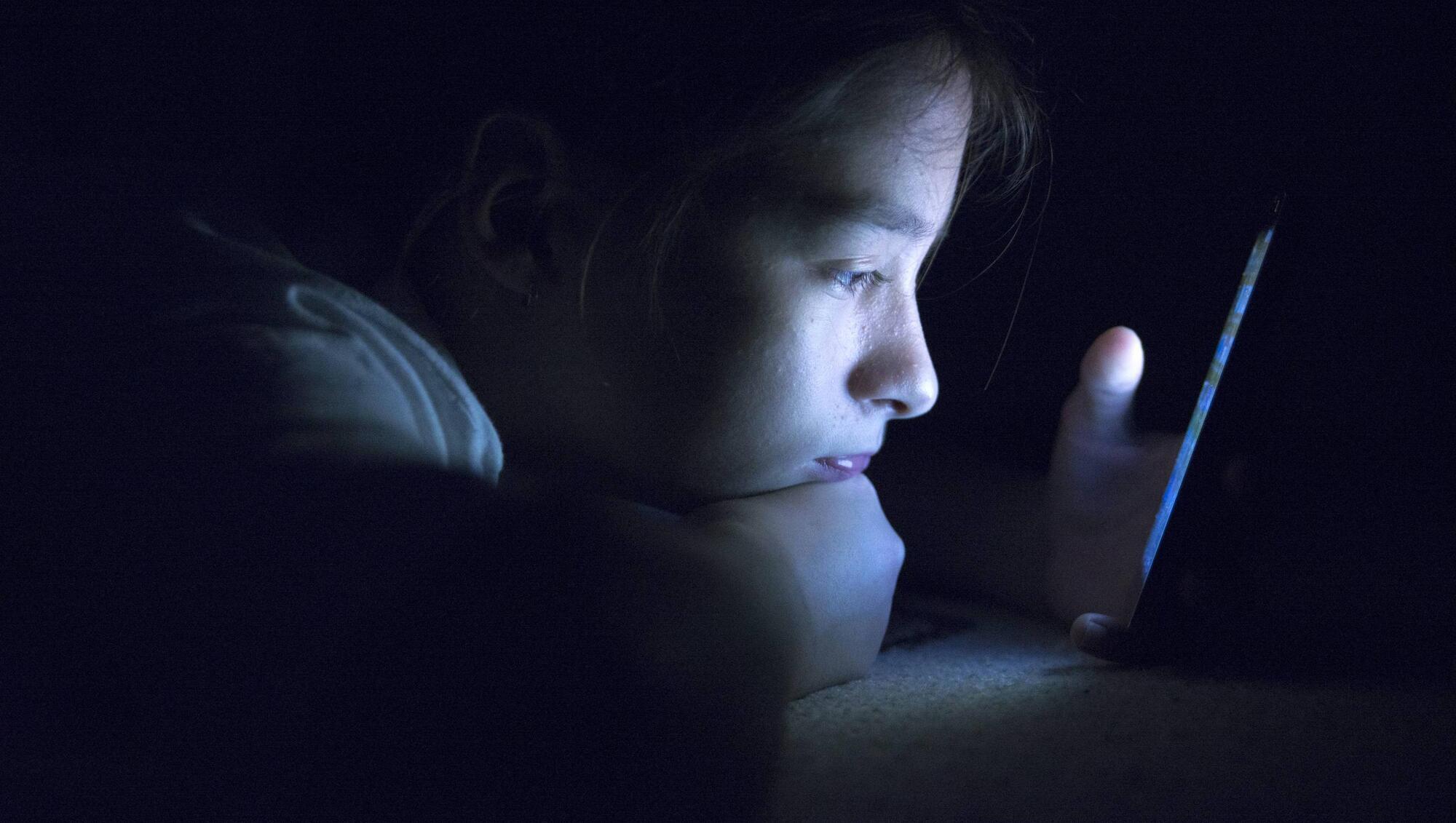
Last week, Cybersafe Kids released their latest piece of research on children and their device usage.
Every parent of a child or teenager should really take a look at the data they gathered and the advice they offer on how to better parent teenagers and their technology.
It is something I have been writing about for many years, and now as a parent of a young teenager, I am living all that theory in practice.
So, I see first-hand, how difficult it is to monitor but it isn’t beyond us. There are things parents can do to make sure their children are safer online.
The data revealed that girls are more likely to be victimised online than boys.
I have sat with so many teenage girls in my clinic, who have become incredibly isolated and sad because their once bustling friendship group has collapsed and they have been the subject of mean or nasty comments online.
Few experiences in life have such a devastating impact on a young person’s sense of self and development than being excluded.
So, it is vitally important that when we hand over a device to a child, we lay out the ground rules early so there is less conflict later when you want to check the phone or see what is happening to them online.
Setting that culture early is such an important part of removing dense conflict later.
I often meet parents who tell me they don’t want to invade their child’s privacy.
I explain, when their child goes into a house do they ask who is in there, and if they don’t know do they check?
Is this an invasion of your child’s privacy or just good diligent parenting?
We would never let our children wander out there aimlessly with adults we do not know.
When you hand a child a smartphone, you are literally handing them access to the entire world.
Some people will be good and some people will be very bad. That’s life.
We should never give our children endless internet access without scrutiny and without safeguarding their activity.
The study found that over 80% of parents do not know what their child is doing online.
This is a staggering statistic, and speaks to my lived experience working with families for many years.
When we have a fear, we generally have three responses; we look to control it, we attempt to avoid it, or we look for reassurance.
Parents, currently, seem to be avoiding the issue of their child’s activity online.
We must stop burying our heads in the sand, we have parental authority over technology and we must start exerting it.
Technology is not inherently bad, but the people who use it are often not well intended and it requires parental supervision.
Boys game more than girls and extreme gaming is addictive.
The US surgeon general’s comments at the start of the summer warned of this addictive aspect to gaming and device use, and he suggested that teenage girls are less happy because of their preoccupation with comparison and image.
His words echoed everything I have been saying about phones for many years. Our teenage daughters are surrounded by filtered images of beauty. We have to help them to see the truth behind these images and to celebrate themselves as they are.
The World Health Organization (WHO) classified gaming as a new mental health condition in 2018. That is worrying to me.
Because if the Diagnostic and Statistical Manual follows the WHO and also classifies gaming as a new mental health issue when it releases its next volume, we will see the sudden and immediate rolling out of heavy psychotropic drugs to ameliorate, what is essentially a parenting issue.
No parent wants their child to be on heavy drugs. That is a dystopian outcome that we must all work to prevent from coming into our children’s lives.
The study also showed that 31% of eight-to-12-year-olds are allowed online whenever they want. The busyness of modern parenting and the cost of living means that both parents are generally working to meet the financial demands of the modern world.

Parents can often feel guilty about that and give their children what they ask for because of that guilt.
We must never parent from a position of guilt. Our children will not thank us for it in the long run. They have to hear ‘no’ from time to time, and they should never be allowed on technology whenever they demand it.
The report also highlighted the rising incidences of cyberbullying. They cited, posting pictures without permission, creation of fake profiles to harass people, and being excluded from chat groups as the most prevalent forms of cyberbullying experienced by teenagers.
If a child experiences this negative type of behaviour, it is vital that parents remain calm when their child discloses it to them.
Open communication is vital during the tricky years of adolescence. Children are going to consume hardcore explicit material whether they want to or not.
I cannot believe in 2023 we still have zero safeguards to protect our children from consuming such damaging content. It defies my comprehension.
Why do we not take the protection of our children seriously? And why are these social media platforms beyond the reach of our government?
But also, we can’t expect the government to parent our children. We must never give away our parental authority.
Children should not get to decide how long they go online for.
That is our job, and if our children are given healthy boundaries at the start when they first get their device, they will learn how to manage themselves online in a safer and healthier way.

Cancel anytime
CONNECT WITH US TODAY
Be the first to know the latest news and updates