Babynups are gaining traction in the US. But when faced with the chaos that often comes with family life, experts say a set of rules may be of little help
You are in charge of night feeds – he launders the babygros and cot sheets. You’re on nappy duty, he cooks the meals.
It is all set in stone, courtesy of a before-birth contract created with your partner when you knew you were expecting a baby – it details exactly what duties fall to each parent.
Welcome to the world of the baby prenup. Also called a baby-nup, it echoes the prenuptial agreement made prior to marriage and in recent years has been a thing in the US, where it has been much discussed and often advocated.
Though usually an informal pre-written agreement between parents-to-be, legal companies are showing an interest. One New Jersey-based law firm advised that a baby prenup can help when deciding to start a family.
Acknowledging that it is not for everyone, the lawyers said others “might feel comfortable” having a contract that outlines both parents’ responsibilities – such responsibilities, they said, could range from household tasks to nutrition and education.
Are baby prenups an inspired idea? After all, what’s not to like about trying to divide fairly the often onerous workload of parenting – and doing this while still in the relatively calm waters of pregnancy, before the chaos hits? Or is the whole idea incompatible with the reality of fast-changing family life?
When parenting and pregnancy website Rollercoaster.ie asked followers if they would consider a baby prenup, 29% said ‘yes, it would make things much easier’ – and 42% said ‘no, what a load of nonsense’.
Rigid rules don’t work
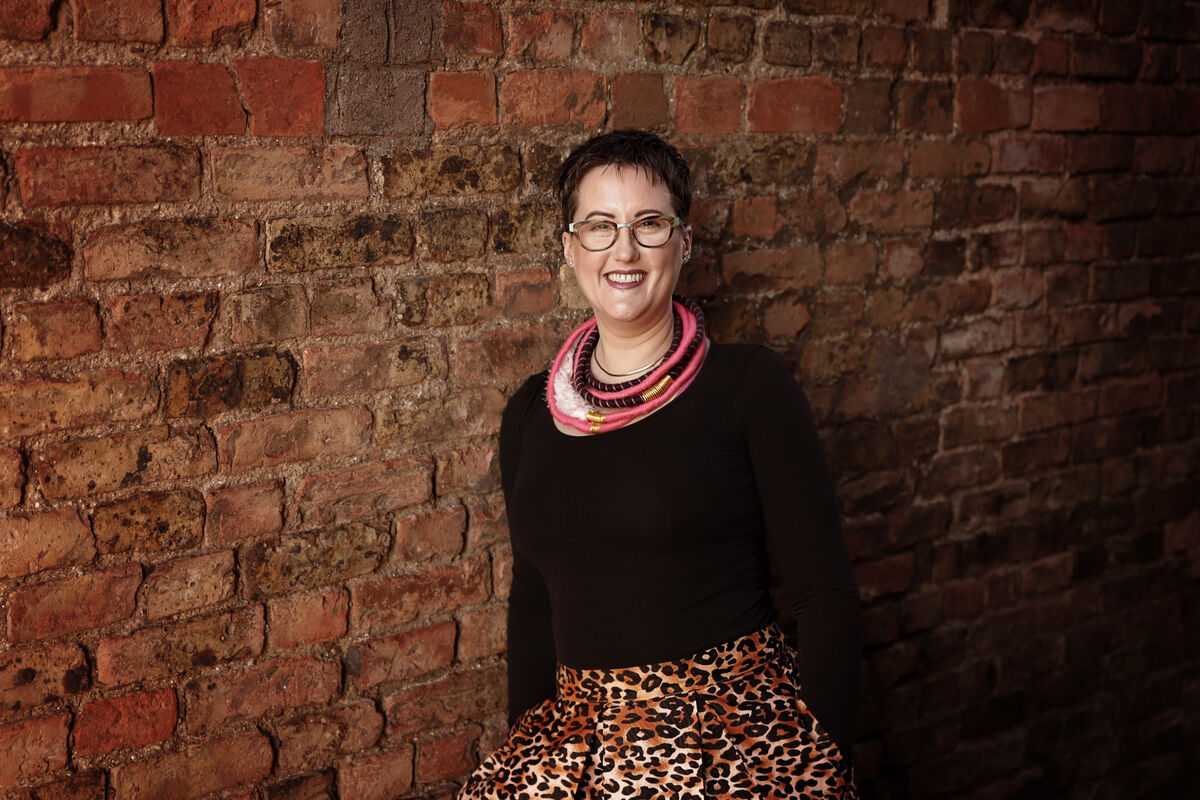
Bethan O’Riordan, psychotherapist and owner of the Calm Parenting Community
Prior to our interview, Bethan O’Riordan, psychotherapist and owner of the Calm Parenting Community, put out a question on Instagram, asking what people thought of baby prenups. “I got 25 responses. Nobody got in touch to say they’d heard of this. One person said it ‘wouldn’t have worked at all – my husband was in the navy and gone for months at a time’.”
Another mum who responded to O’Riordan’s question was Sandra, who commented: “To be honest, I never heard of the concept before. The idea of planning the parent responsibilities, child care, and having this agreement before the baby arrives is a strange one… The idea of a prenup for baby doesn’t sit with me at all.”
O’Riordan too thought “that’s crazy” when she first encountered the idea, but she also believes anything that gets people talking is a good idea. In some ways, baby prenups make sense, she says. “Trying to organise these early days and years, around who’s going to do what, in theory it’s great – everyone knows what they’re doing. ‘While I’m expressing milk, I want you to clean the bottles’. But does this need to be put in a contract? Can’t it just be said?”
The problem with baby prenups is their rigidity, she says – they don’t allow for the fact that everything is different when the baby arrives. O’Riordan imagines a parent not doing what they had committed to doing – because they’re exhausted, have PND, the feeding hasn’t gone well or they’ve been up all night. “Where does this leave the prenup? ... “The minute we get into ‘right’ and ‘wrong’, we’re in a defensive, critical place that removes us from being kind and helpful – yet, as humans, we’re always better when we’re working together.”
In response to O’Riordan’s Instagram question, Tara highlighted parenting’s unpredictability: “We all know that kids do not go according to plans. If you’re too strict on the prenup side of things, it may cause issues. Especially if the parents interpret things differently down the line (which I imagine they do).”
Adaptability and flexibility
Elaine McDevitt, cultural events and project manager
Carlow-based Elaine McDevitt works in cultural event and project management and is mum to Layla, 11, and Cara, seven. She thinks a baby prenup could be quite practical but it needs a degree of built-in flexibility.
“I don’t think it’s possible for people to know exactly what the [parenting] tasks are if you’re a first-time parent. But even if you’re not, circumstances change. There has to be a certain amount of adaptability. What I’ve learned from being a parent is once you think you know something, you don’t. That’s the biggest challenge – constantly needing to adapt – which is very difficult to foresee from the pregnancy stage.”
O’Riordan agrees. “Before I was a mum, I didn’t fully understand what parenting was about. I’m still figuring it out. And you don’t know how you’re going to respond emotionally to something ‘til you’re in it,” she says, adding that there’s value in parents modelling adaptability for their children. “If we don’t keep cultivating our skills for flexibility and openness, then our children won’t be able to either.”
Family therapist Anne McCormack says a lot can change when a baby is born – around health, time management, and work issues, for example. “You never know what’s going to crop up. You might have your expectations but life happens.” For this reason, she is cautious about baby prenups. “‘Prenup’ almost has a legal connotation. So I wouldn’t be keen on a formal version of it.”
But she believes there is something to be said for it as a tool to get couples talking, especially when it comes to the kinds of issues she frequently comes across among new parents. “One parent might feel they’re carrying a heavier load than the other. Finances come up too. Obviously, a child is expensive and if there hasn’t been a discussion about how to manage finances, one partner can feel aggrieved that the other is still spending money on things that are just for that one person, like trips abroad or gym membership.”
Involvement of extended family, once baby arrives, can also create problems. “One parent may feel the grandparent’s around too much, the other might feel ‘that’s a good thing – they’re being supportive’.” Another potentially thorny issue, she says, is how to manage to still have time for the couple – and each parent individually – once the baby comes along.
McCormack believes it could be useful to have a template to discuss such issues in the pregnancy stage. “It would be good to have a conversation about what each person expects around the changes they’ll face as parents and how they’re going to manage these. It could be a discussion that’s suggested to couples when they’re attending ante-natal appointments.”
Tara thinks it’s a great idea for “first-time parents to sit down and think through scenarios together to see if they’re on the same page when it comes to child-rearing”. Sandra says she’s “old-school” and believes in having open conversations – in agreeing or disagreeing when the situation happens and coming up with suggestions or a plan.
McDevitt says there might be some merit in a prenup in the event of the couple’s relationship breaking down. “It might mean that co-parenting would be more straightforward – you’d have had the conversation and there’d be more understanding. It might help towards a more seamless transition to co-parenting.”
O’Riordan’s approach is simple: instead of a baby prenup, just keep talking. It’s OK to be worried about the arrival of a new baby, “but you don’t have to fix that with solid rules”.
Eat better, live well and stay inspired with the Irish Examiner’s food, health, entertainment, travel and lifestyle coverage. Delivered to your inbox every Friday morning.