Nine ways to make the return to school as easy as ABC
Going back into the classroom after a long summer break can be stressful. But parents can take simple steps to prepare their child for what lies ahead, writes Helen O’Callaghan
The countdown to the first day back at school has begun. It is exciting, but niggly worries are almost inevitable. With a week or 10 days to go before schools reopen, what can parents do to help children be ready and happy to start?
There is much children may be anxious about, says Tracey Flynn, a primary schoolteacher in Bray, Co Wicklow.
“Starting in a new school or a rearranged class, meeting their new teacher, finding their new classroom, reuniting with classmates, navigating the schoolyard and building friendships, to name a few.”
Flynn, who is also a drama therapist and children’s mindfulness practitioner, says managing change is part of life. Equipping children with belief in their ability to cope is an important life skill.
Here, Flynn and other experts identify small habits and techniques to start (or revisit) with your child to help ease the back-to-school transition.
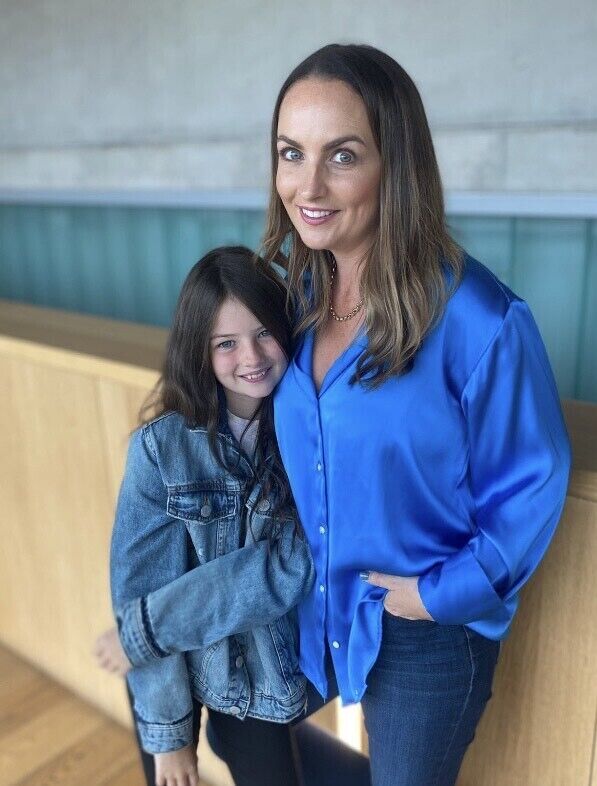
Tracey Flynn with daughter Callie
1. Check in with yourself
How are you feeling?
Worried about your child going back to school? Anxious because you’ve heard this year’s teacher is ‘too strict’ or ‘gives too much homework’?
Or worried about your child’s friendships — what if the same problem arises this year?
“Acknowledging our own worries can help us separate our ‘stuff’ from our children’s — [making] us better able to listen and empathise with them,” says Flynn.
2. Spend quality time with your child
Build the relationship you have with your child, urges Catherine Cross, National Parents’ Council services manager.
“The most important relationship children have — which carries them through everything — is the relationship they have with their parents. Let them know they have your undivided attention, even if it’s just for 20 minutes.
“One parent told me her child said: ‘No, you’re not listening to me, Mum — you need to listen to me with your eyes’.”
It doesn’t matter what you do with your child as long as it’s quality time together. “It could be as simple as watching a movie or pushing a swing. Spending time with them lets them know you’ve a connection with them.”
3. Playing games
Leave time in your child’s day for free play, advises Flynn.
“Children are really good at figuring out what they need, expressing themselves in play, and working through emotions when playing. Open up the conversation with your child about going back to school through playful language.”
Instead of asking how they’re feeling, she suggests playing ‘Wow, Wonder, Wish’.
“Ask your child to share with you one thing they will ‘wow’ at this year, one thing they’re wondering about, one wish for the school year ahead. Share with your child your ‘wow, wonder, wish’ for them too. Children will usually share a worry or concern as the ‘wonder’ or ‘wish’.”
4. Manage their worries
Let children know they are not the only ones with a particular worry, says Cross. “Children can feel they’re the only ones worried — for example, will they like the new teacher, will the new teacher like them? [Explain that] others will have the same worry.”
Parents should keep an open mind about new teachers and classrooms.
“Sometimes parents and children go on past experience, a sibling’s or that of a friend’s child — ‘this teacher is a little stricter, the work is going to be harder’. But teachers have different teaching styles and these can suit some children better than others.”
Teach children the pointlessness of worrying about things they cannot control, says Ciara Heneghan, a primary schoolteacher in Co Roscommon and inclusion adviser with the National Council for Special Education.
She recommends taking a positive approach. “Focus on all that was good about last year — and all the good things your child’s looking forward to this year.
“So if there’s a friend they’re not getting on with, ask, ‘Who are you getting on with? What works with your other friends? Could you use that with this person?’ Get them to look at what’s working and replicate that,” says Heneghan, adding that it could be useful for parents to arrange a meet-up between the two children in the park before school starts.
“Pare it back to one-to-one so as to build it up again before they go back into the group. Having common ground — ‘Do you remember we met up in the park during the holidays?’ — could create a stronger bond.”
5. Prioritise listening to your child over solving or fixing
With her 10-year-old, Flynn dedicates a specific time and place to worry.
“This lets children know their feelings, concerns, and questions are important and will be listened to. Putting a timeframe around this — 10 minutes — helps children manage these feelings rather than allowing them to overtake the day. Choose a nice spot away from noise, phones, and interruptions and have a ‘worry and wonder’ time.”
6. Get practical and predictable
Children like knowing what to expect, says Flynn.
“Get things ready together; write or draw a list of what’s needed for the first week back. Talk about the ’who, what, where, when’. Who’ll bring them to school on the first day/week? What time will they get up/leave for school? Where will they go or be collected after school?
“Choosing some small, manageable thing to do together after school or before bedtime builds security and connection. Go for a walk, bake, play a game, read a book.”
7. Stay positive
“While we may be hard-wired to think about the negative — ‘I’m not good at maths’ or, ‘Everyone else is better than me at…’ — try to rephrase these thoughts with your child, says Flynn. “For example, ‘Maths can be difficult, but you’re super at figuring out problems’.
And use positive language when talking about school.
“No matter how difficult a day, finding the positive builds resilience. Choose a ‘yippee’ at the end of each day [as a] family. It’s quick and fun to do. A ‘yippee’ could be something brilliant that happened or something small but wonderful: Seeing a rainbow or enjoying a hug.”
Joana da Silva of Safefood
8. Food to go
Now that holidays and looser routines are coming to an end, Joana da Silva, Safefood chief specialist in nutrition, advises getting back to a more structured pattern of mealtimes so it isn’t “a drastic change on the first day when they’ve so much to get used to”.
Involve your children in school food preparations. “Do they need a new lunch box or water bottle? It’s always a good idea to involve them in choosing and buying these.”
One-third of their nutritional needs should be met during the school day, says da Silva. “Aim for an appropriate balance between food groups. If trying to include more variety, do this in the home setting before they return to school.
“Children need three to five dairy products daily — incorporate at least one in their lunch box. Include protein — chicken, a small can of tuna in their sandwich, egg, or hummus. Include wholegrains – these help us feel fuller for longer and prevent constipation.
“Parents can make things easier on themselves — if cooking rice, pasta, or couscous for dinner, use in next day’s school lunch.”
Ensure fruit and vegetables are well-represented in their school lunch — go for any fruit, or tinned fruit in its own juice, not syrup. “Give salads — pasta salad could include chopped tomato and cucumber, lettuce is great for giving crunch to a sandwich.
“With snacks, we tend to go for fruit or fruit yoghurt, but there are great savoury options — celery/cucumber sticks or sliced peppers used with hummus or cream cheese dip.”
And keep their hydration levels up, da Silva says plain water and milk are best.
9. Practice mindfulness together
Flynn, co-author of The A-Z of Minding Me, believes in ‘I’ affirmations. “Using repeated affirmations [daily] with children helps them develop positive self-belief and confidence,” she says.
For example, ‘I can adapt to change and try new things’, ‘I can overcome difficult moments and be OK’.”
Breathing exercises are multi-beneficial, helping children handle emotions and stay calm and focused. Heneghan recommends box breathing and lazy eight breathing.
As the countdown to the first day back starts, Flynn urges parents to count on trust. “Trust in your child — they’ve got this. They have you, a teacher, and a school community behind them. They have everything they need to be happy.”
Eat better, live well and stay inspired with the Irish Examiner’s food, health, entertainment, travel and lifestyle coverage. Delivered to your inbox every Friday morning.