Colman Noctor: Activity with a fun ethos is a great approach to sports
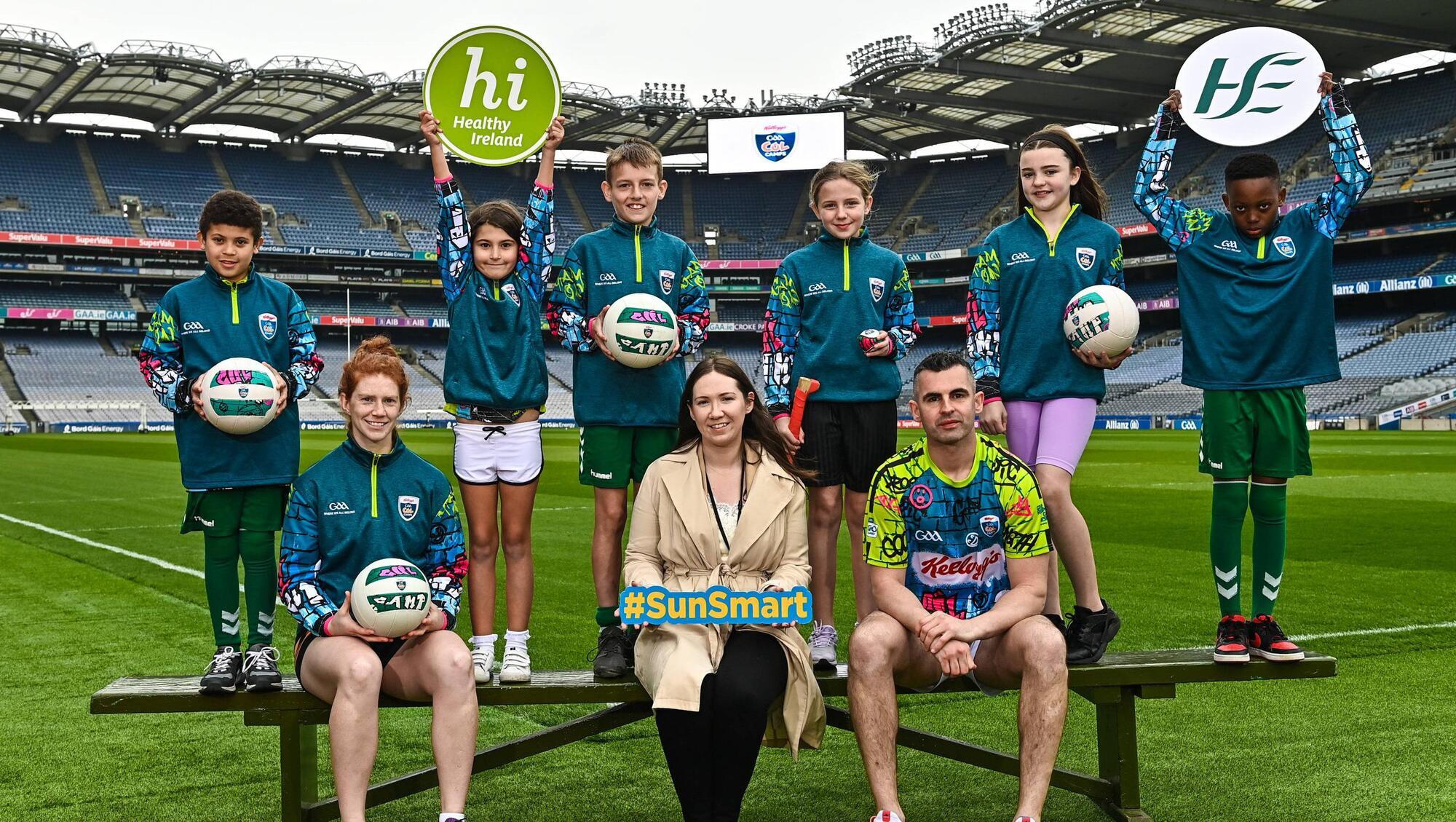
In attendance at the launch of the 2023 Kellogg's GAA Cúl Camps are, from left, Levi Hutch, aged 9, Kerry footballer Louise Ni Mhuircheartaigh, Patricia Grace Pop, aged 7, Karson Butler, aged 12, HSE National Cancer Control Programme, Cancer Prevention Officer, Maria McEnery, Kasey Cromwell, aged 11, Cavan footballer Raymond Galligan, Issy Downey, aged 12, and Fortune Beta, aged 12.
I have written many times about my concerns about the culture of children’s sports in Ireland. The majority of my commentary has been quite critical of the ‘all-or-nothing’, ‘high commitment/ high competitive’ cultures that exist and how I believe these options are too narrow and exclude many children who want to play sport for fun or do not want to commit six hours a week to their sporting pursuits.
I have always advocated for a ‘social sporting pathway’ to exist alongside the current offerings. I think this would offer children a way to play sports and be active but without the pursuit of medals, prizes, and accolades.
When I have suggested this concept, some people believe I am talking about a sporting pathway for children with additional needs, and while I absolutely advocate for these opportunities to be available to these children, it is not quite what I am thinking about. The social sport model I would like to advocate for would be akin to the adult 5-a-side culture. While these environments are competitive and engaging for the hour that they are on, they don’t demand a huge commitment and there is no ‘bigger picture’ or long-term goal involved. Each week there is a different game and different teams: the slate is wiped clean once it is over and it starts again the following week. This means there is no ‘elite’ emphasis, and while the winning or losing of the game is important for the bragging rights for that week, it does not carry into other weeks, and therefore no one is ‘dropped for missing a training session’ or ‘leapfrogged’ by players from younger age groups in order to win trophies.
Another misconception of the model I envisage is that it would be an ‘everyone wins and everyone gets a prize’ structure, which it is not. This model would not advocate for a totally non-competitive ‘nobody keeps score’ philosophy, especially in older groups. Instead, the activity should be meaningful and have a purpose for those who turn up that week, but the winning or losing of the game holds no longer-term consequence to their lives once it is over. Many stalwarts of competitive sports feel children need to experience the disappointment of losing and getting beaten to build character, and while I disagree fundamentally with the concept, this structure would allow for experiences of victory and defeat, without the devastating consequences of letting your coaches, parents, club, and community down by not performing in an Under-13 Division-3 Final.
I play tag rugby and 5-a-side soccer — and while there are no leagues to be won or prizes to be given out, it does not take from the spirit of competition that exists and I can safely say that everyone who turns up ‘gives their all’ to win the game.
What dawned on me this week is that we already have something very close to this model for children, but the only problem is that it is not available to children for the majority of the year. The model that is closest to the one I envisage is the GAA Cúl Camps or FAI Football Camp models.
This week I dropped two of my children off at these camps from 10 am to 2 pm and they have bounded out of the car each day to go in and meet their friends. At the 2pm collection, they were bursting to tell me the stories of the fun they had during the day.
What I can gather from my children’s feedback on their Cúl Camp experience is that the emphasis is on fun and movement.
Indeed the Cúl Camps describe it as: "Cúl Camps provide primary school boys and girls — between the ages of 6 and 13 — with an action-packed and fun-filled week of activity during the summer holidays which revolves around maximising enjoyment and sustaining participant involvement in Gaelic Games. Activities are player-centred with a games-based approach and a strong emphasis on personal development and well-being."

Admittedly they play lots of games like Bulldog and Chasing alongside some fun games of Heaven and Hell (which is essentially a fun penalty shootout). They also had lots of matches during the day which sounded like they were competitive and full-blooded, but they didn't amount to any overall prize, so no one was shouted at for doing something wrong and there were no drills or laps involved which they seemed to very much welcome.
The focus on fun is made possible by the many facilitators who run the activities and keep the children safe and entertained. In the main, these facilitators are enthusiastic young adults looked up to by the children. My children come home telling me all about their coaches' lives — like where they are in college, what they are studying, and their plans for the rest of the summer. The relationship between the children and the coaches seems to be one of compassion and encouragement, not competition and commitment.
If the Summer Sports Camp model provides us with a formula for children’s social sport then why don’t we aim to provide it all year round? I am always intrigued when we have these days and weeks in the year dedicated to a cause like ‘national anti-bullying day’ or ‘national friendship week’. Every day and every week should be anti-bullying and friendship week. Similarly, why do camps need to be restricted to a week in the holidays? There is clearly something valuable in the model of what is being provided, surely this could be extended to at least a season.
I don’t want to suggest that the Summer Camp model replace the existing model of children’s Soccer and GAA structures — rather I believe it could be made available to complement them. I acknowledge we need to meet the needs of children who thrive on competition and want to commit copious amounts of time to their sporting passions. But I also feel we need to provide something similar for other young people who do not meet that threshold and still want to engage in activity, sport, and movement.
I have collected my children from these camps for the last two weeks and I haven’t seen one child come out complaining that it was too serious and intense, and also I have not observed any child coming out saying it wasn’t serious or competitive enough. Perhaps this is because the goals of the camp are clear from the outset and therefore children know what to expect when they go there.
I can certainly speak from my own experience and say that both my children would state categorically that they prefer Cúl Camps to the regular GAA season and find the fun element of the Cúl Camp culture more enjoyable. With this in mind, I wonder if that model was available for a season for all ages, would this help to address the drop in children partaking in sport in their early teens? I wonder if there is a case to be made to trial a Cúl Camp for children one evening per week for the duration of the GAA season.
Only this week we are seeing results of a study from the University of Limerick suggesting the importance of movement and activity to our mental health. [irishexaminer.com/news/arid-41181145.html] Surely with evidence like this, our emphasis should be to keep children and teenagers active and moving as long as possible.
- Dr Colman Noctor is a child psychotherapist