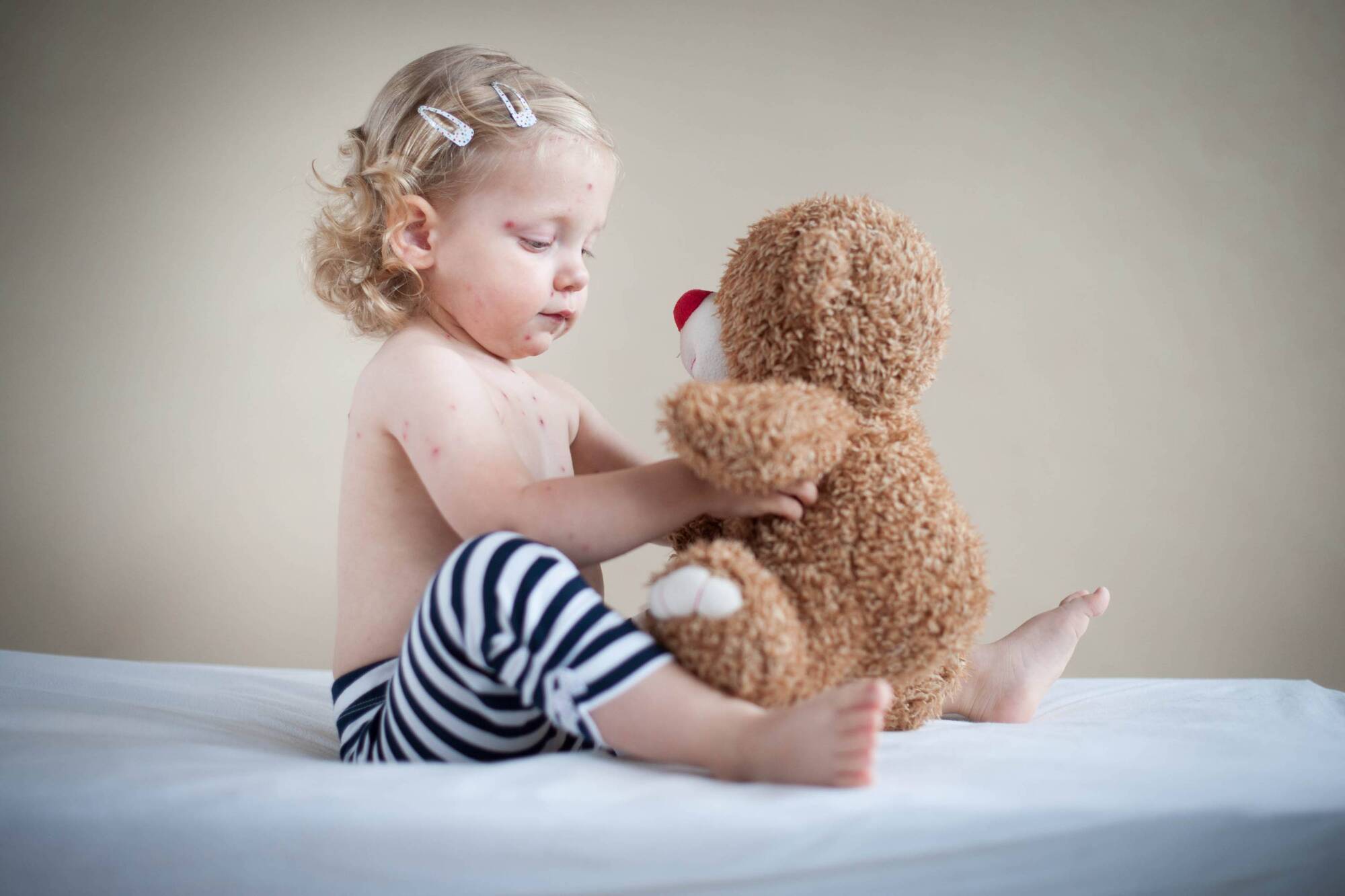
Pharmacist Sheena Mitchell often meets parents who don’t know if their child has been vaccinated against chickenpox.
But chickenpox vaccination isn’t currently part of Ireland’s routine childhood immunisation schedule – though this has been scheduled for review by HIQA.
Once Mitchell tells parents their child won’t have been vaccinated, often their next question is to ask if vaccination is necessary. “That’s a huge question,” says Mitchell, a Dublin-based pharmacist and founder of online family medical resource www.wondercare.ie and podcast (exa.mn/Wondercare-Podcast).
Chickenpox – a highly infectious disease caused by the varicella zoster virus, a type of herpes virus – is largely seasonal, peaking between January and April. It’s most prevalent in children and infants under 12 but can affect anyone.
In her pharmacy, Mitchell is asked: ‘If the child sitting beside mine at school has chickenpox, is my child likely to get it?’ and ‘How long after exposure can you develop symptoms?’ She confirms the incubation period for chickenpox is typically 10-21 days after initial exposure. “A person is contagious for up to two days before the spots appear and for seven days afterwards – or longer, depending on how quickly the spots scab over.”
And so, to the ‘should I or shouldn’t I’ of the vaccine debate. Mitchell points out that in most children chickenpox causes mild to moderate disease. Mum to three children aged 11, nine and seven, all of whom have had chickenpox, she says: “For many of us, getting chickenpox was simply part of growing up. While it was uncomfortable for a short period – some of us still have the scars to show – it was rarely serious.
“In fact, chickenpox parties were a real thing to get it over with once your child reached the more robust toddler stage. Usually, younger children present with a milder dose, so it made sense – even for logistical reasons – to get the whole house infected in one go.”
But while most children will get better themselves, Dr Patrick Kelly, Irish College of General Practitioners (ICGP) clinical lead (immunisations), says other considerations need to be taken into account. “A child with chickenpox may be really miserable for anywhere from a few days to a week. This means they’ll miss school or crèche and it may mean a carer or parent will miss work to look after them.”
Infection protection
Chickenpox typically starts with small red spots, which turn into fluid-filled blisters that can become extremely itchy and uncomfortable. “For those with a bad dose, the rash can appear inside the ears, mouth, and throat and in the genital/nappy area. Children can become very distressed by the itch, which can lead to scratching, potential infection, and scarring,” says Mitchell.
In a small number of cases, chickenpox can develop a secondary bacterial infection. Scratching of itchy blisters carries a risk of serious infection: Invasive Group A Streptococci (iGAS).
“This can result in sepsis or necrotising fasciitis, both extremely serious conditions but which can be treated if caught early,” explains Mitchell, adding that signs of secondary bacterial infection include large red areas around the spots (these can be hot and painful), high fever, serious headaches, nausea/vomiting, lethargy or difficulty breathing.

Adults who contract chickenpox can get very sick – possible complications include pneumonia and encephalitis (inflammation of the brain). Chickenpox is also dangerous for people with immune system problems, for example, leukaemia, or for those taking drugs that weaken the immune system, such as steroids.
Kelly points out that a child with chickenpox may infect vulnerable people, and he outlines the complications the virus can cause pregnant women – and their babies. “Chickenpox infection during pregnancy carries an increased risk of severe varicella pneumonia in the mum, especially late in the second and early in the third trimester.
“There are also risks to the baby depending on when the mother becomes infected. Chickenpox in pregnancy may cause a condition called congenital varicella syndrome. This can lead to underdeveloped arms and legs, a small head (microcephaly), cataracts, growth restriction and skin scarring. It’s also associated with 30% of affected babies dying in the first few months of life.”
Rash decisions
Kelly points to evidence from the US that showed adult hospitalisations and deaths due to chickenpox reduced when the vaccine was given as part of the routine immunisation schedule.
The vaccine (Varivax) used to protect children and adults against chickenpox is given in two doses – one month apart – from 12 months of age. It can be given at the same time as other vaccines on the childhood immunisation schedule.
But while routinely vaccinating children against chickenpox might seem like a no-brainer, the discussion is nuanced. Children who contract chickenpox develop lifelong immunity against the virus. But, says Mitchell, immunity is thought to be shorter-lived with the vaccine.
Mitchell says if a childhood chickenpox vaccination programme was introduced, people wouldn’t catch chickenpox as children – because the infection would no longer circulate in areas where the majority of children had been vaccinated. “This would leave unvaccinated children susceptible to contracting chickenpox as adults, when they could develop a more severe infection or a secondary complication such as pneumonia or encephalitis. While those vaccinated as children may need a booster vaccine later.”
And this poses concerns for pregnant women, particularly if the pregnancy is unplanned, says Mitchell. She points out that for women planning a pregnancy, their GP can do a check for antibodies against chickenpox.
However, those who fall pregnant without an antibody check, even if they were vaccinated as a child, may not have sufficient antibodies to carry them through their pregnancy safely.”
Dr Kelly says: “Non-pregnant [women] of childbearing age with no immunity to chickenpox can be vaccinated prior to or after a pregnancy. Pregnancy should be avoided for one month after getting your varicella vaccination.”
Another concern is that introducing chickenpox vaccination for all children could increase the risk of shingles in adults. Shingles is caused by the same virus as chickenpox and can be quite severe in adults – children, infected with chickenpox as a child, tend to suffer a milder form of shingles as an adult. By caring for her three children when they had chickenpox, Mitchell says: “I was actually getting a natural boost to my own immunity to shingles.”
According to information from University of Oxford referring to the 2010 review of the chickenpox vaccine by the Joint Committee on Vaccination and Immunisation, which advises the British government on vaccines – “future modelling of the impact of vaccination indicated there could be an increase in the rate of shingles in adults over time, which would make the vaccine programme not cost-effective”.
They explained: “if chickenpox in children disappears as a result of a vaccine programme, adults would no longer have immunity boosted by exposure to their chickenpox-suffering children and grandchildren – and would be more likely to get shingles.”
Currently, the chickenpox vaccine for children in Britain is again under review. When Mitchell put it to her 22,000-strong social media following whether they believed treatment or prevention was a better plan for chickenpox, the response was very mixed. “Most people said ‘no, it’s fine, just let kids get chickenpox’.”
But she was surprised at the numbers who felt strongly – because their children had ended up in hospital with chickenpox – that we should have a national vaccination programme. Mitchell speculates that any increase in chickenpox cases could be down to a post-pandemic effect of “three years’ worth of chickenpox circulating compared to one year’s”.
Dr Kelly advises parents considering the vaccine to speak to a GP or practice nurse. “The vaccine and the administration of the vaccine will need to be paid for, and your GP can advise on the cost.”

Cancel anytime
CONNECT WITH US TODAY
Be the first to know the latest news and updates