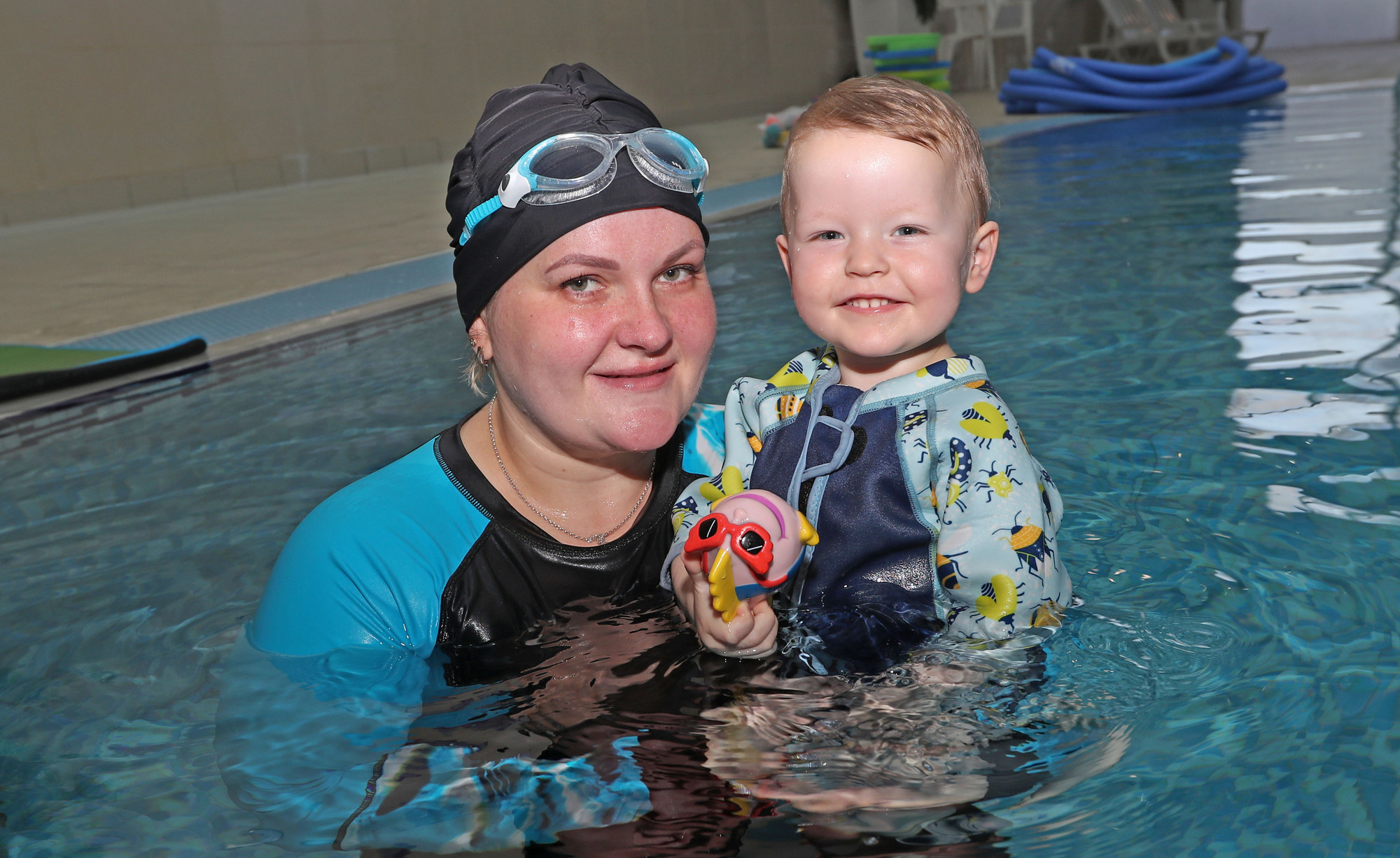
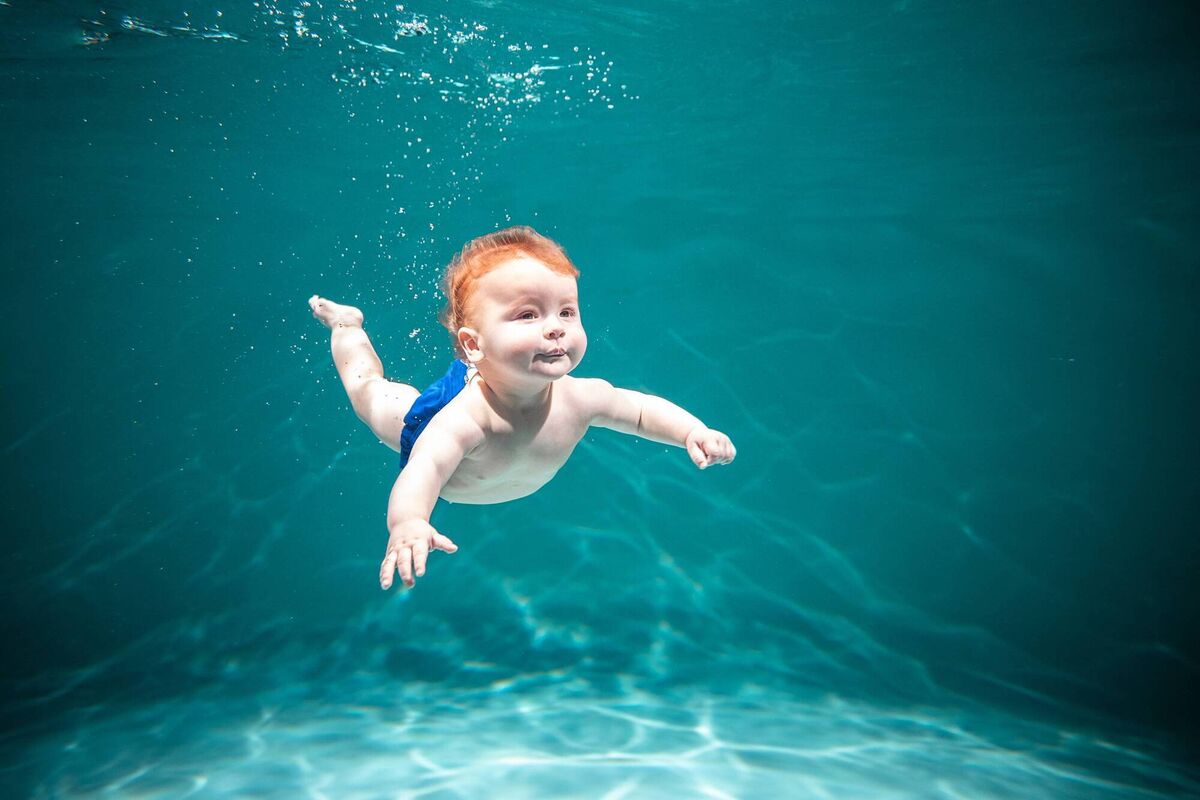
Jakob Corrigan is two years old but he knows how to safely get into the swimming pool.
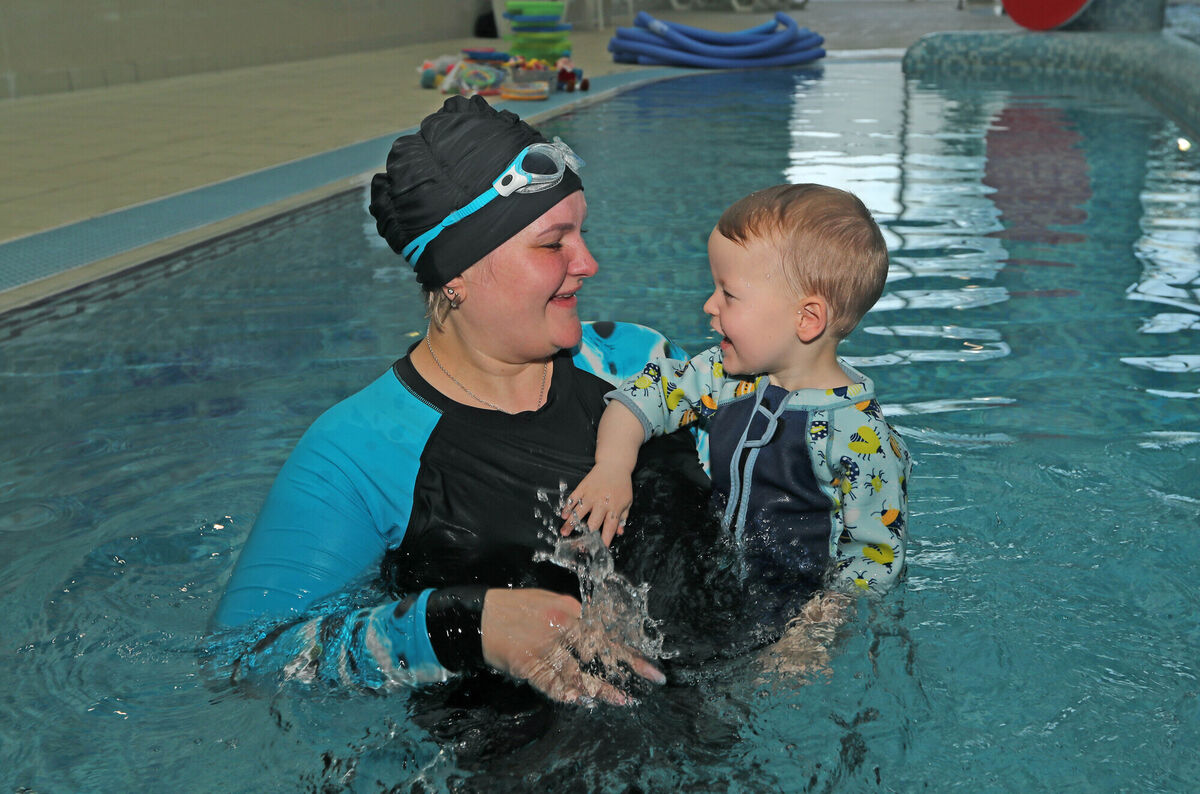
“He turns around and slides with his legs, holding onto the side of the pool,” says his Rathcormac-based mother, Roma. Jakob began learning to swim at 11 months. “Jakob’s a lockdown baby. We wanted to do something together rather than sit at home.”
Roma is not a confident swimmer, while her husband, Pat, can’t swim. “I think swimming is an amazing skill to have, not to be afraid of the water, to be confident. I wanted that for Jakob.”
He is in his first term at the toddler level with teacher, Eimear Barry, of Turtle Tots Ireland (www.turtletots.ie). He attends every Monday at Talbot Fitness in Ballincollig’s Oriel House Hotel, Cork. “I’ve definitely seen his understanding of water safety develop, just his overall confidence in the water. He knows he needs to sit down and wait for his cue to go in,” says Roma.
She had worried about her baby being underwater. “As a first-time mum, slightly over-protective, I was concerned, wondering why they’d have babies going underwater.” But that concern has “100% gone away”, she says.
“Because it’s all about pool safety and taking your cue from your baby, asking them if they’re ready, which you can tell by their body language. It’s very gentle; they’re never forced to do anything.”
Jakob has come on socially and is all giggles in the pool. “As a lockdown baby, he can get a bit overwhelmed by new people. Meeting other children, and adults, has helped.
“Even when he started walking, he was really confident. He had more balance; he was walking down the stairs before he could walk properly.”
When Jakob and Roma finish their 30-minute swim lesson every Monday morning, they’ve got two cherished rituals. “We always ring Daddy, and Jakob tells Daddy he had fun at the pool.
“And then we have our own little tradition, which is to go for coffee and hot chocolate,” says Roma, describing Jakob’s naps after swimming as “fantastic”.
“He’s usually asleep by 12 noon and it’s a very restful nap. He gets up in great form, full of beans.”
Roma’s pleased her son is developing water-safety life skills early. “You never know when he’ll need to use them. And I just love our time together in the pool: It’s our time.”

Great for co-ordination
Aisling McKeever, head of education at Swim Ireland, says swimming lessons are a great opportunity for parents to bond with their baby. “You’re holding your child in the water. They’re relying on you for safety, and you’re showing them they can rely on you to be safe in the water.”
McKeever says swimming represents another way for babies to be active and it carries a host of benefits. “It’s all around the movement; the baby’s moving their whole body in the water, which is beneficial to their heart, lungs, and muscular development.
“There’s also the sensory aspect: The feel of the water, lying on their back, looking around, the new environment, mixing with other babies. And it’s great for their co-ordination; they’re moving their arms and legs, reaching out, kicking.”
McKeever says Swim Ireland recommends waiting until the baby is six months old and has had their main immunisations before starting, though, she says, this isn’t to put a veto on younger babies learning to swim. “Waiting until six months gives them an opportunity to build up their immune system. They’ve started solids by then and have begun to put on weight. They’re able to hold their head.”
At Turtle Tots Ireland, Eimear Barry teaches 30-minute baby swim classes in a pool heated to a range from 28.5°C to 32°C. “Between parents and babies, I’d have 24 bodies in the pool. We teach children from three months to five years. It’s becoming more common to start at an earlier age. We’ve had a couple of premature babies, who’d be 12 months, but they’re that bit smaller.”
For the parents, the swimming is an oasis of time with their babies and away from their everyday lives. “The babies are wrapped up, put in the car and then they come to this environment where they’ve skin-to-skin contact with the parent. It’s a beautiful connection they get to have with their parent for those 30 minutes.”
Barry meets all kinds of baby personalities in the pool. “You’d have the happy chappie, the very reserved little one, the crazy, splashy toddler who wants to be submerged in water more than he wants to be above it.” And parents also vary, from “timid, quiet” to “extremely confident, who may have been a sea-swimmer or sailor and who hope their baby will follow suit”.
Barry says frequently asked questions can range from ‘what should my baby wear’ (some pools require a double nappy system: regular swim nappy with a neoprene nappy on top) to the hardest-to-answer: ‘How quickly will my child be able to swim?’
This, she says, is individual. “The most important thing the child first needs to obtain is confidence. Once they’re confident and can communicate — babies have a voice — we can teach them age-appropriate skills.”

Better balance
A 2010 study from Norwegian University of Science and Technology found that baby swimmers have better balance and are also better at grasping at things than non-swimmers. The difference persists even when they’re five years old, with babies taught to swim still outperforming peers.
Barry sees firsthand some of these benefits. “It really benefits their vestibular system, their balance. At six to 12 months, when they’re starting to sit up, roll, all of these milestones, it really helps.”
She says it’s also very beneficial cognitively. “In one term alone, you see how they’re able to pick up skills.”
A 2012 study from the Griffith Institute for Educational Research surveyed parents of 7,000 children aged under five from Australia, New Zealand, and the US over three years. It found that children who learn how to swim at a young age were reaching many developmental milestones earlier than the norm.
For nervous or aquaphobic parents, McKeever recommends a facility that has a small play pool or one where you can stand comfortably. “Because if you’re not comfortable, your child will straightaway pick up on it.”
Many facilities have wait lists for classes, so she urges parents not to be put off bringing their baby to the pool. “You still can. And there’s lots to do. You can sing nursery rhymes and have them play with the toys they play with in the bath at home. Hold your baby under the armpits facing you and dance them in the water.
“If you want them lying on their back, turn them onto their back with their head on your shoulder, so you’re cheek-to-cheek. This skin-to-skin contact is very reassuring for baby. And talk to them and smile like they’re the most important thing. It doesn’t have to be complicated.”
CONNECT WITH US TODAY
Be the first to know the latest news and updates