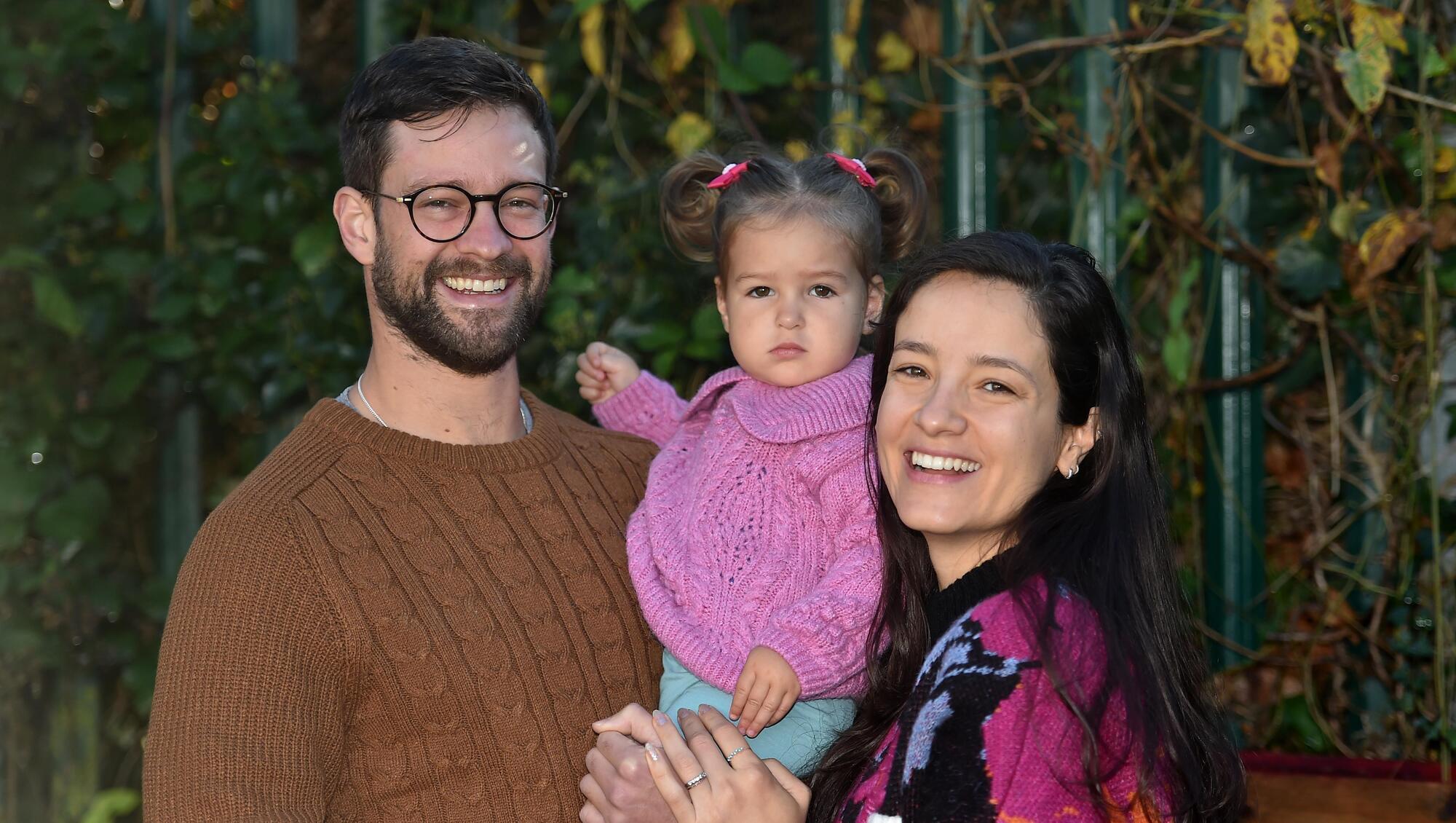
When 20-month-old Hayley Guarezi Turner wants a drink, she asks her dad for “water” and her mum for “agua” — the same drink in two different languages.
“It’s crazy! Nobody told her to speak Portuguese to me and English to her dada. She just picked it up,” says Jessika Guarezi, who grew up in São Paulo, Brazil.
“If we go for a walk together and she sees a dog, she’ll point and say ‘doggie’ if her dad’s holding her — but if I am, she’ll use the Portuguese, ‘cachorro’.”
Practically all of Jessika’s interactions with her only child are in Portuguese. Hayley’s dad, Darragh Turner, who grew up in Limerick, speaks to her in English.
“I use only Portuguese with her,” says Jessika. “Unless I want her dad or grandparents to interact with us in that conversation — even then I’ll speak Portuguese to Hayley and she’ll say it in English to them.”
Raising their daughter bilingually is “going great” for the Cork-based couple, though Jessika admits to a few worries about it while pregnant.
“I worried it’d be hard for me to speak Portuguese with her all the time. Her dad, paternal grandparents, and uncle are all English speakers — and while Darragh’s learning Portuguese, he can’t understand all I say.
“And since I live in an English-speaking country, I worried people might feel offended I’m not speaking English with Hayley.”
But once she was born, it felt “very natural” to speak Portuguese with Hayley.
“Darragh and his parents have really supported me. They understand I want to raise Hayley to speak Portuguese with me and my family. My parents don’t speak English. I want her to be able to communicate with them on video calls or visits.”
Jessika dearly hopes Hayley will grow up to love her inherited Portuguese language.
“I’m doing my part. I read to her in Portuguese. I keep naming and showing her things in Portuguese. She talks to my family in that language. It just feels like home when I speak Portuguese.”
Living in Ireland for seven years, Jessica has heard people say bilingually-raised children might have delayed speech development. It didn’t happen to Hayley.
“She has so many words in the two languages. She can express herself very well in both and she’s not even two yet.”
Support for bilingualism
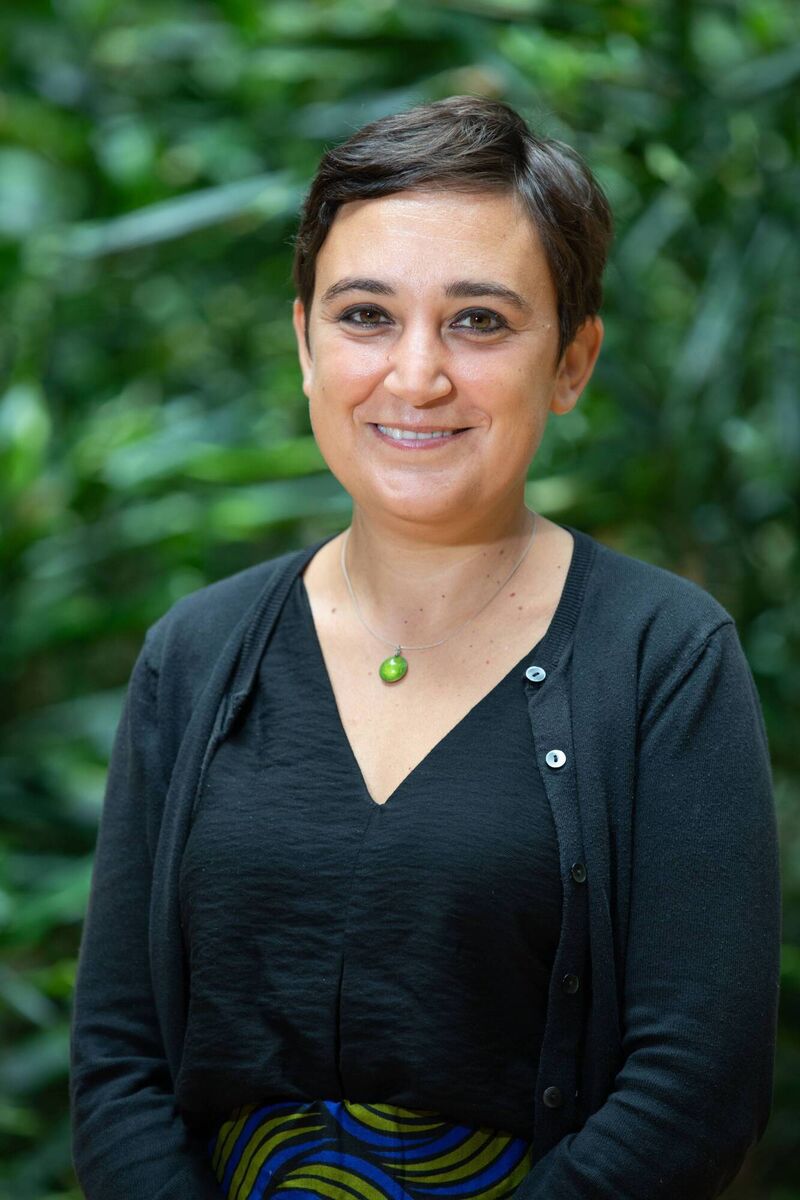
Latest-available Census figures (2016) confirm 612,000 people speak a language other than English or Irish at home. Dr Francesca La Morgia saw a need to support parents passing on their native language to their children while working in clinical speech and language studies at Trinity College Dublin in 2018.
Earlier in her career — as an academic working in language development and bilingualism — she’d met families with toddlers and saw “a lot of misunderstanding about bilingualism”. Parents were getting “negative feedback and wrong advice”.

La Morgia says: “Parents had been told not to speak their [native] language to their children, to speak only English, because the children were growing up in Ireland.”
Realising in 2018 that such attitudes continued, La Morgia set up Mother Tongues ( mothertongues.ie) to support parents wanting to raise children bilingually.
“Parents’ primary concern is that bilingualism will make their child learn to speak later. Parents compare their child with others — they worry about number of words the child knows, particularly in English. They say, ‘If I speak Spanish and my child doesn’t know many words in English, maybe they’ll struggle’,” says La Morgia, who advises parents concerned about their child’s speech and language to see their GP or appropriate professional.
“But the bilingualism isn’t the cause of the language delay,” she adds.
A native of Rome, La Morgia has seen a definite increase in parents raising children bilingually in Ireland, even multi-lingually. Many families seeking support from Mother Tongues speak three languages at home — each parent’s language and also English as the wider community language.
“Their primary question is: are three languages too many? Can a child cope with three? Is it better to stick to two? Well, children can cope with three languages for sure, but it’s important as a family to make a plan to meet your expectations for each language.”
This year, Mother Tongues polled parents raising children bilingually in Ireland. In total, 166 parents responded. Almost 8% said they don’t feel confident passing on their mother tongue to their children, while 15% feel confident “sometimes”.
Just over one in five parents have faced others’ concerns about their children being exposed to more than one language.
“The main areas of concern are that they’ll ‘get confused’, that it’ll ‘lead to language delay’ and that ‘it may affect their competency in English’.”
But there are definite cognitive benefits to bilingualism.
"The ability to think in two languages, to juggle them on a regular basis, gives children improved attention and memory," says La Morgia.
One study found, for example, that the bilingual brain can have better attention and task-switching capacities than the monolingual brain. Researchers said it’s due to the brain’s developed ability to inhibit one language while using another.
In addition, they said: “Bilingualism has positive effects at both ends of the age spectrum.
"Bilingual children as young as seven months can better adjust to environmental changes, while bilingual seniors can experience less cognitive decline”.
More opportunities
For children’s writer Juliette Saumande (her most-recent book is My Little Album of Ireland), there was never a question about raising her two children, Aidan, 14, and Adele, 10, bilingually with her husband, Nat O’Connor.
Dublin-based Juliette, who grew up in a Paris suburb, experienced bilingualism as a child.
“My mother’s family had come from Armenia. So Armenian was always in the background when I visited my grandparents. I can count, use a few choice swear words and say ‘close the door’ in Armenian.”
She and Nat have always been “great believers” in the benefits for children of speaking multiple languages. “They can communicate in different languages, they can go to lots of places — they’ve more opportunities including jobs, travel and friendships. And once they learn an extra language, it’s a lot easier to learn more.”
When Aidan was born, she and Nat “frontloaded” French to give it a head start.
“That meant speaking French and singing songs and reading books in French. Because we knew when he stepped outside the door, he’d be surrounded by English. A few times a week, he went to a minder from Mauritius, who spoke French with him.”

When Adele arrived, the couple veered towards a ‘one parent, one language approach’, and Juliette spoke “as much French as I could”.
The couple never doubted their bilingual approach.
“Nobody told us we should stick to one language to speed things up.”
Now, both children have very good French. They spend time every summer with Juliette’s family in France.
“It’s a great boost for their French. Adele quickly switches from English to French, whereas Aidan takes a week or two in France to immerse himself in the language.”
Raising children bilingually, you learn stuff you’d never otherwise know. Like how some things can only be described perfectly in one language.
“Words where there isn’t really an equivalent in the other language,” explains Juliette. “So a lunchbox is going to stay ‘lunchbox’ in French. And ‘doudou’ in French, which means a ‘teddy’, but it doesn’t have to be a bear — it can be any soft, plush toy. There’s no equivalent in English.”
Juliette has seen her children make untranslatable bilingual puns. It’s great fun, great gymnastics for the brain, she says.
And she has discovered she’ll sometimes use English when having “awkward” conversations with the children. “It adds a bit of distance. I suppose I’m trying to kid myself I’m not the one talking.”
For La Morgia — who couldn’t imagine speaking anything other than Italian to her three children — language is very intimate.
“I’ve lived in Ireland for 18 years and there are some feelings I can’t express as well in English as I can in Italian. I give my true me in my first language.”
Mother Tongue’s information flyer ( mothertongues.ie/your-language-is-important) aims to give reassuring and actionable tips to parents raising children in two or more languages.
Read More

Subscribe to access all of the Irish Examiner.
Try unlimited access from only €1.50 a week
Already a subscriber? Sign in
CONNECT WITH US TODAY
Be the first to know the latest news and updates