How to help children manage big feelings and practise positive thinking and reflection

A shared interest in helping children to think positively led two friends to write an accessible and engaging book 
How to help children manage big feelings and practise positive thinking and reflection

Kids can flourish with encouragement and the right language
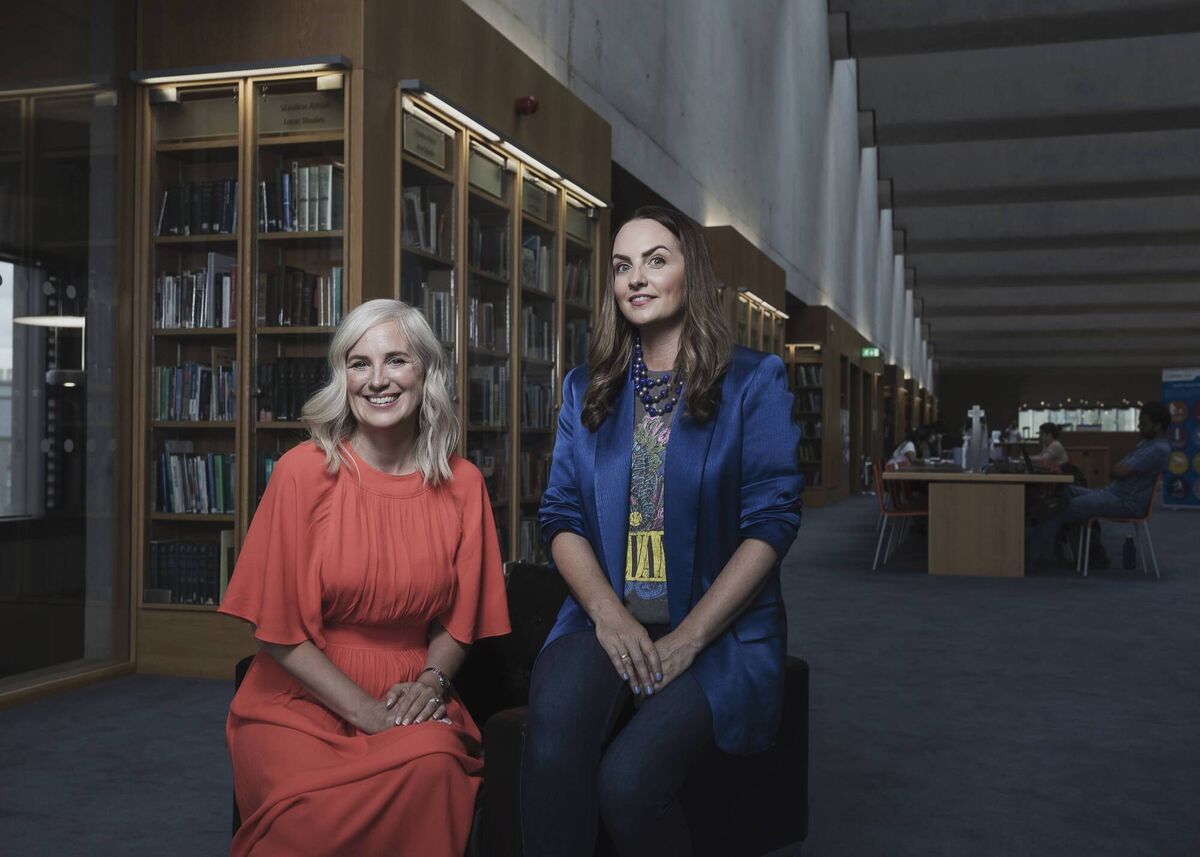
Niamh Gogan was understandably feeling a few butterflies ahead of her first media interview about the book she co-authored with primary schoolteacher Tracey Flynn.

So, to calm herself, Gogan said out loud: ‘I can breathe long and slow to calm my busy mind’.

And her 10-year-old son, Seb, chimed in with “Mum, you ‘can wow and be wonderful just by being you’.” The positive affirmations are from The A-Z of Minding Me, which psychology graduate Gogan and Flynn — who holds a master’s degree in drama therapy — collaborated closely on over the past few years.

It’s an uplifting book that empowers children to embrace and celebrate their unique talents. It’s nurturing and compassionate, encouraging small acts of self-care and kindness and promoting wellness of body and mind.

A book that can bring comfort during difficult times, it’s above all a timely reminder of all the things children can do, after a long period of can’ts.

Both based in Dalkey, Co Dublin, Flynn has a nine-year-old daughter, Callie, and Gogan is mum to Poppi, 12, and Seb, 10, and step-mum to Holly, 24.

“We met when Niamh’s children were in junior and senior infants and I was teaching them. I was delighted to welcome such an eager and playful parent into the classroom,” says Flynn, who teaches in Bray.

It was the starting point for a connection that quickly grew into friendship. “We realised we both had a passion for using positive language with children. Our discussions kept coming back to how powerful positive language is in the classroom and at home – and eventually, we said: ‘what are we going to do about this?’.” 

That thought led to the publication this week of The A-Z of Minding Me, beautifully illustrated by Clonakilty-based illustrator Kerry O’Callaghan and full of powerful affirmations that make it easy for children to connect with themselves and others, manage big feelings, and practise positive thinking and reflection.

Tracey Flynn & Niamh Gogan

The ‘I can’ voice

As authors the two friends “absolutely aligned”, says Flynn. “When it came to writing, we did each and every word together.”

“No word is down by chance — every single word, we thought about and considered,” says Gogan.

“Sometimes we went off and came up with ideas on our own — and when we came back together we found we had exactly the same thoughts,” says Flynn.

With their book, the authors want to give children the words to connect with themselves. “It’s why every single page starts with ‘I’. We feel that’s the most important part of the book — that the child has this inner ‘I can’ voice,” says Flynn.

The affirmations — ‘I can adapt to change and try new things’, ‘I can dream and dare to be different’, ‘I can hug myself, my teddy or myself’ — are all about developing a growth mindset in children.

“Science has shown positive affirmations are a powerful strategy for higher confidence, resilience, mental health and self-esteem. It’s about having these pathways in our brain — strongly positioned — so that in times of adversity we can walk on these paths,” says Flynn, who uses the book like a toolbox in her own parenting, for example in supporting conversations with Callie when she’s having a difficult moment.

“We wanted the book to help children — and parents, grandparents and teachers — to navigate daily moments. For example, Callie slipped down the stairs the other day. She wasn’t hurt but she was totally thrown by what could have happened. So I sat with her and said ‘I can breathe long and slow…’ and she started to breathe.

“Everywhere I look I see an affirmation in a daily moment. And the affirmation connects with the child’s feeling and names it.
“Sometimes children – or adults — don’t have the language to put on [difficult] experiences. And we wanted our book — in a very simple and playful way — to put language on such experiences.”

With the affirmations targeted at different aspects of the person, the book is very holistic in its scope. “We wanted to recognise the whole of the person,” says Flynn, who’s accredited in children’s mindfulness practice.

So there are affirmations ranging from ‘I can exercise and keep my body healthy’ to ‘I can feel lots of different emotions and know my feelings come and go’, from ‘I can know kindness is a gift I can give and receive’ to ‘I can play and learn in different ways every day’.

“We want children to celebrate themselves. We want them to connect, have fun and feel. When Callie says ‘I’m bored’, I say ‘I can invent and use my imagination to create and explore’.”

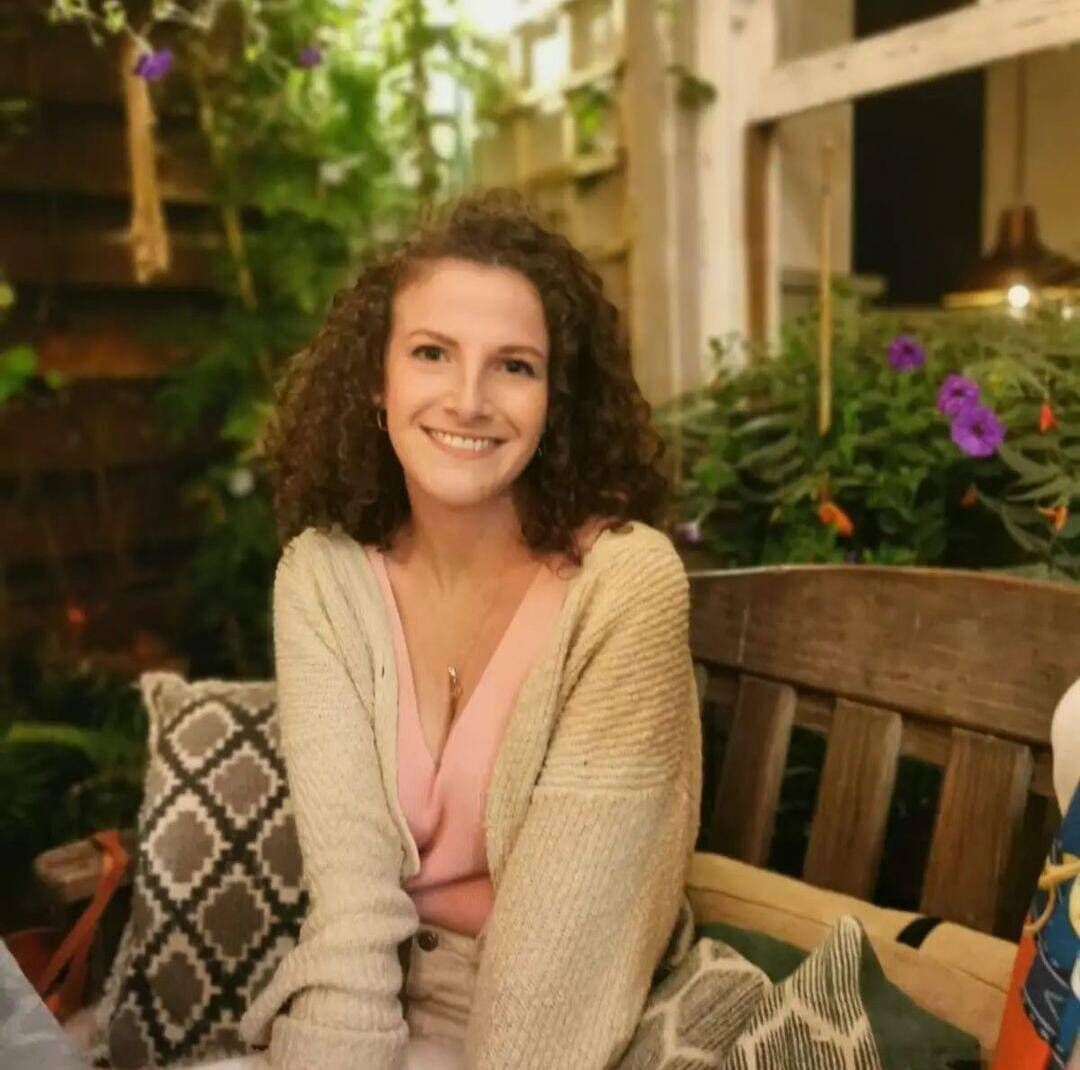
Kerry O'Callaghan, Illustrator

Self-care and wellness

While we teach children how to be friends with other children, Flynn points out that we sometimes forget to teach them how to be a friend to themselves. “This book promotes self-care and wellness. That looks different for different children — which is why different pages will resonate with different children. The younger we start practising having a kinder voice, the more likely we’ll be able to deal with adversity when it comes our way.”

When Flynn and Gogan’s children make a mistake, they now respond with: ‘I can say uh-oh when I make a mistake’, so accustomed are they to hearing their mums say it. “We use very playful language around mistakes, giving the message not to be scared about making a mistake. That’s how we learn and grow, and a resilient child will bounce back stronger,” says Flynn.

The A-Z element came about organically, says Flynn. “We wanted to structure it. We wanted it to be a pick-up, put-down book, with the letters of the alphabet like a guide. A lot of children open it at the page with their own initial and read the message. It was a playful way to incorporate language and sounds into the book.”

Always a lover of picture books, Kerry O’Callaghan hugely enjoyed illustrating it and is grateful to the authors for letting her put her own stamp on it. (A particularly cute image shows a little boy in a car, putting a seatbelt around his dog — to illustrate ‘I can mind myself and others by being safe and kind’).

“This book came at a very relevant time for me, helping me to slow down and take in all these little moments,” says O’Callaghan.

While recommended by publishers Gill Books for children aged up to seven, the authors believe that it’s relatable to all ages. “Also because children develop at different rates,” says Flynn.

The A-Z of Minding Me has an accompanying online resource pack with activities for educators and parents to help further integrate the principles in the book into a child’s daily life.

  • The A-Z of Minding Me’, Tracey’ Flynn and Niamh Gogan, €16.99

In search of connection 

It’s as natural as breathing for Niamh Gogan to use positive affirmations – of the kind in The A-Z of Minding Me – with her children.

“Tracey and I talk to our children like this all the time. Routine is rhythmic for children – and predictability and repetition are very regulating, even for ourselves.

“If your child’s disregulated, focus on your regulation. Are your needs being met? Then foster the connection.” 

Accredited in therapeutic play skills and currently doing a master's in creative psychotherapy, Gogan says the bedrock of understanding children’s behaviour is realising that feelings drive behaviour.

“Feelings are welcome. They come and go. It’s about managing them in a safe way. So what’s driving the behaviour? What need is not being met?” 

Children, says Gogan, are not typically attention-seeking – they are connection-seeking. “Play fosters connection beautifully with children. That [awareness] informed how the book came to fruition.”

For Gogan, an affirmation like ‘I can question and wonder why’ can prompt a playful connection with children. Out on a walk with them, she’ll say, ‘tell me five things we can see, four things we can hear, three things we can sense, two things we can smell, one thing we can eat’.

“What we say to children becomes their inner narrative. With the book, we wanted to give children a tool to practice positive thinking and reflection through repeating the affirmation in their own voice.”


x

More in this section

Cookie Policy Privacy Policy Brand Safety FAQ Help Contact Us Terms and Conditions

© Examiner Echo Group Limited