What’s in a place name? Lots of human fingerprints as it happens
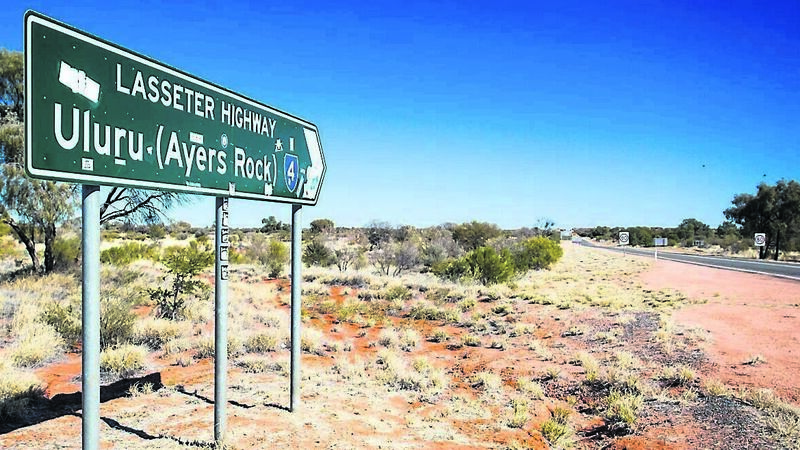
SIGN OF THE TIMES: An iconic road sign directing towards Uluru (Ayers Rock) in the Northern Territory, Australia.
Maps have a way of sounding certain. They sit confidently sit there suggesting that everything has been carefully measured, verified and correctly named. But look a little closer and many of those names are not the product of precision at all. They are the legacy of misheard words, mistranslations and, occasionally, a colonial official deciding that a place would look better named after someone he knew. In short, the map didn’t always get it right.
Across the 18th and 19th centuries, European empires set about mapping the world with enthusiasm. Longitude was calculated, coastlines refined, mountains measured. But while the geography became more accurate, the names were another story entirely. Surveyors frequently encountered languages they did not understand, relying on interpreters or writing down what they thought they heard. Sometimes they replaced local names altogether. Other times, they simply got them wrong. And those mistakes stuck.
Some of the most enduring place names began as simple misunderstandings. Fiji is a good example. The name feels ancient, but it is actually the result of a linguistic detour. Locally, the islands are known as Viti, as in Viti Levu, the largest island. But in the wider Pacific, Tongans pronounced this closer to “Fisi.” When European explorers encountered the name, they recorded that version instead. Over time, “Fisi” became “Fiji,” and that is the name that made it onto global maps. It is a small shift in sound, but a big reminder of how easily geography can be shaped by the ear of the listener rather than the voice of the speaker.
CLIMATE & SUSTAINABILITY HUB
Not all naming errors were accidental. Some were deliberate, and often deeply disconnected from the places themselves. Mount Everest is a good example. The mountain already had names, such as Sagarmatha in Nepali and Chomolungma in Tibetan. But in 1865, the British colonial administration named it after George Everest. Everest never saw the mountain and is thought to have been uneasy about the honour. Nevertheless, the name stuck.
A similar pattern played out in Alaska. Denali (meaning “the high one” in Koyukon Athabaskan) was renamed Mount McKinley in 1896 after William McKinley. McKinley had no connection to the mountain, but the name endured for more than a century before Denali was officially restored in 2015.
Australia offers another example. Uluru was renamed Ayers Rock in 1873 by explorer William Gosse, honouring a South Australian politician. The dual naming system introduced in 1993, and later reordered to Uluru/Ayers Rock in 2002, reflects a gradual shift back toward recognising the original name used by the Anangu people.
Ireland didn’t escape this but the damage was often subtler. Rather than sweeping renaming, many Irish place names were anglicised and reshaped into something English speakers could pronounce, spell or make sense of. Towns like Youghal and Dún Laoghaire are good exampels. Their spellings famously confuse visitors. The mismatch between spelling and sound reflects how Irish names were filtered through English phonetics rather than translated cleanly.
Elsewhere, the changes went deeper than pronunciation. Belfast, for example, comes from the Irish Béal Feirste (meaning “mouth of the sandbank ford”). Over time, the name was anglicised but much of its original linguistic structure was flattened in the process. This pattern repeats across Ireland, where landscape descriptions, historical references and cultural context were often reduced to simpler, more “map-friendly” forms.
What all of these examples reveal is that place names are not fixed truths. They are human decisions, shaped by language, power and, quite often, misunderstanding. Maps may look authoritative, but their names carry the fingerprints of those who recorded them, what they heard, what they understood, and what they chose to write down. Sometimes that process preserved meaning. Sometimes it distorted it. And sometimes it replaced it entirely.
So, the next time you glance at a map, it is worth remembering that beneath those neat, printed names lies a far messier story. Maps are very good at telling us where things are. But when it comes to what they are called, they have, more than once, got it spectacularly wrong.


CONNECT WITH US TODAY



Be the first to know the latest news and updates