Meowing a tool cats use to control their keepers
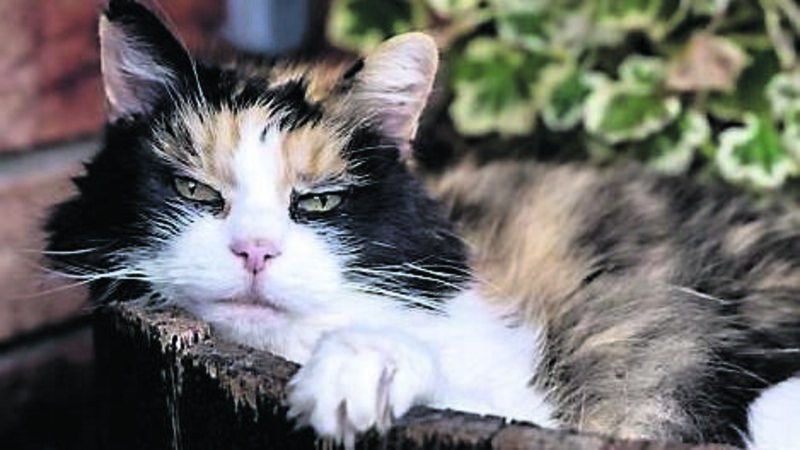
A feline companion is a calming presence, especially if it’s a regular purrer
Meowing a tool cats use to control their keepers

Therapy is not about what you do but how you do it - Carl Rogers

You never own a cat; it lives with you as an equal. Estimates suggest that there are about 12 million domestic cats worldwide and that they kill between
100 million and 250 million animals, mostly birds, annually. Your average pampered pussy, if allowed to roam freely outside the house, is likely to despatch between six and 10 birds this year.

But nobody is perfect. These killer lodgers aren’t all bad; they prevent mice from fouling your breakfast cereal and they can be excellent psycho-therapists of the Carl Rogers non-directive tradition. A feline companion is a calming presence, especially if it’s a regular purrer. The low-pitched snoring sound a contented cat makes is strangely soothing; it calms the turbulent human soul.

Mammals birds insects, and some reptiles, communicate vocally. A sound may contain information about the caller; his or her identity, age, breeding status etc. But the material transmitted may not be personal to the caller; an alarm note, for example, warns of the presence of a predator and a feeding call alerts siblings to a source of food.

Nor are cats the only creatures which generate low-frequency quasi-mechanical sounds. Genets and a species of monkey also purr. Rabbits generate similar noises by grinding their teeth. Cheetahs purr, but lions, tigers, and leopards don’t; they roar.

Purring question

Purring is generated by rapid muscle contractions in the larynx. But it is not the the only type of vocal sound a cat produces. Pussies meow. This is a radically different, more high-pitched, disturbing kind of utterance. So, are the emotions expressed in the two types of sound also different? In a paper just published, scientists at the Museum for Naturkunde in Berlin address this purring question.

Danilo Russo, and his team, recorded the vocalisations of 27 cats, 10 female and 17 male, of five different breeds. The recordings were made at two Berlin animal shelters and in 12 private households. Each cat’s utterances were monitored for an hour on five different days. The 276 meows made by 14 cats, and 557 purrs of 21 cats, were analysed.

The results showed that both purrs and meows carry personal information about the caller. Purrs, however, were less variable than meows. Each cat had its own individual purr and so purring was a better marker of a cat’s identity. Meows, less important in proclaiming identity, were more oriented towards eliciting responses from other cats and from humans.

The team also compared domestic cat meows with those of five wild species; African wildcat, European wildcat, jungle cat, cheetah and cougar.

Domestic cats, the study showed, are more frequent and sophisticate meowers than their wild cousins. ‘Domestic cat meows’, the authors say, ‘showed greater acoustic dispersion than those of wild cats, reflecting increased vocal plasticity through domestication’.

Cats were first domesticated ten thousand years ago. Since then, the researchers
argue, meowing has developed into a valuable tool which domestic cats use to manipulate not only other cats but also their keepers.

*Danilo Russo et al. Meows encode less individual information than purrs and show less greater variability in domestic than in wild cats. Scientific Reports. 2025.

CLIMATE & SUSTAINABILITY HUB

More in this section

Revoiced

Newsletter

Sign up to the best reads of the week from irishexaminer.com selected just for you.

Cookie Policy Privacy Policy Brand Safety FAQ Help Contact Us Terms and Conditions

© Examiner Echo Group Limited