Finding frogspawn still stirs some excitement
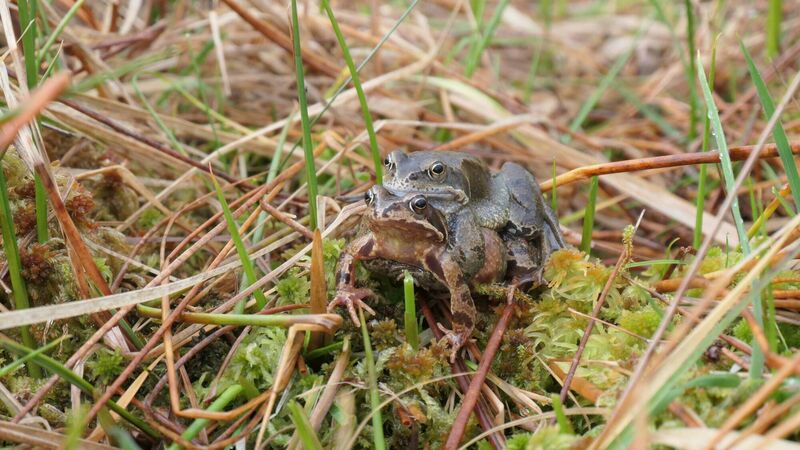
Common frogs are not especially fussy about where they lay their eggs, but they do follow the same routes to get to spawning areas that have been followed by many generations of their predecessors
Finding frogspawn still stirs some excitement

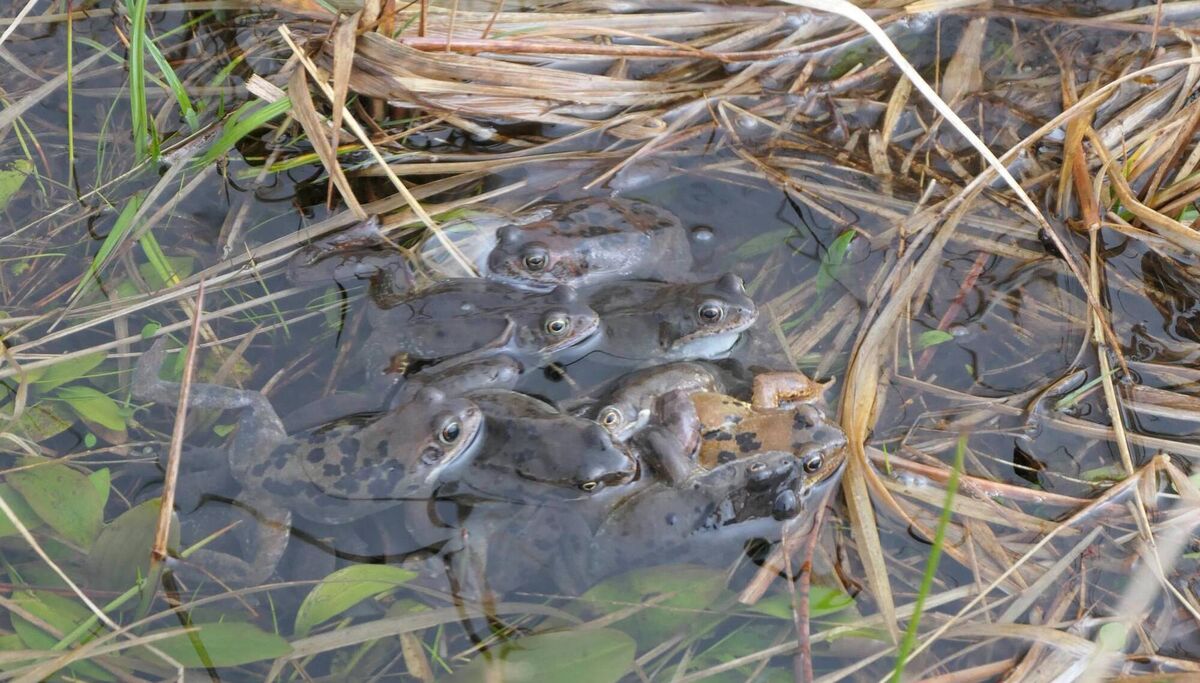
Some common frogs spotted recently in Wicklow. Males crowd in around spawning females, each eager to be the one to fertilise the eggs that she pushes out. Picture: Helen Lawless
Finding frogspawn always stirs a little excitement. I am still intrigued at the process by which these bulbous globs of jelly have the capacity to swell, grow tails and then legs, before hopping away as a fully formed frog, equipped to explore life on land. 

The transformation enchanted us at the school ‘nature table’, back when collecting frogspawn was still OK, and fixed a lifelong fascination with frogs for me. We sometimes salvaged frogspawn from puddles at the side of the road or from soggy tractor ruts, ephemeral pools at risk of drying out before the tadpoles have had time enough to transform and hop away.

Common frogs, the species that is native here in Ireland and across Europe, are not especially fussy about where they lay their eggs. They do, however, follow the same routes to get to spawning areas that have been followed by many generations of their predecessors. 

At this time of year, favourite spawning sites can be crowded places, full of noisy males and females laden with their eggs. Lake edges, ponds, bog pools or wet ditches are home to spawning frogs through February and March. 

Males crowd in around spawning females, each eager to be the one to fertilise the eggs that she pushes out. They hold on to her tightly, sometimes too tightly, in an obstinate embrace known as amplexus, his sandpaper-rough thumb pads specially adapted grip her despite the slippiness of her skin.

Because so many creatures eat frogspawn, abundance is key. The jelly-filled eggs that don’t get gobbled up by herons, crows, predatory water beetles or any number of other animals will take a few weeks to develop into tadpoles, and a few weeks more to become tiny froglets. Froglets have the features of adult frogs, just in miniature. Some retain a little pointy tail from their tadpole days, before it is all reabsorbed into their growing body.

Despite the intrigue many of us have with frogs and frogspawn, there is still an awful lot we don’t know about them. Beneath the obvious signs of metamorphosis, much is happening that we can’t see. As tadpoles, oxygen is obtained by filtering water through their gills. When they morph into froglets, their tissues and internal organs reconfigure entirely. They switch from being able to absorb oxygen from water to being able to breathe oxygen from the air through newly developed lungs.

Life on land

These adolescent amphibians are developing sexually too. When it becomes time for them to venture out of their watery world and they switch their physiology from an aquatic existence to life on land, their ovaries can also switch to testes. 

In this way, lots of froglets switch sex as they mature. In some parts of Europe, where detailed studies have been carried out, all the tadpoles in a particular site will be female, but by the time they emerge from their watery habitat as little froglets, half the new cohorts will be male. They morph from an aquatic female tadpole to a terrestrial male frog. Some individuals will have both male and female characteristics, containing both ovarian and testicular tissues, thus defying categories of male or female. I love the fact that gender plasticity is a regular trait the common frogs now splashing and croaking noisily in the pond at the end of the road. 

This superpower is not limited to amphibians but is also shared by many reptiles and fish.

Frogs switching sex is a natural process, determined through a combination of genetics and environmental factors, including temperature. Some chemicals, however, can interfere with the process. Certain herbicides, including those commonly used on lawns, can trigger frogs to change sex, chemical pollution can do the same for fish.

An amazing frog photo taken  in Wicklow by Helen Lawless  which shows whats called a 'mating ball'.

Common frogs (Rana temporaria) are the only native frog here in Ireland and they are a significant part of many wild food chains. Habitat loss has left them far fewer places to breed and means that there are now far fewer frogs than there once were.

Bogs, fens and other wetland types have been widely drained or infilled as part of agricultural intensification, industrial peat extraction and urban sprawl. Pollution from agricultural nutrients that seep into waterways can make spawning waters unsuitable. New developments can be hospitable to wildlife or not, depending on how they’re designed. Cats are an enormous problem for frogs, too, stalking and stressing frogs as well as catching and killing them.

Perhaps a saving grace for frogs is that a lot of us still harbour a little of our childhood fondness for frogspawn, tadpoles and froglets. Now, as adults, there is much we can do to reverse the decline and help maintain healthy populations into the future. Becoming an advocate for nature restoration is one — frogs rely on healthy wetland habitats such as fens, peat bogs and floodplain ponds and marshes.

Making a pond in your community, your school or college campus, your farm or your garden is another sure way to encourage frogs. Excellent guidance is available on how best to make a pond, and it’s good to know that even a small pond can make a big difference. 

Having tall vegetation at the edge of the pond and places where emerging frogs can shelter is important. Newts also spend their breeding season on ponds, another native species that are truly wondrous to observe as they dance and twirl to impress their mate. Before long, an entire ecosystem will develop, without much need for our interventions.

x

CLIMATE & SUSTAINABILITY HUB

More in this section

Revoiced

Newsletter

Sign up to the best reads of the week from irishexaminer.com selected just for you.

Cookie Policy Privacy Policy Brand Safety FAQ Help Contact Us Terms and Conditions

© Examiner Echo Group Limited